
Flavor, Mouthfeel, and Aroma Characteristics of Honduras San Juan Coffee Beans with Pronounced Sweetness

For professional coffee knowledge exchange and more coffee bean information, please follow Cafe_Style (WeChat official account: cafe_style).
Introduction to Honduras Coffee
Today we turn to Honduras in Central America. This mountainous country borders Guatemala, Nicaragua and El Salvador, and touches both the Pacific Ocean and the Caribbean Sea. There is no written record of when coffee first arrived, but it is generally believed that Spanish merchants introduced it during the 18th century.
Geographical Advantages
Honduras occupies the northern part of Central America, with the Caribbean Sea to the north and the Gulf of Fonseca on the Pacific to the south. Nicaragua and El Salvador lie to the east and south, Guatemala to the west, and the terrain is dominated by mountains and plateaus. The tropical climate, with its mild temperatures and abundant rainfall, is close to ideal for coffee.
For coffee production, Honduras enjoys conditions no worse than its neighbors Guatemala and Nicaragua. The country has 280,000 hectares of coffee plantations, made up mostly of small farms under 3.5 hectares, which together account for 60% of national output.
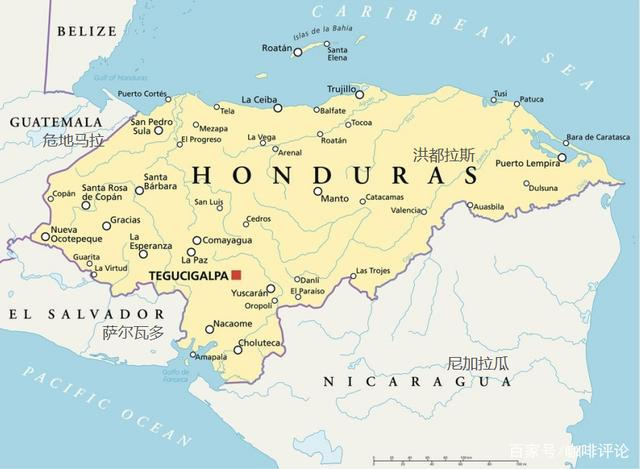
Coffee Growing Regions
Honduras has six main coffee-producing regions: five contiguous areas in the west - Santa Barbara, Copan, Ocotepeque, Lempira and La Paz - plus El Paraiso in the southeast. Honduran coffee typically shows lower acidity with a pronounced caramel sweetness. The five western regions differ slightly from one another, some leaning toward brighter acidity, others toward a more distinctive aroma. Quality is already good, and because the country is still building its reputation, prices remain highly competitive.
Coffee Bean Characteristics
Honduran beans are large, uniform in size and consistent in their glossy color. For ease of harvesting, farmers prune trees to no more than 150cm tall; taller trees require ladders, which is slow and can damage branches. Because cherries ripen at different times, picking is done by hand and only ripe fruit is taken, so harvesting a single branch can take several weeks.
Geography aside, Honduras has historically lacked strong support in green bean processing and transport, which kept its coffee less visible in consumer markets. In recent years the country has worked to change that, investing more attention in the industry and steadily building an international name.
Processing Methods
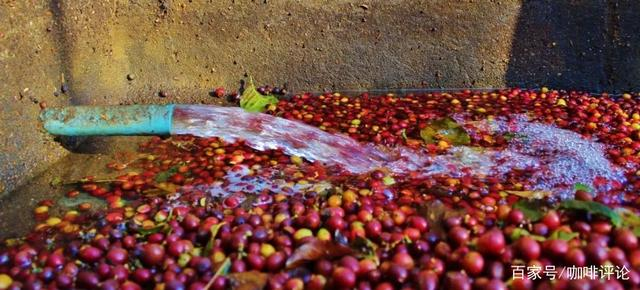
High-quality Honduran coffee is washed. The cherries are first soaked, during which defective fruit floats to the surface and is discarded. The good fruit then goes through a depulper, where rotational force strips away the skin, and the depulped beans are screened to select the densest lots - larger fruit generally means better maturity. The coffee is then sun-dried, which reliably lends the cup a light fruity aroma.
In the mountain growing areas, cherries are hand-picked and processed with care to produce higher-grade lots. Honduras harvests three million bags of coffee a year, offering both quantity and quality, and has become one of the world's top ten coffee-exporting countries.
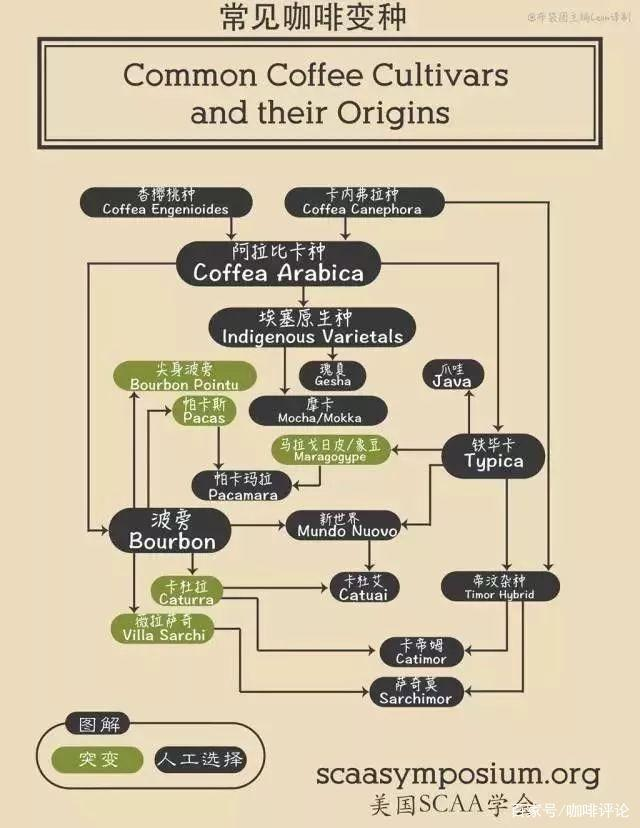
Coffee Varieties
The overwhelming majority of Honduran coffee is Arabica, chiefly Bourbon, Caturra, Catuai, Typica and Pacas derivatives.
Typica: The oldest native variety from Ethiopia, and the ancestor of every Arabica variety. Typica has bronze-tipped leaves and oval, slender, pointed beans. The cup is elegant, but the plant is delicate, disease-prone and low-yielding.
Bourbon: A mutation of Typica, and one of the two varieties still closest to the original. Bourbon spread from southwestern Ethiopia to Yemen, and was carried from Yemen to Bourbon Island (now Reunion) in 1715 and 1718. It produces 20-30% more fruit than Typica.
Caturra: Originally from Brazil, a Bourbon mutation. Caturra is a compact dwarf that is easier to harvest and manage. Branches and main stems grow at 45-degree angles, the leaves are rounder and quite glossy, and the fruit resembles Bourbon, though yields per plant are higher, harvest comes later, and the main stem resists wind better.
Catuai: Also from Brazil, a hybrid of Mundo Novo and Caturra.
Maracatu: A hybrid of Maragogype and Caturra, producing larger bean sizes.
Grading System
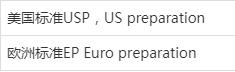
Honduran coffee is graded on altitude and defect rate, with defect rate measured against both American and European standards.
Altitude Grading:

Defect Rate Grading:
Appearance and Flavor
Honduran coffee is full-bodied, neither astringent nor overly acidic, with high richness and aromatic intensity - a genuinely distinctive character.
Washed Processing: The cherries are soaked so that defective fruit floats off and is discarded, then depulped by machine and screened to select the densest beans, since larger fruit usually signals better maturity. Sun-drying completes the process and always leaves a light fruity aroma in the cup.
FrontStreet Coffee Honduras San Juan Sito Coffee Beans
Country: Honduras
Region: San Juan Sito
Estate: Finca Altos de Erapuca
Altitude: 1,300m
Variety: Catuai
Processing: Washed
FrontStreet Coffee Brewing Method
Filter Cup: V60
Water Temperature: 88-89°C
Grind Size: Fuji grind setting 4
Coffee-to-Water Ratio: 1:15
Brewing Technique:
Bloom time: 30 seconds. Water amounts: 30-125-225g.

Brewing Analysis
San Juan Sito is roasted slightly darker. To keep bitterness down, we use a coarse-sugar grind and a lower water temperature, which together pull a full-bodied liquid that expresses its caramel, cream and nutty sweetness.
During the bloom and first pour, keep the stream low and close to the bed. At this stage the grounds absorb water and swell dramatically, and the vigorous release of gas opens up large gaps between particles; a stream that falls from too high will run straight through without extracting much. On the second pour, you can lift the stream to stir the fines at the bottom of the filter and reduce clogging.
FrontStreet Coffee Recommendation
Honduran coffee like San Juan Sito rewards a clean, well-controlled pour-over: keep the water at 88-89°C, hold the ratio at 1:15, and let the caramel and cream notes come forward without bitterness. If that balanced, sweet style is what you enjoy, FrontStreet's light-roast selection is a natural next step.
The washed Yirgacheffe brings bright citrus, berry and floral notes with a green-tea sweetness, and the Ethiopia Huakui leans hard into tropical fruit - strawberry, passion fruit, jackfruit and even lychee - with very low bitterness and a juicy, smooth body. The Kenya Cherry Tomato, grown at 1,550-1,750m in the Sika region, is a washed SL28 and SL34 lot with a 72-hour double-wash fermentation, giving cherry-tomato and dark-plum acidity, a clean finish and a hint of brown-sugar sweetness.
All of these are light-roasted to preserve their acidity and aroma, so they suit a V60 and a 1:15 ratio at 90-91°C. If you want to explore where coffee began, the Ethiopia Kaffa Forest - grown in the UNESCO-listed Kaffa Biosphere Reserve at 1,400-2,100m - carries jasmine, citrus and wild-berry notes that no single farm lot can quite match.
Important Notice :
FrontStreet Coffee is a long-established specialty coffee roaster in Guangzhou China, selling freshly roasted beans from its own farm in Yunnan as well as dozens of carefully selected single-origin beans from around the world for both pour-over and espresso. The products deliver consistently excellent quality and great value, with shipping within 24 hours. Guangzhou's FrontStreet Coffee shop is recommended by many coffee lovers, and the beans are now available online at the Tmall 。
FrontStreet Coffee has moved to a new address:
FrontStreet Coffee Address: 315,Donghua East Road,GuangZhou
Tel:020 38364473
 Scan and follow the En Gafei WeChat official account. Please indicate that the reprint comes from "En Gafei".

