Similarities and Differences Between Colombian and Brazilian Coffee - Flavor Characteristics and Taste of Medium-Dark Roast Brazil and Colombia Coffee Beans
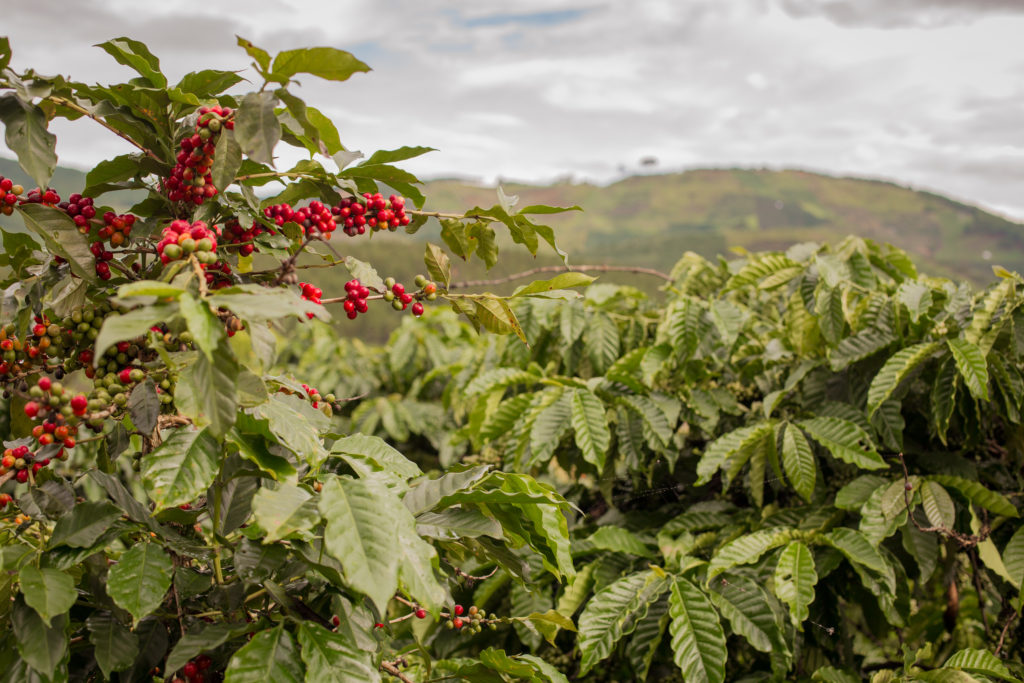
Introduction to South American Coffee at FrontStreet Coffee
FrontStreet Coffee's bean list features coffees from Central and South America, chiefly from Colombia and Brazil. Beyond these two giants there are other distinguished producing countries - Peru, Ecuador, and Bolivia among them - but FrontStreet Coffee believes that Brazilian and Colombian beans currently best represent the traditional South American flavor profile. If you are eager to explore other South American origins, stay tuned for FrontStreet Coffee's ongoing updates!
Common Characteristics of Brazilian and Colombian Coffee
As for what the two countries share, FrontStreet Coffee finds it clearest to discuss flavor and history. In flavor terms, Brazilian and Colombian coffees are used everywhere for espresso blends. Even as single-origin coffees, traditional Brazilian and Colombian lots are typically roasted to a medium level. That traces back to their flavor signature: low acidity, rich body, prominent nutty notes, heavy mouthfeel, and caramel-like sweetness. A deeper roast brings out the best in coffees from both countries.

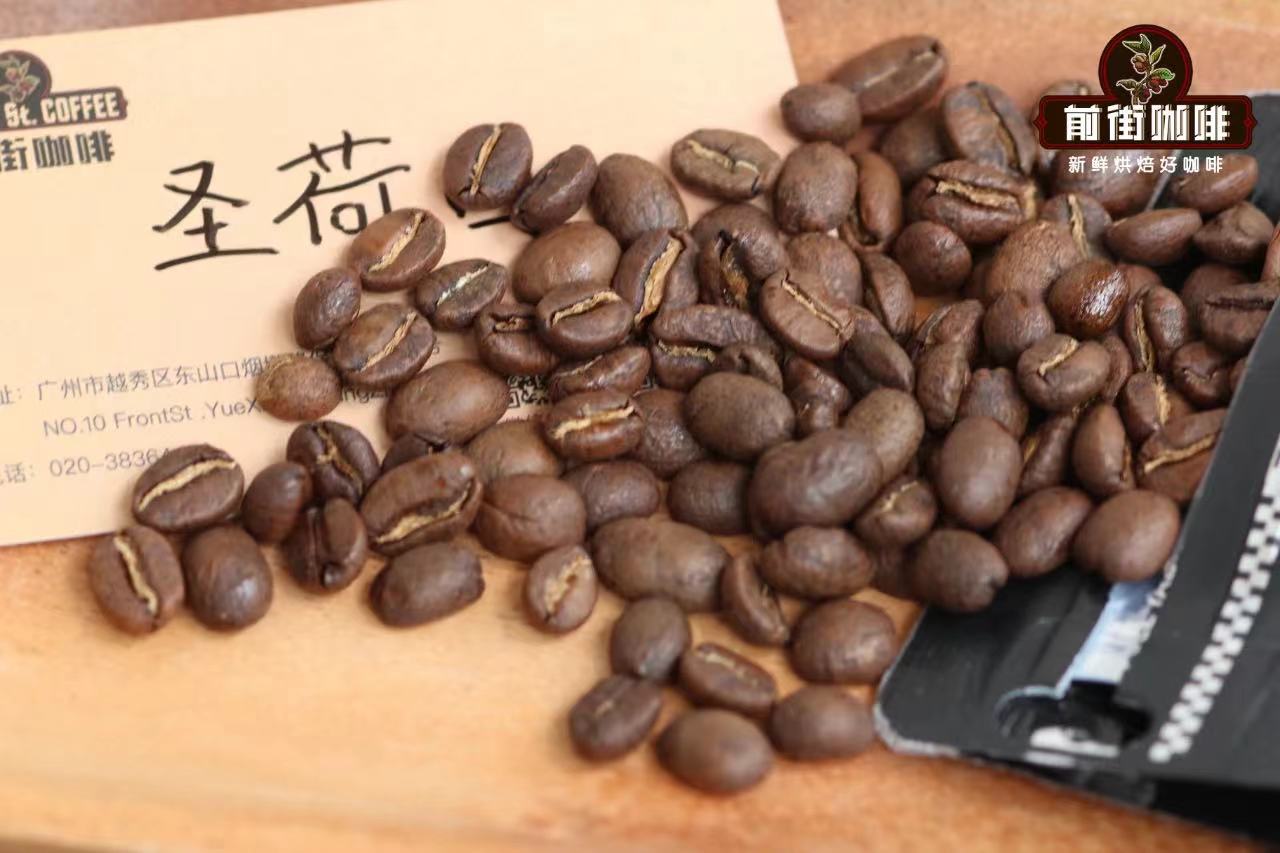
FrontStreet Coffee's premium blend combines Brazilian and Colombian coffee, roasted to a medium-dark level for a rich, nutty profile that never turns harsh. It pairs beautifully with milk, delivering a smooth, full-bodied experience. Of course, for single-origin work, FrontStreet Coffee roasts most Colombian coffees to a medium-light level, since each bean has its own character. Colombia's San José coffee, for example, is roasted medium-light to highlight its rum-barrel fermentation notes while better preserving its aromatics - that treatment is what gives the bean its identity.
Historical Origins of Brazilian and Colombian Coffee
In terms of provenance, Brazilian and Colombian coffee varieties traveled essentially the same route: from France to Spain and across the North Atlantic to Brazil and Colombia. Brazil's varieties arrived via what was then French Guiana, spreading and developing southward from there. According to specialty coffee literature, the beginning of Brazil's coffee industry is tied to King Louis XV's love of coffee. To expand the coffee enterprise, he sent agents overseas to cultivate it. The book records that, to guarantee coffee reached the French colony, the officer Lieutenant de Clieu stole a mother coffee tree from the Royal Botanical Garden in Paris - aided, so the story goes, by a "beauty trap": a well-proportioned beauty was deployed to seduce the curator in charge of the coffee collection. The tree finally reached the French Caribbean island of Martinique in 1723.
Whether that story matches the historical record cannot be verified. Some scholars hold that in 1727, Major Francisco de Melo Palheta was dispatched to resolve a land dispute between French Guiana and Dutch Guiana, with a second mission: to smuggle out the coveted, closely guarded coffee trees. He set his sights on the governor's wife of Cayenne, Madame d'Orvilliers. At a farewell banquet before his departure, his charm paid off - she handed him a bouquet concealing seedlings that would become the progenitors of Brazil's coffee industry.

In reality, Colombia enjoys better coffee-growing conditions than Brazil. Its natural endowment is exceptional: good mountains, abundant water, diverse topography, and many volcanic formations. Colombian coffee is said to have arrived with Jesuit missionaries accompanying Spanish settlers in the early 1700s, with the first shipments landing in the country's northeast. Coffee was soon cultivated by small family farms across the country as a local cash crop. The first commercial export did not appear until the first decade of the 1800s: the first 100 crude bags of raw coffee (roughly 60 kg each) launched what would become a major industry.
In the mid-1800s, as coffee consumption surged in the United States, Germany, and France, Colombian production expanded rapidly too.

In the late 1800s the young industry hit a brief decline as the country erupted into civil war - the Thousand Days' War. The fighting and falling international prices forced many plantation owners to divide their land among workers, giving locals ownership and autonomy over their farms. Not until 1927 did Colombian growers gather to create the Colombian Coffee Growers Federation (FNC), through which almost all Colombian coffee has been exported ever since. It is considered one of the largest rural non-governmental organizations in the world.
Key Differences Between Brazilian and Colombian Coffee
So how do the two differ? FrontStreet Coffee boils it down to three points: growing environment, flavor profile, and production volume.
Since the 1840s, Brazil has been the largest player in the international coffee trade. Today the country produces 40 to 60 million bags a year and is also the world's largest exporter of instant coffee. As the largest producer, Brazil ranks first in total output at about 1/3 of global production - approximately 25% of the world's coffee supply - with growing areas concentrated in the central and southern states.

In 2020, Brazil exported 36.8 million bags of coffee, exceeding the previous year's record of 35.49 million bags. This year, however, according to the Brazilian coffee exporters' association Cecafe, the double blow of drought and frost means the 2021 harvest is expected to be poor. As noted earlier, Colombian coffee is exported mainly through the FNC. Colombia's export volume is far smaller than Brazil's, ranking third in the world behind Brazil and Vietnam, and its production accounts for about 15% of the world total. Thanks to excellent natural conditions, though, it produces more Arabica than any other country. This year, like Brazil, Colombia has suffered repeated natural disasters: according to FrontStreet Coffee's understanding, on September 22nd Colombia's National Disaster Risk Management Department reported that heavy rainfall had significantly reduced coffee production.
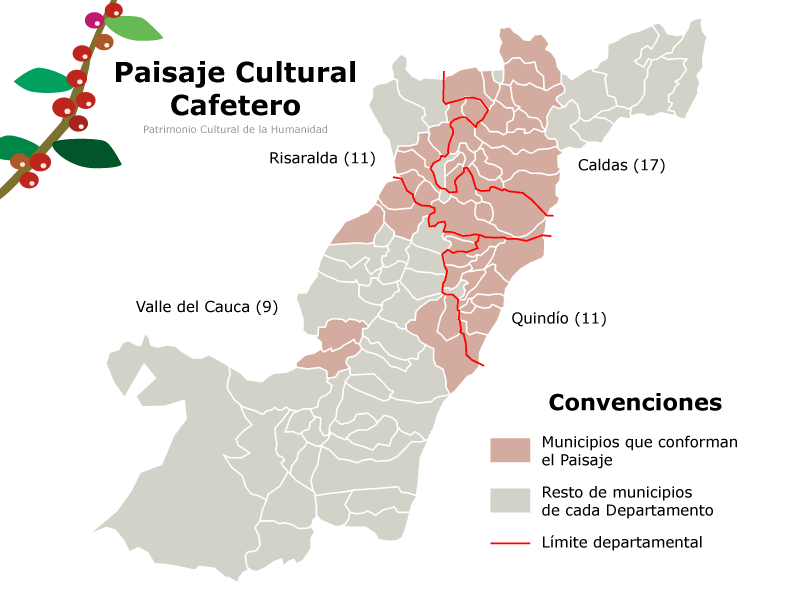
Now to growing environments. Colombian coffee has a very distinct growing axis - the famous Coffee Triangle. On a map, the producing areas are clearly framed by mountainous plateau regions. This zone has been designated by Colombia's Coffee Cultural Landscape (PCC) as a specific region comprising 47 municipalities and 411 villages, centered on the Andes across the central-western departments of Caldas, Quindío, Risaralda, and Valle del Cauca. The Sakura coffee on FrontStreet Coffee's list comes from Colombia's Cauca department, where an altitude of 2050 meters ensures exceptionally high quality. Its double anaerobic washed process also makes the cup remarkably clean, with prominent berry flavors and a texture reminiscent of strawberry jam.

Colombia's main producing regions run along three parallel cordillera ranges, north to south. Coffee is planted on the highlands of these ranges, with unique microclimates, high altitude, and rich volcanic soil - innate conditions perfectly suited to high-quality Arabica. The region currently hosts 24,000 small coffee plantations. Brazil's growing environment, by contrast, enjoys fewer advantages. Specialty coffee literature describes it as monotonous topography, dry climate, poor soil, and low altitude, with cultivation depending entirely on soil improvement, variety enhancement, and technology.
From FrontStreet Coffee's perspective, though, Brazil's relatively flat growing areas - most plantations sit below 1200 meters - reduce acidity and make the coffee superbly suited to blending. Brazilian beans are generally considered an indispensable component of any blend.
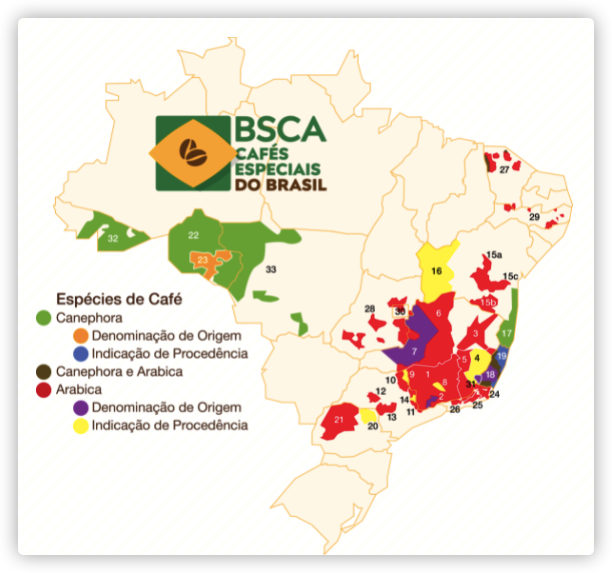
Brazilian coffee is predominantly Bourbon, a legacy of how coffee was introduced. Brazil grows Typica too - legend has it that the beans Lieutenant de Clieu stole were Typica, which was then widely planted across Brazil. FrontStreet Coffee's Brazilian selection is mainly Bourbon: the Yellow Bourbon from Queen's Manor Farm and the Red Bourbon from Cerrado.
Red Bourbon was the second variety to flourish across Central and South America after Typica. As FrontStreet Coffee understands it, Bourbon itself derives from the ancient Typica line, with round-shaped beans. It was introduced to Brazil in 1927 and spread from there to countries across Central and South America. Although yields are not high, Bourbon resists leaf rust better than the delicate Typica. High-altitude Bourbon shows rich, delicate flavors, aromatic fragrance, and smooth acidity. Typically, Bourbon cherries transition from green to light yellow, orange-yellow, red, and finally fully ripe dark red - hence "Red Bourbon."

Flavor Comparison: Brewing Experiments
Next, FrontStreet Coffee brewed Brazilian and Colombian beans side by side to compare their flavor and taste. Using Brazil's Queen's Manor Yellow Bourbon and Colombia's Cauca Castillo with identical parameters and technique - how large a difference would there be?

FrontStreet Coffee's Brewing Parameters:
Filter: V60
Water Temperature: 91°C
Water-to-coffee ratio: 1:15
Dose: 15g
Grind size: fine sugar (80% pass rate on the #20 standard sieve)
FrontStreet Coffee's Brewing Technique:
Bloom with 30g of water for 30 seconds. Pour in small circles up to 125g as a segmented pour. When the level drops and is about to expose the coffee bed, continue to 225g and stop. Once the bed is about to surface again, remove the dripper. (Timing starts at the bloom.) Total extraction time: 2'00".

Flavor Descriptions:
Brazilian Profile: Distinct nutty flavors leaning toward peanut, heavy body, a long-lasting dark chocolate finish, with a slight fruit acidity appearing as the cup cools.
Colombian Profile: The Sakura shows mugwort and other spice aromas in the dry fragrance, with prominent berry flavors and a light fermentation note.

Overall, FrontStreet Coffee's Brazilian Bourbon is lightly sweet with excellent caramel character and a touch of acidity as it cools. The Colombian performs even better: excellent bean quality, rich and distinctive aromas, sweet with balanced acidity and moderate bitterness - suited to single-origin drinking and blending alike. After roasting the beans release sweet aromas; brewed properly, the coffee is sweet with balanced acidity, bitter with sweet undertones. Brewed at the right concentration, Colombian coffee gives off a rich yet elegant fragrance. Its flavor and texture are neither as intense as Brazil's nor as acidic as Africa's - it possesses a subtle, reserved fragrance that other coffees lack.

Colombian and Brazilian beans both rank among the best blending coffees, but Colombian beans bring a sweeter, mellower flavor and richer aroma. Beyond single-origin use, they are often added to blends to boost sweetness and soften the bitterness of other components. One of FrontStreet Coffee's "Premium Espresso Blends," for instance, uses a formula of 30% washed Colombian plus 70% natural Brazilian to create an espresso with dark chocolate flavors, caramel sweetness, and full roasting aromas.

FrontStreet Coffee Recommendation
If this comparison has you leaning toward Brazil, start with FrontStreet Coffee's pulped natural Cerrado Red Bourbon - a classic Brazilian single origin with creamed peanut, toast, caramel, and hazelnut aromas at a medium roast, rounded and gentle with only a light bitterness, and versatile enough for pour-over, moka pot, or espresso SOE. For a more distinctive expression, the FrontStreet Yellow Bourbon from Queen's Farm in Mogiana - grown in fertile red volcanic soil - delivers a cleaner fruit character with cane-sugar sweetness and chocolate, proving how nuanced Brazilian coffee can be.
Important Notice :
FrontStreet Coffee is a long-established specialty coffee roaster in Guangzhou China, selling freshly roasted beans from its own farm in Yunnan as well as dozens of carefully selected single-origin beans from around the world for both pour-over and espresso. The products deliver consistently excellent quality and great value, with shipping within 24 hours. Guangzhou's FrontStreet Coffee shop is recommended by many coffee lovers, and the beans are now available online at the Tmall 。
FrontStreet Coffee has moved to a new address:
FrontStreet Coffee Address: 315,Donghua East Road,GuangZhou
Tel:020 38364473
 Scan and follow the En Gafei WeChat official account. Please indicate that the reprint comes from "En Gafei".