Are Cold Drip Coffee, Cold Brew Coffee, and Cold Coffee the Same? What Are the Differences? An Introduction to the Flavor Profiles and Preparation Methods of Three Types of Iced Coffee
May has arrived and summer is here. In Guangzhou, the summer heat is fierce: even after rain, the air stays hot and humid. Without something cold and refreshing, it is genuinely hard to get through the day in this furnace of a city. Lately, plenty of friends have been dropping into FrontStreet Coffee to order an iced coffee. Some specifically ask for "iced coffee, please," which raises a fair question: should that be ice drip, cold brew, or iced pour-over?

That leads straight to the next question: how do these three styles actually differ? Below, FrontStreet Coffee walks through what sets them apart.
First, the obvious shared ground: all three are served cold. But to understand why they taste so different, start with one basic idea. Brewing coffee is really a process of extracting certain compounds from the coffee grounds. Stop too early and you get "under-extraction." Keep going past the useful point and you pull out compounds you do not want, which is "over-extraction." Extraction is governed mainly by temperature and time. Hot water speeds up the movement of everything in the grounds. Acids move fastest; bitterness moves slowest, yet as temperature rises the total amount of flavor released grows and more bitter compounds reach the surface. Flip that around and it holds just as true: the lower the temperature, the longer it takes to pull a given amount of flavor out of the coffee.
Ice Drip Coffee
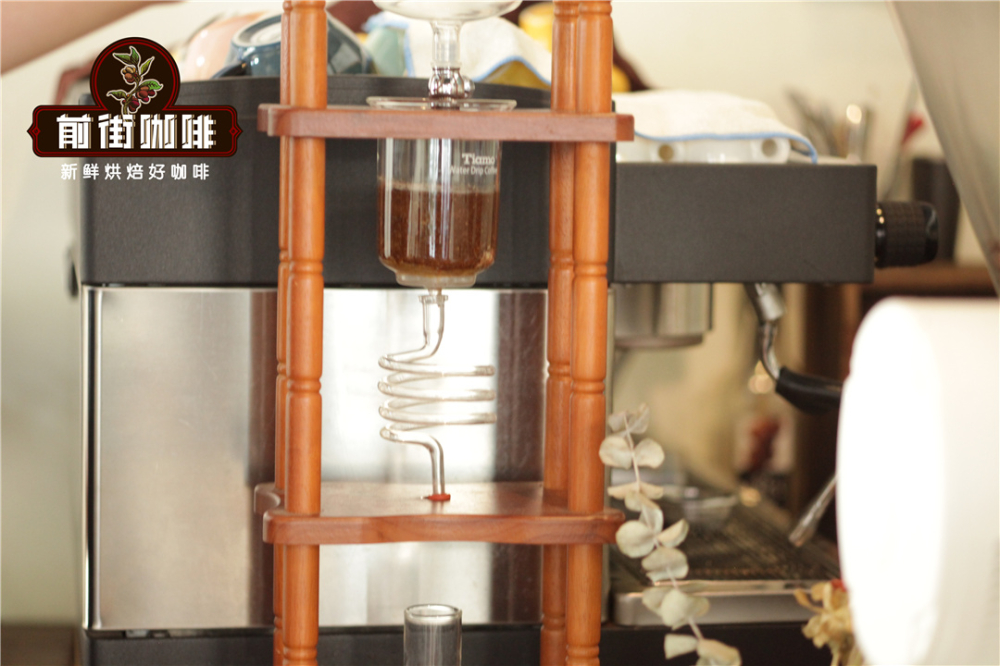
Ice drip coffee works exactly the way the name suggests: a special tower is loaded with ice, the ice melts naturally into water, and that water drips, drop by drop, onto the coffee bed. Making it takes a very long time. At FrontStreet Coffee, an ice drip batch generally needs 6-8 hours to finish extracting. Once the drip is done, the liquid is refrigerated for another 12 hours, during which it slowly ferments in the cold.
How FrontStreet Coffee Makes Ice Drip Coffee
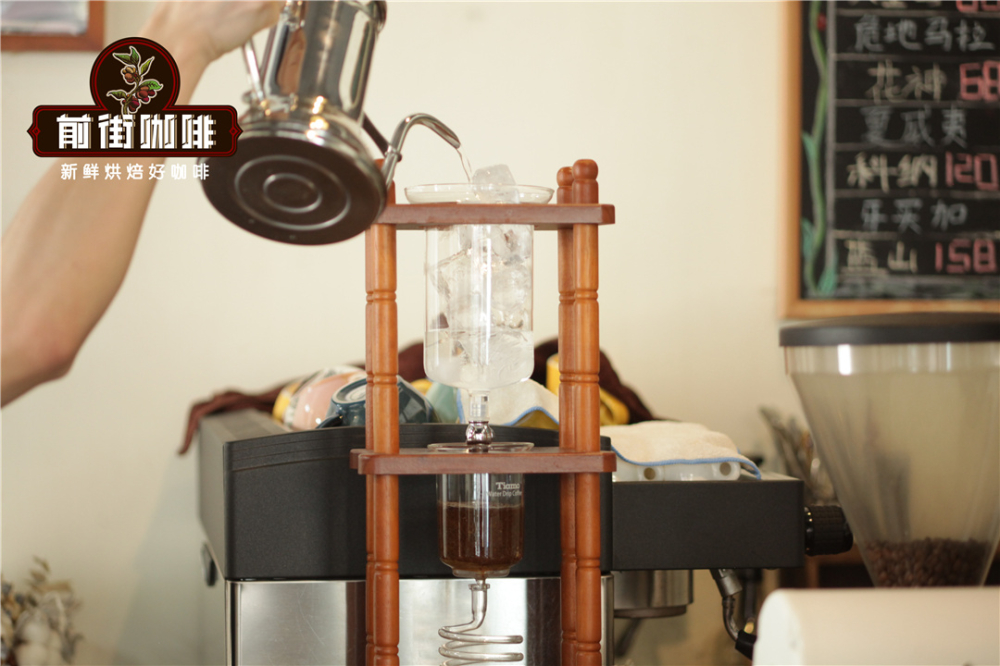
The grounds cup holds 60 grams of coffee and yields 600ml of brewed liquid, a grounds-to-liquid ratio of 1:10. Because the water reaching the bed is cooler than in a normal pour-over, the grind is set slightly finer than a pour-over grind; judged on a #20 sieve, the passing rate should be around 85%. Ice and water are mixed at roughly 1:1, and the flow valve is set to 7 drops per 10 seconds. A piece of moistened filter paper is laid over the coffee bed so the water distributes more evenly. The whole extraction takes about 6-8 hours. When it is finished, the coffee is bottled and chilled for 12 hours before drinking.
Cold Brew Coffee
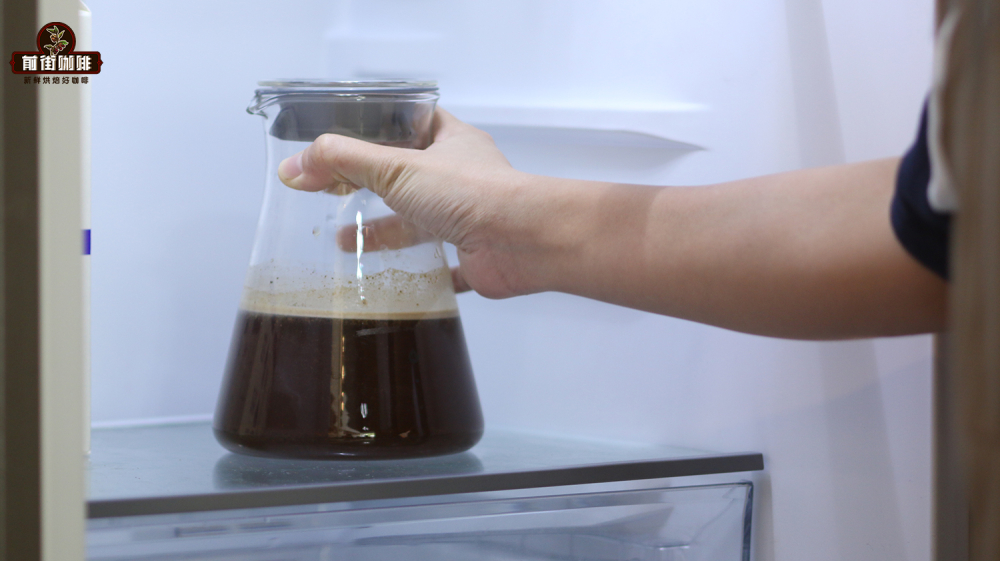
Cold brew is refreshingly simple. Put coffee grounds into clean water, let them steep slowly at low temperature over a long stretch of time, then filter the grounds out of the mixture with filter paper. What is left is clean, clear coffee.
How FrontStreet Coffee Makes Cold Brew Coffee
Start from 50 grams of coffee grounds. Because the water touching the grounds is cooler than in a pour-over, the grind is set a little finer, with an 85% passing rate through a #20 standard sieve. Put the grounds into a glass bottle, then add 400ml of room-temperature water and 200 grams of hard ice cubes, for 600g of ice-water in total and a grounds-to-water ratio of 1:12. Stir with a paddle or stirrer until the grounds and water are evenly mixed, then seal the bottle and place it in the refrigerator.
After 8-24 hours in the fridge, filter the grounds out with filter paper to get clean coffee liquid. Store that liquid in a clean sealed bottle and refrigerate it for another 4 hours before drinking.
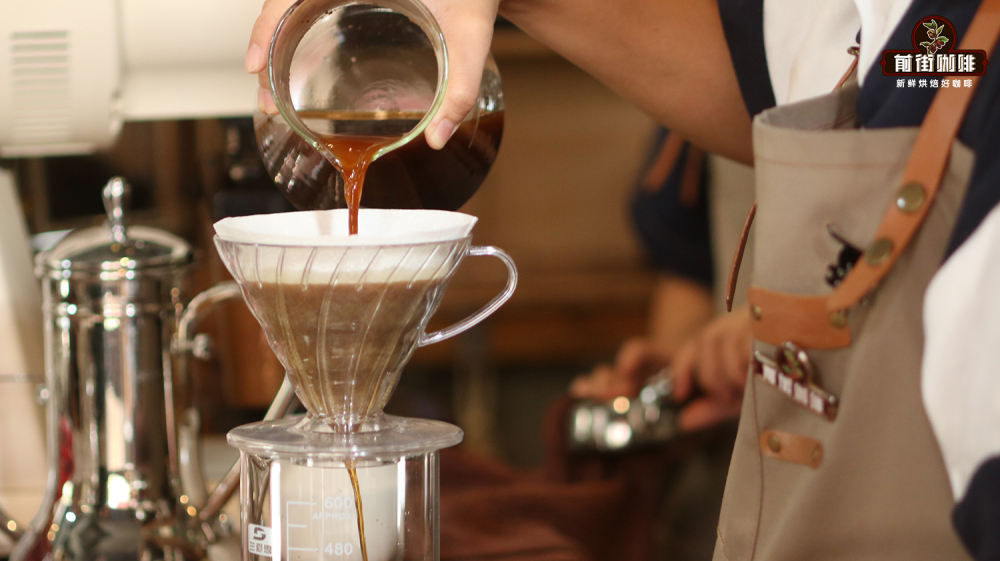
Iced Pour-over Coffee

Iced pour-over is also known as Japanese-style iced coffee. In essence, it is a normal pour-over chilled quickly over ice. To keep the ice from watering down the flavor, the brew uses a tighter grounds-to-water ratio, so less water produces a more concentrated liquid that the ice then cools.
How FrontStreet Coffee Makes Iced Pour-over Coffee
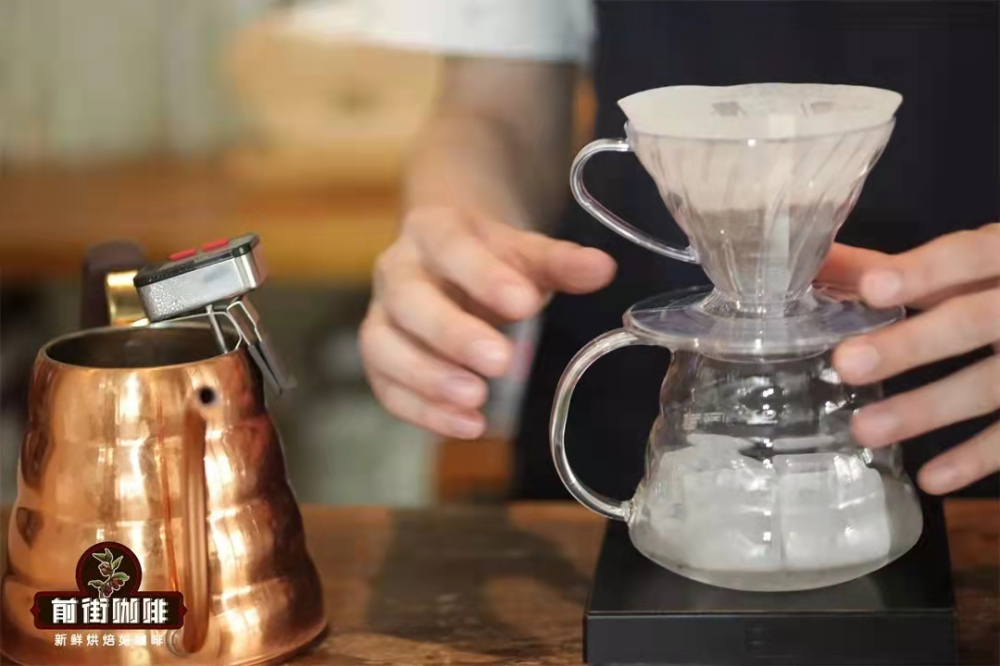
Take 15 grams of coffee as the starting point. The grind is finer than for a hot pour-over: for a light roast, aim for an 85% passing rate through a #20 sieve. The ratio of grounds to water to ice is 1:10:5. Water temperature matches a regular hot pour-over, 90-93°C for light roasts and 87-89°C for medium roasts, and the pouring technique is the same three-stage extraction used for hot pour-over. When the brew is done, shake or stir the dripper so the ice and coffee come into full contact, dropping the temperature quickly while keeping the strength even.
How Ice Drip, Cold Brew, and Iced Pour-over Differ
Iced pour-over extracts the early and middle compounds from the coffee, then chills and dilutes them with a measured amount of ice to reach the right temperature and strength. The result tastes cleaner and more refreshing, and it tends to throw the coffee's main flavors into sharp relief.

Ice drip coffee is extracted with ice water over many hours, so it draws out more of the small-molecule compounds, the floral aromatics and acidity, while the large-molecule compounds such as tannic bitterness are harder to pull. And because the finished liquid is bottled and fermented at low temperature for 12 hours, it carries a distinct fermented character alongside the coffee's own sweet aroma, with an icy, refreshing finish.
Cold brew is not as clear as ice drip, and a thin film of oil floats on its surface. In flavor and body it comes across as slightly richer and more balanced than ice drip. Compared with hot extraction, sweetness and bitterness are less pronounced, while acidity is easier to notice, and the low temperature makes the flavors linger longer.
Are Cold Brew and Ice Drip High in Caffeine?
Recently some friends have asked FrontStreet Coffee about caffeine: are cold brew and ice drip high in caffeine? What about espresso and instant coffee? And how much coffee can you drink in a day without harming your health?

Many people assume ice drip must be low in caffeine, since the cooler the water, the less readily caffeine dissolves (caffeine needs water above 80°C to dissolve well). But even the small amount that cold water does pull out adds up over a very long extraction. How much caffeine ends up in the cup varies widely with the beans used, the interval between drips, and the total extraction time. For packaged instant coffee sold in stores, check the information on the packet. As for what is safe to drink, one authoritative body puts the safe daily caffeine intake for adults at 400 milligrams, though how you personally react to caffeine also matters.
FrontStreet Coffee Recommendation
Not every coffee is built for cold water, and cold extraction changes the picture: it amplifies floral and fruity notes while muting woody and roasty tones. That is why lighter and medium-light roasts tend to shine here. If you want a cold brew led by florals, FrontStreet Sun-Dried Huakui is a natural fit. Grown in Ethiopia, the birthplace of coffee, it is processed as a natural, so the beans soak up a great deal of sweetness from the fruit and skin; brewed cold, it shows magnolia, cream strawberry, dried mango, guava, and black tea.
For a cold brew that drinks like fresh juice, reach for FrontStreet Kenya Cherry Tomato. Its cherry tomato, snow pear, black plum, and smoked plum acidity comes through vividly at low temperatures, with low bitterness and full, juicy acidity that turns especially refreshing over ice. The beans come from Sika in Kenya, grown from the highly selected SL28 and SL34 varieties, and are processed with the region's distinctive K72 double washed method. A medium-light roast converts the aroma precursors into something more complex, which is where all that fruit comes from.
If you prefer a sweeter, creamier profile, FrontStreet Strawberry Candy Geisha Blend pairs the classic Panamanian Geisha with a Costa Rican honey-processed coffee: one brings delicate rose and orange, the other the grape, raisin, and strawberry-gummy sweetness that gives the blend its name. Cold brewed, it is sweet, bright, and lively, and if you let it settle and ferment a little longer it takes on a wine-like fruit character.
Finally, if you want a single everyday Ethiopian bean that works just as well in a cold brew as it does in a pour-over, siphon, or French press, FrontStreet Yirgacheffe Gedeb Cooperative is the easy answer. Washed Yirgacheffe is known for its clean, bright sweetness and acidity, and this lot delivers sweet berry, layered structure, and honey in a cold brew. Do keep in mind that cold brew uses more grounds than a pour-over, so a value-priced daily drinker or a well-chosen blend often makes more sense than an expensive competition-grade lot.
Important Notice :
FrontStreet Coffee is a long-established specialty coffee roaster in Guangzhou China, selling freshly roasted beans from its own farm in Yunnan as well as dozens of carefully selected single-origin beans from around the world for both pour-over and espresso. The products deliver consistently excellent quality and great value, with shipping within 24 hours. Guangzhou's FrontStreet Coffee shop is recommended by many coffee lovers, and the beans are now available online at the Tmall 。
FrontStreet Coffee has moved to a new address:
FrontStreet Coffee Address: 315,Donghua East Road,GuangZhou
Tel:020 38364473
 Scan and follow the En Gafei WeChat official account. Please indicate that the reprint comes from "En Gafei".