Recommended Brewing Methods for Kenyan Coffee Why is Kenyan Coffee So Acidic?
Kenya AA Coffee: An Extraordinary Single Origin
Coffee drinkers who gravitate toward single origins tend to hold Kenya in especially high regard. Kenya delivers intense aroma and a bold, fruit-forward acidity, but it also stands apart for a post-harvest system found almost nowhere else. Once the crop is picked, every lot must be sold through the government-established Coffee Board of Kenya (CBK), which cups each offering, scores its quality, and assigns a grade. Grading hinges first on bean size, with weight and appearance factored in as well, before the coffee moves to auction. This transparent and tightly regulated commercial chain has long earned the confidence of buyers.
Kenyan coffee is grown at altitudes between 1,400 and 2,000 meters. The Thiriku production area sits high in the mountains and ranks among the country's most important specialty growing regions. It is favored with fertile red volcanic soil, generous rainfall, a fine ecological setting, and skilled processing, and it holds Rainforest Alliance certification.
Hailing from Africa, the continent where coffee itself was born, Kenya's crop is the second-largest export earner among African nations. The country grows washed Arabica varieties, and its coffee occupies a major place in the African market while commanding an irreplaceable reputation among connoisseurs worldwide.
Beans are sorted by size, shape, and weight into seven grades: PB, AA, AB, C, TT, T, and Buni. The "AA" grade denotes large, top-quality beans that pass through a 7.2-mesh screen.
Roasted somewhere between light and medium, this coffee shows real personality while staying balanced. Expect fresh, bright fruit notes reminiscent of black cherries, a baked-biscuit aroma, and a pronounced wine-like, fruit-vinegar acidity that lingers elegantly on the palate.
For anyone who loves a coffee with vivid acidity, this is a rare find. Despite its distinctive character, it remains well balanced and easy to drink. Tasted as a single origin, the acidity leads the way; roasted a touch darker, the bitterness grows and the cup turns even smoother.
FrontStreet Coffee's Brewing Recommendations for Kenyan Coffee
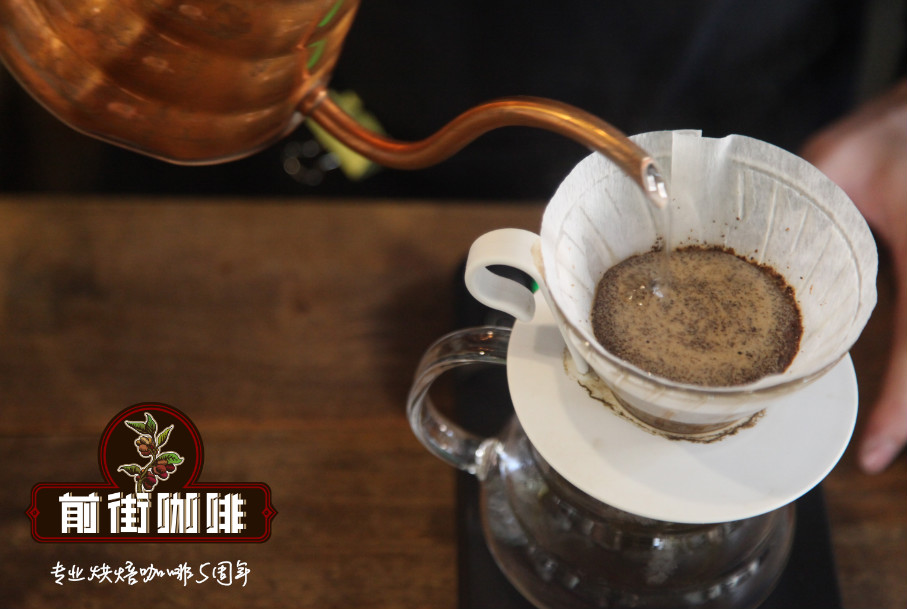
Kenyan coffee grows at high altitude, so the beans are dense. To protect that signature fruit acidity, most roasters choose a light to medium roast. FrontStreet Coffee therefore suggests a finer grind and a hotter brew for Kenyan coffee: water at 90-92°C, a grind setting of 3.5 on a Fuji grinder (roughly the texture of granulated sugar), and an extraction time of about two minutes measured from the bloom.
FrontStreet Coffee Recommendation
Among FrontStreet Coffee's washed selections, the Kenya Cherry Tomato is a textbook example of the Kenyan style. Kenya is especially known for double-washing its green coffee: the beans are floated in water, washed to strip the residual mucilage from the surface, soaked again, sun-dried, hulled, and stored. That repeated rinsing and soaking draws out an extreme sense of juice. In the cup you find layers of cherry tomato, smoked plum, snow pear, black plum, and yellow sugar, with a sweet-and-sour, mouth-watering body that makes it a favorite of many coffee enthusiasts.
Because that bright, juicy acidity is the whole point, Kenyan coffee rewards a careful pour-over: keep the water hot and the grind fine enough to draw out the fruit without dragging in bitterness. Whether you drink it as a hot hand-drip or as a chilled brew, the layered fruit character is what makes this origin so compelling.
Important Notice :
FrontStreet Coffee is a long-established specialty coffee roaster in Guangzhou China, selling freshly roasted beans from its own farm in Yunnan as well as dozens of carefully selected single-origin beans from around the world for both pour-over and espresso. The products deliver consistently excellent quality and great value, with shipping within 24 hours. Guangzhou's FrontStreet Coffee shop is recommended by many coffee lovers, and the beans are now available online at the Tmall 。
FrontStreet Coffee has moved to a new address:
FrontStreet Coffee Address: 315,Donghua East Road,GuangZhou
Tel:020 38364473
 Scan and follow the En Gafei WeChat official account. Please indicate that the reprint comes from "En Gafei".