What are the flavor profiles of American coffee beans? What are the coffee producing regions in the Americas? What are the characteristics of American coffee?

Coffee Producing Countries in the Americas
Global coffee-growing regions fall into three broad areas: the Americas, Africa, and Asia. Today FrontStreet Coffee would like to walk you through the coffee-producing countries of the Americas. American coffees tend to be very balanced, which suits drinkers who cannot handle bracing acidity. Here FrontStreet Coffee shares the coffee regions of the Americas to spread knowledge and value.
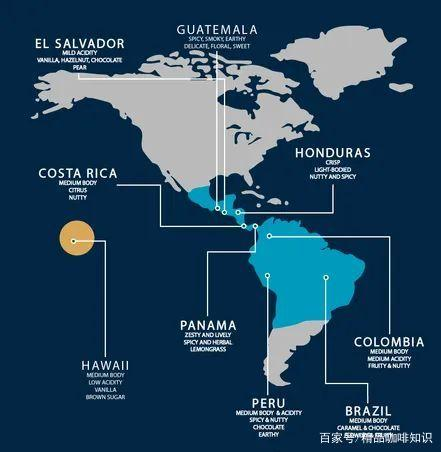
Central America
Central America is the land bridge linking North and South America, made up of seven countries: Colombia, Costa Rica, El Salvador, Guatemala, Honduras, Nicaragua, and Panama. All seven produce coffee, and Guatemala, Costa Rica, and Honduras rank among the world's top ten coffee exporters.
Coffee cultivation in Central America began in the eighteenth century. This important economic crop took hold in Costa Rica around 1840. After Central America gained independence from Spain in 1821, the region saw constant warfare. Costa Rica, being farther from the then-colonial capital of Guatemala, was spared the civil wars, while Guatemala and El Salvador had their coffee production delayed by civil conflict. As political disputes gradually subsided, Central American countries moved into coffee production during the nineteenth century — Honduras alone excepted.
Latin American beans are defined mainly by balance and body. Unlike the herbal richness of Asian origins, Latin American coffees typically show cocoa and dark chocolate. Most are washed, though Brazil leans on semi-dry processing. The beans are large and complete.
Representative Countries (in no particular order)
1. Brazil (Flavor characteristics: low acidity, heavy nutty and chocolate notes, excellent body)
Brazil is the world's largest coffee producer and its second-largest consumer (the first being the United States). Although Brazil faces several times more natural disasters than other regions, its ample planting area makes up for it.
Brazil Coffee Bean Processing Methods
Compared with other Latin American countries, Brazil sits at significantly lower altitude and lacks microclimates. On top of that, the practice of growing coffee without shade trees leaves Brazilian beans somewhat plain, without standout characteristics. There is even a saying in the trade that Brazil has no good beans — a reputation also tied to Brazil's industrial coffee era, when little attention was paid to bean quality.
Brazil, however, has worked hard to raise its game, continually cultivating and improving Arabica varieties and adjusting processing methods to the dry and wet seasons so each region shows its best flavor. The common methods are natural, semi-natural, and washed. Generally, high-humidity areas use washed processing, while low-humidity areas use natural or semi-natural processing.
Brazilian Coffee Regions
Brazil has 21 states, 17 of which produce coffee, yet seven states account for 98% of national output: São Paulo, Paraná, Bahia, Espírito Santo, Minas Gerais, Rondônia, and Rio de Janeiro.
Brazilian Coffee Bean Grades
① By defect rate: from high to low, seven levels, from No.2 to No.8, distinguished by the number of defective beans per 300g using a deduction system. A deduction below 4 qualifies as No.2 (No.1, with no defective beans at all, is rare and cannot be supplied consistently).
② By bean size: screen sizes 17 and 18 are the highest grades.
③ By cupping quality: from high to low — Fine Cup, Fine, Good Cup, Fair Cup, Poor Cup, Bad Cup. FC (Fine Cup) and GC (Good Cup) are the most common.
④ By flavor grade: from high to low — Strictly Soft (very smooth), Soft (smooth), Softish (somewhat smooth), Hardish (unpleasant), Rioy (iodine-like harshness).

Example: FrontStreet Coffee Queen Estate Yellow Bourbon Coffee Beans
Region: Mogiana, São Paulo State
Altitude: 1400-1950m
Variety: Yellow Bourbon
Processing: Natural
FrontStreet Coffee Brewing Recommendations
Brewing parameters: Kono dripper, 88°C water temperature, 15g coffee dose, 1:15 coffee-to-water ratio, medium-fine grind (BG#6W)
Using segmented extraction, bloom with 30g of water for 30 seconds. Pour in a small circular motion to 125g, then continue pouring to 225g once the water level drops and exposes the coffee bed. Extraction time is 2 minutes, counting from the bloom.
Flavor Description
The cup has noticeable sweetness with a faint lemon aroma, rich nutty flavors, and distinct dark chocolate in the finish. The overall experience is nicely rounded.
2. Colombia (Flavor characteristics: rich and intense aroma, bright acidity, nutty flavors, excellent balance)
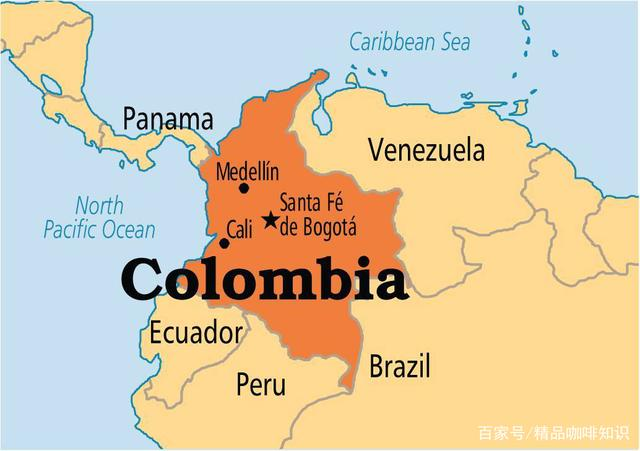
Colombia is the world's third-largest coffee producer, located in northwestern South America, with climate varying by terrain. The southern eastern plains and the Pacific coast have tropical rainforest climates; mountainous areas between 1000-2000 meters have subtropical climates, while the northwest has a tropical savanna climate. Colombian coffee has less body than Brazilian coffee and less acidity than African coffee, but excellent balance, with both nutty and fruity acidic notes.
Colombian Coffee Bean Processing Methods
Colombian beans are mostly washed. Unlike other Latin American countries, Colombia runs on a family-business model, with most growers owning their own washing facilities, which lets them control quality completely themselves.
Colombian coffee is often compared with Brazilian coffee because both are American beans from major producing countries. In fact you can tell them apart by appearance alone, without tasting: because the processing methods differ so completely, Colombian beans carry far more silver skin while Brazilian beans have almost none. Bean size and shape may be similar, but the processing difference makes them easy to distinguish.
As the market has developed, other methods have appeared too. Colombia's Rose Valley coffee and Flower Moon Night coffee use anaerobic double enzyme washed and anaerobic natural processing, respectively.
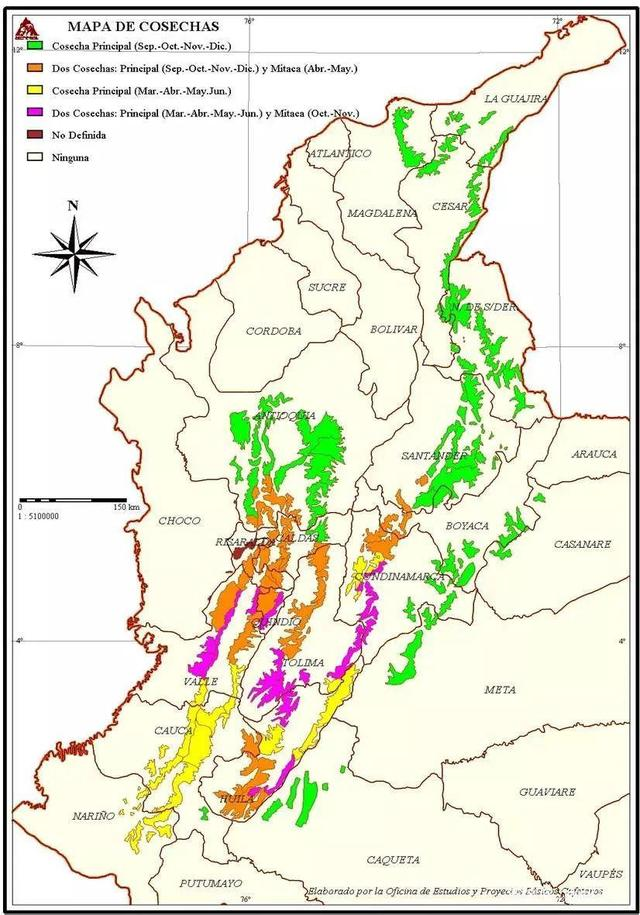
Colombian Coffee Regions
Colombian coffee is grown along the Andes from south to north, with producing regions divided into four major areas: North, Central, South, and East.
Northern Coffee Region
Has only one dry season (December to March) and one rainy season (April to November) each year. Coffee flowers in March, followed by the rainy season, and is harvested in October and November. The Northern region is further divided into micro-regions including Santander, Norte de Santander, La Guajira, Magdalena, and César.
Central Coffee Region
Has two dry seasons and two rainy seasons each year. December to February and June to September are dry, while March to May and September to November are rainy, giving two harvests a year. Micro-regions include southern Antioquia, Boyacá, Caldas, Chocó, Risaralda, Quindío, northern Valle del Cauca, Cundinamarca, and northern Tolima.
Eastern Coffee Region
Coffee cultivation here is much smaller in scale, climatically similar to the north but with higher rainfall and humidity. It includes only regions such as Arauca, Casanare, Meta, and Caquetá. The east has suffered from armed conflict in the past and badly needs coffee production to drive economic recovery. The National Federation of Coffee Growers of Colombia is investing to help the region plant varieties better suited to its environment and to help farmers expand their farms.
Southern Coffee Region
Located near the equator, coffee here grows at higher elevations. Like the north, the south has only one wet season and one dry season — dry from June to September, with the rains arriving in October and possibly lasting until May. Unlike the north, where coffee is harvested in autumn, the southern harvest typically begins in April and runs through June, which lets green bean suppliers offer Colombian coffee almost year-round. The south focuses mainly on specialty varieties, including Huila Department, Cauca Department, Nariño Department, and Tolima Department.
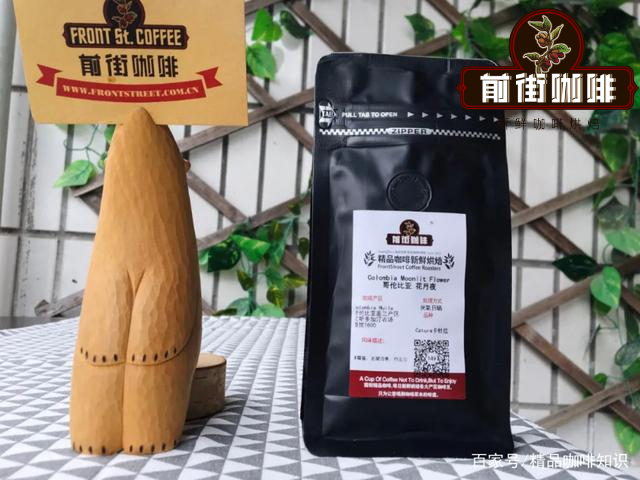
Example: FrontStreet Coffee Colombian Flower Moon Night Coffee Beans
Region: Huila
Farm: El Espinardo Farm
Altitude: 1800m
Variety: Caturra
Processing: Anaerobic Natural Processing
FrontStreet Coffee Brewing Recommendations
Brewing parameters: Hario V60 dripper, 90°C water temperature, 15g coffee dose, 1:15 coffee-to-water ratio, medium-fine grind (BG#6S)
Using segmented extraction, bloom with 30g of water for 30 seconds. Pour in a small circular motion to 125g, then continue pouring to 225g once the water level drops and exposes the coffee bed. Extraction time is 2 minutes, counting from the bloom.
Flavor Description
Balanced mouthfeel, with floral strawberry notes and a black cocoa aftertaste, creaminess, and fermentation character.
3. Panama (Flavor characteristics: represented by Geisha, with distinctive floral aromas and bright acidity)
Panama is world-famous for Geisha, and that reputation is inseparable from the country's unique natural geography and meticulous management. Panama has volcanic ash soil, ample air humidity, and abundant solar energy. After the canal opened in the late 20th century, many American elites moved south — partly for work, partly to explore opportunities — and coffee developed rapidly during this period, establishing Panama's place in specialty coffee.
Panama Coffee Bean Processing Methods
Most Panamanian beans are Geisha. For processing them, washed and natural methods are common. Washing reflects Geisha's original floral, fruity acidity, while natural processing layers on richness and sweetness. Hartman Estate's wine processing method is especially distinctive, inspired by winemaking techniques and adjusting bean quality by controlling pH, temperature, and humidity.
Panama Coffee Regions
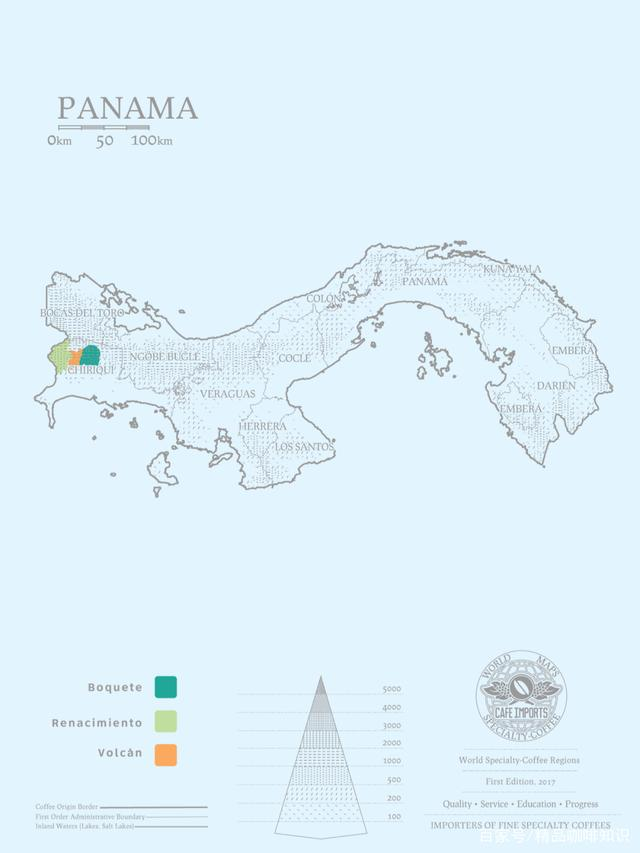
Panama has four main coffee-growing regions: Boquete, Volcan, Santa Clara, and Piedra de Candela.
Boquete, at an average altitude of 1450 meters, produces the most coffee and the best quality in Panama, home to well-known estates such as Hacienda La Esmeralda, Elida Estate, and Kotowa Estate.
Volcan, at an average altitude of 2000 meters, yields relatively mild, balanced coffee.
Santa Clara, at an average altitude of 1500 meters, sits close to the Panama Canal, making coffee transport very convenient.
Piedra de Candela, at an average altitude of 1200 meters, has gradually drawn attention in recent years, and the industry believes it has potential for high-quality specialty coffee.
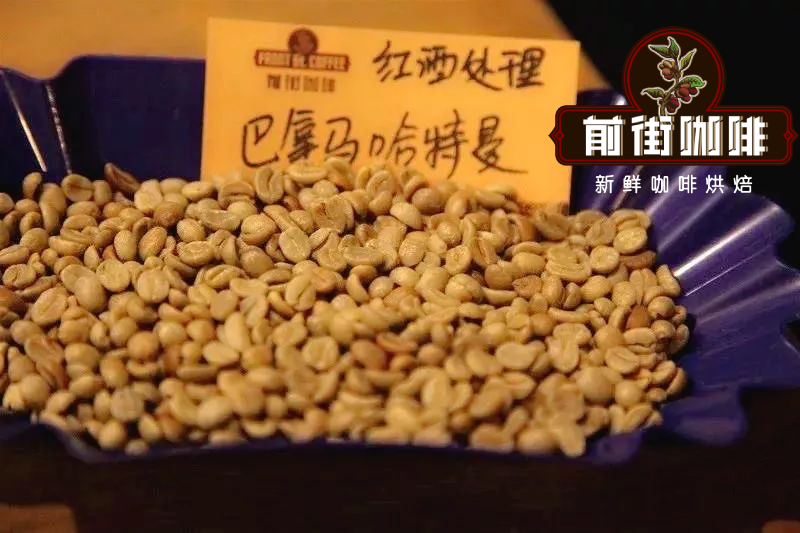
Example: FrontStreet Coffee Panama Hartman Coffee
Region: Volcán
Farm: Hartman Estate
Altitude: 1250-1700m
Variety: Catuai
Processing: Wine Processing Method
FrontStreet Coffee Brewing Recommendations
Brewing parameters: Hario V60 dripper, 90°C water temperature, 15g coffee dose, 1:15 coffee-to-water ratio, medium-fine grind (BG#6S)
Using segmented extraction, bloom with 30g of water for 30 seconds. Pour in a small stream in segments to 125g, then continue to 225g. Extraction time is 2 minutes, counting from the bloom.
Flavor Description
Fairly rich body, with pronounced sweet-and-sour sensations. Smooth on entry with abundant red wine character, high sweetness, bright, lively acidity, and rich layers, plus distinct tropical fruit, nuts, red wine aftertaste, honey, and sugarcane. After it cools completely, brown sugar notes emerge.
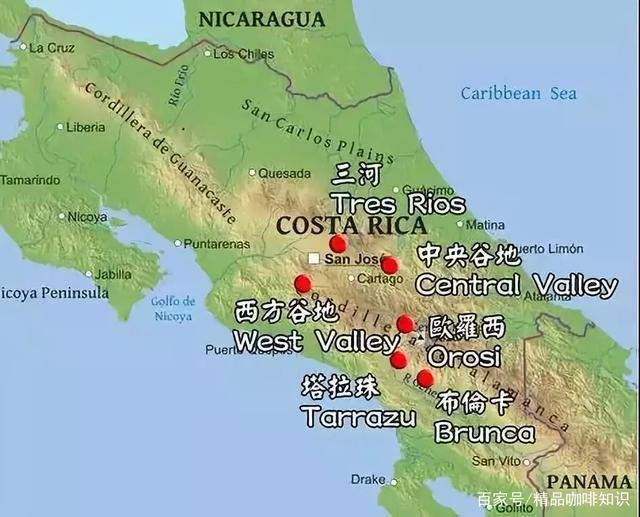
4. Costa Rica (Flavor characteristics: nuts, floral toffee flavors, moderate sweet and sour sensations, aromatic and mellow)
Costa Rica started growing coffee early, the first country in Central America to do so. As far back as 1820, coffee was exported to Europe and became an instant success, once praised by the British nobility as "golden beans." After breaking free of Spanish colonial rule, the local government began strongly backing the coffee industry with a series of policies, encouraging the growth of private estates. Gradually wealthier coffee farmers sent their children to Europe for further study, and they returned as doctors and engineers — a sign of the high standing coffee farmers held in Costa Rica. The country even has laws permitting only Arabica cultivation, with Robusta "prohibited" within its borders — a world-first.
Costa Rican Coffee Bean Processing Methods
Most Costa Rican beans are washed, but the country's most representative method is honey processing, which yields more sweetness than washing. Honey processing leaves the mucilage on during drying, giving the beans a honey-like sweet flavor. Depending on how much mucilage is retained, it is further divided into white honey, yellow honey, red honey, and black honey.
Building on honey processing, raisin honey processing has also been developed: the beans are laid directly on drying beds overnight without removing the skin first, so the skin and pulp shrink into a raisin-like form. The remaining steps match regular honey processing.
Costa Rican Coffee Regions
Costa Rica has eight main coffee regions: West Valley, Central Valley, Tarrazú, Tres Ríos, Orosi, Brunca, Turrialba, and Guanacaste. Central Valley, Tarrazú, and Tres Ríos are the most famous.
Tarrazú lies south of the capital, San José, at altitudes of 1200-1700 meters, with fertile soil and good drainage. The production season runs from December to March. Its beans are defined by an unmatched full mouthfeel from high-altitude growing, with a smooth texture, hard and full beans, and rich aroma.
Central Valley sits at 1200-1600 meters, with a production season from November to March. The region holds three high-altitude volcanoes — Irazú, Barva, and Poás — that supply rich nutrients to the surrounding coffee areas. Excellent microclimate plus volcanic soil give Central Valley beans chocolate cocoa flavors and elegant aromas. The region has three sub-regions: San José, Heredia, and Alajuela.
Tres Ríos, near the Irazú volcano east of the capital, sits at 1200-1650 meters, with a production season from December to March. In recent years urban sprawl has pushed into the suburbs, with farmland sold to developers, causing a sharp decline in Tres Ríos coffee production. Most of the output is contracted by Starbucks, making it hard for the industry to buy. The well-known Aquiares farm in Tres Ríos has operated since 1857 and has a long history. Tres Ríos has good climatic conditions, and its beans show excellent balance.
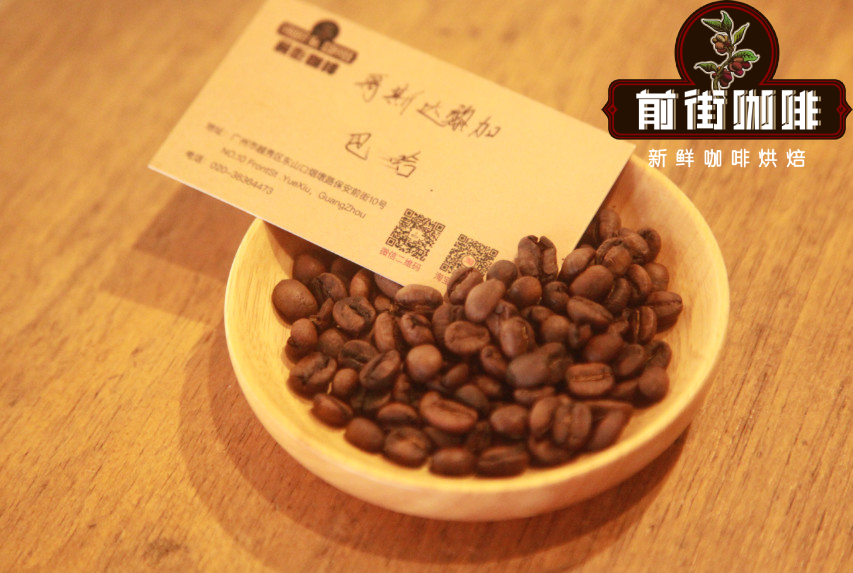
Example: FrontStreet Coffee Costa Rica Bahia Coffee Beans
Region: Tarrazú
Farm: Canet Estate
Altitude: 1950m
Variety: Caturra
Processing: Raisin Honey Processing
FrontStreet Coffee Brewing Recommendations
Brewing parameters: Hario V60 dripper, 90°C water temperature, 15g coffee dose, 1:15 coffee-to-water ratio, medium-fine grind (BG#6S)
Using segmented extraction, bloom with 30g of water for 30 seconds. Pour in a small circular motion to 125g, then continue pouring to 225g once the water level drops and exposes the coffee bed. Extraction time is 2 minutes, counting from the bloom.
Flavor Description
A rice wine fermentation aroma, with the sweet-and-sour sensations of ripe tropical fruits and berries on entry, nut and cream flavors, a caramel aftertaste, and a faint floral finish.
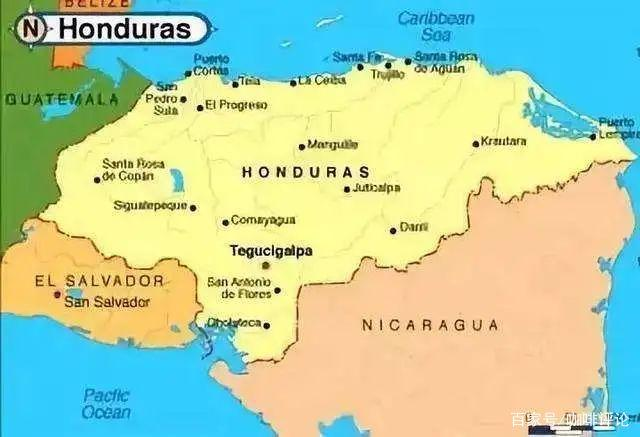
5. Honduras (Flavor characteristics: balanced and smooth, with acidity and slight sweetness, high in both body and aroma)
Honduras's coffee industry developed relatively late, far behind most neighboring Central American countries. With strong government support and lessons drawn from Brazil's development model, it gradually found its footing. The involvement and cooperation of Japanese specialty coffee around 2010 gave Honduras the potential to become a major player. From 2011 onward, Honduras's coffee production surpassed Guatemala's, making it the largest coffee producer in Central America and placing it among the world's top ten.
Most Honduran coffee is exported to Europe, mainly to Germany, which imports nearly 40 million kilograms of Honduran coffee a year. Some also goes to the United States and Japan, though those volumes do not rival Europe's.
Honduras has 280,000 hectares of coffee plantations, mostly small farms under 3.5 hectares. These plantations account for 60% of the country's total coffee production.
Honduran Coffee Bean Processing Methods
Most high-quality Honduran coffee is washed, which preserves the bean's original flavor. Building on washing, barrel-fermented washed processing has also been developed. The recently popular Sherry coffee uses refined washed whiskey sherry barrel fermentation: freshly picked cherries are refined-washed, then placed in sherry barrels previously used to age sherry wine for low-temperature fermentation lasting 30-40 days at roughly 15-20°C, followed by shade drying.
Honduran coffee is divided into six major regions, mainly in Copan, Opalaca, Montecillos, Comayagua, Agalta Tropical, and El Paraíso in the west and south. Three stand out:
Montecillos: the highest-altitude region in Honduras, with bright, layered coffee, rich fruit and sweet aromas, and citrus notes.
Copan: beans from this region have chocolate flavors, rich body, and high sweetness.
Agalta: beans here balance honey sweetness and acidity, with chocolate notes.
That said, the recently popular Sherry and Lychee Lan coffees do not come from the six regions above but from Masaguara, a city in the Intibucá province of southwestern Honduras.
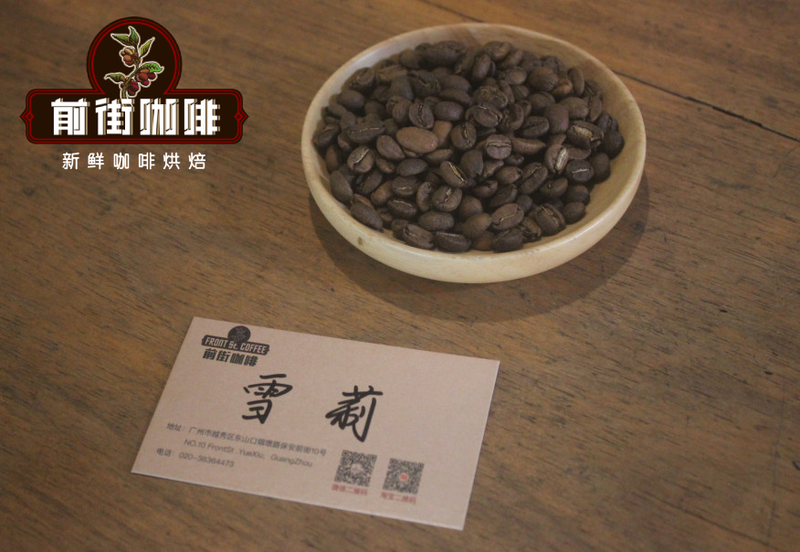
Example: FrontStreet Coffee Honduras Sherry Coffee Beans
Region: Masaguara
Farm: Moca Estate
Altitude: 1500-1700m
Varieties: Caturra, Catuai, Pacas
Processing: Refined Washed Whiskey Sherry Barrel Fermentation
FrontStreet Coffee Brewing Recommendations
Brewing parameters: Hario V60 dripper, 90°C water temperature, 15g coffee dose, 1:15 coffee-to-water ratio, medium-fine grind (BG#6S)
Using segmented extraction, bloom with 30g of water for 30 seconds. Pour in a small circular motion to 125g, then continue pouring to 225g once the water level drops and exposes the coffee bed. Extraction time is 2 minutes, counting from the bloom.
Flavor Description
Entry brings vanilla and cream aromas with citrus and berry acidity. The mid-palate shows almond and dark chocolate, with maple sweetness in the finish and a vanilla aftertaste. Distinct flavors, smooth texture. The profile stays stable from hot to cold, with no off-flavors.
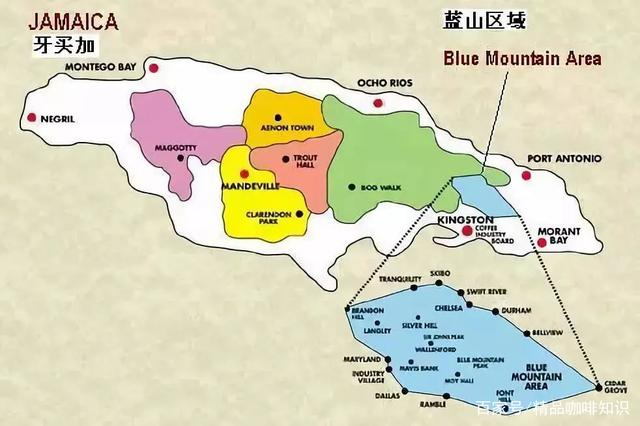
6. Jamaica Blue Mountain (Flavor characteristics: rich and mellow, perfect balance of sweet, sour, and bitter)
Jamaica is an island in the Caribbean Sea. Blue Mountain is the highest mountain in the western Caribbean, at 2256m, with coffee grown only below 1700m — above that is protected forest. Blue Mountain lies in the coffee belt at 25 degrees north latitude, with fertile volcanic soil, fresh air, year-round rainfall, high humidity, large day-night temperature swings, and regular rain that, combined with the island's hazy clouds, keeps the coffee trees out of harsh sunlight.
Jamaica Blue Mountain Coffee Bean Processing Methods
Jamaica Blue Mountain beans are mainly washed, which safeguards the standard Blue Mountain flavor. This year, though, coffee lovers have a treat: naturally processed Blue Mountain has been successfully produced. It is an unprecedented experiment, and the development team went through great hardship — they not only had to win permission from the Jamaican Ministry of Agriculture to export non-washed green beans but also had to study the experience of excellent estates repeatedly to adjust their processing plans.
Jamaica Blue Mountain Coffee Bean Classification
Jamaica Blue Mountain coffee has three grades: Blue Mountain Coffee, Jamaica High Mountain Supreme Coffee Beans, and Jamaica Prime Coffee Beans.
Blue Mountain Coffee is further graded. From high to low: Blue Mountain No.1, Blue Mountain No.2, Blue Mountain No.3, and PB (peaberries, or round beans).
Blue Mountain No.1: 96% of green beans are screen size 17/18, with a defect rate below 2%.
Blue Mountain No.2: 96% of green beans are screen size 16/17, with a defect rate below 2%.
Blue Mountain No.3: 96% of green beans are screen size 15/16, with a defect rate below 2%.
PB: 96% of green beans are PB, with a defect rate below 2%.
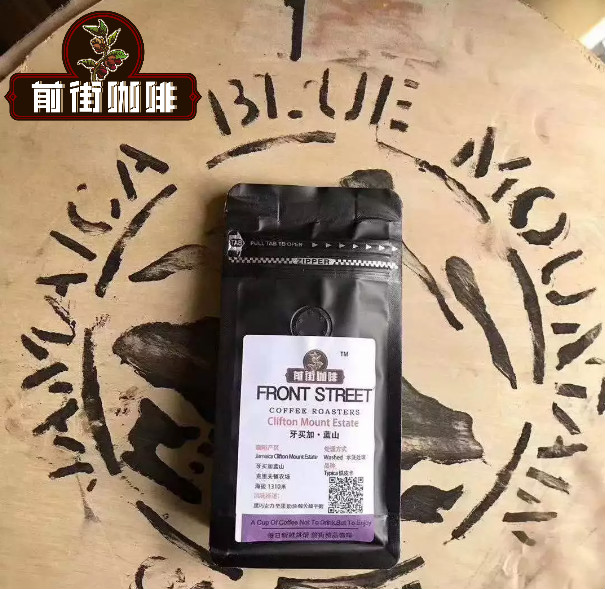
Example: FrontStreet Coffee Jamaica Blue Mountain Coffee Beans
Region: Blue Mountain
Farm: Clifton Mountain Estate
Altitude: 1310m
Variety: Typica
Processing: Washed Method
FrontStreet Coffee Brewing Recommendations
Brewing parameters: Kono dripper, 88°C water temperature, 15g coffee dose, 1:15 coffee-to-water ratio, medium-fine grind (BG#6W)
Using segmented extraction, bloom with 30g of water for 30 seconds. Pour in a circular motion to 125g, then continue pouring to 225g once the water level drops and exposes the coffee bed. Extraction time is 2 minutes, counting from the bloom.
Flavor Description
A clean, mild taste — rich and mellow, with dark chocolate, nuts, cream, and a balanced sweet, sour, and bitter profile.
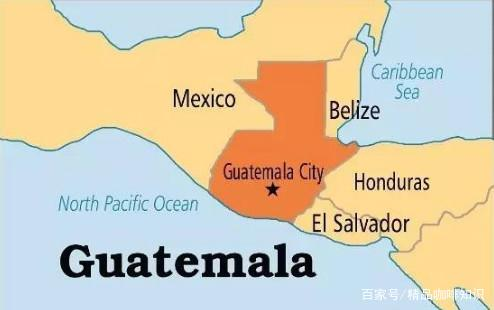
7. Guatemala (Flavor characteristics: rich fruit aroma, balanced sweet and sour)
Though small in area, Guatemala is blessed with both mountains and sea — tropical rainforests, volcanic geology, highland valleys, and varied microclimates. These diverse conditions create Guatemala's unique coffee flavors.
Guatemala has a high average altitude, with coffee belts above 1500m, where extremely hard beans grow easily. Specialty-grade coffee makes up a large share, mainly Bourbon, Typica, Caturra, and Catuai.
Guatemalan Coffee Bean Processing Methods
Guatemalan beans are primarily washed, with natural processing as a supplement. Washing safeguards the fruity flavors of Guatemalan coffee, while natural processing adds richness and complexity on top.
Guatemalan Coffee Regions
Guatemala is divided into eight coffee regions — five volcanic and three non-volcanic: Antigua, Traditional Atitlán, Cobán Rainforest, New Orient, San Marcos Volcano, Acatenango Valley, Huehuetenango Highlands, and Fraijanes Plateau.
Even within a single region, flavors can differ. In the Huehuetenango Highlands, for instance, crossing a mountain ridge can immediately bring a significant change in coffee flavor. Add increasingly diverse varieties and processing methods, and Guatemalan coffee presents a landscape of competing styles.
Non-Volcanic Regions
The Huehuetenango Highlands have the driest climate and highest altitude among Guatemala's three non-volcanic coffee regions. The beans are characterized by high acidity, bitterness with aroma, a wine aftertaste, and excellent mouthfeel.
The Cobán Rainforest's defining feature is its rainforest, with two seasons a year — a heavy rainy season and a light one. The tropical rainforest brings high humidity and abundant nutrients. Its most distinctive coffee flavor is a relatively strong fruitiness, closely tied to the local humidity.
New Orient, in easternmost Guatemala, has the most recently developed coffee cultivation and was once the country's most remote and poorest area. Its rain and fog make it somewhat like the Cobán Rainforest, but with slightly less humidity and rainfall. The soil is mineral-rich and nutritionally balanced. The beans show a balanced mouthfeel, full body, and chocolate notes, though their fruit acidity is the lowest of Guatemala's eight regions. Chocolate aroma is New Orient's signature.
Volcanic Regions
Antigua is one of Guatemala's most famous coffee regions and has the highest frequency of awards, crowned as "classic." Its defining traits are rich volcanic soil, low humidity, abundant sunlight, and large day-night temperature differences. The region is ringed by three volcanoes — Agua, Fuego, and Acatenango — and Fuego is one of Guatemala's three most active volcanoes. Frequent volcanic activity means pumice retains humidity and keeps feeding ash and minerals into the soil, overcoming Antigua's low rainfall and producing coffee with perfectly balanced sweet, sour, bitter, and spicy character.
The Acatenango Valley reaches altitudes up to 2000 meters, with dense shade and a unique ecology. Nearby volcanoes erupt continuously, enriching the soil with fertile minerals that become the area's best natural fertilizer. Processing is mainly traditional and family-based. The beans are similar to Antigua but with slightly lower fruit acidity, significant and pleasant dry and wet aromas, full body, a clear aftertaste, and a refreshing aroma.
Traditional Atitlán has the most abundant organic matter in its soil among the five volcanic regions and has accumulated excellent cultivation and processing techniques over time. 90% of its coffee grows on the steep volcanic slopes of Lake Atitlán, at roughly 1300-2000 meters. The beans show mild acidity, a bright orange peel aroma, and excellent body.
The Fraijanes Plateau is a volcanic region with high altitude and mineral-rich soil. Its coffee leans toward balance, but with more distinctive aromas and flavors than Antigua.
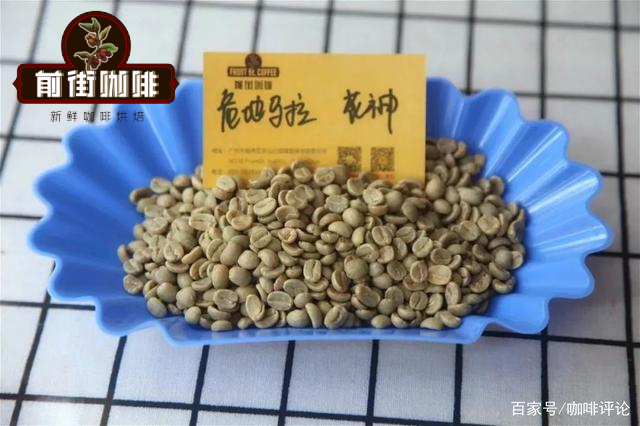
Example: FrontStreet Coffee Antigua Flor de Café Coffee Beans
Region: Antigua
Farm: La Minita Estate
Altitude: 1850m
Varieties: Bourbon, Caturra, Catuai
Processing: Washed Processing
FrontStreet Coffee Brewing Recommendations
Brewing parameters: Hario V60 dripper, 90°C water temperature, 15g coffee dose, 1:15 coffee-to-water ratio, medium-fine grind (BG#6S)
Using segmented extraction, bloom with 30g of water for 30 seconds. Pour in a small circular motion to 125g, then continue pouring to 225g. Extraction time is 2 minutes, counting from the bloom.
Flavor Description
Fairly pronounced citrus acidity, rich floral notes, pleasant sweetness, medium body, with slight caramel in the finish. Balanced and clean overall, with a smooth texture.
FrontStreet Coffee Recommendation
As the largest coffee producer in the world, Brazil grows a wide range of coffees, and Brazilian beans carry moderate acidity with a fine balance of sweetness, bitterness, and body, which makes them ideal for medium roasting. Roasted medium, they pour out nutty aromas, a mellow cup, and a light acidity, and they work both as a single origin and in blends.
For a first taste of the Brazil profile, FrontStreet's Brazil Cerrado semi-washed red Bourbon is a classic single-origin starting point. Cerrado is a well-known region prized for high-quality coffee, and this red Bourbon is a common South American variety that, at medium roast, shows rich notes of creamy peanut, toasted bread, caramel, and hazelnut. Round and smooth with no acidity and a gentle bitterness, it suits not only pour-over but also moka pot, espresso SOE, siphon, and French press.
For something rarer, FrontStreet's Brazil Queen Estate Yellow Bourbon comes from Mogiana, near South Minas, where fertile red volcanic soil feeds the fruit and builds a full aroma. Some farms there keep to traditional methods while others adopt modern, standardized management, and local quality has improved greatly as a result. The estate grows the rare Yellow Bourbon, which arose from a mutation of red Bourbon and offers an especially clean fruit character: through pour-over, moka pot, or a home coffee machine you can taste a sugarcane sweetness found in no other region, along with fruit and chocolate notes. Brazil's low acidity, balanced body, and friendly price also make it a favorite base for espresso blends — FrontStreet's lineup, from the rich-crema Classic Blend and the nutty Premium Blend to the balanced Black Cocoa Blend and FrontStreet Coffee's Commercial Blend made for cafés, all contain Brazilian beans, which supply chocolate and cream aromas, soft sweet-sour-bitter flavors, and a balanced character that helps keep extraction stable.
Important Notice :
FrontStreet Coffee is a long-established specialty coffee roaster in Guangzhou China, selling freshly roasted beans from its own farm in Yunnan as well as dozens of carefully selected single-origin beans from around the world for both pour-over and espresso. The products deliver consistently excellent quality and great value, with shipping within 24 hours. Guangzhou's FrontStreet Coffee shop is recommended by many coffee lovers, and the beans are now available online at the Tmall 。
FrontStreet Coffee has moved to a new address:
FrontStreet Coffee Address: 315,Donghua East Road,GuangZhou
Tel:020 38364473
 Scan and follow the En Gafei WeChat official account. Please indicate that the reprint comes from "En Gafei".