What is the Water-to-Coffee Ratio for Nicaraguan Mamamina Estate Natural Pacamara Pour-Over Coffee?

If you are looking for FrontStreet Coffee's most popular medium-dark roast coffee, it has to be the Mandheling beans. With rich flavors and a captivating aroma, it boasts a full body and an exceptionally distinct sweet aftertaste — a truly exceptional coffee. Although FrontStreet Coffee has always sold Mandheling as a single origin, many cafés have discovered that its rich chocolate and nutty flavors are perfect for espresso blends, which is why you may find Mandheling in blended coffees elsewhere in the market. Indeed, before Blue Mountain became world-famous, Mandheling was once considered the finest premium coffee in the world. After roasting, the beans grow quite large; the green beans appear brown or dark green, giving off a special caramel-like fragrance and delivering a mellow, rich flavor that is bitter yet sweet, without acidity. Many coffee connoisseurs, after trying countless floral and fruity beans, eventually find their way back to Mandheling.

The Origin Story of Mandheling Coffee
With all that said, do you know the full story behind Mandheling coffee? Today, let's learn about it together with FrontStreet Coffee! Mandheling coffee is produced in Sumatra, Indonesia — also known as "Sumatran coffee" — with main growing regions including Java Island, Sulawesi Island, and northern Sumatra. Although most Indonesian coffee is Robusta, it is Mandheling that made Indonesian coffee shine on the world stage. Mandheling is neither a region name, a place name, a port name, nor a variety name. So where did the name come from? It is actually a phonetic misinterpretation of the Mandailing ethnic group of Indonesia.

During World War II, when Japan occupied Indonesia, a Japanese soldier tasted an exceptionally mellow coffee at a café. When he asked the owner for the coffee's name, the owner misunderstood and thought he was asking where it came from, so he replied: "Mandheling." After the war, the soldier recalled the "Mandheling" he had drunk in Indonesia and commissioned an Indonesian coffee merchant to ship 15 tons to Japan — where it became surprisingly popular. That is how the name spread, and that merchant is now the renowned PWN (Pwani) Coffee Company. FrontStreet Coffee's Golden Mandheling has always been purchased from PWN, undergoing one machine selection and three manual hand-sortings to ensure product quality and excellent flavor!
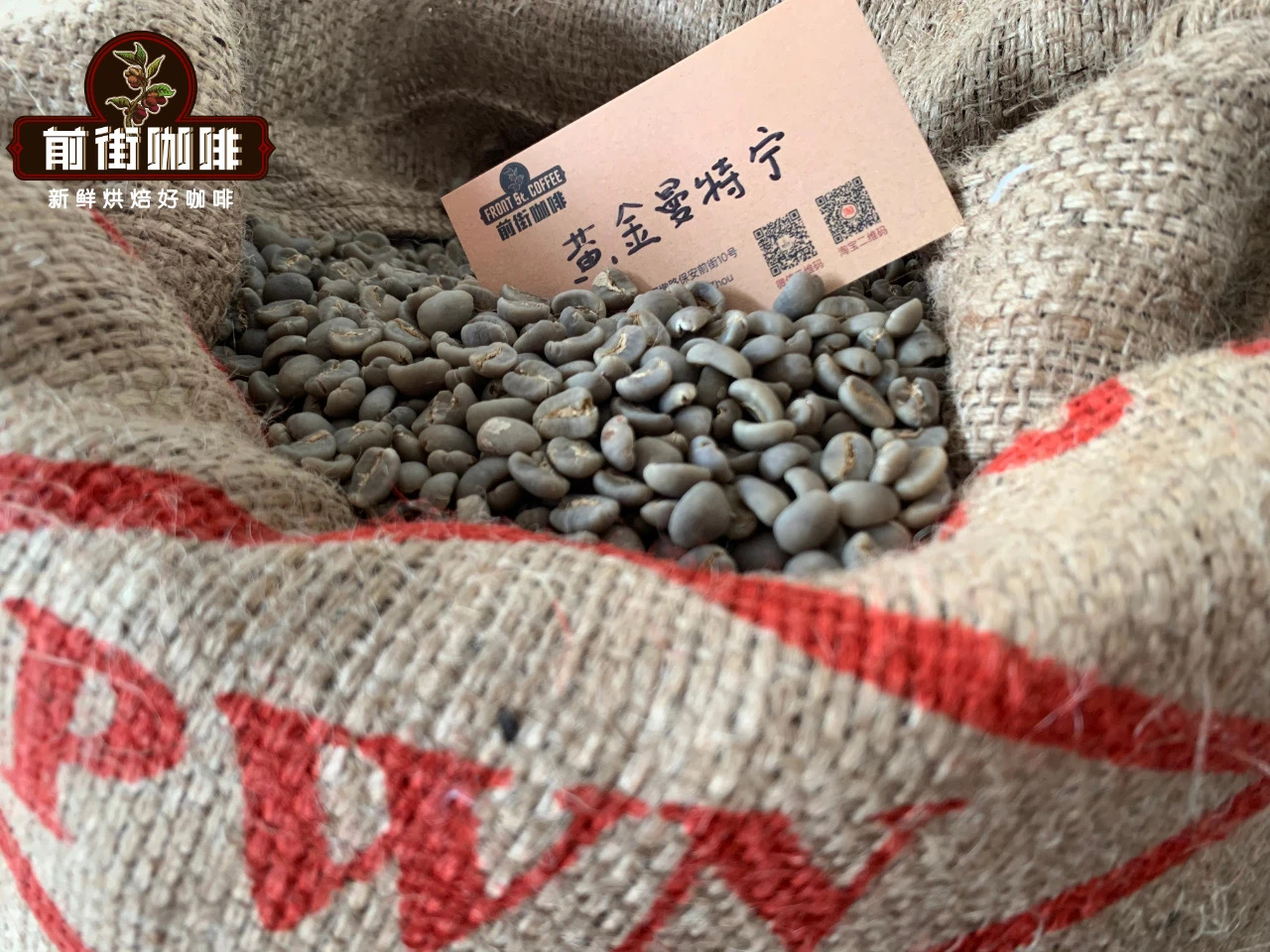
PWN Golden Mandheling
Country: Indonesia
Grade: G1 Triple Hand-sorted
Company: PWN
Region: North Sumatra, Aceh GAYO Mountain
Processing Method: Wet-hulled
Variety: Ateng
Altitude: 1100-1600m
At the time, Mandheling coffee was exported mainly to Japan, where quality standards were extremely high and management very strict. The coffee often underwent four manual bean selections to remove defective beans, producing Mandheling with a dark green color and uniform appearance. It was precisely this excellent green bean quality that created huge market demand, sending even the European and American markets wild for it.
According to FrontStreet Coffee's understanding, although the title "Golden Mandheling" was popularized by the Japanese, PWN registered the trademark first. Strictly speaking, only Mandheling produced by PWN can be called Golden Mandheling. Due to limited production and high demand, however, the market has filled with counterfeits. Some have undergone strict screening with bean sizes no different from the authentic article, but a discerning palate will easily taste the enormous difference in flavor. Japan's "Golden Mandheling" also has its own brand, called "Dingshang Mandheling." As for the flavor of PWN's Golden Mandheling, you can purchase some and judge for yourself.
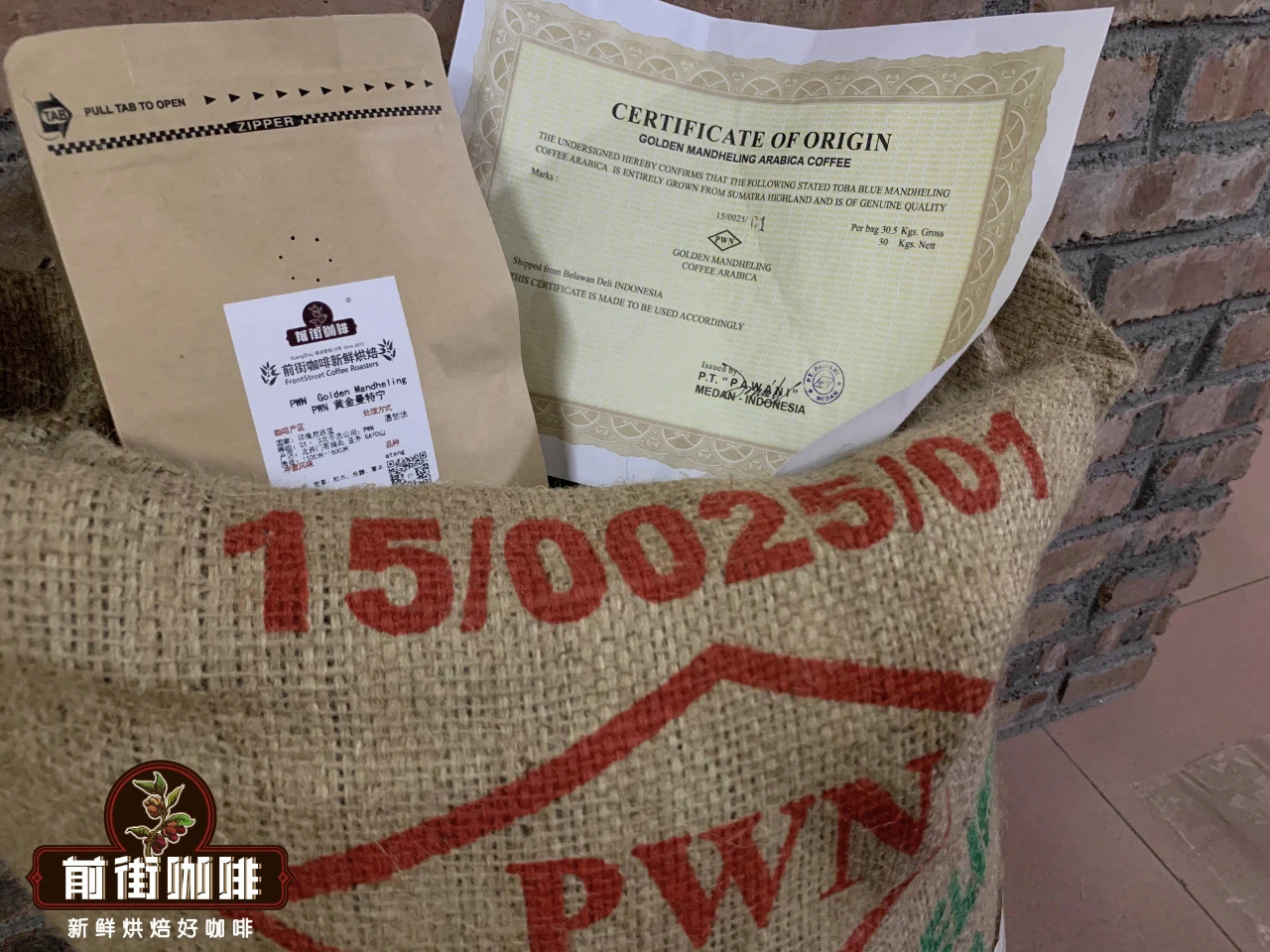
How to Identify Authentic Golden Mandheling
As mentioned, there are many counterfeit Golden Mandheling coffees on the market, so how do you tell genuine from fake? It is actually quite simple. FrontStreet Coffee believes it comes down to two things: PWN Golden Mandheling's factory certificate and coffee burlap bags printed with the PWN logo. When purchasing, ask the seller to show these two items in advance — if they cannot, be extra cautious.
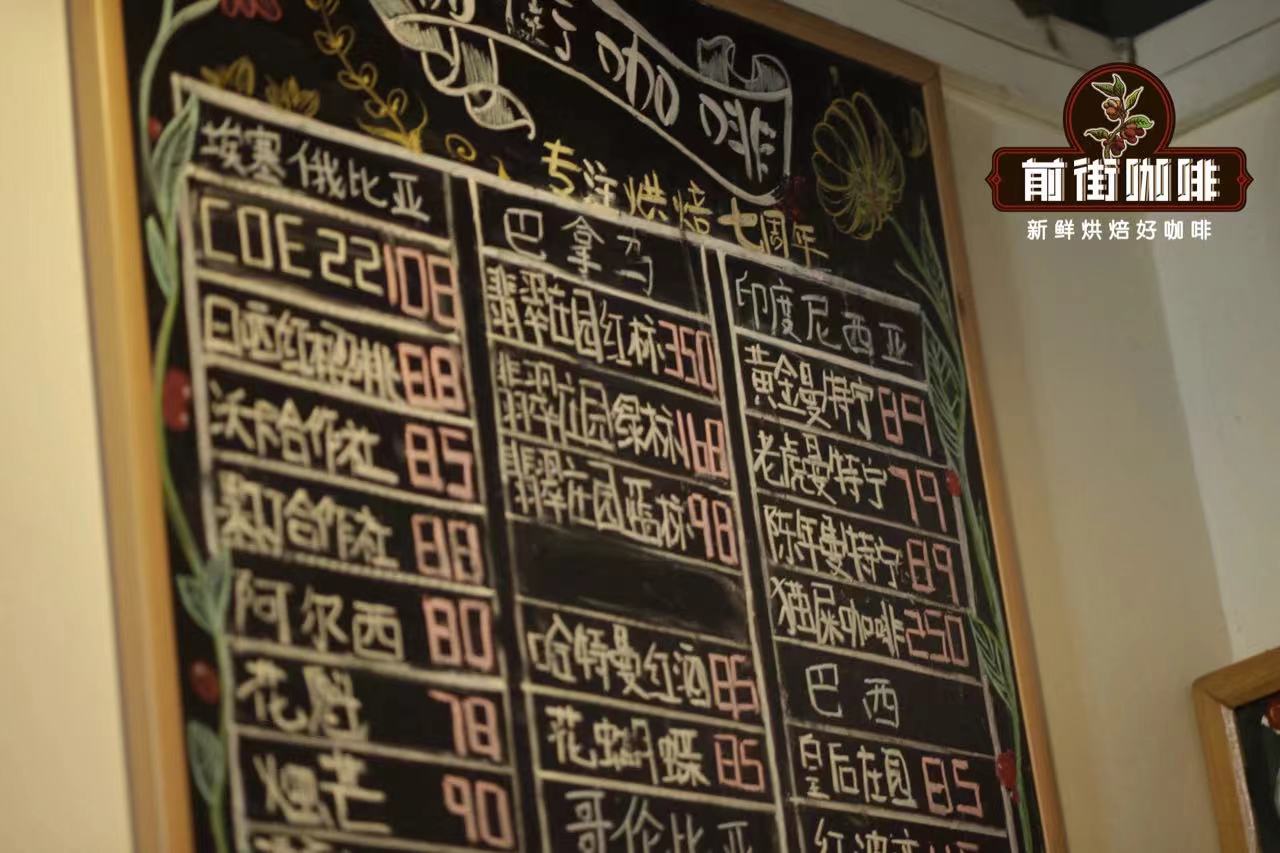
Differences Between Golden Mandheling and Other Mandheling Varieties
What separates Golden Mandheling from other Mandheling coffees? FrontStreet Coffee believes the difference lies in the producing company and the bean selection process. Strictly speaking, regular Mandheling can achieve a taste similar to Golden Mandheling after careful screening and selection — but most of Indonesia's highest-quality Mandheling beans are acquired by PWN. The famous Mandheling coffee is produced around Lake Toba in northern Sumatra.
Traditional Arabica coffee from northern Sumatra is generally marketed under the names Lintong and Mandheling. Specifically, Lintong refers to coffee grown in a small area southwest of Lake Toba in the Lintong administrative region, where plantings are scattered across high, undulating clay plateaus rich in tree ferns. Lintong coffee is non-shade grown, uses no chemicals, and is almost entirely owned by small private farmers. Mandheling is the broader term, encompassing Lintong coffee and other growing areas under similar conditions, such as Diari (capital Sidikalang) and the areas north of Lake Toba.

Different Mandheling Varieties at FrontStreet Coffee
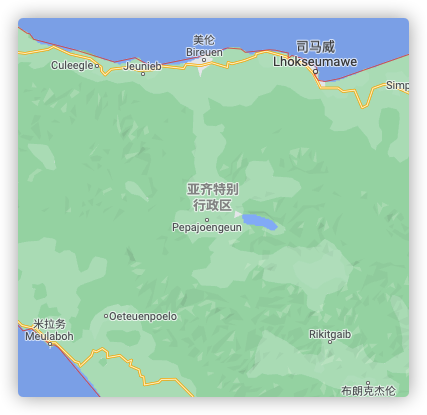
Observant customers will notice that FrontStreet Coffee's bean menu includes Mandheling varieties beyond the Golden: Aged Mandheling, Lintong Mandheling, and Tiger Mandheling. The main difference lies in the growing regions. Speaking of which, let's look at Indonesia's map together!
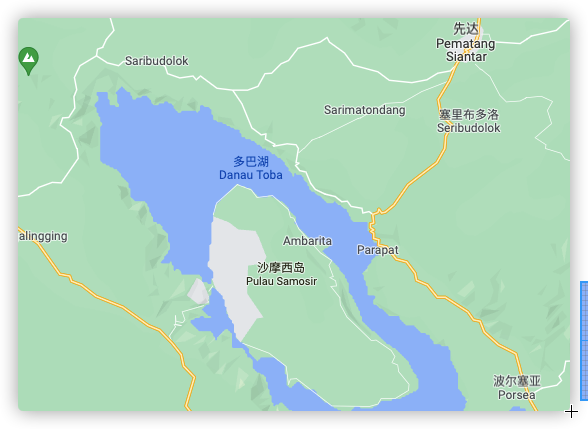
Lintong Mandheling comes from the Lintong Nihuta area southwest of Lake Toba. This great lake is one of the deepest in the world, reaching depths of 505 meters. The coffee region is a plateau famous for its rich tree fern species, and the area produces 15,000 to 18,000 tons of Arabica coffee annually. Tiger Mandheling comes from the GAYO mountain area in northern Aceh Province, Sumatra. Indonesia straddles the equator, with a humid tropical rainforest climate, abundant rainfall, and fertile volcanic soil — favorable conditions for coffee. Gayo sits on the slopes around Takengon town and Lake Tawar at the northern end of Sumatra in the Aceh area, with growing altitudes averaging between 1,110 and 1,600 meters. The coffee is almost entirely grown by small farmers under shade trees.

Aged Mandheling is quite special: it refers to Mandheling beans stored for an extended period as green coffee. Compared with other Mandhelings, its hallmark is honey-like sweetness. Successful aging eliminates Mandheling's less elegant acidity — the acidic components mature and convert to sugars, making the coffee rounder and sweeter when brewed. It is worth noting, however, that failed aged Mandheling can be like "coffee zombies," with flavors that are difficult to drink.
Brewing Parameters for Golden Mandheling
FrontStreet Coffee currently carries only one Golden Mandheling in its stores, with other Mandheling green beans out of stock. So today we share the brewing parameters and technique for Golden Mandheling:
Filter: KONO
Dose: 15 grams
Ratio: 1:15
Water Temperature: 86-87°C
Grind Size: Medium-coarse (70% retention rate on national standard #20 sieve)
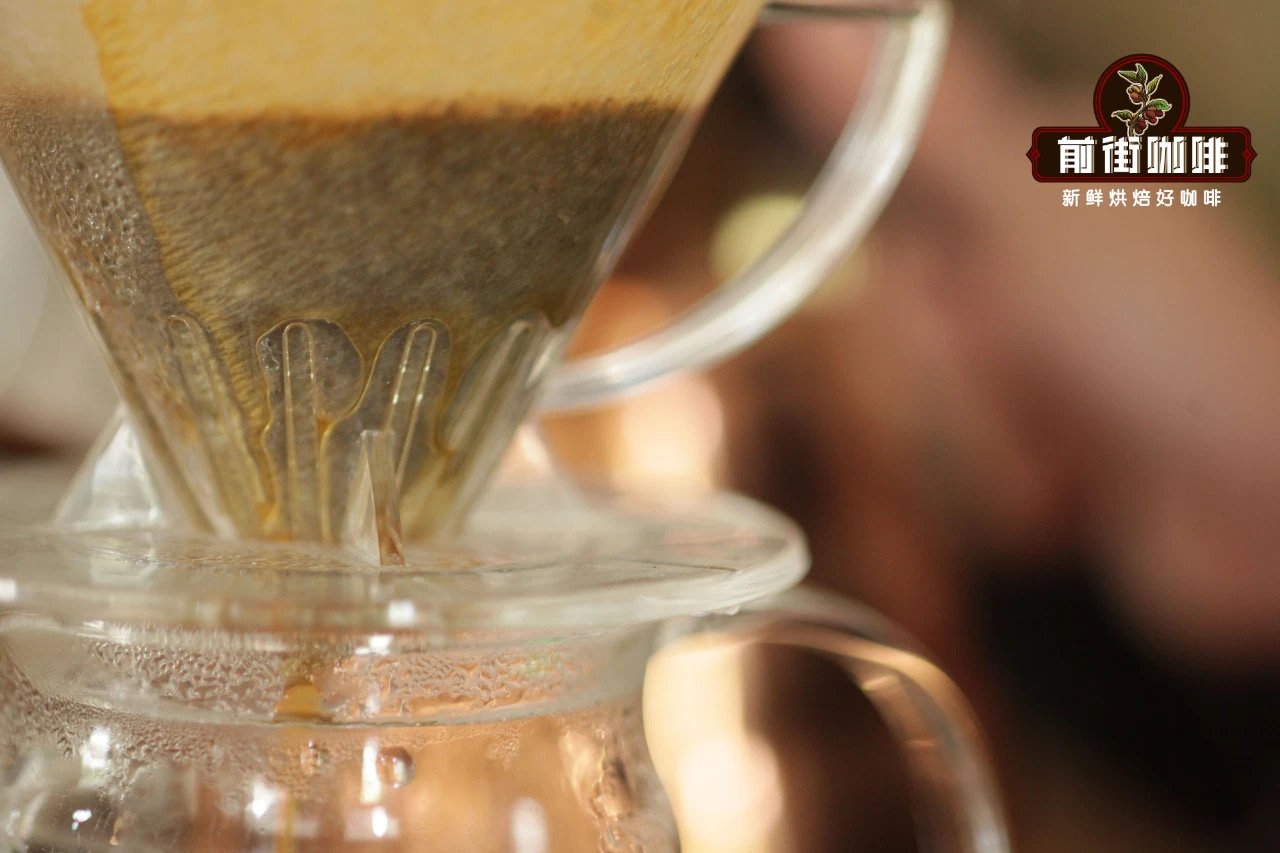
FrontStreet Coffee Brewing Method:
First segment: pour 30g of water to bloom and wait 30 seconds. Second segment: continue with small circular pours until reaching 125g, then pause. When the water level drops and the coffee bed is about to be exposed, proceed to the third segment: pour until reaching 225g, then stop. When the bed is about to be exposed again, remove the dripper. (Timing starts from the bloom.) Total extraction time: 2'00".
FrontStreet Coffee Recommendation
Mandheling's distinctive character comes from Indonesia's wet-hulled processing. The rainy season overlaps with the coffee harvest, making long African-style sun drying impossible, so growers developed the Sumatran wet-hull method: the skin and pulp are removed first, the beans are washed briefly and dried, and while still half-dry the parchment is machine-hulled off, exposing the green beans directly to the air to speed up drying. That exposure to local molds and yeasts is exactly what creates Mandheling's wild, earthy, herbal flavors — a taste of Mother Nature herself that some old-school coffee lovers find irresistible.
If you want to feel that character in its most refined form, choose the PWN Golden Mandheling: beans of 18-mesh size or larger, fewer than 3 defects per 300 g of green coffee to meet the highest G1 standard, plus three rounds of hand sorting that raise cleanliness and sweetness. Roasted medium-dark, it shows black chocolate and caramel while keeping Mandheling's wild herbaceous edge. FrontStreet Coffee recommends brewing it as pour-over — 15 g of coffee, water at 87-88°C, a 1:15 ratio, a coarse-granulated-sugar grind, and three-stage pouring: 30 g first to wet the grounds fully and let them degas, 100 g next to lift the bed and draw out the golden foam, then a final gentle center pour of 95 g to boost sweetness, yielding a thick, syrupy body with caramel sweetness and chocolate-nut flavors.
For espresso lovers, FrontStreet Coffee's Classic Blend — the highest repurchase item — layers medium-dark Mandheling over Brazilian cream-and-nut sweetness, with butter, roasted chestnut, and caramel standing out, plus a small amount of Robusta for richer crema. It pulls gorgeous latte art and makes Dirty's layered gradient effortless.
Important Notice :
FrontStreet Coffee is a long-established specialty coffee roaster in Guangzhou China, selling freshly roasted beans from its own farm in Yunnan as well as dozens of carefully selected single-origin beans from around the world for both pour-over and espresso. The products deliver consistently excellent quality and great value, with shipping within 24 hours. Guangzhou's FrontStreet Coffee shop is recommended by many coffee lovers, and the beans are now available online at the Tmall 。
FrontStreet Coffee has moved to a new address:
FrontStreet Coffee Address: 315,Donghua East Road,GuangZhou
Tel:020 38364473
 Scan and follow the En Gafei WeChat official account. Please indicate that the reprint comes from "En Gafei".