Pour-Over Coffee Bean Recommendations: Selection Guide & Unique Japanese Brewing Methods
Introduction to Four Major Pour-Over Coffee Techniques
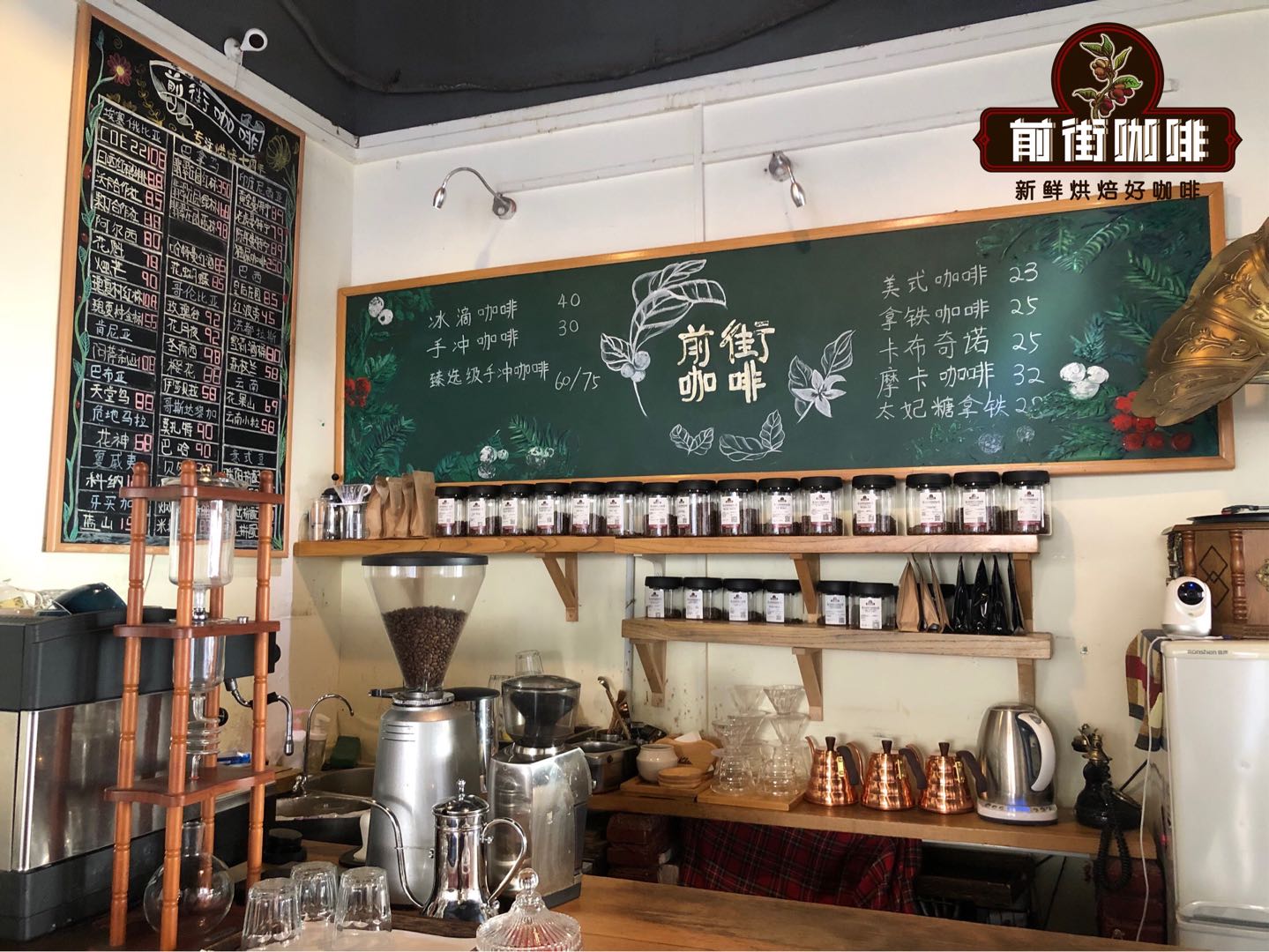
Many coffee lovers who come to FrontStreet Coffee for beans ask the same question: how do you brew pour-over coffee so it tastes its best? FrontStreet Coffee often says that brewing by hand is an enjoyment in itself — coffee you make yourself simply tastes better. So in this article, FrontStreet Coffee introduces the four classic pour-over techniques, then recommends beans that suit beginners.
Four Classic Japanese Pour-Over Techniques
Anyone familiar with Japan knows the culture's devotion to craftsmanship, and coffee brewing is no exception. Japanese baristas have studied pour-over exhaustively, developing several methods designed to coax the very best out of the beans. The techniques used by FrontStreet Coffee's own baristas are rooted in these Japanese methods, aiming to present coffees from different origins at their best.

Here are the four most common Japanese pour-over methods:
1. Matsuya-Style Pour-Over

The Matsuya style was invented by Matsuyoshi Kazuyoshi in 1962. He developed a filter paper that doesn't restrict the expansion of the coffee bed, along with a metal frame that holds the paper at the right angle. The hallmarks of this method are a coarse grind and a very long bloom: first dig a well in the center of the grounds, then pour a thin, high stream of water until drips begin to fall. Circle outward to wet all the grounds, cover with a lid, and bloom for 3 minutes. Afterward, pour evenly and continuously; stop when the liquid reaches halfway up the server, then top up with hot water to dilute.
Flavor profile: coffee brewed this way changes little as it cools and never turns muddy.
2. Kawano-Style Pour-Over

The Kawano style is what the industry calls the drip method. Just as the name suggests, water is added drop by drop, like an hourglass, which gives the grounds an exceptionally full bloom. It demands a very steady kettle hand and plenty of patience: let water pool and drip slowly onto the grounds, and once the bed is about one-third saturated you can begin pouring properly. Pause when the water reaches the top of the bed, then pour again once it drops to half.
Flavor profile: the drip method highlights sweetness while steering clear of harsh sourness and bitterness.
3. Volcano Pour-Over

The volcano method exploits the carbon dioxide inside freshly roasted beans: through repeated blooming, the bed swells up like an erupting volcano. Dark roasts suit this technique best because they hold more CO2. It is usually paired with a flannel filter. Since the bed is thick in the middle, you pour in the center, in a circle about the size of a one-yuan coin. The first half of the brew aims at full extraction without disturbing the bed; the second half shifts to even pouring to prevent over-extraction in the center and to dilute the cup. In effect, the first third of the liquid is over-extracted and the last two-thirds under-extracted — blended together at the end, they make a balanced cup.
Flavor profile: volcano coffee has a rich texture and high concentration.
4. Zigzag Pour-Over

This method comes from Tahara Shizumi, a barista at Coffee Ran-kan and winner of the Japanese Barista Championship. Using a flannel filter, it has been praised as "flannel-style espresso." There is no bloom at all, and total extraction takes only about 40 seconds; water is poured in a zigzag pattern to distribute it evenly. As the dripping liquid begins to strengthen, increase the water flow; when it starts to thin out, increase the flow again.
Flavor profile: a mellow cup with solid body and a pronounced finish.

As you can see, these methods aren't easy to master — but FrontStreet Coffee believes pour-over has no rigid rules. Water quality, the dripper, grind size, the coffee-to-water ratio, the size and height of your pour, extraction time, how you circle the bed — every one of these shapes the flavor in subtle ways. Once you've built up some experience, adjust them to your own preferences and brew single-origin coffee that suits your taste.

Still, pour-over is genuinely a field of study — brewing a great-tasting cup takes plenty of practice. Next, FrontStreet Coffee recommends some single-origin beans that suit pour-over beginners.
As every coffee lover knows, beans from different origins taste different. African coffees tend toward citrus and lemon — fresh and bright; Asian coffees lean mellow and earthy; American coffees run nutty and cocoa-like. FrontStreet Coffee recommends one high-value bean from each continent for beginners.
African Single-Origin Recommendation

The most representative African origin is unquestionably Ethiopia, and FrontStreet Coffee's washed Yirgacheffe is a standout there. Its charming fruit acidity has earned it a firm place in the specialty coffee market. Washed processing gives coffee cleaner, brighter flavors that showcase the original character of Yirgacheffe and emphasize its citrus and lemon acidity — washed coffee is the purest expression of an origin's basic flavor. That makes this bean, also a representative of the light-roast style, perfect for pour-over practice.

FrontStreet Coffee · Ethiopian Washed Yirgacheffe Coffee Beans
Country: Ethiopia
Region: Yirgacheffe
Altitude: 1800-2000m
Variety: local native varieties
Process: washed
Flavor: jasmine, berries, lemon, citrus
FrontStreet Coffee Pour-Over Suggestions
To bring out Yirgacheffe's fruity acidity fully, FrontStreet Coffee uses a higher water temperature and a finer grind — and to keep that heat from over-extracting, a fast-flowing dripper such as the V60. The V60's 60-degree cone funnels the grounds toward the center, so the water flow naturally converges there, ensuring good contact time between water and coffee. Its spiral ribs run clockwise from bottom to top, holding the filter paper away from the walls so water can move freely, and the single large outlet lets it drain faster than most drippers.

FrontStreet Coffee's parameters: V60 dripper, 90°C water, 1:15 coffee-to-water ratio, 15g of coffee, grind set at an 80% pass rate through a China No. 20 standard sieve.

A note on grind: even within the same Yirgacheffe, different grades sieve differently, so FrontStreet Coffee sieves every lot to determine its ideal grind. The brew: rinse the filter paper and preheat the dripper and server; bloom with 30g of water for 30 seconds; pour in small circles to 125g; when the level drops and the coffee bed is about to be exposed, pour on to 225g; then stop and remove the dripper when the bed is again about to be exposed (timing starts at the bloom). Total extraction time: 2'05".
Asian Single-Origin Recommendations
The most representative Asian coffee is undoubtedly Indonesia's Mandheling, which is why FrontStreet Coffee launched a Mandheling daily bean for newcomers. Mandheling is processed with Indonesia's unique wet-hulled method, which gives the coffee its distinctive tobacco and earthy aromatics — very much an acquired charm, and one that has made Mandheling famous in the single-origin world. FrontStreet Coffee's daily beans are designed to introduce new coffee drinkers to flavor in the most affordable way, so this Indonesian Mandheling is ideal for pour-over practice.

Here it's worth knowing that Mandheling comes in several types. The king of them all is FrontStreet Coffee's PWN Golden Mandheling, which tastes cleaner than the more common Lintong Mandheling — the earthy mustiness disappears, and sweetness, acidity, and bitterness sit in fine balance. That's because the PWN company is extremely strict about cherry quality: only defect-free cherries that pass three rounds of manual selection may become Golden Mandheling. The price is correspondingly higher, but if you can, compare FrontStreet Coffee's Lintong Mandheling daily bean with its PWN Golden Mandheling side by side — for a beginner, tasting two beans from the same origin is an excellent exercise.
FrontStreet Coffee Lintong Mandheling (Daily Bean) Coffee Beans
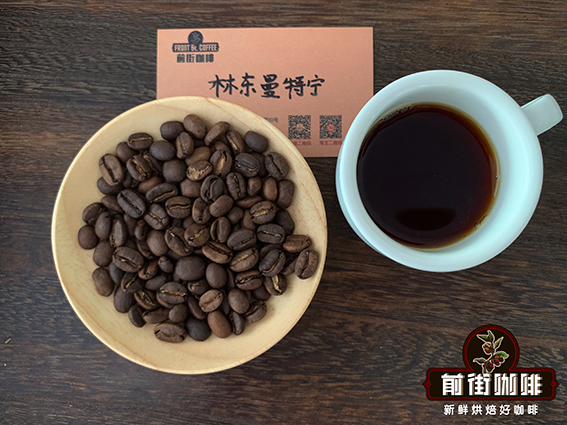
Region: Lintong, Sumatra
Altitude: 1100-1600 meters
Variety: Typica, Caturra
Process: wet-hulled
Flavor: toasted bread, nuts, caramel, pine, herbs

FrontStreet Coffee · PWN Golden Mandheling Coffee Beans
Region: Aceh, Gayo Mountains, Sumatra
Altitude: 1100-1600 meters
Variety: Ateng
Grade: G1, 3 rounds of manual selection
Process: wet-hulled
Flavor: spices, herbal notes, caramel, pine, nuts, chocolate
FrontStreet Coffee Pour-Over Suggestions
FrontStreet Coffee keeps its Mandheling parameters as consistent as possible — but roast level changes the recipe. The Lintong Mandheling daily bean is roasted medium-light, while beans like the PWN Golden Mandheling are roasted medium-dark, so each gets its own parameters.
Medium-light roast parameters: V60 dripper, 1:15 coffee-to-water ratio, 15g of coffee, 90°C water, grind at an 80% pass rate through a No. 20 standard sieve.
Medium-dark roast parameters: Kono dripper, 1:15 coffee-to-water ratio, 15g of coffee, 88°C water, grind at a 70-75% pass rate through a No. 20 standard sieve.

FrontStreet Coffee brews both with segmented pouring: bloom with 30g of water for 30 seconds, pour in small circles to 125g, continue to 225g once the level drops and the bed is about to show, then stop and remove the dripper when the bed is again about to show (timing starts at the bloom). Extraction runs 2'00" in the V60 and slightly longer — 2'10" — in the Kono.
Flavor Description
FrontStreet Coffee PWN Golden Mandheling: multiple layers, mellow and clean, highly balanced, rich nut and caramel aroma with chocolate notes, long aftertaste.
FrontStreet Coffee Lintong Mandheling: herbal, slightly medicinal entry, dark chocolate and caramel, sweet finish.

American Single-Origin Recommendation
Finally, from the Americas, FrontStreet Coffee recommends its Huehuetenango daily bean from Guatemala. It is washed processed, so the flavor is clean and bright — friendly to beginners — and it sits stylistically between the two beans above: less delicate than the light-roast Yirgacheffe, less heavy than the dark-leaning Mandheling, because this bean is roasted medium and lands right in the middle.
FrontStreet Coffee · Guatemala Huehuetenango Coffee Beans

Country: Guatemala
Region: Huehuetenango
Altitude: 1500-2000m
Variety: Bourbon, Caturra, Catuai
Process: washed
Bean appearance: relatively uniform size
Flavor: nuts, lemon peel, berries, citrus
FrontStreet Coffee Brewing Suggestions
FrontStreet Coffee's parameters: V60 dripper, 90°C water, 1:15 coffee-to-water ratio, 15g of coffee, grind at an 80% pass rate through a No. 20 standard sieve.
The brew: bloom with 30g of water for 30 seconds; after the bloom, pour in circles to 125g; when the level drops by half, continue to 225g; remove the dripper once everything has drained through. Total extraction time: about 2 minutes.
Those are FrontStreet Coffee's pour-over techniques and bean recommendations for beginners — we hope they help.
For more specialty coffee beans, follow FrontStreet Coffee.
FrontStreet Coffee Recommendation
Beyond the three beginner beans above, FrontStreet Coffee has a few more pour-over favorites. The Hario V60 — designed by the Tokyo glassware maker Hario, founded in 1921, and reshaped into its modern form in 2004 — is the dripper most experts will hand a newcomer. Its 60-degree cone and V shape force water to converge at the center before draining, extending contact time so aroma and flavor extract fully, while the single large outlet leaves flow rate entirely in the brewer's hands. FrontStreet Coffee favors the resin version: it insulates against heat loss and, in mass production, holds the tightest tolerances.
For light-roast, flower-and-fruit profiles that shine in a V60, consider FrontStreet Coffee's Yirgacheffe Guoding — a classic gateway Yirgacheffe with bright citrus, berries, florals, and a green-tea-like sweetness — or FrontStreet Coffee's Ethiopia Huakui, one of the biggest stars of recent specialty coffee, bursting with tropical fruit: strawberry, passion fruit, jackfruit, even lychee, with obvious sweetness and almost no bitterness. FrontStreet Coffee's Kenya Small Cherry from the Thika region, grown at 1550-1750 meters on SL28 and SL34 varieties and given Kenya's signature 72-hour double-washed fermentation, delivers a vivid cherry-and-plum juiciness with a clean, long finish.
If your taste runs to the mellower medium-dark side, FrontStreet Coffee's PWN Indonesia Golden Mandheling brings deep-roasted comfort: very low acidity, a full-bodied, lingering cup of herbs, dark chocolate, and a whisper of earth. And FrontStreet Coffee's Brazil Queen Manor is low in acid and beautifully balanced, with rich nut and cocoa aromas plus a clear caramel sweetness — smooth, never astringent. It works equally well as pour-over, espresso, or moka-pot coffee, making it a dependable everyday classic.
Important Notice :
FrontStreet Coffee is a long-established specialty coffee roaster in Guangzhou China, selling freshly roasted beans from its own farm in Yunnan as well as dozens of carefully selected single-origin beans from around the world for both pour-over and espresso. The products deliver consistently excellent quality and great value, with shipping within 24 hours. Guangzhou's FrontStreet Coffee shop is recommended by many coffee lovers, and the beans are now available online at the Tmall 。
FrontStreet Coffee has moved to a new address:
FrontStreet Coffee Address: 315,Donghua East Road,GuangZhou
Tel:020 38364473
 Scan and follow the En Gafei WeChat official account. Please indicate that the reprint comes from "En Gafei".