What is Japanese Iced Coffee? Flavor Profile and Step-by-Step Brewing Guide

Among coffee-loving nations, Japan stands out for its artisanal dedication. As FrontStreet Coffee notes, Japan has long had a deep coffee history and culture. The Japanese especially love full-bodied, richly flavored coffee and often favor medium-dark roasts, Blue Mountain and Mandheling are Japan's favorites! And in Japan's hot summers, iced coffee is indispensable. Today, FrontStreet Coffee shows you how to make a refreshing, delicious iced coffee.
Japanese Iced Coffee Method
The method couldn't be simpler: put ice cubes in your serving vessel, then brew hot coffee over them using your usual routine.

Advantages of Japanese Iced Coffee: Quick Preparation
Japanese iced coffee is astonishingly fast. If a craving for something iced strikes, you don't need to wait overnight or a full day the way cold brew demands. Made precisely, Japanese iced coffee is exceptionally rich in flavor and bright on the palate. We've tried it with washed Yirgacheffe, and it outshone any cold brew of the same bean. It delivers rich flavor in exactly the same brewing time as a regular cup, pretty amazing.
The preparation mirrors a normal pour-over, except you cut the water in half and replace it with ice.

Brewing Process
1. Coffee Beans
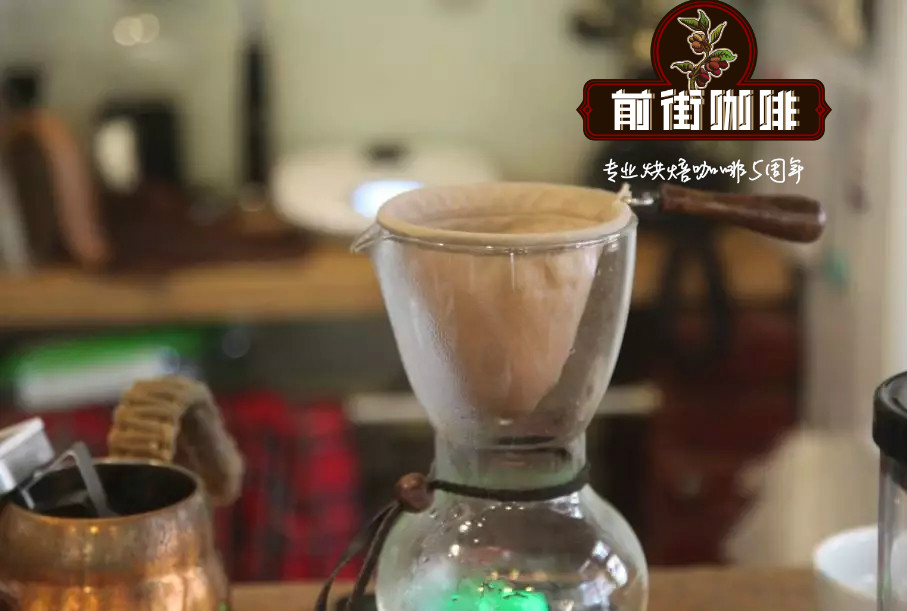
Choose beans with fresh, bright flavors, medium-light roasts work best. FrontStreet Coffee recommends the washed Yirgacheffe, the Guji, the Kenya Cherry Tomato, the Huakui, or the Strawberry Candy, anything with fruity, acidic aromas. Use 15g of coffee and 100g of ice (enough ice to keep it genuinely cold!). Rinse and dry your dripper and filter paper beforehand. No need to preheat the cup for iced pour-over.

2. Temperature and Grind Size
For temperature and grind, we chose to raise the water 1°C above the 91°C normally recommended for pour-over. Normally you'd grind to a fine-sugar texture (Fuji Royal at 3.5); for iced pour-over, go slightly finer, half a setting down, to Fuji Royal 3.

This is why we suggested picking a bean you already know well. Because of the powder-to-water ratio (1:10) in iced pour-over, the extraction rate runs slightly lower than a regular brew, but not by much. Compensate with water temperature and grind size.
In other words: higher water temperature + finer grind = higher extraction rate.

3. Brewing Technique
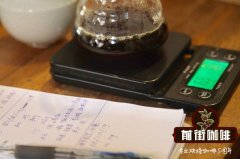
Bloom with 40g of water for 30 seconds.
In this stage you can also stir, or stretch the bloom slightly, so the grounds absorb water fully and degas smoothly. Use a small, vertical stream from a suitable height, circling slowly until the scale reads 160g, then stop pouring.

4. Poured Water in Stages
First pour: 60g of water; second pour: 40g. Use a relatively thin but tall stream, agitating purposefully so the grounds tumble thoroughly. Just be careful not to let the water level climb too high or splash onto the edge of the filter paper.
5. Wait
Because the grind is finer, drawdown will be slightly slower. No need to worry, at this ratio the brew won't easily over-extract into unpleasant flavors. Small-molecule fruit acids and floral aromas extract first, followed by mild bitterness. Since iced pour-over captures the front-to-middle of the extraction, as long as you don't keep pouring in one spot, the overall flavor stays fresh and bright.

6. Complete
Total extraction time is about two and a half minutes (similar to a normal brew with 20g of grounds). Once all the liquid has dripped through, swirl the server to mix evenly. Most of the ice should have just melted; the remainder keeps chilling and gradually dilutes the coffee. As the ice continues to melt the flavor lightens, so drink up before it fully melts.

Key Points for Making Japanese Iced Pour-over
1. The ice-to-water ratio should be roughly 1:1. It doesn't have to be exact, but don't stray far (adjust slightly for room temperature). Otherwise the coffee either won't get cold enough (too little ice) or will turn out weak (too much ice, too little water, under-extracted).
2. Extraction rate matters. Your first iced pour-over may not hit the mark. Assess whether the brew is too weak (low extraction) or off-tasting (high extraction). Assuming even extraction, you can raise the extraction rate by: raising water temperature, grinding finer, stirring more, or extending the extraction. Conversely, lower temperature, coarser grind, less stirring, or a shorter extraction will reduce it.

3. Don't expect fireworks. Sometimes a muted iced pour-over isn't about extraction or technique at all, human smell, taste, and touch simply become less sensitive at low temperatures, and aroma molecules move and diffuse more slowly in the cold, making them harder to perceive. So while iced pour-over satisfies the craving, refreshes, and keeps you going, it may not necessarily blow you away!
FrontStreet Coffee Recommendation
Looking for the right beans for iced pour-over? Here are the FrontStreet Yirgacheffe picks:
FrontStreet Washed Yirgacheffe (House Pick), For newcomers to the Ethiopian terroir, start with the most classic FrontStreet Washed Yirgacheffe house coffee, known for its white jasmine, bright citrus and lemon acidity, and tea-like finish. Its friendly price has made it the first bean many people use to step into specialty coffee. Yirgacheffe is a small town in southern Ethiopia, within the Sidamo zone, at roughly 1700-2100m, with coffee planted above 1800m, one of the highest coffee-growing regions in the world. The area was historically wetland, and Yirgacheffe's name became a byword for Ethiopian specialty beans thanks to its unmistakable white florals and lemon-citrus acidity. In 2010, the Ethiopian Commodity Exchange finally separated it from the Sidamo designation, hence the household name we know today.
FrontStreet Gudingding Cooperative, Yirgacheffe can be broken down into many small sub-regions, even single villages, several of which host experienced, highly skilled cooperatives whose coffees raise the bar another notch. The most representative is the FrontStreet Washed Gudingding Cooperative from Gudingding village. The cooperative sits in the Worka area at Yirgacheffe's southeastern tip, originally part of the Worka cooperative under the Yirgacheffe Coffee Farmers Cooperative Union (YCFCU); as demand for traceability grew, such "single-origin" lots were gradually uncovered by coffee hunters worldwide. Gudingding follows the most traditional washed processing, and this coffee, often called the last pristine corner of Yirgacheffe, carries none of the traditional bitterness, just fresh, bright citrus and lemon acidity plus jasmine fragrance. Many coffee lovers fall for it at first sip.
FrontStreet Natural Red Cherry, From the same Yirgacheffe region, FrontStreet's Red Cherry is fully-ripe-cherry natural processed: only completely ripe, defect-free fruit is harvested, given a first round of sorting at the station, then laid out on raised beds to dry. For the first few days the cherries are turned every 2-3 hours to prevent uneven heating and over-fermentation. After three to five weeks of sun-drying, workers machine-scrape off the dried outer fruit depending on weather and temperature, then move the beans to storage. Because the fruit dries with its flesh intact, the coffee keeps classic Yirgacheffe character while gaining the tropical fruit of a natural, citrus-like acidity, a berry juice feel, honeyed sweetness, and cream-smooth texture.
Yirgacheffe brewing suggestion, Dripper: V60; water temperature: 90-91°C; dose: 15g; ratio: 1:15; grind: EK43s at setting 10 / fine-sugar texture (#20 sieve at 80%). FrontStreet's pour: first pour 30g for a 30-second bloom; then pour 95g (scale reads about 125g), finishing at about 1 minute; when the water level drops to two-thirds of the bed, pour the remaining 100g (scale reads about 225g), finishing at about 1:35. Dripping completes at 2:00-2:10, remove the dripper and the extraction is done.
Important Notice :
FrontStreet Coffee is a long-established specialty coffee roaster in Guangzhou China, selling freshly roasted beans from its own farm in Yunnan as well as dozens of carefully selected single-origin beans from around the world for both pour-over and espresso. The products deliver consistently excellent quality and great value, with shipping within 24 hours. Guangzhou's FrontStreet Coffee shop is recommended by many coffee lovers, and the beans are now available online at the Tmall 。
FrontStreet Coffee has moved to a new address:
FrontStreet Coffee Address: 315,Donghua East Road,GuangZhou
Tel:020 38364473
 Scan and follow the En Gafei WeChat official account. Please indicate that the reprint comes from "En Gafei".