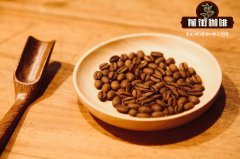
How Should Mandheling Coffee Beans Be Roasted? What is Sumatra Mandheling Coffee Wet Hulling?

Introduction to Sumatra Coffee
What the coffee world calls Mandheling is, in fact, Sumatra coffee — coffee from the Indonesian island of Sumatra. Sumatra is Indonesia's second-largest island and the world's sixth-largest, covering 470,000 square kilometers.
Sumatra Coffee Growing Regions
For all its size, Sumatra does not grow coffee everywhere. Large-scale cultivation is concentrated in the two northernmost of the island's eight provinces: Aceh and North Sumatra. Aceh coffee comes mainly from the Gayo Mountains around Lake Tawar, farmed largely by the indigenous Gayo people. In North Sumatra Province, coffee is grown around Lake Toba — the world's largest volcanic caldera lake — chiefly in the Sidikalang area to its west and the Lintong area to its south, where the farmers are mostly of Batak heritage.
Unique Processing Methods
Sumatra's production system is unlike anywhere else. The island has very few large estates; instead, tens of thousands of smallholders grow and harvest their own coffee, pulp the cherries, and sun-dry the beans at home. Before the green beans are fully dry, the parchment is stripped off, and the beans pass through a chain of small, medium, and large collectors, dried in batches and forwarded to exporters. Even at the exporter, beans are often sun-dried again until moisture reaches spec, then hand-sorted to remove defects and foreign matter, screened by size, and packed for export.
This distinctive semi-washed method is known locally as Giling Basah — wet-hulling. Because the beans are hulled while still half-dry, they dry slowly and bare-skinned, which is what creates Sumatra coffee's characteristic rich, heavy texture. The trade-off is labor: the wet-hulled beans pick up more defects and demand intensive hand-sorting afterwards. But the full-bodied style it produces exists nowhere else in the coffee world.
Golden Mandheling
Golden Mandheling is produced mainly on Java, Sulawesi, and Sumatra. Unlike most famous coffees, it is not named for a place at all — the name refers to a harvesting and processing standard.
Golden Mandheling holds a prestigious position in the industry. The semi-washed Sumatra style is the most outstanding bean in Indonesian coffee, and Golden Mandheling is its finest expression: purely hand-picked, mellower than ordinary Mandheling, combining low-acidity sweetness and bitterness with real depth, on top of the rich, rugged character that defines Mandheling coffee.
Gayo Production Region
Sumatra distinguishes between "Aceh Gayo Mountain," "North Sumatra Lake Toba," and "Lintong Lasuna" in the island's north, along with the Gayo production area around scenic Lake Tawar. The world-famous Golden Mandheling comes from the Gayo area around Lake Tawar.
The region enjoys abundant rainfall — an annual average of about 2200mm — an altitude between 1100-1400 meters, and volcanic soil well suited to coffee.
Cultivation here is led by independent smallholders who use shade trees to improve quality. Compared with Lintong Mandheling from the island's other specialty heartland, Gayo coffees are calmer and more restrained. Golden Mandheling therefore pairs a thick, creamy texture and rich chocolate-and-dried-fruit flavors with fewer defective beans, thanks to the farmers' painstaking sorting.
FrontStreet Coffee Roasting Recommendations
Mandheling's acidity is best handled with heat: FrontStreet Coffee typically roasts it dark to soften the acidity and bring forward the heavy body plus cocoa and nut flavors.
Indonesian coffee is mostly a mixed planting of Typica and local Arabica varieties carrying Robusta genes. For roasting, medium heat and a slower profile promote even drying: with a standard setup, set the damper to 20% at charge, 50% at the browning point, and 80% at first crack, fine-tuning heat by roughly 5% according to the rate of rise. FrontStreet recommends roasting to the very beginning of second crack — a medium-dark roast — which effectively strips out the earthy edge of wet-hulled Indonesian coffee while boosting chocolate flavor and body.
FrontStreet Coffee Recommendation
Wet-hulling exists for a simple reason: Sumatra's weather. Indonesia's humidity runs between 70-90% year-round, rains are frequent, and annual rainfall can exceed 2000mm — conditions in which the 2-3 weeks of sun-drying used in Africa simply will not work, and full washed processing costs more water and labor than smallholders can afford. So farmers hull the parchment mechanically while the beans are still half-dry, exposing them to the air to speed drying — and in doing so pick up wild, earthy, herbal, spicy notes found nowhere else. For the classic expression of that style, FrontStreet Coffee recommends its PWN Golden Mandheling, produced by Indonesia's PWN company to extraordinarily strict standards: only beans above screen size 18, fewer than 3 defects per 300-gram sample to meet the top G1 grade, followed by three rounds of hand-sorting that give the cup exceptional cleanliness and sweetness. After a medium-dark roast it shows abundant roast aromas, a clean yet full-bodied cup, caramel sweetness, and notes of chocolate, nuts, and roasted chestnut. For brewing, FrontStreet suggests pour-over at 87-88°C with 15 grams of coffee, a 1:15 ratio, a coarse-sugar grind, and three-stage pouring to bring out the syrupy body and caramel sweetness. Those who prefer it pressed into espresso should try FrontStreet's classic blend, where medium-dark Mandheling adds sandalwood, herbal, and spice tones over a Brazilian creamy-nut base, with a touch of Robusta for richer crema.
Important Notice :
FrontStreet Coffee is a long-established specialty coffee roaster in Guangzhou China, selling freshly roasted beans from its own farm in Yunnan as well as dozens of carefully selected single-origin beans from around the world for both pour-over and espresso. The products deliver consistently excellent quality and great value, with shipping within 24 hours. Guangzhou's FrontStreet Coffee shop is recommended by many coffee lovers, and the beans are now available online at the Tmall 。
FrontStreet Coffee has moved to a new address:
FrontStreet Coffee Address: 315,Donghua East Road,GuangZhou
Tel:020 38364473
 Scan and follow the En Gafei WeChat official account. Please indicate that the reprint comes from "En Gafei".

What are the characteristics of Réunion Island Laurina coffee? Why is Laurina called natural low-caffeine coffee?