What are the characteristics of Réunion Island Laurina coffee? Why is Laurina called natural low-caffeine coffee?

What Are the Characteristics of Réunion Island Laurina Coffee?
When people talk about low-caffeine coffee, most think of decaffeinated coffee that has been specially processed to remove caffeine. But there is a coffee variety that is naturally low in caffeine - just 0.5% - and that is the Bourbon Pointu that FrontStreet Coffee introduces here.
Scientifically, Bourbon Pointu is "Coffea Laurina," or Laurina coffee, though it is commonly called Bourbon Pointu. The name comes from the shape of the bean, which is relatively slender and pointed at both ends.

Why Does Bourbon Pointu Have Such Low Caffeine?
Unlike other coffees that are artificially decaffeinated, Bourbon Pointu has less caffeine than a typical Bourbon tree because of genetic degradation, which gives it better flavor but an extremely low yield. That is why Bourbon Pointu is rare and expensive. The variety is particularly susceptible to leaf rust and black spot disease, which is the main reason for its low yield, and for that reason it is extremely precious and mostly grown in laboratories.
As early as the 18th century, Bourbon Pointu had already won fans around the world. Even King Louis XV of France and the novelist Balzac were devotees. Over the 200 years from the 18th to the 19th century, Bourbon Pointu was cultivated extensively on Bourbon Island, reaching a peak annual output of 4,000 metric tons in 1800.
A series of disasters followed, however - hurricanes, fire ants and leaf rust - and cultivation declined. Finally, in 1942, the last batch of Bourbon Pointu shipped back to France amounted to a pitiful 200 kilograms. After that it disappeared without a trace, no longer even mentioned in official documents. Bourbon Pointu was considered extinct.
The Rediscovery and Revival
Decades after Bourbon Pointu vanished, Yoshiaki Kawashima, a coffee expert at UCC Coffee Japan, repeatedly heard coffee farmers in El Salvador mention that "low-caffeine coffee trees might still survive on the French Bourbon Island," which inspired him to search for it.
In 1999, while on a research trip to Africa, he visited Bourbon Island to look for the legendary low-caffeine trees. Things did not go as smoothly as he had imagined: the young people on the island had never heard of coffee crops there, so he left his contact details with local farmers and officials before leaving.

Finally, two years later, in 2001, Kawashima received a call from a farmer on Bourbon Island reporting the discovery of more than thirty unknown coffee trees growing wild.
Experts later confirmed that these were indeed the original Bourbon Pointu trees. French scientists and UCC Coffee Japan then collaborated on a revival plan for this natural low-caffeine coffee, and in 2006 the first small batch of Bourbon Pointu beans was produced. After screening, they went on sale in 2007, mainly to the Japanese market, at high prices said to be four times those of premium Blue Mountain coffee.
Modern Recognition
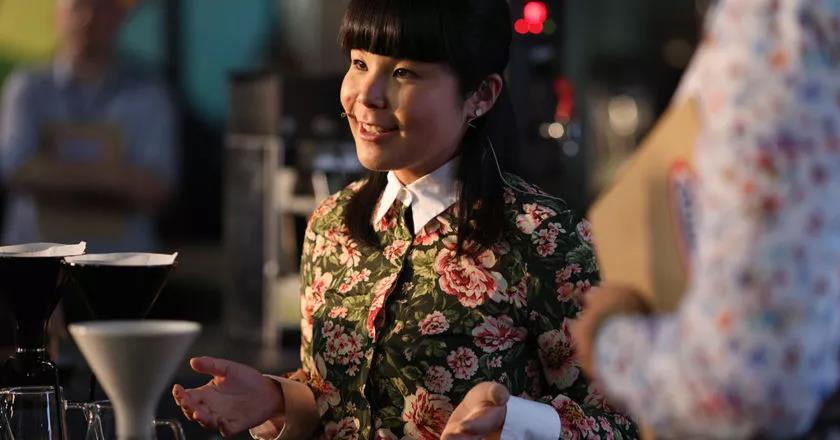
At the 2018 World Brewers Cup, Emi Fukahori of Switzerland used a semi-carbon dioxide maceration processed Bourbon Pointu from Brazil to defeat a field of Panama Geisha varieties, writing another memorable chapter in competition history.
The beans she chose came from the Daterra Estate in Brazil's Cerrado region - a Laurina Bourbon Pointu. In her presentation she described the variety as having 50% less caffeine and 20% less chlorogenic acid than other Arabica varieties, resulting in significantly less bitterness. Emi Fukahori described its flavor and aroma as red grapes, orange blossom, pineapple, rum and green apple. That it could surpass so many Geisha varieties and ultimately win the WBrC championship shows that Bourbon Pointu should not be underestimated.
Characteristics and Brewing
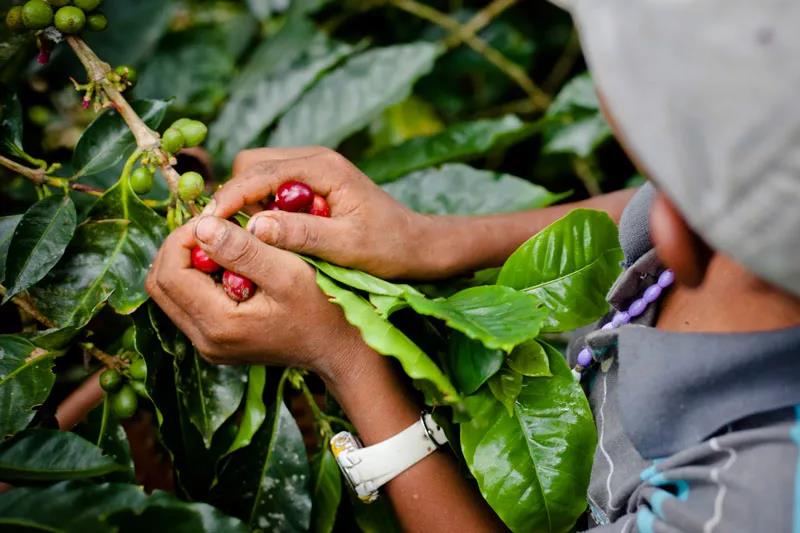
The Bourbon Pointu tree resembles a small Christmas tree, with shorter branches and narrow leaves. Its caffeine content is only 0.5%. It is particularly prone to leaf rust and black spot disease, which is the main reason for its low yield, and its red cherries ripen earlier than those of other varieties.
Although Bourbon Pointu no longer commands the exaggerated prices of the past, it remains a very precious bean. So what exactly does such an expensive coffee taste like?

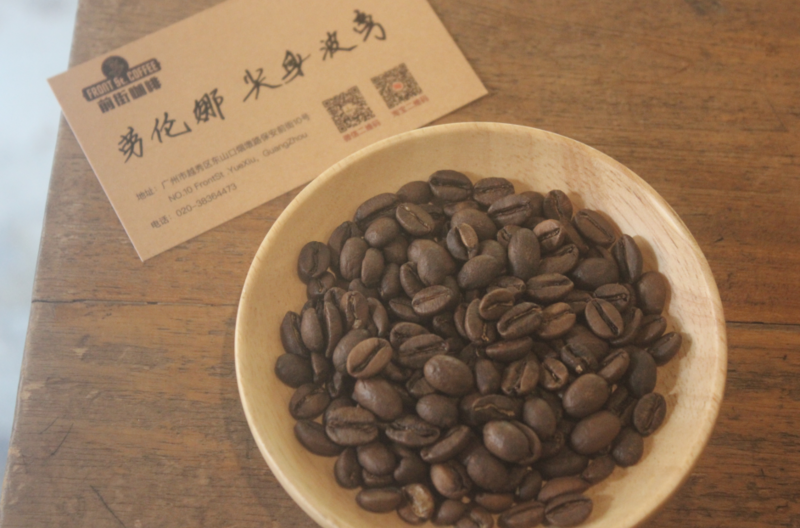
Look at the roasted beans and you will see that Bourbon Pointu is generally small and uniform, with a slender shape pointed at both ends, much like a grain of wheat.
FrontStreet Coffee brewed a pot of natural process Bourbon Pointu. The parameters and flavor description are as follows.
Parameters: 15 g coffee, Hario V60 dripper, 90C water temperature, medium-fine grind, a 1:15 coffee-to-water ratio.

Brewing method: Poured extraction. Use 30 g of water to bloom - stop when the surface of the coffee bed changes from wet to dry, giving a bloom time of 30 seconds. Then pour a small stream into the center up to 125 g. When the liquid level drops and is about to expose the bed, continue pouring to 225 g and stop. When the level drops again and is about to expose the bed, remove the dripper. The extraction time, counting from the bloom, is 2 minutes.

Flavor: The dry aroma carries a fermented fragrance along with spice, nuts and tropical fruit. The wet aroma has distinct floral notes. The entry is smooth, with flavors of red fruits, plums and pine nuts and a persistent sugarcane aftertaste.
FrontStreet Coffee Recommendation
If the soft, low-bitterness character of Bourbon Pointu appeals to you, FrontStreet Coffee's Brazil Queen Estate SOE is a kindred spirit. Grown from the distinctive Yellow Bourbon variety, Brazilian coffee is low in acidity and soft in body, with chocolate, nut and cream aromas and a balanced structure that makes extraction very forgiving. Roasted medium-dark and pulled through an espresso machine, it shows butter cookie, macadamia and toasted bread notes - a gentle, easy-drinking cup for anyone who prefers less bite.
For a classic, dependable espresso base, try FrontStreet's signature house blend, used in its stores for close to ten years. It pairs Brazilian Cerrado with Colombian Huila beans for the familiar, comforting taste of traditional Italian-style coffee, and it works whether you brew it at home or in a cafe.
Important Notice :
FrontStreet Coffee is a long-established specialty coffee roaster in Guangzhou China, selling freshly roasted beans from its own farm in Yunnan as well as dozens of carefully selected single-origin beans from around the world for both pour-over and espresso. The products deliver consistently excellent quality and great value, with shipping within 24 hours. Guangzhou's FrontStreet Coffee shop is recommended by many coffee lovers, and the beans are now available online at the Tmall 。
FrontStreet Coffee has moved to a new address:
FrontStreet Coffee Address: 315,Donghua East Road,GuangZhou
Tel:020 38364473
 Scan and follow the En Gafei WeChat official account. Please indicate that the reprint comes from "En Gafei".