Don't Throw Away Expired Coffee Beans! Eco-Friendly and Practical Recycling Tips

They say that if you truly love coffee, you'll never let it go stale before you finish it. But sometimes a discount is too good to pass up and you buy more than you can drink, or you get sick and can't touch coffee, and the beans go past their prime. So can those beans still be used?

The reason we chase freshness in coffee is that fresh coffee offers richer flavor and more complex layers. As time passes, the carbon dioxide inside the beans gradually dissipates, and the flavors fade along with the escaping gas. When the carbon dioxide is almost completely released, the beans are no longer fresh. Coffee brewed from stale beans tastes bland, nowhere near as enjoyable as before.
Understanding Coffee Bean Freshness
Typically, 60 days past the roast date is the limit of a coffee bean's optimal flavor window. Some strict coffee enthusiasts even define beans more than 30 days past roast as "stale." Based on FrontStreet Coffee's own testing, most beans, when stored properly sealed and protected from light and moisture, still perform well within 40-50 days without showing stale characteristics. If they're left unsealed after opening, though, coffee starts losing flavor around 30 days, and the bloom during brewing won't happen — telltale signs of stale beans.

FrontStreet Coffee wants to emphasize that while stale coffee beans do affect flavor and make the cup less enjoyable, from a food-safety standpoint they're completely safe to consume. Generally, roasted coffee beans have a shelf life of one year, so there's no need to worry about safety. As for the weaker flavor, we can't change the state of the beans, but we can adjust the extraction method to improve the taste and make the coffee more palatable.
Brewing Techniques for Stale Coffee Beans
As mentioned, when beans are stale they won't bloom — the grounds show no reaction after water is poured. Many people assume that since blooming is for releasing gas, the step can simply be skipped with stale beans. In fact, when brewing stale coffee beans you should pay even more attention to the pouring technique during the bloom.
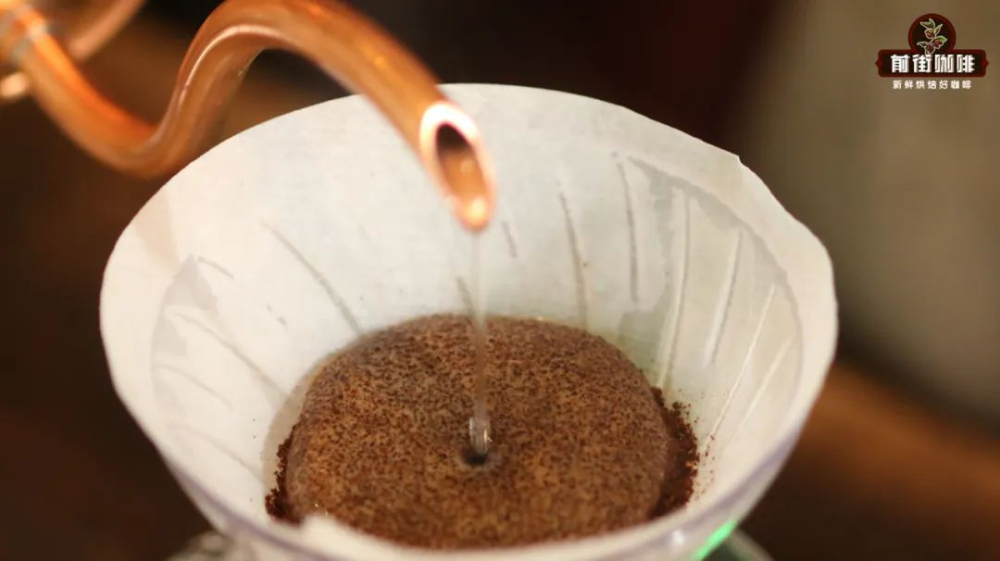
Because while the bloom appears to release gas on the surface, what it really needs to accomplish is wetting all of the coffee grounds, both the exterior and the inner core. When gas is released, the grounds expand, closing the gaps between them and slowing the flow of water into the lower pot, which gives the water enough time to saturate the core of the grounds.
With stale beans, though, there's no reaction when water is poured, so water runs quickly through the gaps into the lower pot without enough time to penetrate the core. What you observe, then, is only the surface of the grounds being wet while the core stays dry — and the brewed coffee naturally lacks flavor.
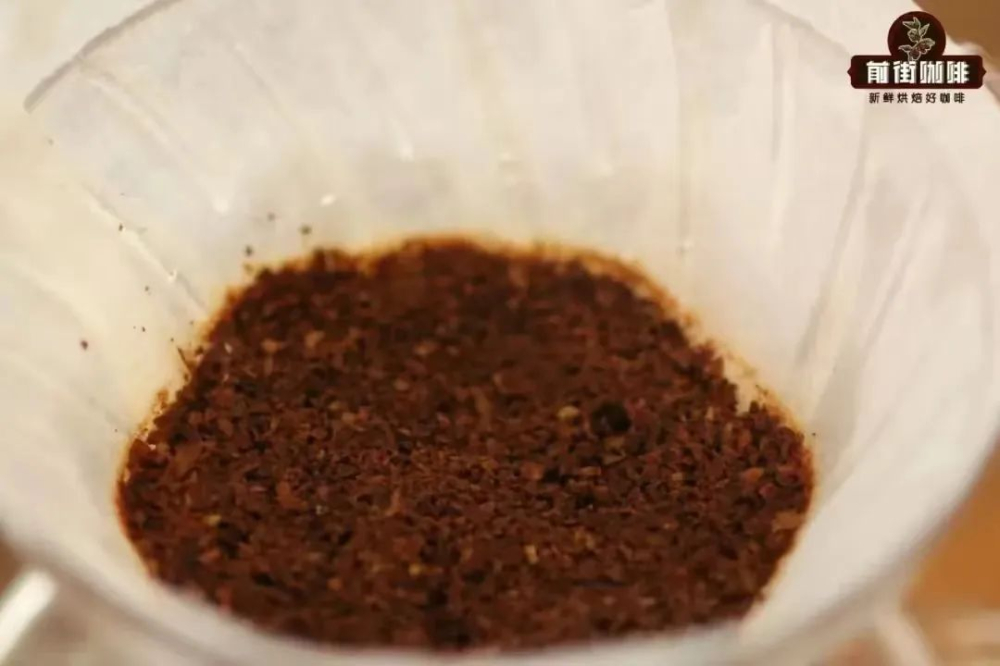
During subsequent pouring, because there's little gas release, the foam appears very thin and most of the grounds easily settle at the bottom, blocking the drainage holes. That can quickly lead to bitterness and off-flavors from over-extraction.
Adjustment Methods for Stale Coffee Beans
To sum up, when dealing with stale coffee beans you can make the following adjustments. First, on grind size, FrontStreet Coffee suggests going coarser than usual. For example, if FrontStreet Coffee normally uses setting 10 on an EK grinder, use setting 10.5 here. This helps avoid clogging and prevents bitter off-flavors.

During the bloom, extend the pouring time as much as possible — use a smaller stream, for instance, to give water enough time to saturate the grounds. The soaking time shouldn't be too long. Based on FrontStreet Coffee's experiments, for 15g of grounds, pour 30ml of water over 13 seconds, then wait 5-7 seconds before continuing to pour, making the bloom about 20 seconds in total.
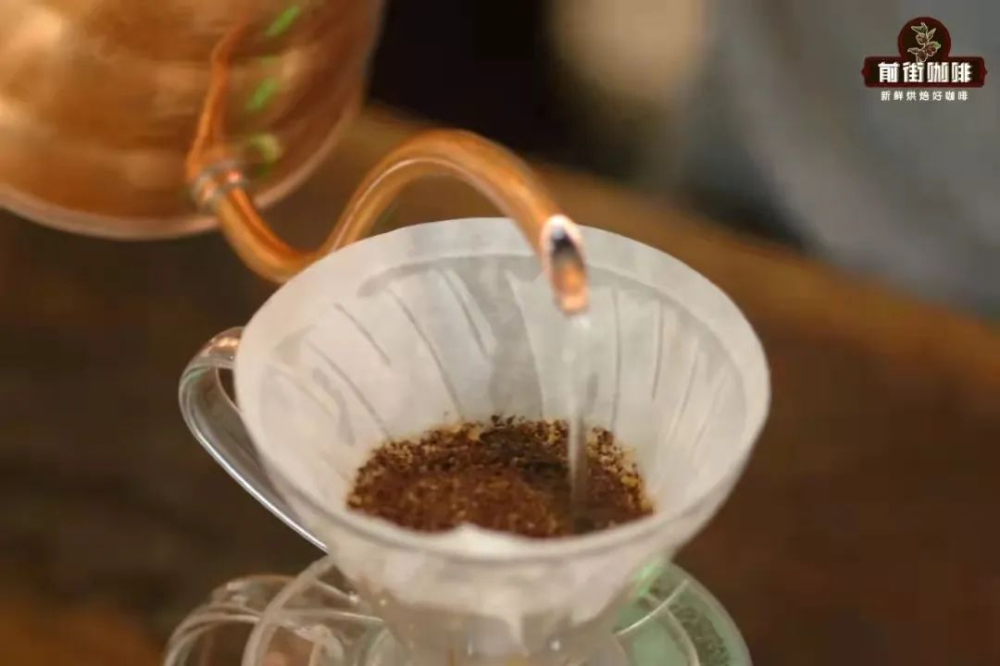
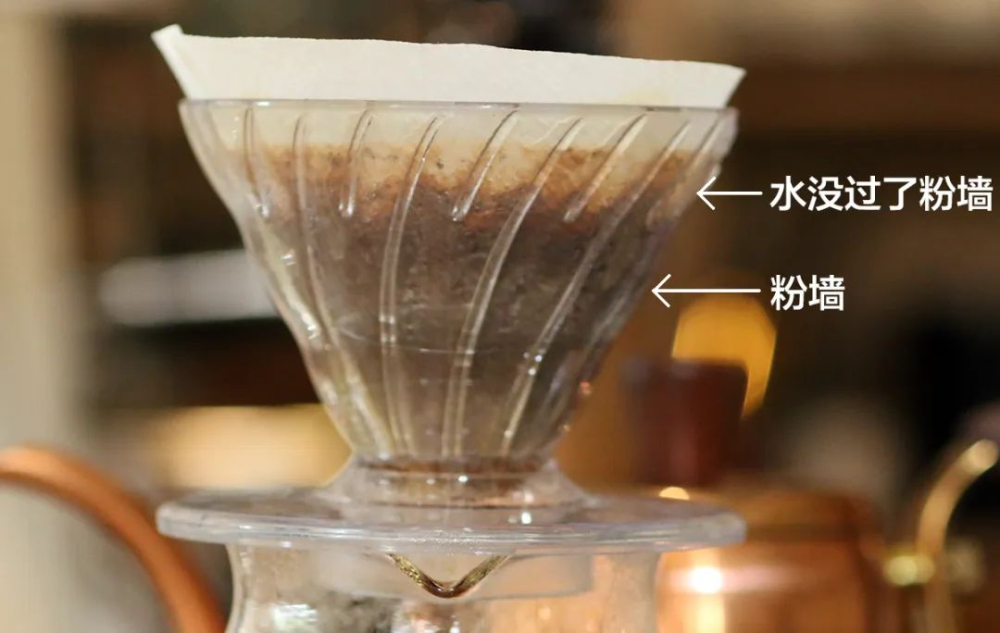
Then continue pouring as usual. One thing to note: don't make too-large circular motions when pouring, since that easily washes the already sparse coffee bed back down to the bottom and creates extra blockage. Also, don't raise the water level too high — stale grounds mostly lack "vitality" and sink quickly, so a high water level won't have enough grounds to form a proper bed and instead lets water run along the dripper's ribs, another reason the coffee lacks flavor.
These adjustments only respond to the changes you see during brewing and offer an improvement over the usual method. The flavors that have already dissipated from beans that lost their freshness can't be rescued by brewing technique.
Alternative Uses for Expired Coffee Beans
But if the beans in your hands haven't just passed their optimal window but have gone beyond their shelf life, then you can't proceed as FrontStreet Coffee described above. The best approach is to put them to other uses. Here, FrontStreet Coffee summarizes three practical, environmentally friendly ways to recycle them.

First Method: Odor Elimination
Place coffee grounds in ashtrays to remove cigarette odor — when cigarettes are stubbed out, they give off a coffee fragrance. Many coffee shops use this method, and it also helps extinguish cigarette butts easily. If you often use an oven for baking, after several uses the interior becomes coated with grease and mixed with various odors. Place a tray of coffee grounds in the oven and heat it to effectively remove lingering food smells. For pet owners, cleaning up pet waste is the most headache-inducing chore thanks to the unbearable odor. Just place some coffee grounds after cleaning up and you can reduce the trouble the smells cause.

Second Method: Cleaning
Wrap ground coffee in gauze and wipe stovetops and pot lids for effective stain removal. Use boiled expired coffee to clean sinks and toilet pipes. Similar surfaces can all be cleaned with expired coffee beans.

Third Method: Plant Nutrients
Coffee beans contain nutrients that plants need. Simply crush expired coffee beans and pour them into flower pots, where they serve as fertilizer without unpleasant odors. Arrange them in a circle around plant roots and you can also help repel insects.
FrontStreet Coffee Recommendation
The easiest way to avoid stale beans in the first place is to buy well-roasted coffee and drink it within its window — and medium roasts tend to be forgiving. FrontStreet Coffee's Brazil Queen's Estate, a yellow Bourbon from Brazil, is a great everyday choice: roasted medium, it's clean and gently sweet, with cream, peanut, chocolate, toast and sugarcane aromas and a smooth, never-astringent cup. It brews as a pour-over just as happily as it does in a moka pot or an espresso machine.
If you'd rather lean sweeter, FrontStreet's Strawberry Candy Geisha blend combines a Costa Rican honey-process coffee with a washed Panamanian Geisha at a medium roast, showing orange-blossom honeyed notes and rounded sweetness. It suits cold brew, pour-over and espresso, so it's easy to finish before it fades. And for a gentle, balanced medium roast with genuine origin character, FrontStreet's 2013 Yunnan Sun-Dried Typica brings nutty, brown-sugar, black-tea and dried-apricot notes that hold up nicely over a pour-over, cold brew or drip machine.
Important Notice :
FrontStreet Coffee is a long-established specialty coffee roaster in Guangzhou China, selling freshly roasted beans from its own farm in Yunnan as well as dozens of carefully selected single-origin beans from around the world for both pour-over and espresso. The products deliver consistently excellent quality and great value, with shipping within 24 hours. Guangzhou's FrontStreet Coffee shop is recommended by many coffee lovers, and the beans are now available online at the Tmall 。
FrontStreet Coffee has moved to a new address:
FrontStreet Coffee Address: 315,Donghua East Road,GuangZhou
Tel:020 38364473
 Scan and follow the En Gafei WeChat official account. Please indicate that the reprint comes from "En Gafei".