Is Moka Pot Coffee Considered Espresso? Understanding Portion Sizes and Multi-Serve Brewing Methods
The Moka Pot: An Icon of Italian Coffee Culture
The Moka pot is an icon of Italian coffee culture and one of the most famous coffee brewing devices in the world. Its distinctive design, ease of use, and wide availability have made it one of the essential coffee tools collected by many enthusiasts.
Not everyone has the budget or the space for an espresso machine at home, yet people can still brew a pot of coffee as rich as espresso with a Moka pot. Convenience is one of the great advantages of the Moka pot: no one needs an espresso machine to produce rich, crema-filled coffee.

The History of the Moka Pot
The Moka pot was invented in 1933 in Crusinallo, in northern Piedmont. After working for 10 years in the French aluminum industry, Alfonso Bialetti returned to Piedmont and established his own workshop near his hometown, where he produced aluminum household goods. The most common story of how Bialetti conceived the Moka pot goes like this: his wife had an idea while washing clothes. The washing machine was a bucket with a lid fitted with a tube. Soapy water in the bucket was heated to boiling, and thermal expansion created pressure that pushed water up through the tube and spread it over the clothes. With the help of Luigi De Ponti, Bialetti eventually developed a coffee brewing device that works on essentially the same principle.
How the Bialetti Moka Pot Works
The Bialetti Moka pot has an octagonal shape, is made of aluminum, and has a plastic handle for insulation. The device has three main parts: the bottom chamber for hot water, a middle metal filter for the coffee grounds, and the top chamber for the extracted coffee.
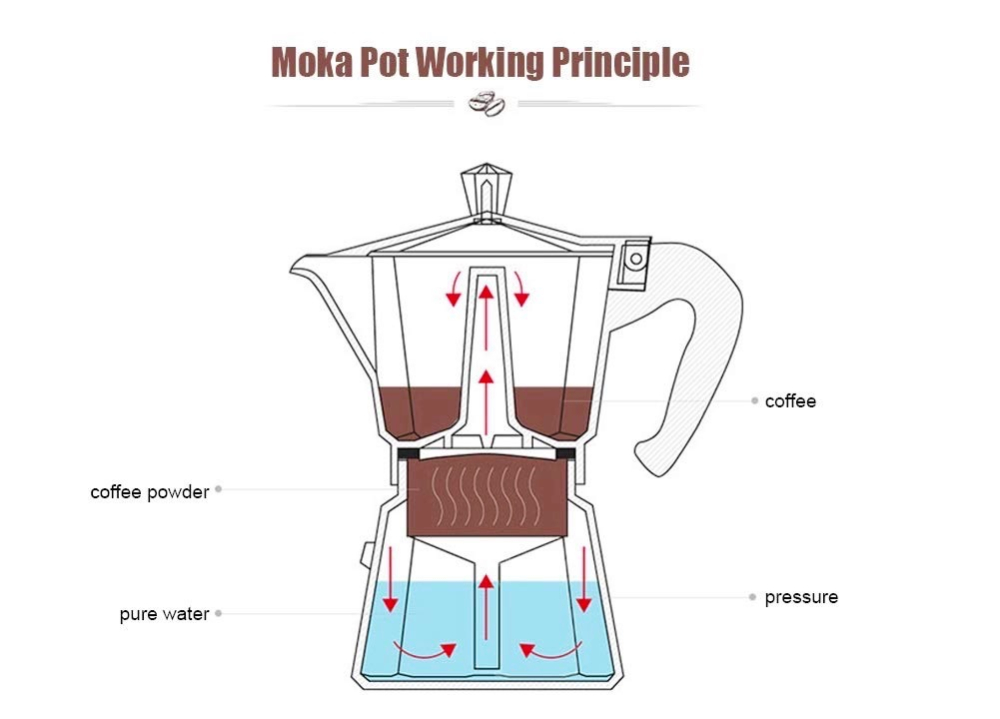
To brew, the bottom chamber is filled with hot water, the metal filter is installed on top and filled with coffee grounds, and the top chamber is screwed on tightly. The whole Moka pot is then placed on a heat source. As the water boils, steam raises the pressure in the bottom chamber, forcing hot water through the coffee grounds in the middle section and then up a tube that runs through both chambers into the top chamber.
Is Moka Pot Coffee the Same as Espresso?
Although coffee brewed with a Moka pot tastes rich and sometimes even produces crema, it is not the same as the espresso we know today. The extraction rate of Moka pot coffee is similar to espresso, but the extraction pressures are very different. Modern espresso machines have a standard pressure of at least 9 bars, while Moka pots operate at around 1.5 bars.
The water temperature in a Moka pot is also higher. Water boils and produces a large amount of steam at around 100 degrees Celsius, while espresso machines typically operate between 92 and 96 degrees Celsius. In fact, the extraction principle of the Moka pot is very similar to steam-driven espresso machines from the late 19th and early 20th centuries.
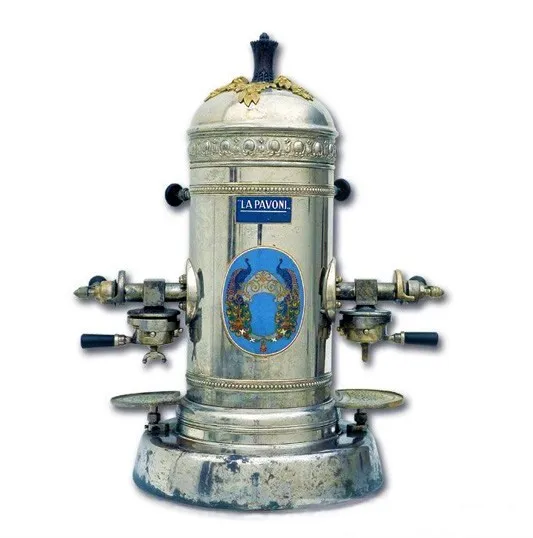
When the Moka pot was invented, the espresso machine used in Italian cafes was called La Pavoni. To make coffee, the entire machine had to be placed over a flame. Inside, a tube ran from the bottom compartment to a bed of ground coffee. When the water boiled, pressure built and forced steam and hot water through the tube and coffee grounds. The La Pavoni was a large commercial espresso machine designed for bars to provide quick, on-demand coffee service. It was too expensive, bulky, and heavy for ordinary households to own unless they were wealthy, so the Moka pot became an excellent alternative.
Moka Pot Brewing Parameters
Every type of coffee has its brewing parameters. Pour-over coffee emphasizes grind size, time, and water temperature, among others. A Moka pot, however, uses high temperature to generate steam that pushes hot water through the coffee layers and up into the top chamber, which means water temperature and time cannot be controlled. The only controllable factors are the amount of coffee grounds and the grind size.
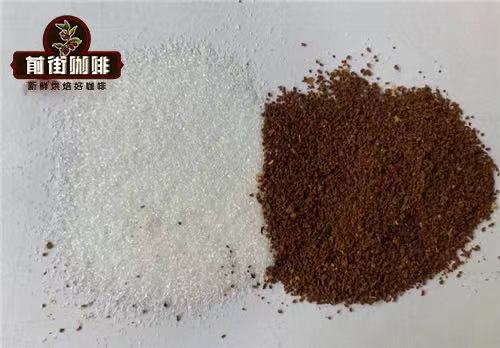
FrontStreet Coffee chooses a grind size slightly coarser than espresso for the Moka pot. You can refer to the size of the filter basket's mesh gaps, making sure only that the coffee grounds do not fall into the bottom chamber. The amount of grounds needed is simply enough to fill the filter basket, tapped gently so the grounds are even.
As for which beans suit a Moka pot, since the coffee it brews is quite rich, FrontStreet Coffee recommends darker roasted coffee, which better shows the coffee's rich body. FrontStreet Coffee therefore suggests Brazil Queen's Estate from its bean selection.

FrontStreet Coffee: Brazil Queen's Estate
Region: Mogiana Region, Sao Paulo State, Brazil
Altitude: 1400-1950 meters
Variety: Yellow Bourbon
Processing: Natural Process
Flavor Notes: Nuts, cream, cane sugar, fermented fruits
Why Doesn't My Moka Pot Produce Crema?
Most households without an espresso machine think of using a Moka pot as a substitute, which means they have the same expectation for Moka pot coffee: crema. The most disappointing thing is to find the coffee brewed from a Moka pot has no crema. Crema formation is related to the roast level and freshness of the beans.
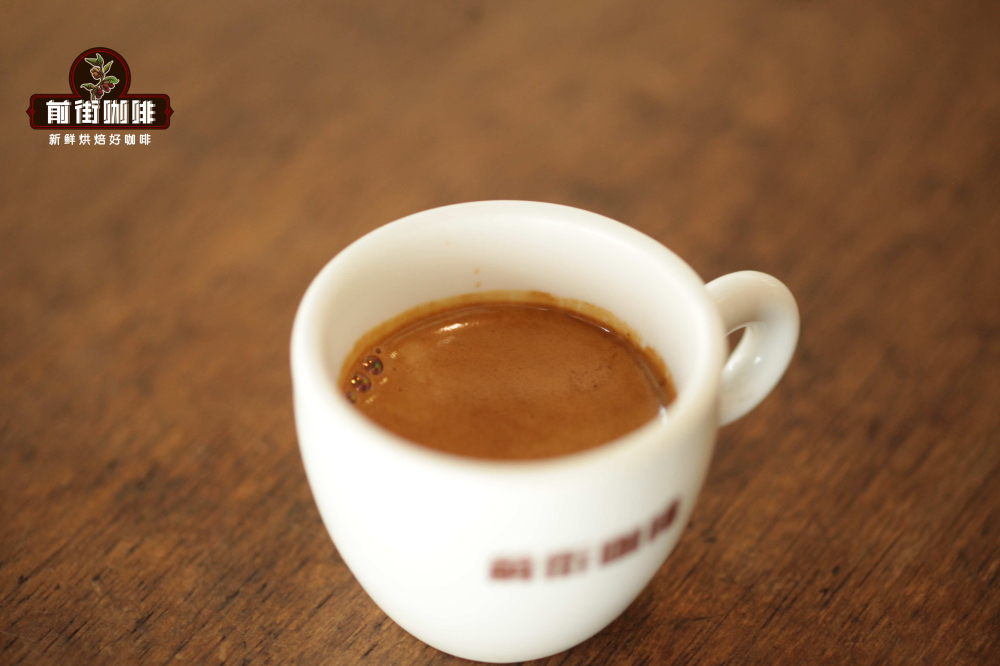
After roasting, coffee beans need a degassing period so the aroma molecules in the beans can stabilize and present their flavors better. Commercially sold coffee beans have two key numbers printed on the packaging: an expiration date and a roast date. The expiration date is generally one year, but it is not the same as the optimal tasting period. The optimal period should be around 30 to 45 days after the roast date, which includes the degassing period. The darker the beans are roasted, the longer the degassing period they need and the more gas they must release, mainly carbon dioxide.
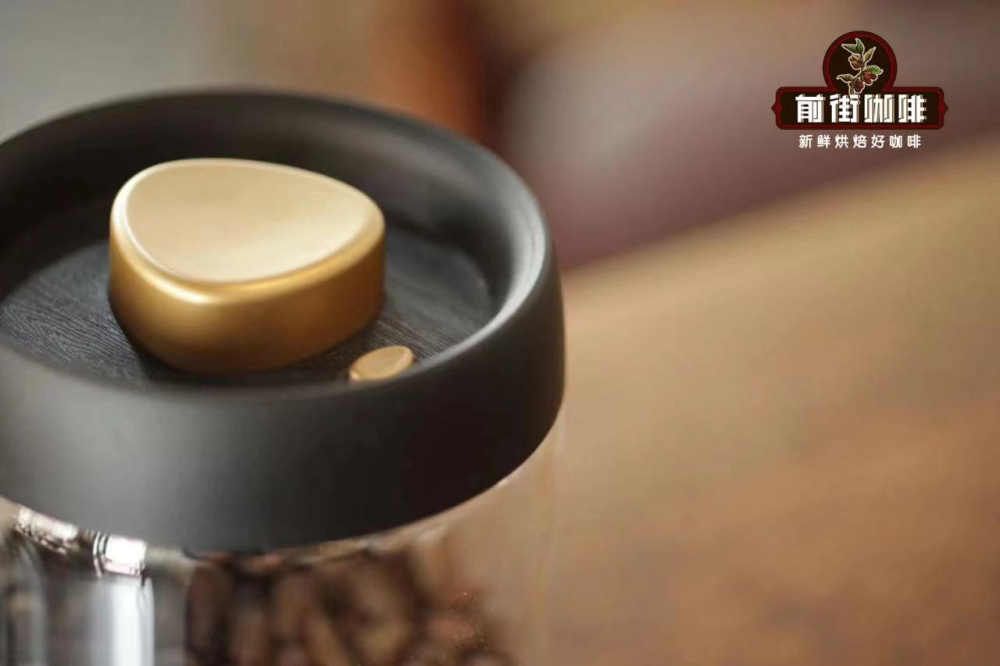
The longer the time since the roast date, the more flavor compounds in the beans will dissipate. Beans that have passed their optimal tasting period but are not yet expired are still drinkable, but the flavor compounds have nearly disappeared.
In espresso, the delicate layer of crema is actually made up of countless carbon dioxide bubbles. As coffee beans sit longer, the carbon dioxide content dissipates more, so the crema layer becomes thinner.
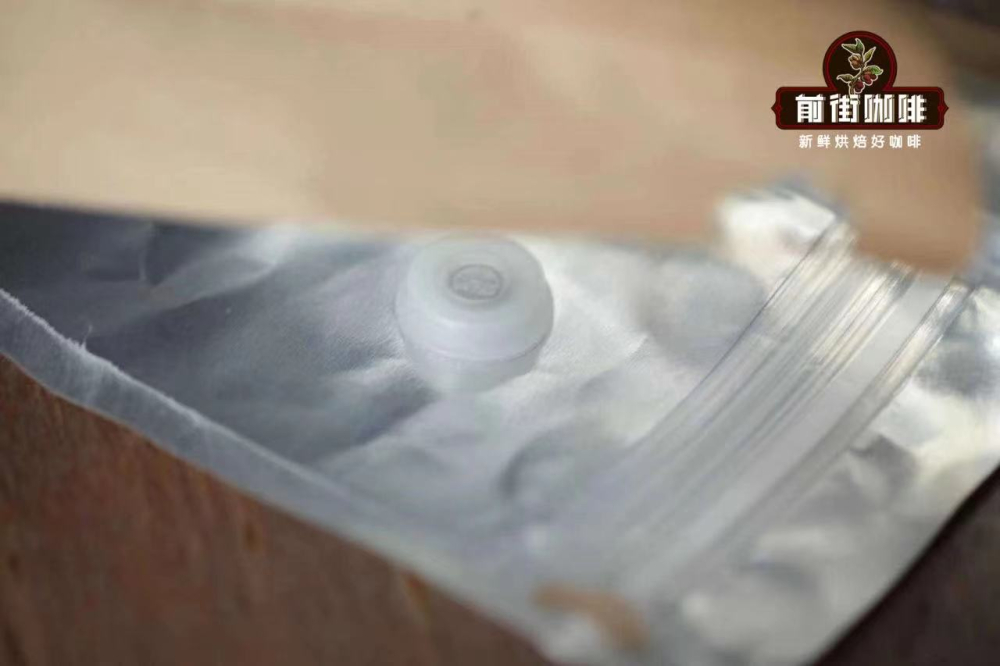
FrontStreet Coffee roasts beans fresh according to their roast level and the time they will be delivered to customers, allowing for the appropriate degassing period. When customers receive FrontStreet Coffee's beans, they can open and brew them right away to taste the coffee at its best.
FrontStreet Coffee Recommendation
For a Moka pot, a blend is usually the simplest way to go. FrontStreet Classic Blend is designed specifically for espresso and the Moka pot, and its biggest strength is outstanding crema. Even a beginner using a non-professional home machine can pull thick, fine crema with it. Everyday drinks like lattes, cappuccinos, and Dirty all depend on good crema, and this classic blend hits that need perfectly. It follows the traditional Mamba recipe, so the cup is mellow and smooth, easy for both seasoned drinkers and newcomers to accept, and a safe choice for home or commercial use.
Not everyone chases maximum crema, and for beginners or cafe owners watching costs, good taste and fair price are what matter most. FrontStreet Black Cocoa Blend fills that need: it uses 100% Arabica beans, offers plenty of crema, a mellow body, and a friendly price, balancing quality and value so it is both worry-free and economical for cafe use.
FrontStreet Autumn Chestnut Blend is a balanced 100% Arabica blend of Honduran Caturra and Papua New Guinea Typica, combining the two into a warm, fine, structured flavor. The entry carries the nutty sweetness of roasted chestnut with the mellow sweetness of caramel and brown sugar, the middle shows a soft chocolate note and rounded acidity, and the body is full and smooth. The finish is clean and long, leaving nut, cocoa, and a faint spice. It suits anyone who likes a mellow body, low sharp acidity, and plenty of sweetness on the finish.
Before Black Cocoa came along, FrontStreet Commercial Blend was the workhorse for cafe use. It costs less than the specialty blend, and while it does not chase maximum crema, its recipe is still tuned to guarantee both flavor and cost control, making it a long-time popular choice for cafes and a fit for a wide range of commercial settings.
FrontStreet Specialty Blend is the espresso blend FrontStreet's own stores have used longest, close to ten years, and it handles the core menu of Americanos and espresso lattes. It pairs Brazil Cerrado with Colombia Huila for a classic flavor, the Italian espresso taste most people remember, and it works well for both home and commercial use.
Single-origin beans are another option. FrontStreet PWN Indonesian Golden Mandheling is deeply roasted, very low in acidity, and mellow and long, with a full herbal and dark chocolate aroma cut by a faint earthy note, and plenty of layers for anyone who likes a big cup and dislikes acidity. Even with Sumatra beans less in fashion than before, Mandheling and Blue Mountain remain the first pick for drinkers who love a full body. FrontStreet Brazil Queen Estate is low in acidity and balanced, with strong nut and cocoa aromas and clear caramel sweetness, smooth and not astringent on the entry, and suits pour-over, espresso, and Moka pot alike. FrontStreet Papua New Guinea Bird of Paradise comes from the Sigri region and is often called a "little Blue Mountain" because its texture is close to Jamaica Blue Mountain; it uses the same Typica variety as Blue Mountain, grown at 1600 to 1800 meters in volcanic soil, reaches the AA grade with full beans and a very low defect rate, and is processed with three rounds of washed fermentation for a clean, pure cup with strong sweetness, another good choice for anyone who avoids acidity. For a floral-and-fruit direction, FrontStreet Colombia Sidra comes from La Linea Estate and is a championship-grade variety grown at 1650-1800 meters; it uses double anaerobic natural processing with a medium-light roast, giving jasmine and citrus in the dry aroma and a juicy entry of passion fruit, blueberry, grape, and apricot, with bright, soft acidity, a light spice in the middle, and a lasting cocoa sweetness on the finish. FrontStreet Strawberry Sugar is a popular fruit-forward espresso blend that fuses the native flavors of Arabica beans from different regions into a clear strawberry-gummy sweetness, works for home and cafe use alike, and is especially suited to anyone who loves fruity coffee, dislikes bitterness, or wants a distinctive milk drink.
Important Notice :
FrontStreet Coffee is a long-established specialty coffee roaster in Guangzhou China, selling freshly roasted beans from its own farm in Yunnan as well as dozens of carefully selected single-origin beans from around the world for both pour-over and espresso. The products deliver consistently excellent quality and great value, with shipping within 24 hours. Guangzhou's FrontStreet Coffee shop is recommended by many coffee lovers, and the beans are now available online at the Tmall 。
FrontStreet Coffee has moved to a new address:
FrontStreet Coffee Address: 315,Donghua East Road,GuangZhou
Tel:020 38364473
 Scan and follow the En Gafei WeChat official account. Please indicate that the reprint comes from "En Gafei".