Why Use Blends for Espresso Beans? Introduction to Espresso Bean Blending Methods and Grinding Settings

To this day, the vast majority of coffee shops still feature Italian blends as their main products. Blended beans became mainstream not only to reduce raw material costs but also to provide stable extraction for daily production and consistent flavor in espresso-based drinks. In short, coffee shops choose blends to maintain consistent quality standards.
What is Italian Blend Coffee?
In the early days of Italian coffee, coffee shops around the world used single-origin beans, such as Mocha and Brazilian coffee. It was taken for granted, so people did not emphasize it. As demand for coffee grew, beans from the major producing regions often showed inconsistencies, with potential instability in production, quality, or flavor. To avoid these risks, some merchants began blending beans from different origins to complement each other.

Producers also used dark roasting to eliminate unpleasant flavors and acidity, so that even if the batch quality from an individual origin was lower, dark roasting could mask the defects and produce richer coffee oils. Before the specialty coffee wave arrived, the raw material for espresso was therefore typically a blend of two or more origins, with little emphasis on origin or batch. As for flavor, it was largely fixed on bitter notes such as caramel, dark chocolate, nuts, cream, and cocoa.
FrontStreet Coffee wants every guest to enjoy a stable, distinctly flavored espresso or milk coffee every time, so it uses a blend of FrontStreet Coffee's Ethiopian Natural Red Cherry and FrontStreet Coffee's Honduras Whiskey Barrel Sherry as its espresso blend.

FrontStreet Coffee's Purpose for Creating Blend Coffee Beans:
1. Create Long-Term Stable Flavor
Different harvest seasons from the same region, and even different batches within a year, can produce different flavors. The drawback of single-origin coffee is exposed here: you cannot confidently guarantee that the single origin you found delicious this year will taste the same next year. One purpose of blending, therefore, is to create a product that can be supplied long-term with consistently stable flavor. When the quality of a particular bean in a new season fails to meet requirements or changes, a similar bean can be found to replace it and maintain stability.

2. Create Flavors That Single Coffee Beans Cannot Produce
A single-origin coffee can be like a person, with both strengths and weaknesses, while a blend is like building a team, using each member's strengths to cover the others' weaknesses for a complementary effect. Blending a sweeter bean with a more acidic one to achieve a sweet-and-sour balance, or adding some Brazilian beans to increase overall body, are both purposes of blending.
3. FrontStreet Coffee Will Determine the Target Flavor of the Blend
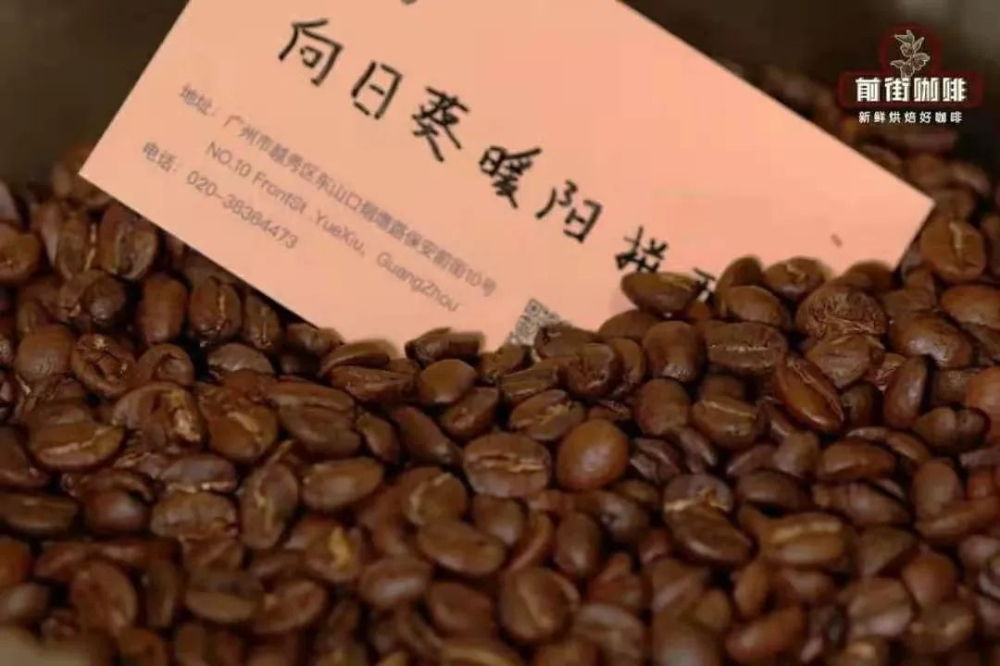
When FrontStreet Coffee first created the FrontStreet Warm Sun Italian Blend, the target was clear: a blend with wine-like aroma. FrontStreet Coffee's Honduras Sherry Barrel, Honduras Lychee Orchid, and Colombia San Jose, three beans with barrel fermentation and distinct wine-like aromas, were immediately listed as candidates. After multiple attempts and considering factors such as cost-effectiveness, FrontStreet Coffee finally chose the Honduras Sherry Barrel as the main note of the Sunflower Warm Sun Blend.
4. Finally, FrontStreet Coffee Will Determine the Blending Type
The advantage of raw blending is that it can use a single roast level to make the coffee tend toward stability and uniformity. It also reduces the number of roasting sessions, completing everything in one roast to improve efficiency. The disadvantages are also obvious: the limitations of raw blending are large, and it is generally recommended only for beans of similar density. Blending a bean suited to light roasting with one suited to dark roasting and roasting them to the same level can easily end up with less than 1+1.
The advantage of post-roast blending is that each bean can be roasted to its optimal roast level, maximizing its characteristics. The disadvantage is that daily quality control and management become more difficult. Inconsistent roast dates demand attention to multiple resting periods; a post-roast blend using 4 to 5 beans would require tracking 4 to 5 different roast dates. FrontStreet Coffee uses post-roast blending for the FrontStreet Warm Sun Blend, roasting the FrontStreet Coffee Honduras Sherry Barrel and the FrontStreet Coffee Natural Yirgacheffe Red Cherry Project separately, to maximize the wine-like aroma of the Sherry Barrel beans while preserving as much as possible the fruit acidity and citrus-berry aroma of the Natural Yirgacheffe.
When selecting blend beans and formulating recipes, FrontStreet Coffee first determines the characteristics to be presented, including the balance of sweet, sour, and bitter notes, expectations for body and flavor, and whether the focus is milk drinks, Americanos, or espresso. All of these are considered when choosing green beans, determining roasting methods, and finalizing recipes. The recipe also goes through repeated testing, adjustment, retesting, and readjustment before it is finalized.

For beginners without much experience who want to make a delicious latte, Italian blend beans are clearly more advantageous. In terms of extraction, FrontStreet Coffee recommends choosing more stable Italian blend beans. Blend products typically combine flavor profiles from different regions and use medium to dark roasting, making it easier to extract rich crema (beans with high crema are more suitable for milk drinks). This way the espresso has a thick, rich flavor and a higher margin for error. Most Italian blend beans are also supplied mainly for shop production use, and compared with single-origin beans of similar flavor, they are relatively lower in price, focusing on an economical, high-value approach.
Extraction Parameters:
Coffee Beans: FrontStreet Coffee Sunflower Warm Sun Blend
Coffee Dose: 20g
Liquid Yield: 40g
Brew Ratio: 1:2
Extraction Time: 26-32 seconds
Grind Setting: Galileo 2.0

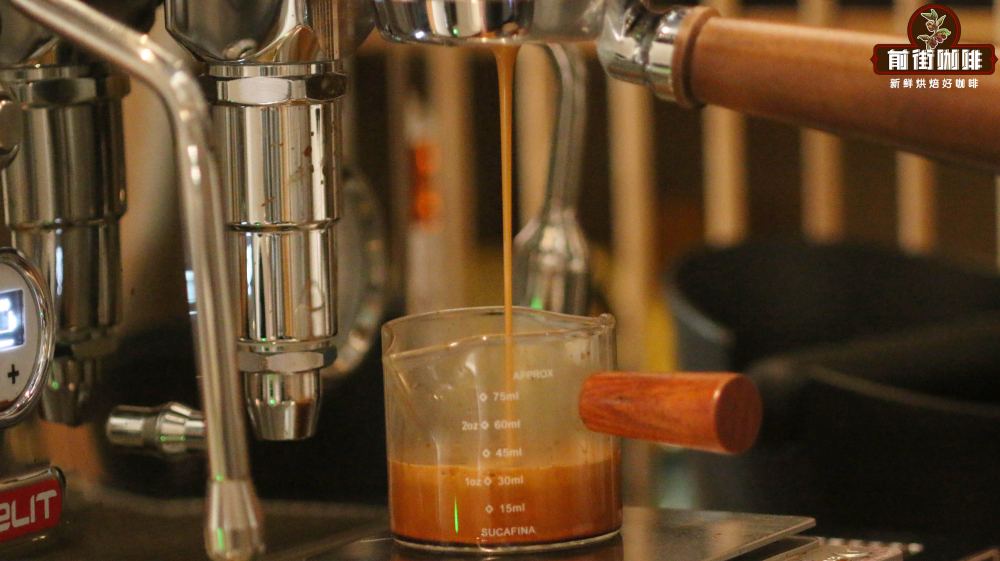
FrontStreet Coffee uses a double basket capacity coffee machine requiring 20 grams of coffee powder each time, with an extraction ratio of 1:2, meaning 40 grams of liquid coffee extracted within a reasonable time. Extraction time is related to the flow rate of the coffee powder, and single extractions are generally controlled between 20-35 seconds. Under 20 seconds the coffee tends to taste thin and weak; over 35 seconds it easily over-extracts and turns burnt and bitter. FrontStreet Coffee therefore keeps espresso extraction within the 26-32 second range during production.

Before extraction, wipe the portafilter dry, turn on the grinder, grind a double dose of coffee, and place it on a scale to measure and adjust until it reaches 20 grams. Then use a distribution tool to level the powder and press down vertically with a tamper to compact the puck, ensuring more stable extraction.
Then turn on the extraction switch and run water for 1-2 seconds to moisten the group head and wash away any stuck grounds. Place a scale under the cup for collecting espresso and zero the weight, placing both under the group head during extraction.

Gently lock the portafilter into the group head and start the extraction switch. Watch the extraction liquid. When the scale shows 40 grams of coffee liquid extracted and the time is approximately 30 seconds, pull down the extraction switch. Brewing parameters change subtly with daily air humidity and bean condition, so the coffee dose, grind setting, and liquid yield may need small upward or downward adjustments.
FrontStreet Coffee Recommendation
FrontStreet Classic Italian Blend. For everyday espresso, FrontStreet Coffee suggests a blend built on Brazilian beans. Low acidity, a balanced profile, and an accessible price make Brazilian coffee a first choice in many Italian-style recipes. FrontStreet Coffee's Classic Blend, the nutty Premium Blend, the balanced Black Cocoa recommended by many baristas, and FrontStreet Coffee's Commercial Blend made for cafes all include Brazilian beans.
Adding Brazilian coffee provides chocolate and cream aromas along with a soft sweet-sour-bitter balance, and the even character helps stabilize extraction. For milk drinks, the blend extracts rich crema and stands up well to latte art and layered drinks such as Dirty.
For espresso, use 20g of coffee at a 1:2 ratio, extracting 40g of liquid in 26-32 seconds, with the grind set at Galileo 2.0.
Important Notice :
FrontStreet Coffee is a long-established specialty coffee roaster in Guangzhou China, selling freshly roasted beans from its own farm in Yunnan as well as dozens of carefully selected single-origin beans from around the world for both pour-over and espresso. The products deliver consistently excellent quality and great value, with shipping within 24 hours. Guangzhou's FrontStreet Coffee shop is recommended by many coffee lovers, and the beans are now available online at the Tmall 。
FrontStreet Coffee has moved to a new address:
FrontStreet Coffee Address: 315,Donghua East Road,GuangZhou
Tel:020 38364473
 Scan and follow the En Gafei WeChat official account. Please indicate that the reprint comes from "En Gafei".