Coffee Latte Art Tips Sharing: Simple Heart Coffee Latte Art Tutorial for Beginners

For many coffee enthusiasts, latte art holds a special allure. It looks simple at first glance--a gentle pour and out come hearts, tulips, and other designs. But once you try it yourself, you start wondering: why does the milk come out in clumps? Forget rosettas and little swans--sometimes even a basic heart seems impossible! Don't worry. FrontStreet Coffee is here today to share some latte art tips.
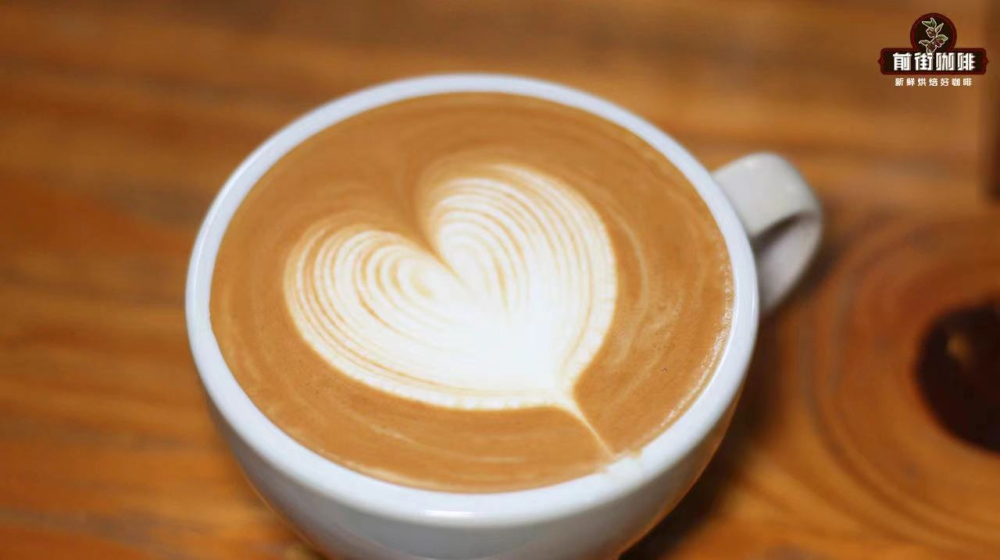
1. Flowable Milk Foam
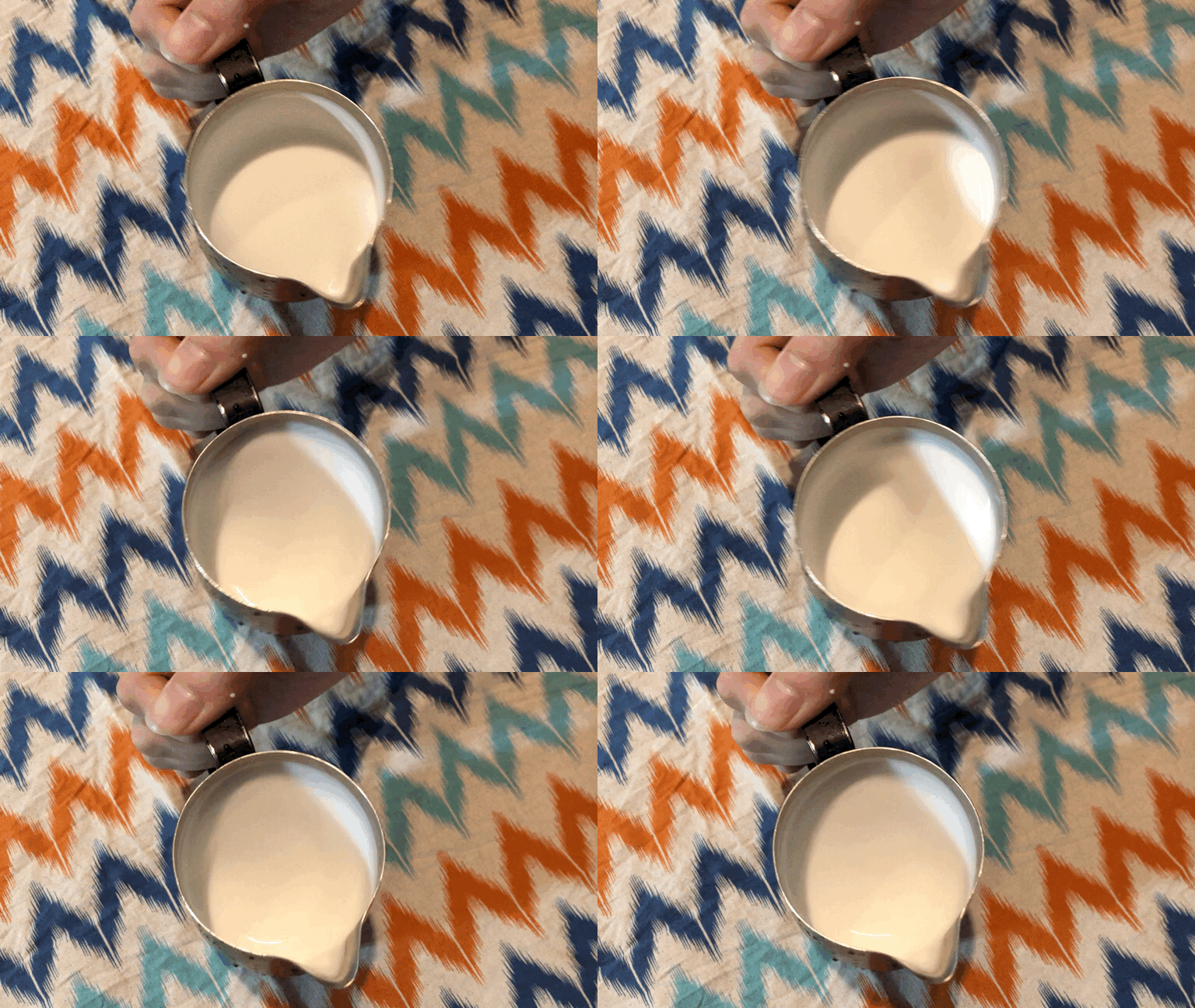
Before you can pour latte art, you need a pitcher of suitable milk foam. Latte art foam should be medium in thickness--neither too thin nor too thick, or it will simply float on top of the coffee when poured. So how do you achieve the perfect foam?
Finding the Right Steam Wand Position
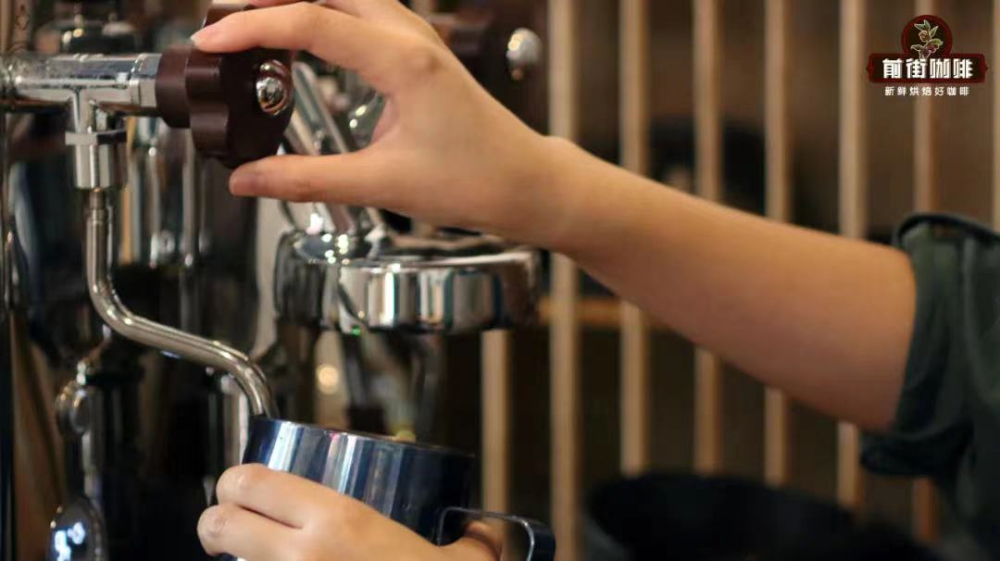
Generally, position the steam wand at roughly the 2-3 o'clock or 9-10 o'clock direction relative to the milk pitcher, with the spout at 12 o'clock. Why? Frothing works by using steam to spin the milk into a small vortex, which folds larger air bubbles back into the milk and produces a smooth, velvety texture.
Once you've found the position, set the depth. Deeper is not automatically better--frothing depends on incorporating air, and a wand buried too deep never touches air. Too shallow is also wrong: close to the surface, the milk may splatter under steam, or the steam may run too strong and create excess foam.
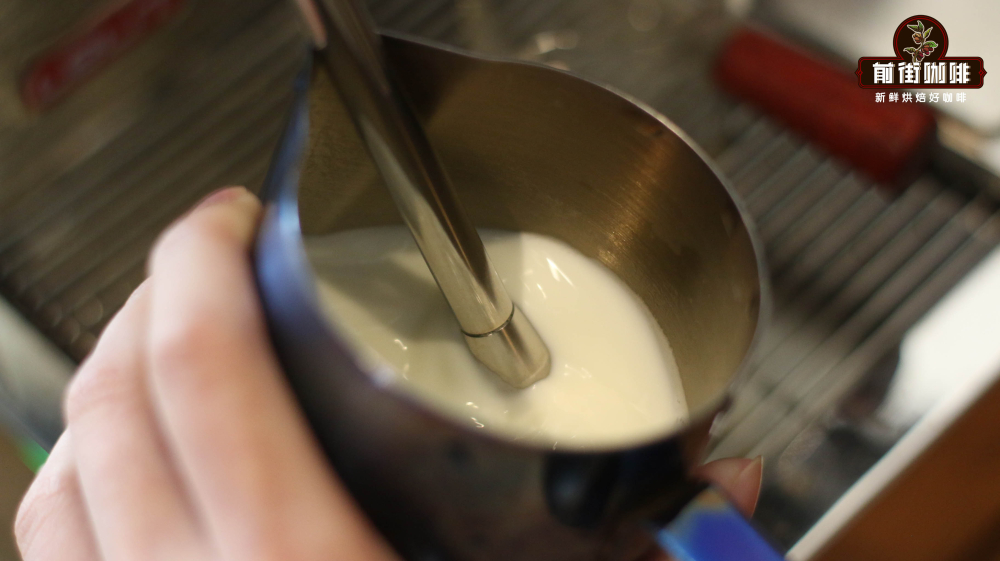
Use about 1cm of depth as a baseline. If the machine's steam is very strong, producing an oversized vortex or turbulence, go deeper (around 1.5cm). If the steam is weak, go shallower (around 0.5cm or less) so the milk forms a small vortex quickly without spinning too violently.
Suitable Milk Foam

While frothing, you should hear a hissing sound. If you don't, the wand may be too deep--raise the pitcher slightly. With no hiss at all, no air is being incorporated. Once the milk has expanded to about 80% full, tilt the wand toward the center-right of the pitcher near the rim, letting the foam roll in a vortex. This mixes foam and milk thoroughly while refining the texture.
Temperature

Keep the milk from getting too hot--but not too cold either. We generally recommend 60-65°C. Too hot, and it can scald while the foam destabilizes; overheating also changes the milk proteins, degrading the taste.
2. Integration
Before pouring the design, there is one more crucial step: integration. Some people dismiss it--isn't it just swirling milk around a few circles?
But integration lays the foundation for latte art, and its quality determines the mouthfeel of the drink. Integration is done with a relatively fine flow of milk. A well-integrated milk coffee flows smoothly. How widely you integrate depends on foam thickness: the thicker the foam, the poorer the flow, and the wider your integration motion must be to keep the surface fluid.
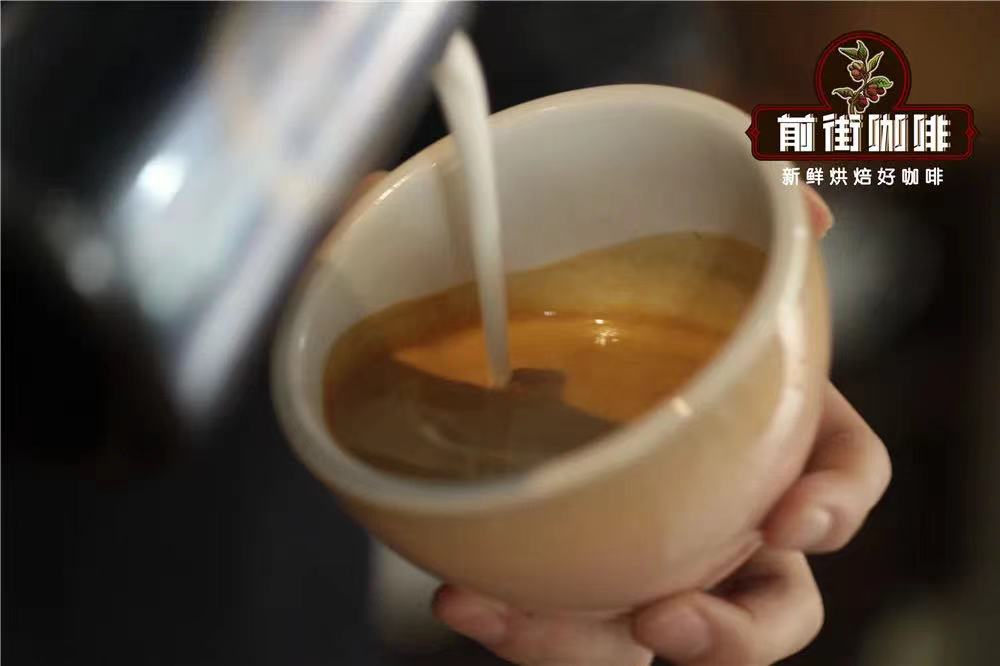
Before practicing with milk, practice with water. Tilt the cup at 45 degrees and pour a steady stream of water in. Start at a fixed point, then try pouring from different heights and in circles at a consistent speed. Finally, combine height changes with circular motion. The hand holding the cup should gradually straighten as you pour. Remember: never break the stream before the design begins.
3. Holding the Pitcher and Cup
How you hold the cup matters too. From the bottom, the side, or the handle? Whatever your method, the key is that it feels comfortable and flexible; otherwise the design will feel awkward. We typically hold the cup with the handle facing us, so the design faces the customer when served.
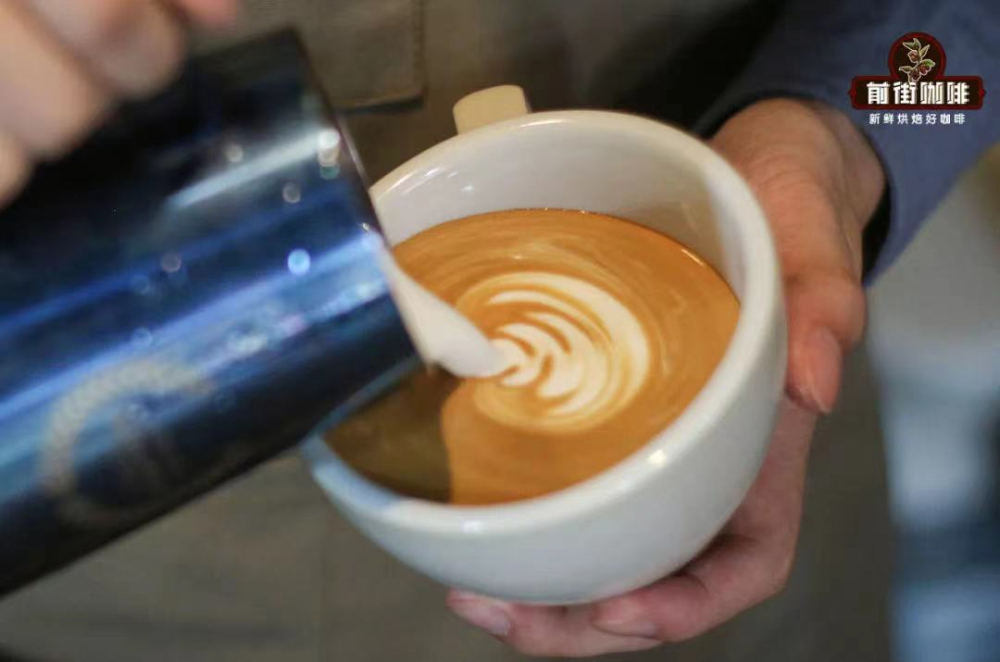
While pouring, tilt the cup appropriately to bring the pitcher closer to the coffee. A cup held too upright, too far from the pitcher, is hard to control.
There are two common pitcher grips: gripping the handle, and pinching it. Gripping lets you use wrist strength for broader movements and more dramatic patterns; pinching allows fine fingertip adjustments for delicate designs.
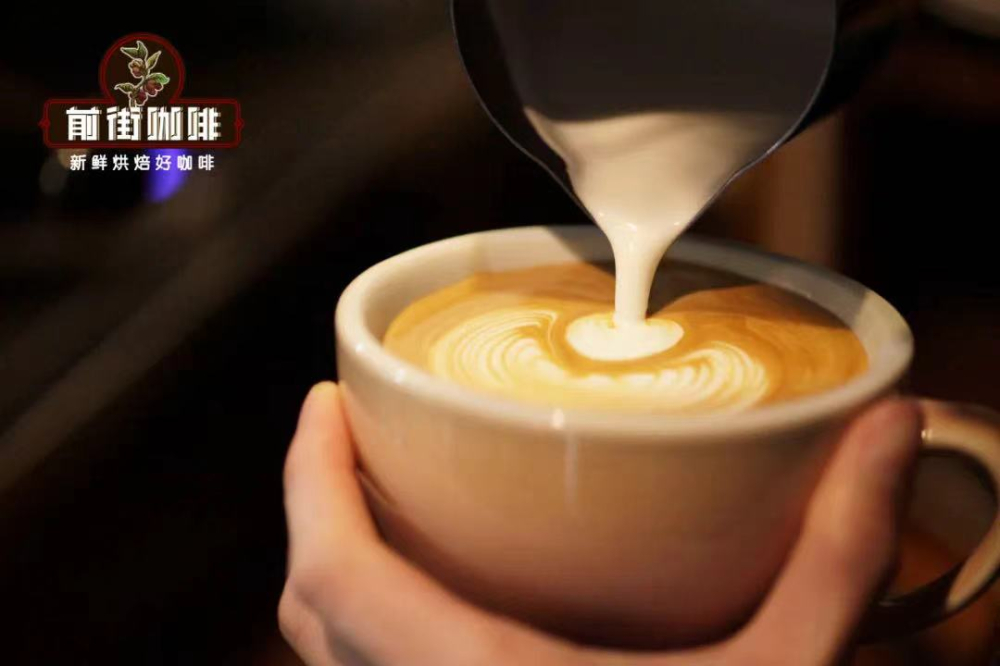
Also, keep the pitcher spout perpendicular to the cup. Otherwise the pattern will lean to one side and lose its symmetry.
4. Practice!
Technique is useless without practice! As the saying goes, talk is cheap--practice makes perfect. If milk coffee is too expensive to practice with, use dish soap and soy sauce! These are skills perfected only through repetition--there is no such thing as cloud-based practice!

And don't just pour mindlessly, cup after cup. Summarize what each cup taught you, pour it back out, and start over. Only by reviewing as you go will you make significant progress.
FrontStreet Coffee Recommendation
If you want to learn latte art at home, buy FrontStreet's Classic Blend: a medium-dark espresso recipe combining beans from three origins, inspired by the old-school "Mamba" pairing of Mandheling and Brazil, plus a touch of Robusta for extra aroma and crema. Extraction releases clear butter, toasted toast, and caramel-biscuit aromas in a strong, solid, finely cremaed cup with very stable shots--a must-have home coffee for beginners.
For nutty, aromatic depth in the same medium-dark register, choose FrontStreet Coffee's Premium Blend: a classic pairing of washed Colombian and semi-washed Brazilian beans with nut, dark chocolate, and caramel notes. As Americanos or milk drinks--latte, flat white--it highlights smooth cream, almond, and cocoa aromas with crema that rivals cafe output, leaving plenty of headroom for practicing art.
And if a coffee shop is in your future, FrontStreet Coffee's Commercial Blend is built for you: FrontStreet Coffee's Premium Blend formula with a little Robusta added for more deep-brown, fine crema and a heavier body, so every Americano, latte, or mocha carries nut, cocoa, and caramel flavors--and makes latte art feel effortless.
Important Notice :
FrontStreet Coffee is a long-established specialty coffee roaster in Guangzhou China, selling freshly roasted beans from its own farm in Yunnan as well as dozens of carefully selected single-origin beans from around the world for both pour-over and espresso. The products deliver consistently excellent quality and great value, with shipping within 24 hours. Guangzhou's FrontStreet Coffee shop is recommended by many coffee lovers, and the beans are now available online at the Tmall 。
FrontStreet Coffee has moved to a new address:
FrontStreet Coffee Address: 315,Donghua East Road,GuangZhou
Tel:020 38364473
 Scan and follow the En Gafei WeChat official account. Please indicate that the reprint comes from "En Gafei".