
Moka Pot Working Principles and Usage Guide: How to Brew a Delicious Concentrated Black Coffee
The Design Principle of the Moka Pot
The moka pot works on a simple principle: direct flame heating expands the volume of the cold water and air in the lower chamber, slowly pushing them upward into the upper chamber. As the hot water rises, it passes through the funnel-shaped basket of coffee grounds, extracting the coffee along the way.
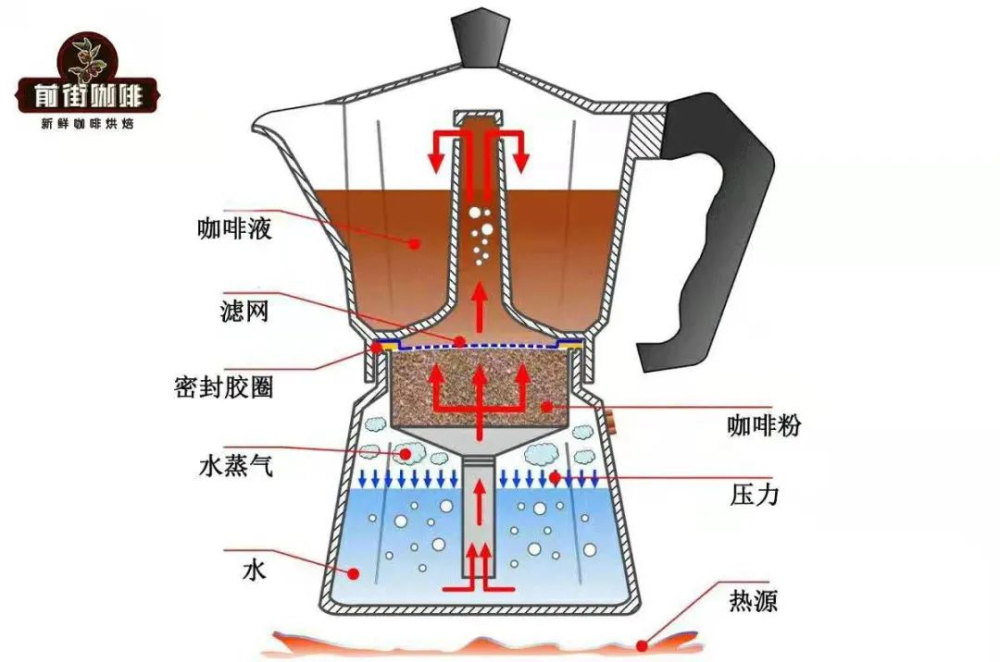
The filter screen holds back the grounds so the liquid runs clear, and the spout through which the coffee emerges in the upper chamber uses a height difference to keep the liquid from flowing back.
Moka Pot Grind Size
Because the water is driven up through the coffee layer by steam pressure at very high speed, FrontStreet Coffee suggests grinding extremely fine when brewing with a moka pot - but not so fine that the grounds can slip through the holes in the filter basket.

Fill the basket so the grounds sit level with its rim, spread them evenly with your finger, and give the bed a light press - gently is enough. This compacts the space between particles so the bed can resist the fast-moving water, preventing channels from forming and causing uneven extraction.
Moka Pot Usage Precautions & Tips
Since a moka pot involves direct heating, FrontStreet Coffee has a few suggestions and precautions for safe, tasty brewing.
1. If possible, start with boiling water in the lower chamber. This shortens the time the grounds spend at high temperature and lowers the chance of a burnt, bitter taste. Just be sure to take proper heat-insulation measures before tightening the two chambers together.

2. Never fill the lower chamber above the pressure relief valve (that small nut- or screw-like device). The valve is a safety feature designed to release excess pressure from inside the pot; if water blocks it, heating can easily cause an explosion from built-up pressure.

3. On a direct flame, keep the heat between low and medium after ignition, and never let the flame lick up the sides of the pot. This protects the pot, keeps you safe, and prevents the coffee in the upper chamber from being overheated - which would produce a burnt bitterness.
Coffee Beans Suitable for the Moka Pot
To brew a rich, aromatic, full-bodied cup with golden crema in a moka pot, start with freshly roasted beans. Every bag sold by FrontStreet Coffee ships within 5 days of roasting, so you always get coffee at its best in color, aroma, and taste.

Because moka extraction is pressurized and highly concentrated, light roasts are a poor match: the higher concentration turns what would be pleasant acidity in a pour-over into sharp sourness, and the mouthfeel becomes thin.
FrontStreet Coffee therefore recommends medium-dark roasted blends. The appeal of blends lies in their excellent value, and because beans from different origins are combined in different proportions, the coffee holds balanced, stable flavors even under extreme fineness plus pressure.

FrontStreet Coffee has launched four espresso blends with distinct flavor characters to match different tastes.
"FrontStreet Coffee - Warm Sun Blend" - a bean built around wine aromatics. Composed of Ethiopian natural Red Cherry beans (30%) + Honduras sherry-barrel beans (70%), it offers rich wine aroma, vanilla cream, berry sweetness and tartness, and roasted nut flavors.
"FrontStreet Coffee - Premium Blend" - an espresso bean led by nutty aromas. Composed of washed Colombian beans (30%) + Brazilian natural pulped beans (70%), it presents nutty, dark chocolate, and caramel flavors, ideal for daily café production.

"FrontStreet Coffee - Commercial Blend" - an espresso bean built for body. Composed of washed Robusta (10%) + washed Colombian (30%) + natural pulped Brazilian (60%), it delivers nutty, cocoa, and caramel flavors with high body, meeting everyday café needs.
"FrontStreet Coffee - Basic Blend" - an espresso bean with slight acidity and rich body. Composed of washed Yunnan small-bean coffee (30%) + natural pulped Brazilian beans (70%), it offers gentle fruit acidity, caramel, and nut flavors - suited to cafés and home users who prioritize cost with moderate flavor demands.
FrontStreet Coffee Recommendation
For moka pot brewing, FrontStreet Coffee's blends are the first stop: the FrontStreet Classic Blend - a traditional Mandheling-Brazil formula designed specifically for espresso and the moka pot - produces exceptionally thick, silky crema even on entry-level home machines, with a mellow, rounded cup for lattes, cappuccinos, and Dirty alike. The FrontStreet Premium Blend pairs Brazil Cerrado with Colombia Huila for that most familiar, classic espresso flavor. For a single origin, the FrontStreet Brazil Queen's Farm coffee is an outstanding moka candidate: very low acidity, deeply balanced, with rich nut and cocoa aromas, pronounced caramel sweetness, and a smooth, long finish.
Important Notice :
FrontStreet Coffee is a long-established specialty coffee roaster in Guangzhou China, selling freshly roasted beans from its own farm in Yunnan as well as dozens of carefully selected single-origin beans from around the world for both pour-over and espresso. The products deliver consistently excellent quality and great value, with shipping within 24 hours. Guangzhou's FrontStreet Coffee shop is recommended by many coffee lovers, and the beans are now available online at the Tmall 。
FrontStreet Coffee has moved to a new address:
FrontStreet Coffee Address: 315,Donghua East Road,GuangZhou
Tel:020 38364473
 Scan and follow the En Gafei WeChat official account. Please indicate that the reprint comes from "En Gafei".

