Typica Variety Characteristics of Blue Mountain Coffee: Authenticity Identification and Ideal Roasting Profile

Practically everyone who has dipped a toe into coffee has heard of the famous Blue Mountain. If FrontStreet Coffee had to sum up this bean in a single sentence, it would be: a high-quality Typica coffee from Jamaica's Blue Mountains, washed processed and roasted to a medium-dark level.
Typica Variety
Typica, with its mellow aroma, remains one of the great classic varieties still cultivated around the world, and Jamaican Blue Mountain is its most celebrated expression. Growing Typica beans with elegant, pure flavors is no simple task. Every stage — from natural terroir and plantation management to picking and post-harvest processing — demands meticulous attention before the beans develop their positive flavors and mouthfeel. That means producing high-quality Typica requires a far greater investment in labor and cultivation skill, which is precisely why Blue Mountain and Kona coffees command such prices.

Typica's most distinctive trait is the reddish-bronze color of its young top leaves, which is why it is also called "red-topped coffee." Typica trees grow in a conical shape, with slightly inclined branches forming 50-70° angles with the vertical trunk. The trunks are slender and the branches thin, and because of the trees' height and long branches, they need generous spacing when planted. FrontStreet Coffee even has a Typica tree planted beside its Dongshankou store — worth a look if you ever visit.
Typica beans are relatively large, elongated, and pointed at both ends, somewhat egg-like in shape. After roasting they typically show citrus acidity with barely perceptible bitterness and a sweet aftertaste. Overall cleanliness is high, and the cup is widely praised for its elegance and refinement.

Typica's weakness is its very poor disease resistance against common threats such as leaf rust and coffee berry disease, combined with a rather scarce yield. Leaf rust is the most devastating of these diseases; it was first recorded in the coffee-growing regions around Lake Victoria in East Africa in 1861. In 1970 an outbreak swept through Bahia, Brazil, and since then leaf rust has appeared in one coffee-producing region after another worldwide. Infected trees effectively carry an incurable disease, eventually withering and dying. As an economic crop, Typica — with low yields and high susceptibility — is difficult to cultivate profitably, and many growers have abandoned it in favor of more resistant varieties.
On FrontStreet Coffee's regular bean menu you will find three Typica lots: Jamaican Blue Mountain No. 1, FrontStreet Coffee 2013 Natural Process Typica, and Papua New Guinea Bird of Paradise. Grown in different terroirs and processed in different ways, Typica can express remarkably distinct flavors and mouthfeel.

Jamaican Blue Mountain Region
Blue Mountain's quality is inseparable from its growing environment. The Blue Mountain Range is ringed by the waters of the Caribbean Sea, creating a unique island tropical-rainforest microclimate. During the rainy seasons, rainfall is concentrated and drainage is good; volcanic ash from the island's volcanoes enriches the soil, so the trees need minimal irrigation and fertilization. With abundant sunshine year-round, near-constant mist, and cool, comfortable high-altitude air, the area suits a wide range of crops — locals traditionally plant coffee alongside banana trees on the Blue Mountain slopes.

The CIB (Coffee Industry Board) has designated roughly 6,000 hectares within the range under strict regulation: only Typica coffee grown inside this zone may be called "Blue Mountain Coffee." Within the CIB-defined area, the forests where Blue Mountain coffee is grown sit at 910-1,700 meters. High altitude combined with ideal climate lets the cherries develop their full complement of aromatic compounds — the higher the elevation, the more pronounced the Typica character.
But Typica's poor disease resistance, low per-tree yield, and need for careful hand attention all weigh on production. The Blue Mountains' rugged, uneven terrain makes management and harvesting difficult and demands highly skilled pickers, further limiting output. In recent years, less than 15% of Jamaica's coffee — roughly 900 tons — has qualified to carry the Blue Mountain label. After picking, cherries go straight to processing plants, where they are washed to remove the pulp and then dried.

How Does FrontStreet Coffee Roast Jamaican Blue Mountain?
When FrontStreet Coffee receives its Jamaican Blue Mountain No. 1 green coffee, the beans are uniform and plump, consistent in size, and a translucent blue-green overall. FrontStreet Coffee roasts them medium-dark to bring out Blue Mountain's chocolate and nut aromas to the fullest while preserving the soft acidity and sweetness that keep the cup balanced.

In short, FrontStreet Coffee roasts the beans thoroughly "inside and out." On that properly developed foundation, skilled roast profiling lets the flavors of the Jamaican Blue Mountain beans speak for themselves.
Caramelization is one of the most significant reactions shaping coffee flavor. After six to seven minutes of roasting, the beans have absorbed a large amount of heat energy, triggering pyrolysis and first crack. Some sugars convert to carbon dioxide, water continues to evaporate, and new aromatic compounds form — the so-called coffee oils — combining with hundreds of aromatic substances including nicotinic acid, citric acid, quinic acid, malic acid, acetic acid, caffeine, and more.
Roasting Profile
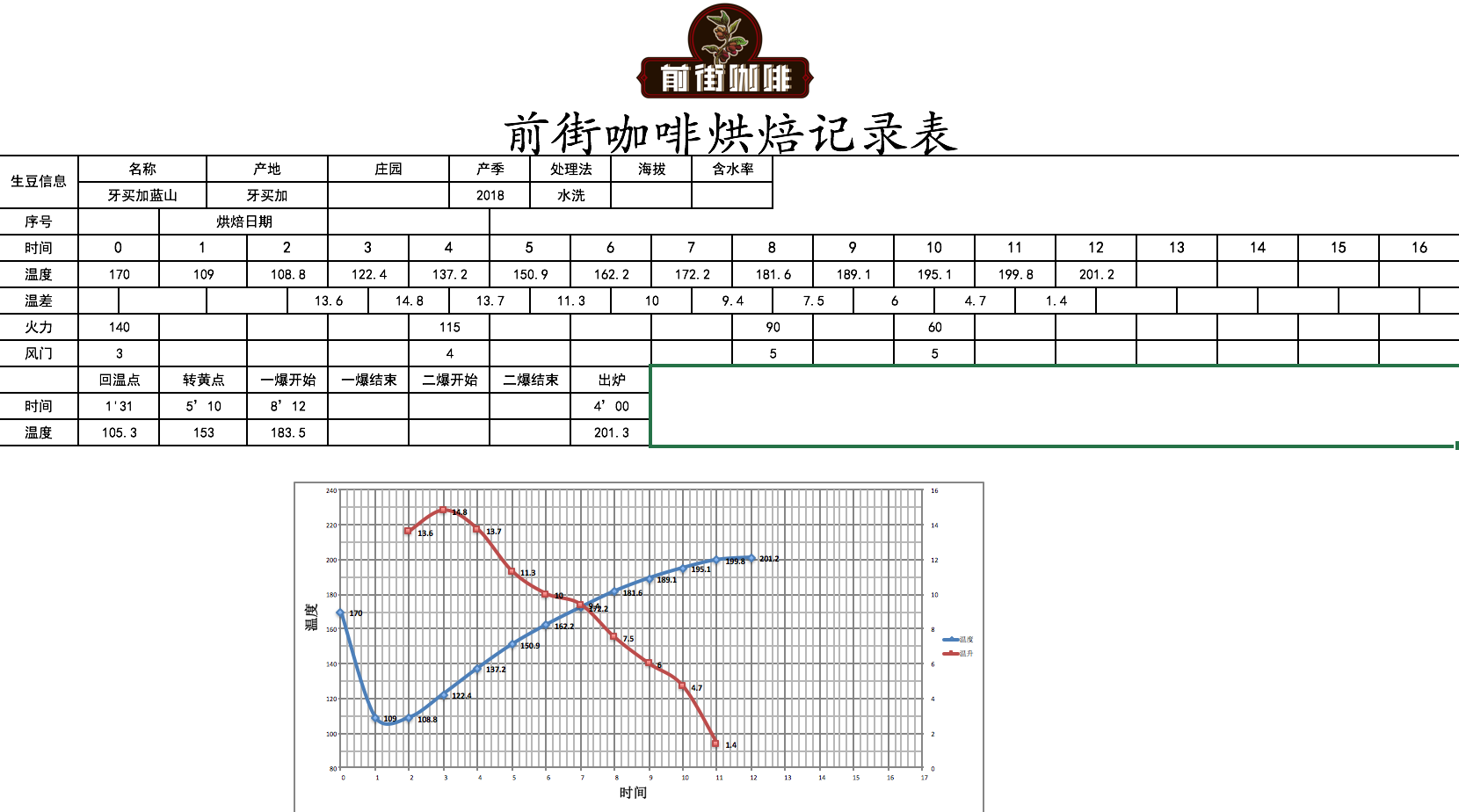
Preheat the roaster to 170°C and charge the beans with the damper at 3. After 1 minute, drop the heat to 140°C, keeping the damper unchanged. At 5'10", when the probe reads 153°C, the bean surface turns yellow and the grassy aroma has fully disappeared — dehydration is complete. Reduce the heat to 115°C and open the damper to 4.
At 8'00", wrinkling and black spots appear on the bean surface and the toast aroma clearly shifts into coffee aroma — the prelude to first crack. Listen carefully from here. First crack begins at 8'12"; reduce the heat to 90°C and open the damper fully (ease the heat gently — cutting it too hard can stall the crack), then drop the beans at 201.3°C.

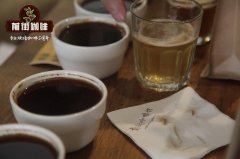
Immediately after roasting, FrontStreet Coffee cupped the fresh Blue Mountain. The dry fragrance showed nuts, sweet melon, and chocolate; after adding hot water, oolong tea, caramel, honey, and dark chocolate emerged. On the palate: dark chocolate, roasted hazelnut, cream, and brown sugar — clean, clear flavors with a mellow mouthfeel and persistent aroma.

FrontStreet Coffee's Barista Brewing Suggestions
FrontStreet Coffee typically uses a KONO dripper for medium-dark roasts. The smooth, curved upper chamber of the KONO holds the filter paper snugly, and compared with a V60 it leans on immersion, raising overall concentration and boosting body. Slow-flow brewers such as the Kalita wave and flannel filters work well too. And because a medium-dark roast is more porous than a light roast and absorbs water more readily, FrontStreet Coffee chooses a coarser grind — 75% pass-through on a #20 standard sieve — with 88°C water and its customary three-stage pour to avoid over-extraction.

Pour-over Parameters
Water temperature 88°C, coarse-sugar grind size (75% pass rate on #20 standard sieve), 15g of coffee, 1:15 ratio, three-stage extraction.
Stage one: gently pour 30g of water and bloom for 30 seconds. Stage two: pour steadily in even circles to roughly 125g. Then wait for the liquid to drop to about half, and pour the final stage to 225g. Let the coffee drain completely; total extraction time is about 2 minutes.

Blue Mountain No. 1 Coffee Flavor Profile
Hot, Blue Mountain No. 1 presents a rich dark chocolate aroma with notable body and a distinct almond finish. As it cools, roasted hazelnut and creamy sweetness emerge with a silky texture, accompanied by soft acidity and caramel sweetness, and the aroma lingers long after the last sip.
FrontStreet Coffee Recommendation
FrontStreet Coffee's own Jamaican Blue Mountain No. 1 comes from the historic Clifton Estate, complete with certification documents and the traditional wooden barrels in which genuine Blue Mountain coffee has always shipped. Roasted medium-dark, it balances cream, caramel, chocolate, nut, and honey notes — soft yet layered, with a clean, lingering finish and never a harsh edge.
To brew it at home, FrontStreet Coffee suggests a KONO dripper with beans rested 4-7 days off roast, 15g of coffee at 1:15, a white-sugar coarseness, and 87-88°C water in the three-stage pour above — the best way to taste why Blue Mountain is often called the specialty coffee nearly everyone loves.
Important Notice :
FrontStreet Coffee is a long-established specialty coffee roaster in Guangzhou China, selling freshly roasted beans from its own farm in Yunnan as well as dozens of carefully selected single-origin beans from around the world for both pour-over and espresso. The products deliver consistently excellent quality and great value, with shipping within 24 hours. Guangzhou's FrontStreet Coffee shop is recommended by many coffee lovers, and the beans are now available online at the Tmall 。
FrontStreet Coffee has moved to a new address:
FrontStreet Coffee Address: 315,Donghua East Road,GuangZhou
Tel:020 38364473
 Scan and follow the En Gafei WeChat official account. Please indicate that the reprint comes from "En Gafei".