Mastering Water Flow Control for Perfect Pour-Over Coffee: Attention to Detail Makes the Difference
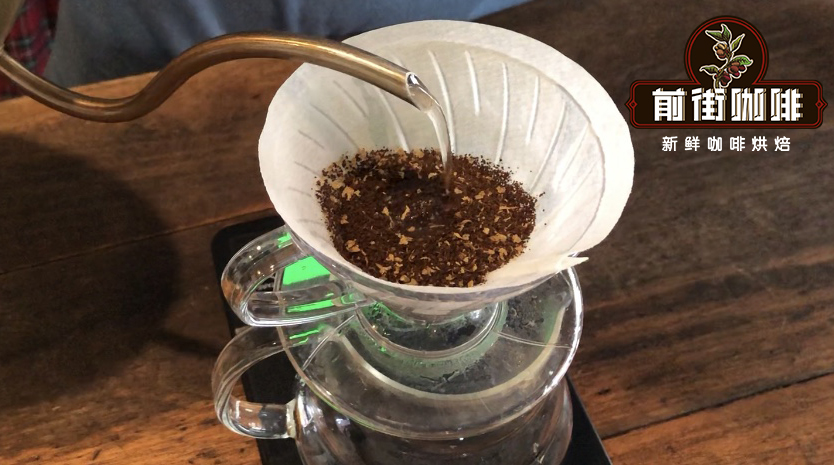
Many beginners, the moment they get their first pour-over kettle, can't wait to brew something great. But once they pick it up, they discover it's nowhere near as easy to control as they imagined. FrontStreet Coffee is here to share the details and techniques of water flow control.
1. Choosing a Pour-Over Kettle
Most pour-over kettles on the market are metal (stainless steel, copper, enamel), that only affects how quickly the water cools, not how controllable it is. The main factor in water flow is the spout, generally divided into swan-neck fine spouts (in wide and narrow diameters), elephant-trunk spouts, and crane-mouth spouts (also wide and narrow). For practicing flow control, a swan-neck fine spout is generally recommended because it's easier to get started with.
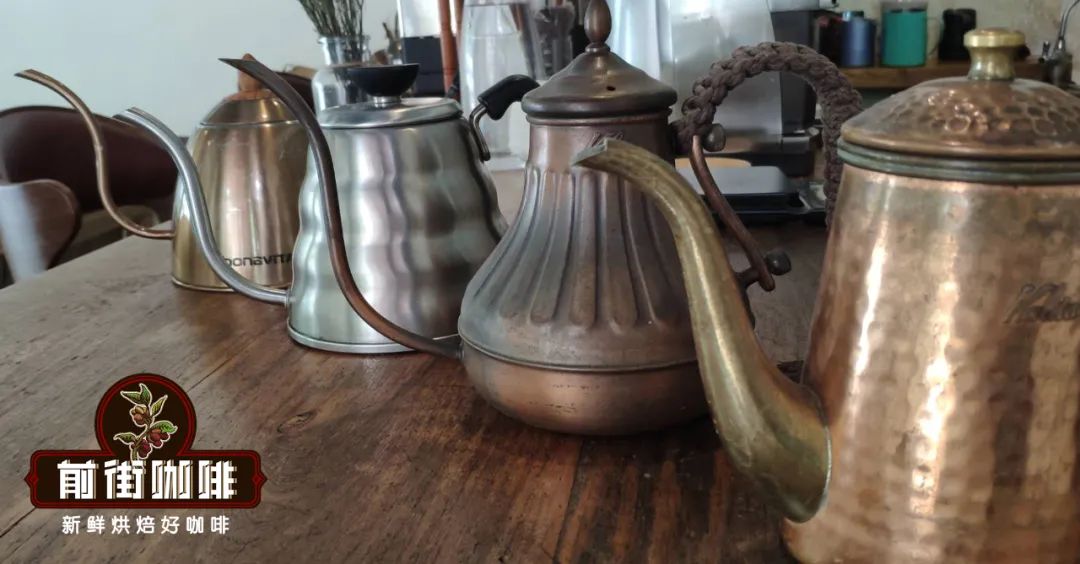
Swan-neck fine spouts come in many shapes, mostly tweaking the spout angle to make it easier to pour a true 90-degree water column. For practicing, we recommend the Hario 1.2L Cloud Kettle, known to many as the "hand grenade kettle." Its larger outlet diameter and more traditional angle make it harder to master. FrontStreet Coffee's logic: if you can conquer a difficult kettle, the easier ones will be no problem at all.
If you'd rather start with a kettle that's easy to control, the Shizuku kettle is a good option. Its outlet is very small, making it easy to pour a fine, steady stream, but its strength is also its weakness: it simply cannot pour a large flow.
2. Kettle Holding Posture
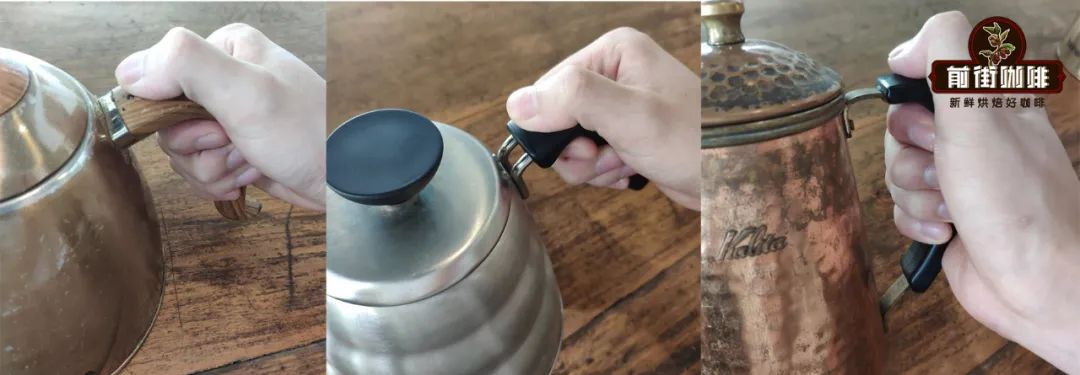
Brewing a pour-over typically means holding the kettle for more than 2 minutes, sometimes 7 minutes or more. A comfortable grip therefore goes a long way toward keeping the flow stable. The standard hold: thumb resting on top of the handle, the other four fingers wrapped around it. Grip firmly enough that the kettle doesn't wobble when gently nudged by your free hand. Don't over-clench, that tires the hand out fast.
As a rule, filling the kettle to about 70% capacity is ideal. With the Hario 1.2L Cloud Kettle, for example, water reaching the second "cloud" ring is the optimal pour volume. If your grip strength is limited, adjust to a weight you can comfortably handle.
3. Fixed-Point, Constant-Speed Pouring
This is tedious, and essential. In the beginning you may hold the kettle with both hands (though single-handed pouring is recommended in the long run). Start by pouring out the entire kettle at a small, constant flow, keeping the stream at a right angle to the horizontal. Repeat until comfortable. Then repeat the whole exercise at a medium, constant flow. Finally, progress to a large flow, again and again.
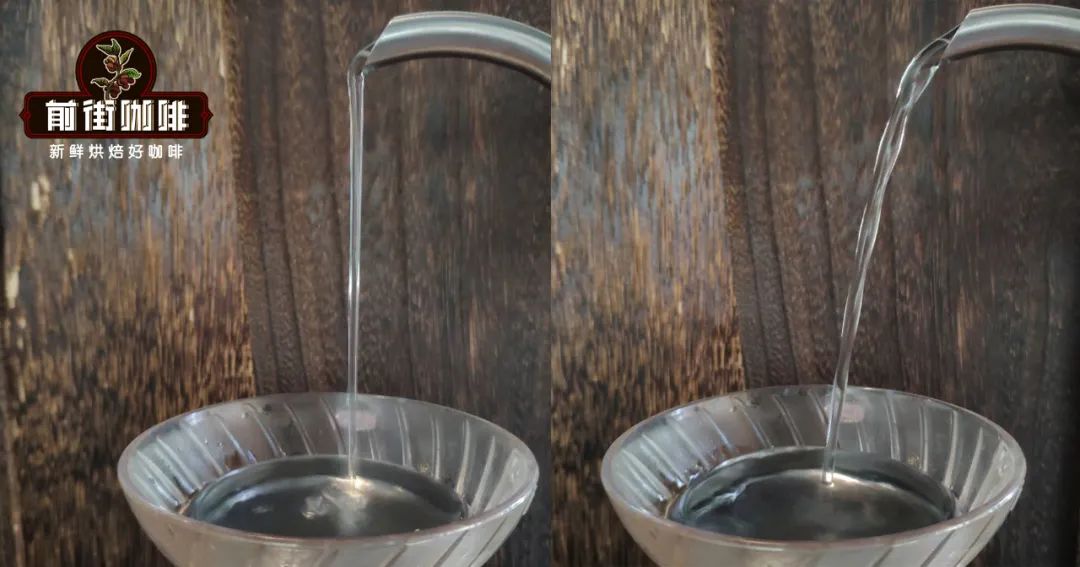
FrontStreet Coffee finds this practice trains your hands to know the kettle's changing weight, the "feel", while also building patience and an intuition for flow rate versus time.
4. Circular Pouring Practice
Once fixed-point pouring is second nature and the flow obeys you, move on to circles. Take a dripper and set a large bottle cap on it to stand in for the coffee bed. Then pour in circles along the edge of the cap, again progressing step by step from slow to fast.
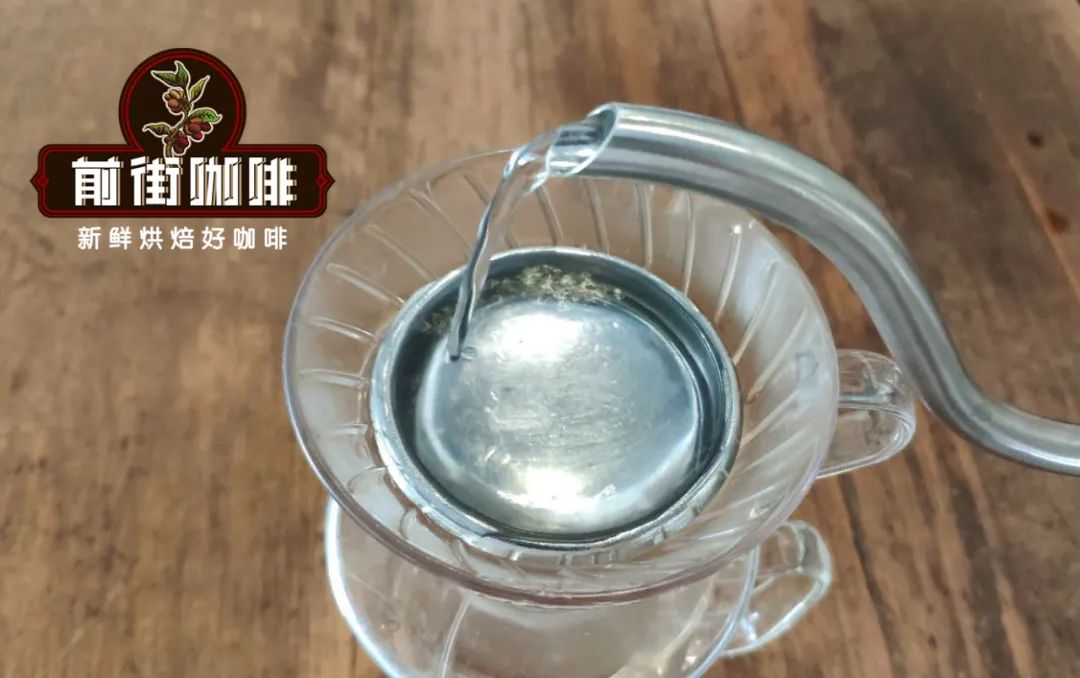
As the saying goes, one minute on stage takes ten years of practice offstage. FrontStreet Coffee can only share the techniques, the results come from your own practice. So keep practicing!
FrontStreet Coffee Recommendation
Ask any seasoned coffee friend to recommend a practical, beginner-friendly, good-looking dripper, and chances are they'll say V60. Here's why, and which beans to brew in it:
About the V60, The company behind the V60, Hario, was founded in Tokyo in 1921 as a well-known glassware maker, originally designing and producing heatproof glass instruments for research institutions; the heatproof glass server that so often accompanies pour-over is one of Hario's popular products. In 2004, Hario redesigned the V60 prototype into the form we know today, naming it for its unique 60-degree cone angle and "V" shape, and released it to market a year later. Compared with other drippers, the conical shape and 60-degree angle force the water to flow to the center before dripping through, extending the contact between water and grounds so aroma and flavor extract fully. The V60's signature single large outlet lets water run unimpeded, flow speed depends almost entirely on the brewer's control, and shows up directly in the cup.
Why resin?, Today V60s come in many materials: besides FrontStreet's beloved resin, there are ceramic, glass, copper, and stainless steel versions. Material affects looks, weight, and subtle thermal differences in extraction, but the structural design never changes. FrontStreet favors the resin Hario V60 for two reasons: resin effectively blocks heat loss, and in mass production resin is the easiest material to mold with the smallest dimensional error.
Light-roast, floral-fruity beans for V60, FrontStreet Gudingding (classic Yirgacheffe: citrus, berries, florals, green-tea finish), FrontStreet Huakui (rich tropical fruit, strawberry, passion fruit, jackfruit, even lychee; sweet, low bitterness, "the coffee that tastes least like coffee"), FrontStreet Strawberry Sugar (Geisha character), and FrontStreet Mozart (raisin notes) all shine in a V60, as does the FrontStreet Kenya Cherry Tomato, a washed Kenya from the Thika region at 1550-1750m on SL28 and SL34, given the signature 72-hour double washed fermentation and a light roast, with bright cherry-tomato and dried-plum acidity and a full juice feel. The V60's fast extraction style brings out the three-dimensional aroma and lively acidity of the third-wave era, florals, fruit acidity, delicate sweetness, and tea notes.
Medium-dark roasted beans, Before the third wave, coffee favored medium-dark roasts and flavors of body, sweetness, and caramelization, chocolate, maple, nuts, vanilla, best shown through siphon or cloth brewing; FrontStreet Blue Mountain No. 1 and FrontStreet PWN Golden Mandheling were the era's most popular beans. The FrontStreet PWN Golden Mandheling is deep-roasted: low acidity, mellow and long on the palate, with herbal and dark chocolate aromas and a faint earthiness, for those who like their coffee bold and not sour. The FrontStreet Brazil Queen Estate is low in acidity, balanced, with rich nut and cocoa aromas and clear caramel sweetness, smooth, never astringent, great as pour-over, espresso, or moka pot.
Important Notice :
FrontStreet Coffee is a long-established specialty coffee roaster in Guangzhou China, selling freshly roasted beans from its own farm in Yunnan as well as dozens of carefully selected single-origin beans from around the world for both pour-over and espresso. The products deliver consistently excellent quality and great value, with shipping within 24 hours. Guangzhou's FrontStreet Coffee shop is recommended by many coffee lovers, and the beans are now available online at the Tmall 。
FrontStreet Coffee has moved to a new address:
FrontStreet Coffee Address: 315,Donghua East Road,GuangZhou
Tel:020 38364473
 Scan and follow the En Gafei WeChat official account. Please indicate that the reprint comes from "En Gafei".