How to Drink Blue Mountain Coffee: Can Blue Mountain Coffee Beans Be Used for SOE?

For more premium coffee knowledge, please follow the WeChat official account: FrontStreet Coffee
Before specialty coffee entered the public consciousness, the market ran on rich, mellow, bitter coffee—and in that era, Jamaica Blue Mountain reigned at the very top of the coffee world, always near the head of any bean ranking. What earned Blue Mountain that reputation? What exactly is the famous "Blue Mountain flavor"? And if you want to taste the real thing, how should you brew it? FrontStreet Coffee tackles all of these questions in today's article.
Why Is Blue Mountain Coffee So Famous?
Jamaica's Blue Mountains, with their superb natural conditions, created one of the world's most celebrated coffees. Well before the 1960s, Jamaican beans were already in strong demand across the entire coffee market.

In 1969, hurricanes devastated the entire island. Japan's UCC stepped in—not only with financial aid but also by introducing scientific, ecologically sound cultivation methods to restore Blue Mountain production. As thanks, the Jamaican government signed a 30-year contract with Japan, pledging 90% of the Blue Mountain production quota to the Japanese market and leaving the remaining 10% (about 245 tons) for everyone else. Scarcity begets value: with inherently low supply, a trade monopoly on top, and aggressive demand-side marketing, prices climbed exactly as you'd expect.
Even during the Japan agreement years, not every bean was consumed in Japan—some was resold to other Asian markets at premium prices, and as Japanese promotion intensified, coffee professionals in Singapore, South Korea, Taiwan, and Hong Kong began chasing Blue Mountain as well. From 2000 onward, the "Blue Mountain craze" gradually spread to mainland China, which is why when coffee comes up with the older generation, "Blue Mountain" is still the first name on their lips.

During the 2008 global financial crisis, Jamaica sought to sell Blue Mountain more widely, and conveniently the Japan agreement had expired, freeing up more quota for other countries. As China's coffee demand expanded, domestic merchants gained direct access to imports from Jamaica. FrontStreet Coffee's Jamaica Blue Mountain No.1 comes from the island's historic Clifton Estate and is traditionally washed.
What Makes Blue Mountain Coffee Unique?
The appeal of top-tier Blue Mountain comes down to its singular flavor—and that flavor is a product of an exceptionally fortunate growing environment. Richard Sharp, owner of Jamaica's Clifton Estate, put it this way in an interview: "It's the specific latitude, longitude, and the unique location of the Caribbean island that creates a microclimate that doesn't exist anywhere else."

The Blue Mountains rise in eastern Jamaica, in an earthquake zone where ancient volcanic activity left behind mineral-rich, fertile soil. The range holds the highest peak in the entire Caribbean and draws tourists year-round. The air is clean and unpolluted, and the rainy, humid, cool climate lets coffee trees thrive in near-perpetual cloud. High altitude brings wide day-night temperature swings, giving the cherries time to load up on nutrients and the cup its mellow sweetness and fragrance. The range is vast but rugged, so most trees grow on steep slopes where harvesting by machine is impossible—locals hire skilled female pickers to hand-harvest only fully ripe cherries, safeguarding quality bean by bean.
For decades Jamaica has planted Arabica only, so its Typica has never been hybridized and remains pure. Jamaica is also a relatively closed island nation with naturally privileged microclimates. After more than two centuries of domestication, Blue Mountain Typica has evolved stronger disease resistance—particularly against coffee berry disease, where it outperforms typical Typica—yielding more stable production and quality.

What Is "Blue Mountain Flavor"? And What Does a Cup Cost?
As noted above, Blue Mountain's fame, high price, and scarcity have flooded the market with products of wildly mixed quality. Inferior coffees wearing "Blue Mountain" on the label mislead consumers constantly—scroll any shopping platform and you'll see "Blue Mountain flavor," "Blue Mountain blend," "Blue Mountain mix": names that borrow the legend but have little to do with genuine Blue Mountain.

Coffee hailed as the world's best will never be cheap, so "Blue Mountain beans" priced at a few dozen yuan are almost certainly not authentic. One reliable check is the handmade oak barrels used to ship Blue Mountain green beans—Jamaica is the only origin in the world that ships coffee in oak. Compared with coarse burlap sacks, the barrels absorb and release humidity while sealing aroma in, keeping the beans at a steadier moisture content and making roasting more predictable. Over time, the wooden barrel itself became one of the identifiers of genuine Blue Mountain.
Producers and distributors must also be licensed by the Jamaican government and authorized by the Coffee Industry Board, and every exported batch must pass CIB quality testing, carry its label, and ship with certification. So ask to see the paperwork. FrontStreet Coffee's Blue Mountain No.1 comes from Clifton Estate with a quality certificate from the Jamaica Coffee Industry Board, an authorized-sales certificate from the producer, and a certificate of origin for Jamaican Blue Mountain—and the Dongshankou store displays the oak barrels the green beans arrived in.

Before the millennium, a cup of Blue Mountain black coffee in China cost tens or even hundreds of yuan—extravagant for the time, and possibly not even genuine. As the Jamaican government spread its quotas across more consumer markets, drinking real Blue Mountain in China has become far easier. FrontStreet Coffee sells its Blue Mountain No.1 beans at 158 yuan per 100g package, and a tasting at the Dongshankou store is just 60 yuan per cup (about 200ml). The beans come from Clifton Estate, one of Jamaica's historic farms, and represent the highest grade of Blue Mountain coffee.

Delicate, high-quality Blue Mountain deserves a proper brew. Beyond the pour-over FrontStreet Coffee writes about so often, if you own an espresso machine you can also pull your Blue Mountain beans as an SOE. Here's how FrontStreet Coffee does it.
SOE stands for Single Origin Espresso—espresso made from beans of a single origin. The concept grew out of the third wave of coffee, as specialty and single-origin thinking went mainstream.

Specialty coffee means high-quality coffee from regions with distinctive microclimates and geography, grown to express positive aromas and a true "taste of place." As more consumers learned where their beans came from and proved willing to pay for quality, producers invested more at the source, and single-origin beans became a category of their own. They were originally brewed as pour-over, but increasingly found their way into espresso—and with competitions and chain-brand marketing pushing the idea, SOE caught on everywhere.
By definition, any espresso pulled from single-origin beans is an SOE; both SOE and espresso blends live under the espresso umbrella. The difference: blends combine beans from two or more origins, usually roasted medium-dark for a rich, balanced cup, while SOE aims to spotlight a single origin's character and is typically roasted lighter. The SOE from FrontStreet Coffee's Ethiopia Natural Yirgacheffe Red Cherry on the shop menu, for example, shows off the sweet-tart brightness of berries and citrus.
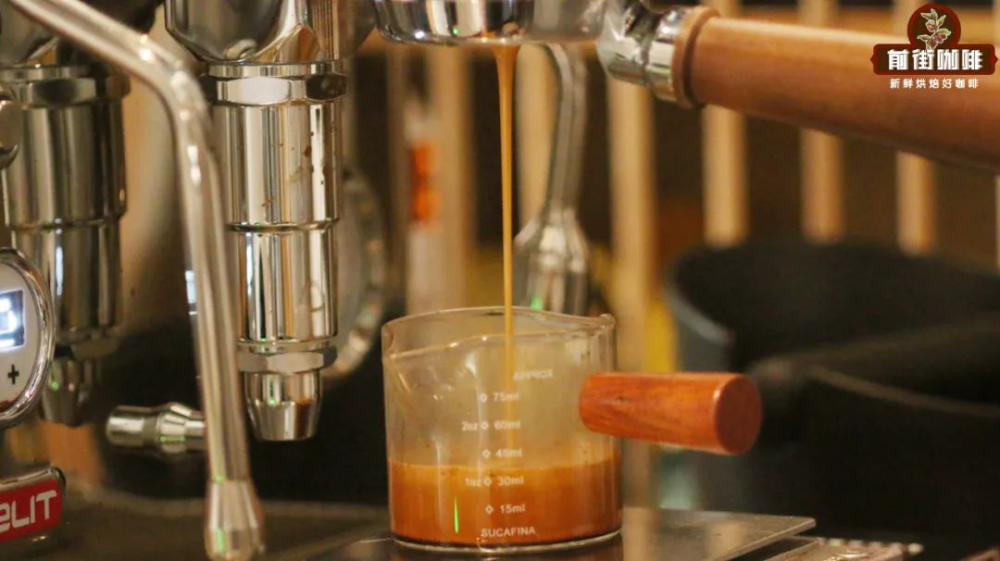
The machine at FrontStreet Coffee's shop is a commercial single-group "Lelit Bianca," which can adjust extraction pressure up to a maximum of 11 bar. A home machine needs only 9 bar to cover extraction and milk steaming, paired with an espresso grinder.
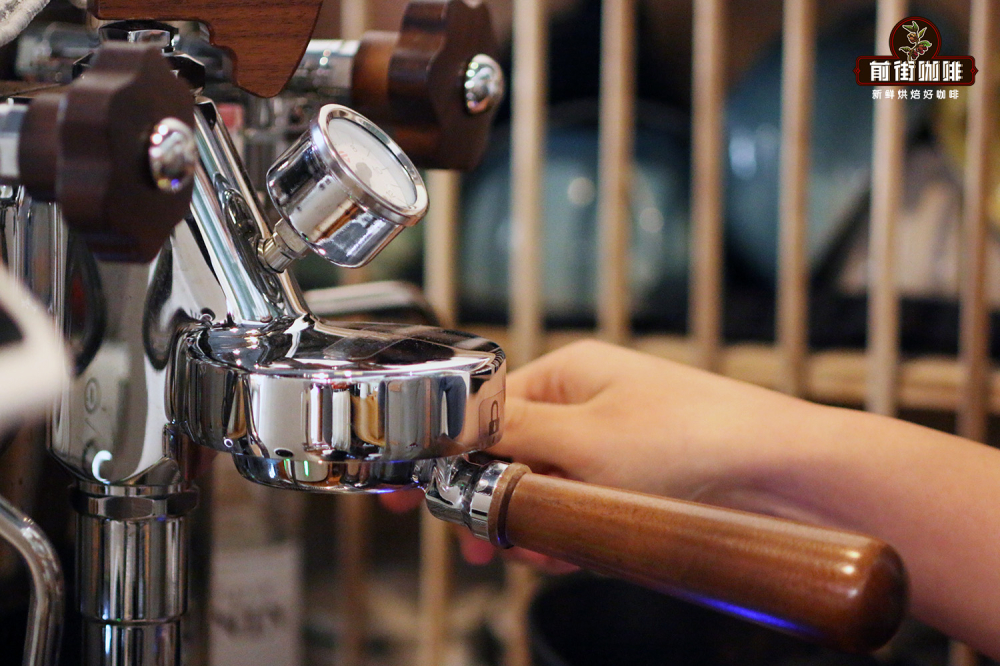
SOE Extraction Parameters, Shared
Coffee beans: FrontStreet Coffee Ethiopia Natural Konga
Dose: 20g
Yield: 40g
Brewing ratio: 1:2
Extraction time: 26-33 seconds
Grinder setting: Galileo 2.0
FrontStreet Coffee runs a double basket rated for roughly 18-20 grams and doses 20 grams per shot.

Most shots fall between a 1:1.5 and 1:2.5 ratio of grounds to liquid; FrontStreet Coffee's 1:2 means 20 grams in, 40 grams out. Time tracks flow rate: shots under 20 seconds usually taste thin, while past 35 seconds you drift into over-extraction and bitterness. Most of FrontStreet Coffee's espresso lands in the 28-30 second range.
The routine: wipe the portafilter dry, grind a double dose, weigh out 20 grams, distribute the grounds evenly, then tamp firm and level for a stable extraction.

Flush the group head briefly to wet it and rinse away stray grounds, lock in the portafilter, and start the shot. When the scale reads 40 grams out (about 28-33 seconds), stop the pump and the SOE is done. From there, add ice water or 80°C hot water to taste for an Ethiopian SOE Americano.

For a hot SOE latte, FrontStreet Coffee works at a 1:6 ratio: 40 grams of espresso into a pre-warmed cup, then 240g of milk steamed to 50-65°C for fine, moderately thick microfoam, blended evenly with the coffee. The Yirgacheffe SOE latte drinks like a lemon cookie—rich and smooth, warming and satisfying to the last sip.
FrontStreet Coffee Recommendation
So, can Blue Mountain be an SOE? Absolutely—and if you want the definitive version, FrontStreet Coffee's Jamaica Blue Mountain No.1 is the one to pull. It comes from the historic Clifton Estate, growing coffee since around 1750 at roughly 4,300 feet (about 1,310 meters), where afternoon mists, sunshine, and mineral-rich soils slow the cherry's ripening; the full set of CIB certification, authorization papers, and origin documents travels with the beans, and the store displays the original shipping barrels. Roasted medium-dark within five days of shipping, it pulls a shot that is clean yet complex and remarkably smooth—chocolate sweetness, a powerful body, no harsh bitterness, only a measured acidity and a long fruity finish.
Pour-over suits it just as well, and FrontStreet Coffee suggests a KONO dripper to boost that mellow body: 15g of coffee rested 4-7 days from roast, ground coarser than you would for a light roast—about white granulated sugar—87-88°C water, and a 1:15 ratio. Pour in three stages: 30g of water for a 30-second bloom, then to 120g in a small, slow, vertical stream of circles, then a slightly faster final pour to 225g to keep the bed from clogging and over-extracting. Milk-drinkers take note: a Blue Mountain flat white or latte is superb, and the same beans shine through a moka pot for a thick, chocolate-caramel Americano.
If you'd like to compare it side by side with the espresso program described above, ask for the Ethiopia Natural Konga SOE at the counter—same 20g-in / 40g-out, 1:2 discipline, around 26-33 seconds—so you can taste for yourself how a fruity Ethiopian natural and a balanced, classic Blue Mountain wear the same extraction recipe in entirely different ways.
Important Notice :
FrontStreet Coffee is a long-established specialty coffee roaster in Guangzhou China, selling freshly roasted beans from its own farm in Yunnan as well as dozens of carefully selected single-origin beans from around the world for both pour-over and espresso. The products deliver consistently excellent quality and great value, with shipping within 24 hours. Guangzhou's FrontStreet Coffee shop is recommended by many coffee lovers, and the beans are now available online at the Tmall 。
FrontStreet Coffee has moved to a new address:
FrontStreet Coffee Address: 315,Donghua East Road,GuangZhou
Tel:020 38364473
 Scan and follow the En Gafei WeChat official account. Please indicate that the reprint comes from "En Gafei".