Why is Hanakai Coffee called Hanakai? What is the origin of Hanakai Coffee and its relationship with Geisha Coffee?
Anyone reasonably familiar with coffee will have noticed that most Ethiopian coffees are named after their growing regions — coffees from Yirgacheffe, for example, include Yirgacheffe Red Cherry and Yirgacheffe Kochere. But what about Guji? It also comes from a region of Ethiopia — so why isn't it simply named after the Guji region like the rest? Is there something special about Guji?
How Did Guji Coffee Get Its Name?
FrontStreet Coffee's view: on paper, "Guji" sounds like it should describe a bean bursting with floral notes, but in reality that's not the case. Guji's florality is restrained; what stands out is its fruit — passion fruit, strawberry, mango, jackfruit, and citrus. Here's the story: the original name of these coffee beans was Hambella. The name "Guji" was coined by Chinese green coffee traders. In February 2017, a natural processed coffee from the Hambella Buku Abel estate won the Ethiopian Green Bean Competition. Because it broke Geisha's stranglehold on brewing competitions, it became the only coffee seen as capable of going head to head with Geisha.

Guji coffee comes from Ethiopia, the birthplace of coffee, where the variety landscape is enormously complex. Every farmer grows coffee under mixed cultivation and has no realistic ability to identify the individual varieties, while the Ethiopian government, to protect the genetic resources of its native coffee trees, declines to disclose them. That's why many Ethiopian coffees are listed simply as "local native varieties" — and Guji's variety is likewise a local native variety.
What is Geisha Coffee?
Coffee names can carry many layers of meaning. Geisha coffee — also written Gesha — takes its name from Geisha Mountain in Ethiopia; the pronunciation resembles the famous Japanese geisha, hence the name.
Geisha beans actually originate in southwestern Ethiopia. In 1963, Don Pachi Serracin introduced Geisha trees from Costa Rica to Panama. Because of their low yields — which directly cut into harvest volumes — farmers were reluctant to grow them. It was not until Daniel Peterson, owner of Panama's Hacienda La Esmeralda, accidentally discovered that the beans from long-neglected Geisha trees at the highest point of his estate carried the distinctive citrus and floral aromas typical of African beans that things changed. He separated them out and entered them in the 2004 Best of Panama green coffee competition, where they became an overnight sensation. From then until now, Geisha has been unstoppable, taking the Panama cupping competition crown year after year. To specialty coffee lovers around the world today, Geisha beans remain the supreme treasure.
The Difference Between Guji Coffee and Geisha Coffee
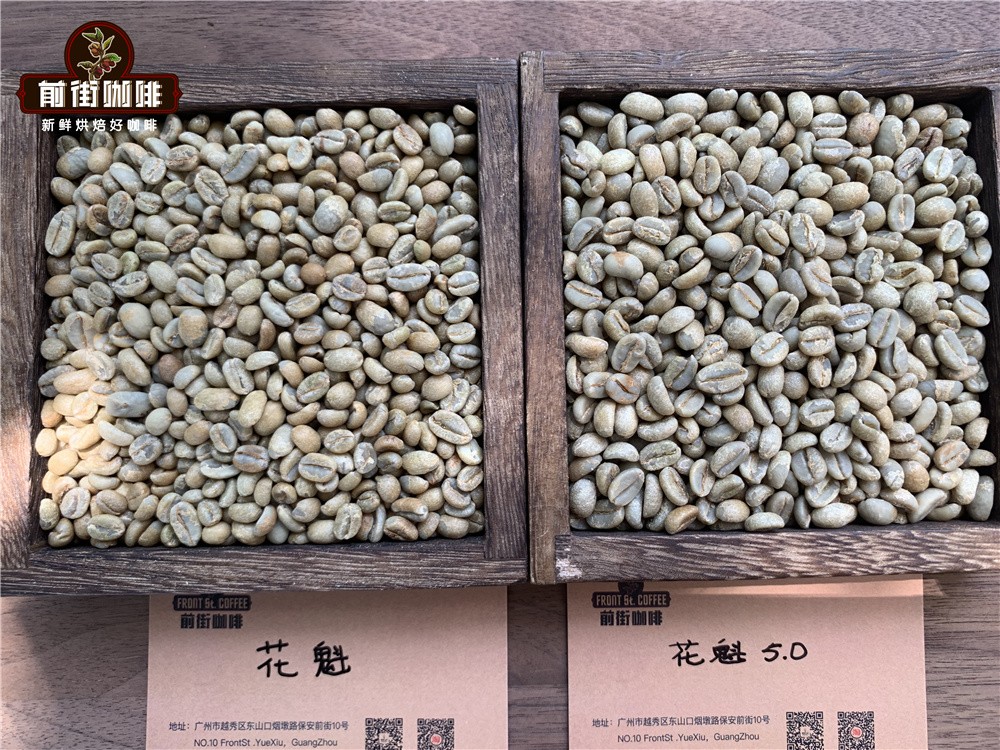
Both Guji and Geisha trace back to Ethiopia — so what exactly separates them? FrontStreet Coffee explains: Guji is the name of a natural processed native coffee from Ethiopia, while Geisha is a specific coffee variety. Geisha can be grown anywhere in the world, but "Guji" — only natural processed coffee produced at Hambella Buku Abel in the Guji region deserves that name. That is the fundamental difference.

(Left: Hambella · Guji, Right: Panama · Geisha)
Guji Coffee — The Guji Hambella Region
This Guji bean comes from Hambella, in Guji, Ethiopia's largest coffee-producing region, administratively part of Oromia. Hambella lies west of Yirgacheffe Kochere, separated from it by highlands 3,200 meters high and roughly 30 kilometers wide. To the southeast, east, and north it borders the Shakisso, Uraga, and Kercha sub-regions of Guji, making it one of the highest-altitude coffee sub-regions in all of Ethiopia.

As you'll have gathered from the introduction above, the "Guji" we speak of is really a traditional natural processed G1 coffee from the Hambella region, with the "Buku Abel" washing station — located in Dimtu town — as its more precise point of traceability. After "Guji" shot to fame, DW company added 5 independent green coffee drying stations across Hambella Wamena Wereda to meet the surge in demand, all within the core Dimtu town area. Alongside the original Buku Abel, four other small villages — Buku Saysay, Haro Soresa, Tirtiro Goye, and Seke Bokosa — joined the production of natural processed coffee beans. At that point, DW's annual output of "Guji" reportedly reached tens of millions of tons.

From the 2018 harvest onward, Guji (natural G1) from the same growing area and the same stations began showing changes in flavor. Through cupping at the time, FrontStreet Coffee found that while the 2018 and 2019 Gujis carried flavors similar to the 2017 lot, they fell short of the "first-generation Guji" in body, aftertaste, and other aspects of mouthfeel.
To keep selling this natural processed coffee from Hambella while distinguishing it from the original, Chinese green coffee trading companies — counting from 2017 — gave each successive year's lot an X.0 suffix: the 2018 batch was "Guji 2.0," the 2019 harvest "Guji 3.0 and 3.1"... and the most recent release was "Guji 7.0," and so on. This suffix lets you identify which year's lot your Guji belongs to.

Guji's Natural Processing Method
The berry, strawberry, lemon citrus, and fermented wine flavors of Guji coffee are inseparable from how it's processed. FrontStreet Coffee's Guji uses the most ancient method of all — natural processing. During the annual harvest and processing season (December-January), the red cherries picked by farmers must have a sugar content above 30 before natural processing can begin. For the first two days, the humidity of the red cherries must be maintained so their fruit sugars can fully drive the fermentation reaction. Meanwhile, the high altitude lets nighttime temperatures at the station drop to around 12 degrees Celsius, preventing over-fermentation in the heat. When the midday sun is stronger, the beds are shaded in time to keep the cherries from sunburn, and at night thick plastic sheets are spread over them against sudden rain.

This allows the red cherries to ferment and dehydrate at relatively low temperatures. After about half a month of natural processing, once the green beans' moisture content falls to around 13%, they are packed in jute bags and stored in a warehouse at 12-22 degrees Celsius and 45-55% humidity for about 50 days of resting and further drying. When the moisture reaches about 11%, the beans are shipped to the mill for hulling, screening, and sale. FrontStreet Coffee believes that selecting high-sugar red cherries for natural processing further heightens Guji's sweetness and makes its juice-like expression all the richer.
Flavor Differences Between These Two Coffees
Now let's see how these two different coffees differ in the cup:
For brewing, FrontStreet Coffee always suggests that freshly roasted beans express a coffee's flavor best. That's why every bean sold by FrontStreet Coffee is roasted within 5 days — our philosophy is "freshly roasted good coffee," ensuring every customer receives the freshest coffee possible. Coffee rests for about 4-7 days, so by the time your order arrives, it's right at peak flavor.

If you need FrontStreet Coffee to grind the beans for you, that's fine too. Just remember that pre-ground coffee should be brewed promptly. There's no resting period for ground coffee — during shipping, the pressure from built-up carbon dioxide in the packaging actually helps round out the flavor, so you can brew a cup the moment the coffee powder arrives. That said, ground coffee oxidizes quickly in air, so its flavor dissipates fast and won't taste as good. FrontStreet Coffee therefore recommends buying whole beans and grinding fresh before brewing.
For these two coffees, FrontStreet Coffee recommends:
Dripper: Hario V60, Water Temperature: 90°C, Dose: 15g, Ratio: 1:15, Grind: Medium-fine (80% retention on the Chinese standard #20 sieve)

Use a segmented approach: bloom with twice the coffee dose in water — 30g for 30 seconds. Blooming lets the grounds release their trapped carbon dioxide, making the extraction that follows more stable. Then, with a small stream, pour in circles up to 125g, and continue pouring until you reach 225g before stopping. Once all the water has dripped through, remove the dripper. Timing starts from the first pour, with a total extraction time of 2'00". Finally, pick up the entire brew and swirl it well before pouring it into the cup to taste.
FrontStreet Coffee's Natural Guji Coffee Flavor: A light fermented wine aroma, more prominent caramel notes, a much richer and more complex mouthfeel, honey sweetness, cocoa undertones with a hint of spice, full body, and a persistent aftertaste.
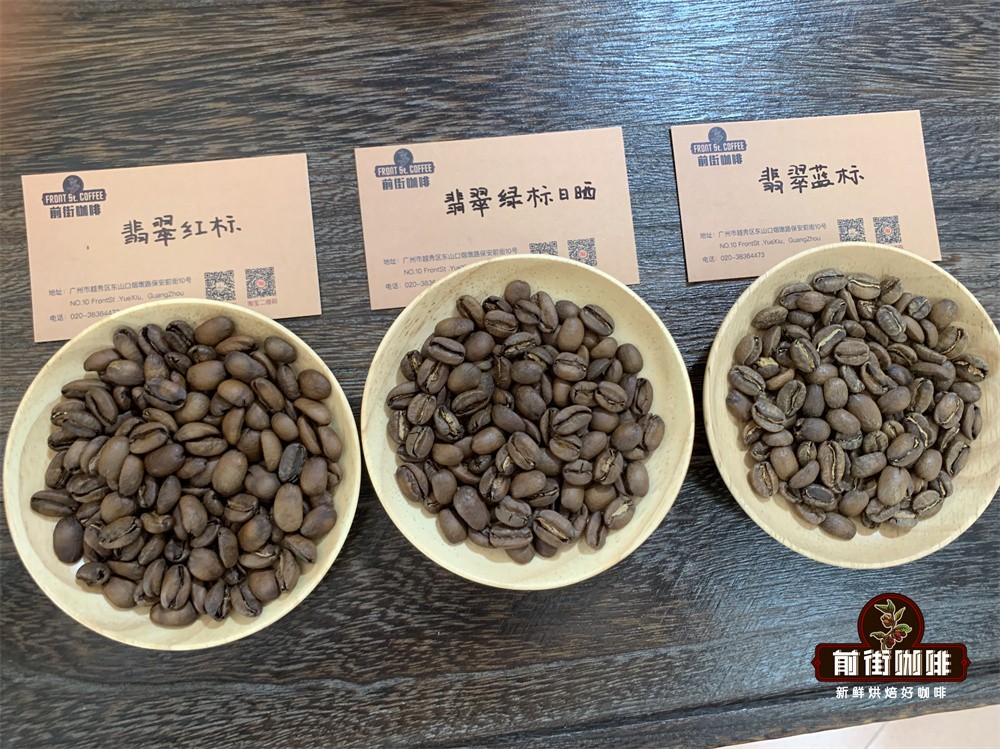
[Natural Red Label] Bright rose and citrus aromas, brown rice, berries, apricots, complex fruits, and honey, with a substantial juice-like mouthfeel, rich flavor layers, and noticeable sweetness.

[Washed Green Label] Opens with intense jasmine florality and high sweetness — citrus, berries, a juice-like mouthfeel, cream, green tea, orange peel, cantaloupe — with richly layered flavors and a persistent floral-citrus aftertaste.
[Washed Blue Label] Opens with gentle lemon and grapefruit acidity, and as the cup cools it reveals oolong tea, honey, and sucrose sweetness. The mouthfeel is clean and bright throughout.
[Natural Blue Label] Smells of fermented fruit and fruity sweetness; on the palate it delivers melon and tropical fruit sweetness with a juice-like mouthfeel, and its overall sweetness is very high.
FrontStreet Coffee carries nearly fifty single-origin beans with distinct flavor profiles, more than enough to satisfy any coffee lover's curiosity. Welcome to FrontStreet Coffee to talk coffee with our baristas!
FrontStreet Coffee Recommendation
If this story of Hambella's natural processed Guji has caught your attention, the FrontStreet Natural Huakui (Guji Hambella) is the coffee to seek out. It comes from the Hambella area of Guji, Sidamo, where the whole farm spans 200 hectares and the cherries are processed in the traditional natural style. To keep the fruit from molding or picking up earthy odors during drying, workers lay the ripe cherries out on raised beds to sun for 21 days, turning them constantly so they dry evenly; every three to five days, farmers hand-sort out any defective or moldy beans. Once the dried skin has hardened, it is removed with a hulling machine, and the green beans go through one final hand sorting before leaving the estate.
Because the cherries dry whole — skin and pulp intact — a medium-light roast reveals a light fermented wine aroma, florality, citrus, and mango, with a much richer, more complex cup: honey sweetness, a cocoa undertone laced with gentle spice, a full body, and a finish that lingers long after the last sip. It is a superb companion to, or substitute for, the Guji lots described above.
Important Notice :
FrontStreet Coffee is a long-established specialty coffee roaster in Guangzhou China, selling freshly roasted beans from its own farm in Yunnan as well as dozens of carefully selected single-origin beans from around the world for both pour-over and espresso. The products deliver consistently excellent quality and great value, with shipping within 24 hours. Guangzhou's FrontStreet Coffee shop is recommended by many coffee lovers, and the beans are now available online at the Tmall 。
FrontStreet Coffee has moved to a new address:
FrontStreet Coffee Address: 315,Donghua East Road,GuangZhou
Tel:020 38364473
 Scan and follow the En Gafei WeChat official account. Please indicate that the reprint comes from "En Gafei".