
Pour-Over Coffee Water-to-Coffee Ratio: Essential Tips and Techniques for Beginners
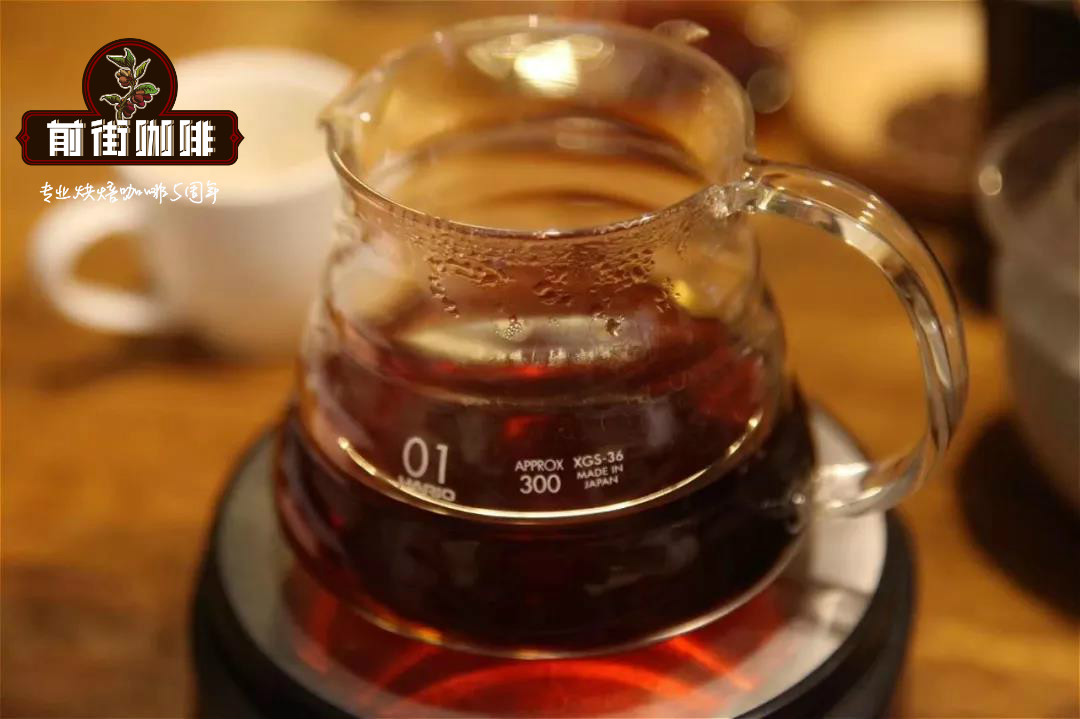
Hello everyone - many of you buy your own gear and beans to brew pour-over coffee at home, and I regularly receive all sorts of questions about it. The enthusiasm for discussion is genuinely high, so today I'll take several questions beginners ask most often and answer them thoroughly.
First Question: Why doesn't water drain during the pour-over bloom?
The purpose of blooming is to let hot water slowly penetrate to the center of the coffee grounds, so the soluble substances in the coffee dissolve first into a high-concentration coffee solution. During the next pour, the concentration gradient drives movement from high concentration (the bloomed liquid) to low concentration (the fresh hot water) until equilibrium - uniform concentration - is reached.
So if you use too much water for the bloom and a large amount of coffee liquid drips out, the falling water never pauses and simply carries substances off the exterior of the grounds. The outer layer dissolves first while the inner layer is still dry; by the time hot water finally penetrates the center, the unpleasant tastes and astringency of the spent outer layer have begun to dissolve too. Coffee brewed this way ends up both weak and loaded with over-extracted flavors.
If the bloom water is insufficient - no droplets fall at all - the grounds have not absorbed enough water and some of the coffee has not degassed properly, which leads to under-extraction.
So how much water should you use for blooming?
Generally speaking, there are two ways to calculate it:
1. Use 1.5~2 times the weight of the grounds. For 15g of coffee, that means roughly 23~30g of bloom water. For light roasts, use slightly less.
2. Use 1/10 of the total extraction target. To brew 240 milliliters of coffee, use 24g of bloom water. Again, use slightly less for light roasts.
The correct bloom state is when just a few drops fall - nothing more. The prerequisite, as shown in the image above, is that the bloom water is poured completely and distributed evenly across the bed so every particle gets wet.
Second Question: Where does the acidity in coffee come from?
Coffee is one of the plants with the highest chlorogenic acid content in the entire plant kingdom, and chlorogenic acid is a powerful antioxidant. Coffee also contains organic acids such as formic acid, citric acid, and malic acid. During green bean processing, acetic acid (vinegar acid) and lactic acid are produced. And during roasting, although certain acids decompose under heat, citric, malic, lactic, and acetic acids are largely retained. So coffee always carries some acidity - after all, coffee is a fruit.
Even medium-dark roasts like Blue Mountain and Mandheling retain acidity, just less than medium and light roasts. Coffee flavor is also a complex interplay in which the four tastes - sour, salty, bitter, and sweet - both enhance and suppress one another: a certain amount of sweetness suppresses acidity, a certain amount of saltiness highlights sweetness, and so on. And when judging acidity, we should assess not just intensity but quality.
Medium-dark roasted Blue Mountain, for example, is what we would call a very balanced coffee with low acidity but excellent acidity quality - gentle, mouthwatering acidity of the kind that makes you salivate.
Kenya coffee is another example: its bright berry and citric acidity is high in intensity, yet in a good Kenyan cup that acidity transforms into a sweet-tart fruit sensation - again, excellent acidity quality.
Low-quality acidity, by contrast, is acidity that only makes you wince, or dull, lifeless acidity - neither counts as excellent quality.
Third Question: How should you set the water-to-coffee ratio for pour-over?
Honestly, when it comes to brewing, whatever you like is best - some people like it strong, some like it light.
But why do we always recommend a ratio between 1:14 and 1:16?
Start with the ratio we use for cupping: 1:18.8. That ratio is designed to put the coffee's concentration and extraction yield inside the Golden Cup range - that is, an extraction rate between 18% and 22%, and a coffee concentration between 1.2% and 1.45%.
Pour-over ratios are a recommendation aimed simply at "better taste." Anyone who has cupped knows cupping coffee is relatively weak - that is deliberate, to make the various flavors easier to distinguish, and each cupping round takes about 20 minutes with the grounds fully immersed, releasing everything. Pour-over, in contrast, extracts within 2~3 minutes of water contact. To reach a comparable extraction, you need a tighter ratio: 1:14~1:16 depending on roast level. With this ratio, as long as nothing goes catastrophically wrong during the brew, the cup generally will not taste bad.
Of course, there are exceptions to every rule. I personally like brewing Hacienda La Esmeralda Natural Red Label Geisha at 1:18, which showcases the complete floral and fruity aromas. You can also go as tight as 1:13 or even 1:12 for Blue Mountain or Mandheling, extracting only the front and middle sections of flavor.
As for the countless pouring techniques out there, my advice is simple: as long as the coffee tastes good, who cares how you brewed it!
Fourth Question: How long should Ethiopian coffee beans be rested?
Those who have read our article "FrontStreet Coffee Teaches You Coffee | The Importance of Fresh Beans - Resting" already know.
Ethiopian coffee belongs to the light-roast category, and light roast beans degas relatively evenly and slowly, so they need more time to mature. Resting 5-7 days is normal, and if your storage environment runs cool, resting 8~10 days is perfectly fine.
These are just a few of the most common beginner questions about pour-over coffee. If anything is missing or off, please add to the discussion - and if you have other coffee questions, ask away and we will do our best to answer.
Looking forward to the next beginner Q&A. Let's keep improving together!
FrontStreet Coffee Recommendation
If you are just getting into pour-over, the Hario V60 dripper is the classic first purchase - its 60° cone and single large outlet produce fast, expressive extraction that flatters floral and fruity coffees. For beans, start with FrontStreet Yirgacheffe Worka (Guodingding) Cooperative, an entry-level favorite with bright citrus, berries, white florals, and a green-tea-like sweetness, or the FrontStreet Ethiopian Huakui natural, whose tropical fruit - strawberry, passion fruit, jackfruit, even lychee - makes it "the coffee that doesn't taste like coffee." For the ultimate expression, the FrontStreet Panama Esmeralda Red Label Geisha offers elegant jasmine, citrus, bergamot, and black tea in a clean, transparent cup.
Important Notice :
FrontStreet Coffee is a long-established specialty coffee roaster in Guangzhou China, selling freshly roasted beans from its own farm in Yunnan as well as dozens of carefully selected single-origin beans from around the world for both pour-over and espresso. The products deliver consistently excellent quality and great value, with shipping within 24 hours. Guangzhou's FrontStreet Coffee shop is recommended by many coffee lovers, and the beans are now available online at the Tmall 。
FrontStreet Coffee has moved to a new address:
FrontStreet Coffee Address: 315,Donghua East Road,GuangZhou
Tel:020 38364473
 Scan and follow the En Gafei WeChat official account. Please indicate that the reprint comes from "En Gafei".

