What is Geisha Coffee Bean? Are Geisha and Yirgacheffe the Same Coffee Variety?

We all know Gesha coffee is delicious and famous - but do you know where the name comes from? Coffees get named in many ways: after a producing country or region, or after an estate. Gesha, however, is named after a coffee variety itself - written Geisha or Gesha in English. Coincidentally, it echoes the word for a Japanese performing artist, which is why some people call the variety "Geisha," and the name has stuck worldwide.
Gesha now grows nearly everywhere - Panama, Ethiopia, Colombia, Costa Rica, even Yunnan in China. Are they all the same variety, or are there differences? Gesha originated in Ethiopia and rose to fame at Panama's Hacienda La Esmeralda. So what actually separates Gesha coffee from Ethiopia's Yirgacheffe?

The Discovery of Gesha
The Gesha variety was collected in 1931 from the Gesha forest in Ethiopia and sent to a coffee research institute in Kenya. In 1936 it was introduced to Uganda and Tanzania; Costa Rica took it in in 1953, and Panama received it in the 1970s, when Mr. Francisco Serracin of the Pichilla farm obtained seeds from CATIE in Costa Rica and began growing Gesha. As the story goes, Daniel cupped harvest batch after batch, noting the flavor of each - until one batch stood out with a uniquely distinctive character. The only way to confirm the difference was to compare, batch by batch.
Once the batch was identified, he traced back its harvest date and harvest area within the estate, reviewed all the batch data again, and finally pinned down the exact harvest location. Having confirmed the spot, he began observing the trees, leaves, and fruit one by one - and that is how Gesha was found. Contrary to the legends, the truth is simpler: this variety emerged because one man put in far more effort and persistence than anyone else.

From an obscure plant to global fame, Gesha's journey through the estates of many producing countries was anything but easy. Ethiopia, a landlocked nation in the Horn of Africa and one of the world's most populous countries, is revered as the birthplace of Arabica coffee, with a wealth of native varieties and genetic diversity found nowhere else. Most Ethiopian coffee is grown by smallholder farmers on tiny plots or in wild and semi-wild environments; nearly 15 million people nationwide are involved in growing and processing coffee. As the cradle of Arabica, Ethiopia's coffee history stretches back to the 10th century, when the first African nomadic tribes mixed coffee cherries with oils and spices to make energy-giving foods.

Ethiopian Yirgacheffe
Yirgacheffe is one of Ethiopia's premier - and most famous - coffee regions. It is a small town within Gedeo, and the name itself is poetic: "Yirga" means "to settle," and "cheffe" means wetlands - "settle down in this wetland." The altitude is very high, reaching 1700-2200 meters, and the low average temperatures stretch the coffee's growth and maturation, letting the fruit absorb more aromatics and develop deeper, more intense flavor.

The region is dominated by small-scale farming. Farmers plant coffee in their backyards, and since coffee alone can't provide year-round income, they intercrop it with other crops - which conveniently also shade the trees. At harvest, farmers sell ripe cherries in bags to cooperatives for processing, and the green beans are later sold under the cooperative's name - which is why so many Ethiopian coffees carry cooperative names. Yirgacheffe currently has 28 member cooperatives, many already familiar to coffee lovers, such as the Gedeb, Worka, and Konga cooperatives. One thing we must highlight is the cooperatives' washed processing technique: FrontStreet Coffee believes a large share of Yirgacheffe's signature flavor comes from it.

Yirgacheffe beans began with the most traditional natural processing and later adopted washed processing. FrontStreet Coffee's Red Cherry is natural-processed from fully mature cherries; the beans run slightly large, the mill is regarded as a benchmark for Yirgacheffe quality, and the coffee always shows those classic floral and lemon flavors.
FrontStreet Coffee has sourced more than a dozen Ethiopian coffees, because each region of Ethiopia tastes different - and we want enthusiasts to taste as much of coffee's birthplace as possible.

Differences Between Gesha and Yirgacheffe
Gesha may have originated in Ethiopia, but how does it differ from Yirgacheffe coffee?
First, Different Varieties
Gesha coffee is, by definition, coffee of the Gesha variety - collected from the Gesha forest in 1931, sent to Kenya for research, introduced to Uganda and Tanzania, adopted by Costa Rica in 1953, and finally taking root in Panama in the 1970s. The Gesha we drink today is genuinely precious.

Yirgacheffe, by contrast, is made from Ethiopia's local native varieties - the so-called Heirloom landraces. You'll notice the beans vary in size and shape, possibly because they contain multiple varieties never separately identified. Ethiopia is a treasure trove of coffee genetics with far too many varieties to classify easily, and the government has chosen not to disclose variety information for protection reasons, so they are collectively called native varieties.

Beyond that, Gesha tastes different in Ethiopia than in Panama, shaped mainly by environment and climate. Although Ethiopia is coffee's birthplace and ideal for growing it, the Gesha variety is extremely picky: it needs shade trees and high altitude, fertile volcanic soil, forest ecology, proper rainfall and sunshine, and meticulous hands-on management - all indispensable. It's precisely because Panama's environment and its estate owners could supply every one of those conditions that the internationally renowned Gesha flavor was born there.
Panama
Panama sits in Central America surrounded by quality coffee-producing countries, with Costa Rica on one side and Colombia on the other. Its mountains run east to west, and cold air flowing through the central cordillera converges at altitudes above 6,500 feet, creating unique microclimates in the Boquete region and beyond. Temperatures are comfortable, rainfall abundant - ideal for many crops.
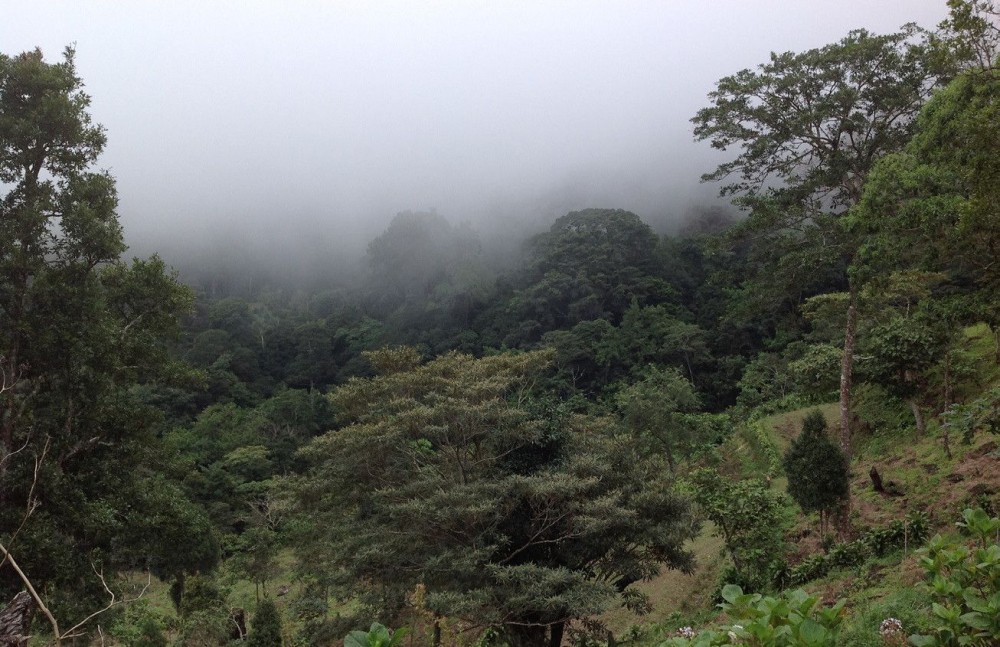
Gesha trees need cloud cover or plant shade and cannot tolerate direct strong sunlight. In Boquete, the mountains are often wrapped in cloud and fog - humid by day, cool by night - and the Baru volcano enriches the soil. These are all favorable conditions for elite coffee. The higher the planting altitude, the longer Gesha's cherries mature, the more nutrients they absorb, and the richer and more distinctive the flavor. High-altitude Gesha shows intense florals, a full juice-like texture, bright acidity, a smooth mouthfeel, and rich flavor layers - far surpassing lower-grown lots.
Hacienda La Esmeralda
Panama's Hacienda La Esmeralda is both the discoverer and the champion of the Gesha variety.

La Esmeralda enjoys the highest recognition in the coffee world, and its coffee comes mainly from three farms: El Velo, Canas Verdes, and Jaramillo. To manage cultivation precisely, the estate cups beans from different areas separately and maps planting plots by altitude - and that is how today's Gesha grades came to be: Esmeralda Red Label, Esmeralda Green Label, and so on.
Elida Estate
Elida Estate has a century of coffee history, founded in 1918 by the Lamastus family and now run by the fourth generation. More than half of Elida's planting area lies within Baru Volcano National Park, the highest in Central America. The volcano's microclimate and high-altitude environment let plants thrive; alongside coffee, the estate grows many rare high-altitude fruit varieties.

FrontStreet Coffee's Boquete Gesha is one of our daily beans and a representative coffee of the Panama region.
Coffee Bean Processing Methods

Yirgacheffe beans began with traditional natural processing and later adopted washed processing; the most famous are FrontStreet Coffee's Natural Red Cherry and our Washed Yirgacheffe. Gesha, too, comes in both natural and washed versions - such as FrontStreet Coffee's Washed Green Label Gesha from Esmeralda Estate, our Natural Red Label Gesha, the Washed Boquete Gesha, and our Natural Elida coffee.

FrontStreet Coffee Brewing Parameters:
Since both our Yirgacheffe and Gesha beans are lightly roasted, brewing calls for high-temperature water at 91°C to pull out the florals and fruit. We recommend a medium-fine grind (80% pass-through rate on China standard #20 sieve): too coarse and the cup turns thin, lacking body; too fine and the high water temperature tips into over-extraction and bitterness.

The specific parameters FrontStreet Coffee uses: V60 dripper, water temperature 91°C, water-to-coffee ratio 1:15, coffee amount 15g, medium-fine grind (80% pass-through rate on China standard #20 sieve).
Our segmented extraction technique: first pour 30g of water to wet the grounds into a "hamburger" shape and bloom for 30s. For the second pour, at 1'00" on the timer, add water up to 125g, then wait for the level to fall to 2/3 of the coffee bed. For the third pour, at 1'40", add water up to 225g and wait for all the coffee to finish dripping. Total extraction time: 1'59"; total brew time: 2'00". When extraction is complete, swirl gently so the coffee is fully uniform before tasting.

FrontStreet Coffee's Washed Yirgacheffe Gedeb flavor: lemon, florals, orange, cane sugar - clean and refreshing overall, with honeyed notes in the aftertaste and an oolong-tea finish.
FrontStreet Coffee's Natural Red Cherry flavor characteristics: lemon, licorice, citrus, berries, sweet orange; high sweetness overall, with caramel and cream in the aftertaste and black tea aroma in the finish.
FrontStreet Coffee's Panama Washed Boquete Gesha flavor characteristics: clear citrus, lemon, and bergamot acidity, a creamy smooth mouthfeel on the swallow, finishing with the sweetness of green tea and honey.
FrontStreet Coffee's Panama Natural Elida flavor characteristics: fermented aroma, roses, berries, citrus, green tea, cream, nuts.

FrontStreet Coffee Brewing Suggestions:
A delicious cup also depends on freshness. FrontStreet Coffee has always believed that bean freshness shapes flavor above all, so every order ships with beans roasted within the last 5 days - our philosophy is "Freshly Roasted Good Coffee." Coffee rests best for about 4-7 days, so by the time it reaches you, the flavor is at its peak.
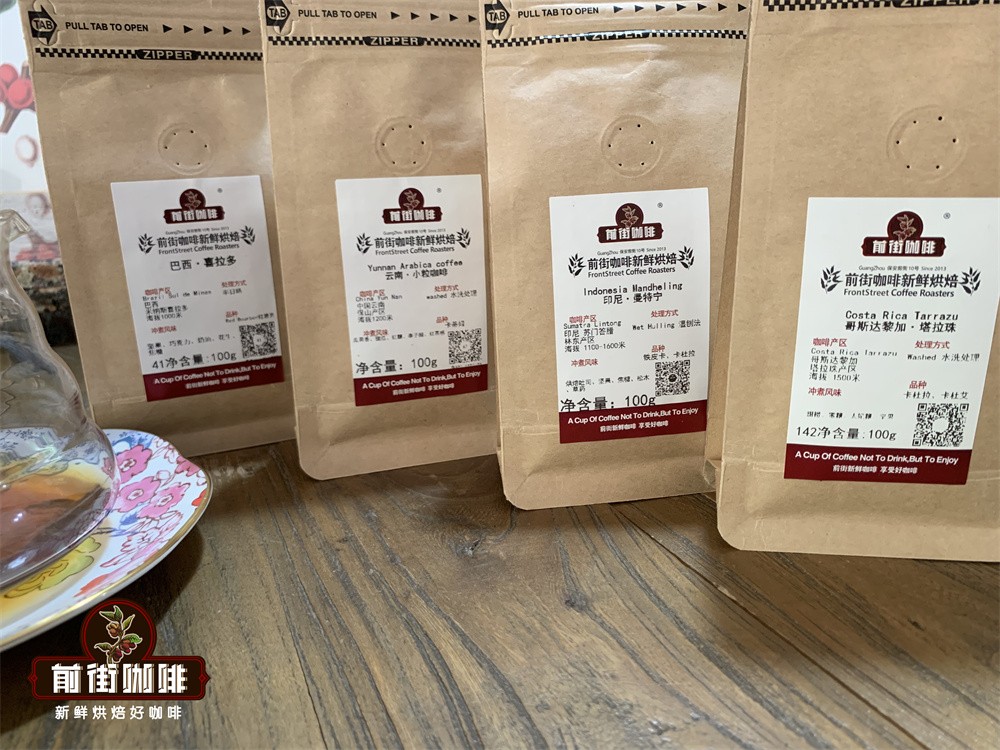
For those who need pre-ground coffee: once beans are ground in advance, no resting period is needed, because during shipping the pressure of carbon dioxide in the sealed packaging helps mellow the flavor - you can brew immediately on arrival. But grounds must be brewed promptly: exposed to air they oxidize quickly, flavor dissipates, and the coffee won't taste as good. That's why we suggest buying whole beans and grinding fresh before each brew.
However delicious Gesha is, it won't suit every palate - everyone's tastes differ. Some prefer Ethiopia's delicate florals and bright fruit acidity; some love Indonesian Mandheling with its pine and herbal nuttiness; others might enjoy specially processed Costa Rican coffee like our Mirasu or the grape-honey-processed Mozart. FrontStreet Coffee carries all of these. If you're not sure which flavor to choose, start with our daily beans - representatives of the major producing countries at very high value for money. They won't disappoint, and they're a very wise choice!
FrontStreet Coffee Recommendation
If you'd like to sample the legendary "Gesha flavor" without a steep learning curve, FrontStreet's Boquete Gesha from Panama is our first recommendation for newcomers: at an accessible price, it delivers classic high-grade Panamanian Gesha character - the orange-blossom sweetness, an oolong-tea-like texture, delicate fruit acidity, and clearly defined layers. For the pinnacle, we carry both Esmeralda grades: the Red Label ("Esmeralda Special," grown at 1600-1800 meters, cupping above 90 points, with each batch from a single plot such as the Harimu Micro-lot) for those who want precise terroir, and the Green Label ("Private Collection," a blend of multiple high-altitude plots) for the estate's signature Gesha profile at a friendlier price - exceptional value.
And if the Ethiopian side of the story intrigues you, our classic Washed Yirgacheffe - white jasmine, bright citrus and lemon, and a tea-like finish - is the perfect introduction to the birthplace that started it all.
Important Notice :
FrontStreet Coffee is a long-established specialty coffee roaster in Guangzhou China, selling freshly roasted beans from its own farm in Yunnan as well as dozens of carefully selected single-origin beans from around the world for both pour-over and espresso. The products deliver consistently excellent quality and great value, with shipping within 24 hours. Guangzhou's FrontStreet Coffee shop is recommended by many coffee lovers, and the beans are now available online at the Tmall 。
FrontStreet Coffee has moved to a new address:
FrontStreet Coffee Address: 315,Donghua East Road,GuangZhou
Tel:020 38364473
 Scan and follow the En Gafei WeChat official account. Please indicate that the reprint comes from "En Gafei".