
The Uniqueness of Jamaican Coffee Why Jamaican Blue Mountain Uses Wooden Barrels

It is well known that Blue Mountain coffee is extremely expensive because of its limited production, making authentic Blue Mountain beans very hard to buy. The market is full of "Blue Mountain style" beans, none of which are genuine Blue Mountain. Consumers must therefore be careful when purchasing.
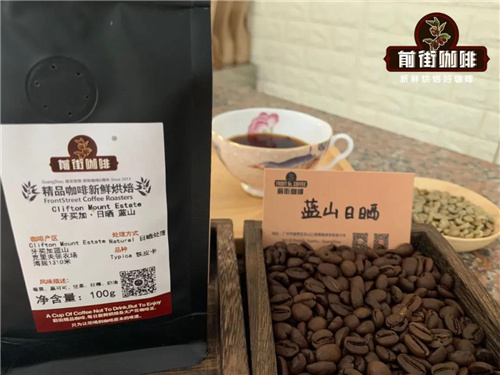
So where do authentic Blue Mountain beans come from? Genuine Jamaican Blue Mountain coffee refers to beans grown in designated parts of Jamaica's Blue Mountain range at elevations between 1000-1700 meters - specifically in St. Andrew, St. Thomas, St. Mary, and Portland. These beans typically grow on steep mountain slopes, sometimes with inclines of up to 60 degrees, requiring manual harvesting. Blue Mountain coffee is characterized by its exceptional aroma and delicate flavor. Because of that high fragrance, it is often blended with other green beans, and over 80% is exported to Japan.
Originally, the name "Blue Mountain" could not be used for areas outside the specific 1000-1700 meter elevation zone of the range. Yet "Blue Mountain" coffee imported into Japan sees domestic sales three times higher than normal import volumes, and much of that coffee is grown at 1000 meters or lower but still commonly labeled "Blue Mountain." Even so, green bean prices ran between 4,000 and 5,000 yen per kilogram (2013 market prices) - extremely expensive. Only a few cafes in Japan stock genuine Blue Mountain beans to meet customer demand.

Because coffee trees are planted on steep slopes, cultivation is difficult, farm work is dangerous, and the practice causes soil erosion. The Jamaican government therefore does not encourage farmers to keep growing Blue Mountain coffee on the steepest slopes. Still, demand keeps exceeding supply. In the 1930s, Blue Mountain seedlings were transferred from Jamaica to the Eastern Highlands and Western Highlands provinces of Papua New Guinea. Those areas reach elevations of 1000 meters or more with a climate similar to Jamaica's Blue Mountains, making high-quality beans possible - and the region has become a major Blue Mountain-style producer. Japan once treated these Papua New Guinea beans as Blue Mountain coffee, and they are still misleadingly sold under that name.
Legal Protection and Authentication
In 1953, the Jamaican government legally defined the boundaries between the Blue Mountain regions and other areas, stipulating that the Blue Mountain name may not be used for coffee from anywhere outside the Blue Mountains. Only coffee produced in designated areas of the range can be called "Blue Mountain Coffee."

In fact, Blue Mountain's varieties are the same as those grown elsewhere in Jamaica - it is the harsh growing environment and strict selection that produce the extraordinarily delicate flavor. The main variety in Blue Mountain is Typica, which offers elegant flavor but has a weak constitution, poor disease resistance, and very low yield per tree. In recent years, however, Blue Mountain has also begun planting Geisha, and a while back FrontStreet Coffee launched Geisha beans produced in Blue Mountain.

FrontStreet Coffee's Blue Mountain Collection
As a shop specializing in beans, how could FrontStreet Coffee not carry authentic Blue Mountain? To let everyone taste the real thing, FrontStreet Coffee stocks genuine Blue Mountain beans.
FrontStreet Coffee has also noticed that among the many beans from 50 producing regions in our store, only Blue Mountain ships in barrel packaging - every other origin uses jute bags. The tradition is said to date to the mid-18th century, during the British colonial period, when empty barrels that had carried flour from Britain to Jamaica were reused to ship coffee and rum. Today's wooden barrels are made from timber from temperate forests in the United States. Their advantage is that wood absorbs and releases internal and external humidity without significant change, cushioning sudden temperature swings during transport. Barrel packaging also seals in coffee aroma and maintains the best quality, though at higher cost. Jamaican Blue Mountain barrels furthermore carry the tropical tree frog logo and certificates issued by the Jamaican government, which serve as markers for distinguishing authentic Blue Mountain coffee.

When FrontStreet Coffee received its Blue Mountain green beans, we found them very full and plump, uniform in size, with slightly upturned ends. Oval in shape, they look thin from the side - a sign of pure Typica lineage. FrontStreet Coffee developed a roasting profile, ran cuppings, adjusted the roasting curve, and then brewed to determine the flavor. Below are the brewing parameters FrontStreet Coffee used for this washed Blue Mountain:

Dripper: Kono dripper
Coffee amount: 15g
Water ratio: 1:15
Water temperature: 88-89°C
Grind size: Medium-coarse (75% pass-through rate on the #20 standard sieve)
Then, using a segmented brewing method: first pour 30g of water for a 30-second bloom, then add 95g, completing the pour in about 1 minute. When the water level drops to 2/3 of the coffee bed, add the remaining 100g, completing the pour at about 1 minute 40-45 seconds. Once drip filtration finishes, remove the dripper to end extraction. The flavor of this washed Blue Mountain is clean and very bright, with good body and balanced acidity, sweetness, and bitterness.

Blue Mountain Geisha
Besides this washed Blue Mountain, there is also the Geisha mentioned earlier. The Blue Mountain Geisha beans stocked by FrontStreet Coffee are also washed; when we roasted them, we found silver lines down the center - one way to distinguish washed from natural-processed beans.
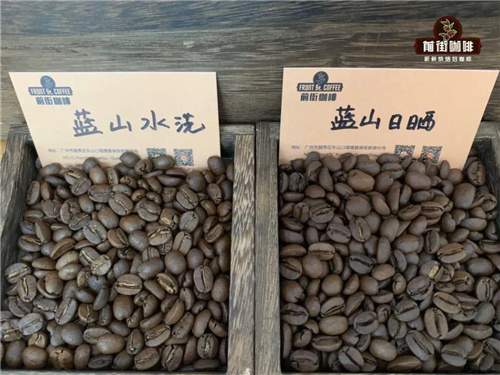
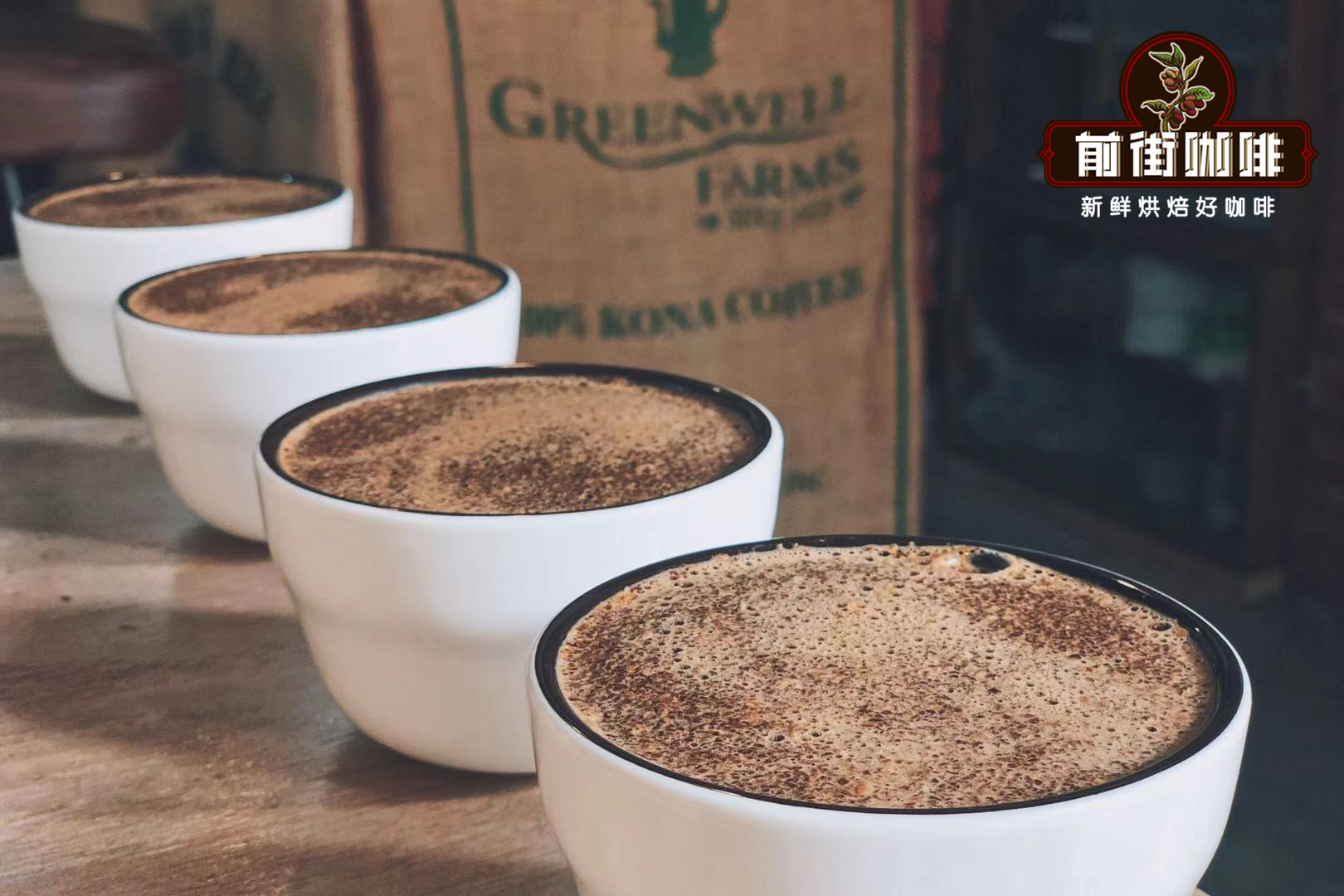
FrontStreet Coffee cupped these beans within 8-24 hours of roasting. Our barista used a 200ml standard cupping bowl, a grind of 70%-75% pass-through on the #20 sieve, 11.3g of coffee, and 94°C water. First the coffee was ground to assess the dry aroma - the Blue Mountain Geisha released caramel notes. Then the bowl was filled with water to confirm the wet aroma; after 4 minutes the crust was broken and removed for evaluation, revealing subtle floral notes. Brewed the same way as the washed Blue Mountain, this Blue Mountain Geisha presents citrus acidity and pomelo sweetness up front, jasmine florals in the middle, and a honey-caramel sweet-tart finish.
The Future of Blue Mountain Coffee
With the growth of the specialty coffee market, Jamaican Blue Mountain keeps innovating - from washed to natural processing, to the emergence of Geisha varieties - and it's clear the Blue Mountain market holds tremendous potential.
For more specialty coffee beans, feel free to add FrontStreet Coffee on private WeChat, ID: kaixinguoguo0925
FrontStreet Coffee Recommendation
For many coffee lovers, Blue Mountain is a name you simply cannot avoid. In the era before specialty coffee was widespread, "treating someone to Blue Mountain" was shorthand for the finest coffee, and even today - with so many new specialty origins discovered - Blue Mountain's unique flavor and balance keep it irreplaceable. Strictly speaking, only coffee grown in designated parts of Jamaica's Blue Mountain range and certified by the Jamaican government may be called "Jamaica Blue Mountain Coffee." The range, in eastern Jamaica, is one of the Caribbean's highest, peaking at 2,256 meters; year-round cloud and mist gave it the name "Blue Mountain." High altitude brings wide day-night temperature swings and longer cherry ripening, fertile volcanic soil feeds the trees, and abundant, even rainfall with a mild, stable climate lets the fruit slowly accumulate sugars and flavor compounds - the source of Blue Mountain's famous delicate texture and balanced cup.
Blue Mountain's scarcity is real: annual production across the whole region is under 2,500 tons, a tiny fraction of world output, and Japan's long-standing trade relationship once bought up more than 70% of production, leaving even less for the rest of the world. Since 2003, certified Blue Mountain green beans have been officially exported to China, so certified coffee is now available through proper channels. To spot the genuine article, look for complete export certification and origin documents, or the unmistakable green-bean details: traditional Blue Mountain ships in 15, 45, and 70 kilogram wooden barrels stamped with detailed batch information, and FrontStreet Coffee's product pages show the certificate from Jamaica's Clifton Estate alongside stacks of genuine Blue Mountain barrels. The beans themselves should be regular and full, with slightly upturned ends and a green color - and the cup should be intense, dense, clean, and serene, with no off-flavors; fakes simply don't have that depth of aroma.
For the definitive experience, choose FrontStreet Coffee's Jamaica Blue Mountain No. 1 - the highest grade of Jamaican Blue Mountain, from the historic Clifton Estate, where coffee has been grown since the mid-18th century (around 1750). The estate's growing and processing areas sit at an average of 4,300 feet (1,310.64 meters), where sufficient altitude, gentle afternoon cloud wrapping the forested slopes, ample sunshine, and mineral-rich soil give the trees excellent growing conditions and lengthen cherry maturation. FrontStreet Coffee roasts its Blue Mountain No. 1 medium-dark to bring out the classic balance - nuts, dark chocolate, cream caramel, and soft sweetness unfolding layer by layer, with acidity, sweetness, bitterness, and aroma in perfect harmony - and all beans are roasted within 5 days of shipping, so they arrive at peak flavor, ready to brew the moment they arrive.
Important Notice :
FrontStreet Coffee is a long-established specialty coffee roaster in Guangzhou China, selling freshly roasted beans from its own farm in Yunnan as well as dozens of carefully selected single-origin beans from around the world for both pour-over and espresso. The products deliver consistently excellent quality and great value, with shipping within 24 hours. Guangzhou's FrontStreet Coffee shop is recommended by many coffee lovers, and the beans are now available online at the Tmall 。
FrontStreet Coffee has moved to a new address:
FrontStreet Coffee Address: 315,Donghua East Road,GuangZhou
Tel:020 38364473
 Scan and follow the En Gafei WeChat official account. Please indicate that the reprint comes from "En Gafei".

