How to Make Drip Coffee - Is Drip Coffee the Same as Pour-Over Coffee - Differences Between Drip and Pour-Over Coffee
Understanding Drip Coffee and Pour-Over
Today the most common drip method is pour-over. But coffee made in an American-style drip machine also counts as drip coffee. So what separates the two? In one sentence: drip coffee includes—but is not limited to—pour-over, while pour-over is simply one method within drip coffee.
Getting More Out of a Drip Machine
A drip machine is simple: plug it in, add ground coffee to the filter basket, use paper or a metal filter screen, and the water stays at a nearly constant temperature. Serving more people? Use more coffee—fewer, less. Switch it on and the coffee drips into the glass carafe or thermal pot.
Because a drip machine fixes both water temperature and flow rate, FrontStreet Coffee sees a few clear opportunities to optimize the brew.
The Right Coffee-to-Water Ratio: 1:18.18
As the SCAA never tires of stressing, we still recommend a 1:18.18 ratio—1 gram of coffee to 18.18 milliliters (c.c., cubic centimeters) of water. Since drip machines are filled with cold water, we suggest measuring the right volume in a measuring cup first, then adding it to the machine. This ratio lands most brews within the Golden Cup range: concentration 1.15%-1.35% and extraction yield 18%-22%.
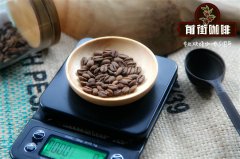
If you don't have a measuring cup at home, use a scale instead. Here we suggest going straight to this ratio: 15 grams of coffee powder per serving, paired with 225 grams of cold water (or 265.4 milliliters by volume). This is the ratio used at FrontStreet Coffee's shop, and we encourage you to try it. We've already converted the density of hot water at 93-96°C between volume and mass, under one atmosphere of pressure at a room temperature of 25°C, and are giving you the gram amounts for both coffee and water directly.
Getting the ratio right keeps you from wasting coffee. During extraction, we want to pull acidity, sweetness, and bitterness out of the acid-sweet-bitter-astringent process while completely avoiding the over-extraction of lingering bitterness and astringency. Extracting the right compounds is what brings your coffee into the right flavor zone.
So you don't have to haul out a cylinder or scale every time, put a piece of tape on your drip machine's water-level window. Treat the 225 grams or 265.4 milliliters just mentioned as one cup, measure out one cup, two cups, three cups, and mark it off in segments on the window. Next time, you can pour the correct amount for the number of people quickly.
Stirring
Normally you scoop the powder into the basket, level it, and switch on the machine. But what if your beans are too fresh, your powder too fine, you need three to four times the usual number of cups, or your beans are a light roast? That's when stirring comes in.
The point of stirring is to help extraction. Stirring releases a lot of CO2 bubbles, helps the coffee powder soak in water, and lets hot water reach the grounds for a full, even extraction.
So if the powder is too fresh, if you've chosen a medium-dark roast, if hot water seems to reach only the lower pot, if powder escapes the basket, or if the grind is too fine and you still want to brew without waste—in any of these cases, we suggest stirring as soon as the hot water first hits the coffee powder (a water amount equal to the coffee's weight is ideal). Make sure all the powder and water are evenly in contact, then stop immediately. Stirring time should be 5-10 seconds. (Keep stirring and the coffee will turn too bitter and astringent.)
These problems, though, could have been avoided from the start—likely you ground too fine, so grind a little coarser next time.
When should you stir? We recommend it for light roast beans. If the brewed cup lacks sweetness, add the extra step and stir a bit to help the machine extract a little more, making the overall flavor stand out. Overdo it, of course, and astringency creeps in. Practice a few times and you'll get the hang of it.
Pre-Infusion
Generally speaking, drip machines don't have pre-infusion. So what is it?
Pre-infusion gives the coffee powder a waiting period before it's fully wetted. During that time hot water sits on the grounds, which heat up and continuously release CO2. Afterward they can accept the full flow of hot water and extract flavor compounds completely.
With pour-over, you first pour some hot water onto the powder, wait, then pour the rest. Different schools do it differently—some wait 30 seconds, some wait until the surface loses its sheen, some add water as soon as the bed starts to fall, and others pour continuously but start with a slower flow. All of them show how necessary pre-infusion is.
Drip machines have electricity on their side: start and stop at the flick of a switch. To get the most from yours, try a two-stage water addition. Turn on the machine and add a first pour roughly equal to the coffee's volume, then switch off, wait 30 seconds (patiently), switch on until brewing is complete, and switch off.
Grind Size
In pour-over, grind size shapes flavor, but in a drip machine there's a second factor: water flow speed.
During extraction, acidity, sweetness, bitterness, and astringency come out in that order—the sequence in which coffee compounds are washed from the grounds. Grind size is therefore a lever on flavor. The finer the grind, the larger the contact area (think of surface area from middle-school science), so compounds flow out faster; the coarser, the slower. Of all the compounds in black coffee, astringency is the one we least want. So how do you get the "right" extraction? It comes down to your taste buds. If the coffee tastes astringent, the powder is too fine—go coarser. If it isn't sweet enough, go a little finer.
The extraction rate mentioned above, recommended by the SCAA at 18%-22%, is measured in Golden Cup courses with a VST optical refractometer: first find the concentration of the brewed coffee solution, then combine it with the SCAA Coffee Brewing Control Chart to read the extraction yield. But that's a method for hitting Golden Cup brewing, and everyone's taste and definition of good coffee differ. So here we suggest judging your grind size by your own palate. Using instruments to check every cup seems like making a mountain out of a molehill—unless, of course, you're sitting the Golden Cup exam, in which case take it seriously. This article isn't about calculating concentration and extraction rates, so we'll touch on it only briefly.
Next comes water flow: powder that's too fine stops hot water from passing smoothly through the coffee bed into the lower pot. Finding a grind that lets water pass smoothly and extract at an appropriate flow rate is a study in itself.
In the end, you can find a balance between flow and flavor, guided by your own observation and taste.
Intermittent Water Extraction
Want more flavor? Don't skip this technique.
If you brew pour-over often, you know how important pre-infusion is. Pre-infusion is essential to extraction; intermittent pouring is another way to lift flavor. The two-stage and three-stage approaches are what most people try.
You can apply this to a drip machine too. Intermittent water means switching off the power. Want to interrupt several times? Switch it off several times—not for fun, but for flavor.
How long before switching back on? If you can, watch the water in the drip machine's filter cup: when all of it has seeped down, it's time to add more. If you can't see it, count—about 10-15 seconds should do. Why only 10-15 seconds? Because we don't want the coffee powder to cool down, which hurts extraction. So 10-15 seconds it is.
We recommend this for relatively fresh beans, such as those roasted 1-3 days ago, or beans at a light roast level.
Intermittent pouring is meant to add good flavor. If you find the flavor doesn't improve, skip it. Generally, sweetness increases. If astringency increases instead, you've interrupted too many times—or no interruption was needed at all.
Cold Brewing
Younger drinkers may not have tried this one. Can a drip machine make iced coffee? Yes—and the trick is the ratio.
If you brew following SCAA principles, 1:18.18 is the easiest route to Golden Cup coffee: 1 gram of coffee to 18.18 milliliters of water. Volume or grams? This trips up many enthusiasts, but whatever tool you find convenient is fine.
FrontStreet Coffee's recommended ratio uses mass-to-mass. Assuming 15 grams of coffee powder to 225 grams of water (this involves the density conversion of hot water at 91-96°C under one atmosphere of pressure—we won't go into that here, only the resulting numbers): first place 110g of ice cubes in the lower pot, put 110g of water in the drip machine, and the 15g of coffee goes in the powder compartment. Remember, though, that only half your water actually passes through the coffee—meaning you need that hot water to extract more efficiently. How? Grind the coffee a little finer than usual.
How fine? You'll need to test a few times, but generally adjusting one "mark" finer is more than enough. It still depends on your results.
By Pass
The cold brewing above is actually a form of By Pass. The definition: first reduce a certain amount of water from the ratio that would normally pass through the coffee, shortening extraction time, and after extraction add the withheld water back into the brewed coffee.
It looks like brewing stronger coffee and then diluting it to a lighter, preset concentration.
In the United States this approach is widely used, especially by larger operations as a way to save brewing time. To get a relatively concentrated brew from a drip machine, you grind finer than usual, use repeated intermittent pours, or even add stirring—all to obtain a more concentrated liquid. The payoff is speed and quick service.
After you have the concentrated liquid, add water. The amount added still needs to follow the SCAA Golden Cup ratio, such as the 1:18.18 above. So if you use a method that reduces the water, add back what you held out, and if it tastes good, you've found your method. What counts as "right" is still your call: if it's astringent, grind coarser; if it isn't sweet enough, grind finer. Without instruments to measure concentration and extraction, it all comes down to taste.
(Quasi) Cupping
Cupping is a deeply professional topic that most people, beyond enjoying coffee, never encounter.
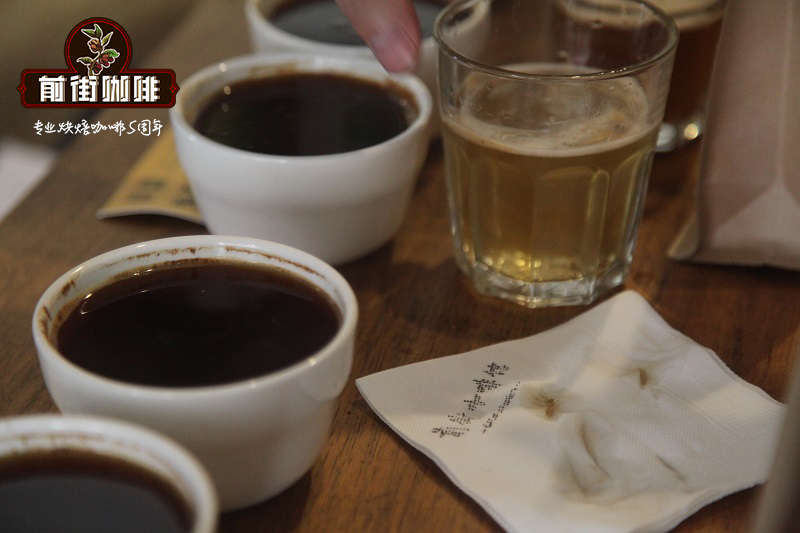
Cupping is an essential way to evaluate coffee. Farmers cup to understand how their own coffee tastes; bean buyers cup to judge a lot's value and whether to buy the whole batch; roasters cup to check how a roast turned out and whether it matches last time; green bean judges cup to find the most impressive bean and the deserving champion; brewers cup to see how well they brewed and how to highlight the bean's character; and consumers cup to understand their own beans—whether they love them and whether the "magical" flavor the shop claimed is real.
Cupping uses a 1:18.18 ratio, clean, odor-free hot water at 200°F, a calibrated grind setting, water TDS, a cupping spoon—four minutes, breaking the crust, slurping, eight minutes, dry aroma, wet aroma—with seemingly very strict, meticulous rules and scoring.
A drip machine is actually a very convenient, simple cupping tool. Although the coffee powder isn't continuously soaking in hot water, for ordinary consumers without such strict demands, it's more than sufficient. Suppose every time you buy new beans you grind at the "same" setting, brew at the "same" ratio, use the "same" method—no stirring, no intermittent pours—and taste within the "same" time frame. Judging this way, if you like the bean, you can slowly add new variables such as stirring, intermittent pouring, cold brewing, or By Pass—and your fondness will only grow. If you don't like the bean, there's no need to add anything, because if you didn't like it to begin with, no amount of tinkering will change much.
A Beginner's Guide to Blending Beans
Single-origin beans, single estate, specialty beans—these are the guiding principles of the third wave.
Blending? What's that?
The purpose of blending is to compensate for weaknesses and amplify strengths, combining everything you like into one coffee. You hope it isn't too acidic but is very sweet, with rich floral aroma and, if possible, some chocolate too. To present all of that in a single coffee is difficult without roasting tricks; ordinary coffee rarely has it all.
In fact, if you have too many beans at home, you can do this too: add different beans in different proportions, readjust, and create your own signature flavor.
Try this: brew each bean type using the same ratio, prepare several cups, pour different coffees into cups in different proportions, stir thoroughly, taste, and record. Then, based on your records, blend different beans by weight to create your exclusive blended coffee. Next time you want a cup, grind and brew.
Or try this: blend different varieties together intuitively, grind, brew American-style, taste, and record—and from your records, find your own personal blending recipe.
Coffee is inherently alive; how we define it often depends on interpretation. Third-wave specialty beans are meant to highlight each bean's original terroir, and that is exactly what opens the door to more possibilities. In past World Barista Championships, some competitors skipped mixing beans from different estates and instead boldly used a single estate's beans, blended across different roast levels—and won high praise from the judges.
We don't compete, but we can use simple brewing equipment to experience the symphony of different estates working together.
Come on—your turn to try.
FrontStreet Coffee is a roastery in Guangzhou with a small shop but a diverse range of beans, where you can find various famous and lesser-known lots. It also offers online store services.
Related reading: Can espresso blends be used for drip brewing? And what are the differences between beans for American coffee and espresso.
FrontStreet Coffee Recommendation
Drip and pour-over methods reward beans with clarity and sweetness. FrontStreet Coffee suggests these three for the dripper.
FrontStreet Yirgacheffe Gotiti Cooperative
Washed single-terroir beans from Gotiti village in the Worka area, a favorite first stop into specialty coffee. Look for vivid citrus, berry, and floral notes with a green-tea finish. Its acidity is soft and bright—more like the natural tang of fruit than anything sharp—which makes it very easy to love.
FrontStreet Ethiopia Huakui
One of the most successful specialty lots in recent years, with an extraordinarily prominent tropical fruit aroma—strawberry, passion fruit, jackfruit, even lychee. It's sweet with very little bitterness, smooth, and full of juice, so many drinkers call it "the least coffee-like coffee." Great for anyone who dislikes traditional bitterness.
FrontStreet Kenya Small Tomato
A washed Kenyan single-origin built around bright cherry-tomato and smoked-plum acidity with a full, juicy body, grown in Kenya's Sika region at 1550-1750 meters from the classic SL28 and SL34 varieties. Its 72-hour double washed fermentation draws out the fruit, and FrontStreet roasts it light to keep the lively acidity and layered fruit—crisp cherry tomato and smoked plum up front, then snow pear and black plum, with a clean finish of yellow sugar and a hint of green tea.
Important Notice :
FrontStreet Coffee is a long-established specialty coffee roaster in Guangzhou China, selling freshly roasted beans from its own farm in Yunnan as well as dozens of carefully selected single-origin beans from around the world for both pour-over and espresso. The products deliver consistently excellent quality and great value, with shipping within 24 hours. Guangzhou's FrontStreet Coffee shop is recommended by many coffee lovers, and the beans are now available online at the Tmall 。
FrontStreet Coffee has moved to a new address:
FrontStreet Coffee Address: 315,Donghua East Road,GuangZhou
Tel:020 38364473
 Scan and follow the En Gafei WeChat official account. Please indicate that the reprint comes from "En Gafei".