Arabica Coffee Science and Arabica Coffee Characteristics
Professional Coffee Knowledge Exchange
Arabica is the most heavily marketed word in coffee — and one of the least understood. Here is the science behind the species, and how it really differs from its rivals.
Understanding Coffee Varieties
Let's start with some basics. Today, many coffee merchants have built entire brand campaigns around a single claim: "100% Arabica." You will see it printed on packaging and plastered across advertisements — "Freshly ground black coffee made with 100% Arabica!"
Dear reader, Arabica is a species of coffee bean, not a style of coffee.
Coffee Varieties
The three major native species are Arabica, Robusta, and Liberica. Arabica ranks first in production, making up roughly 60-70% of the world's coffee, with sub-varieties such as Bourbon and Typica. Robusta accounts for about 30-40% of global production. Liberica trails at around 3% of the total, cultivated mostly in the Asia-Pacific region.
Liberica, also known as large-bean coffee, is extremely vigorous but simultaneously weak in both flavor and leaf-rust resistance. Its cultivation covers less than 1% of coffee land, and it has all but withdrawn from the commercial market, preserved mainly for scientific research. So today we will focus on Arabica and Robusta.
Arabica
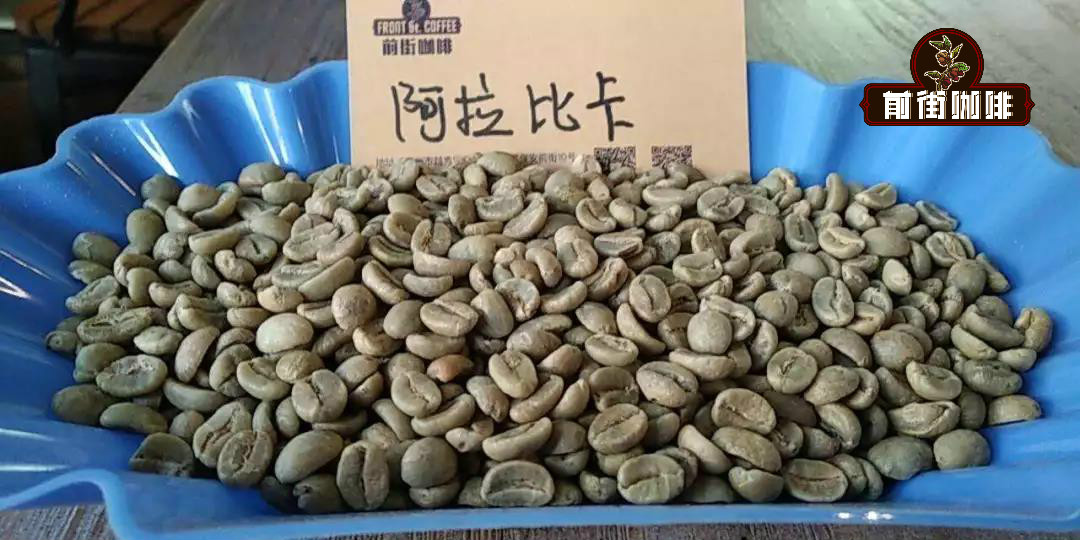
Also known as small-bean coffee, Arabica originates from Ethiopia. Arabica trees mostly grow at altitudes between 1,000-2,000 meters; they are relatively cold-tolerant, with a suitable growing temperature of 15-24°C. They demand high humidity — annual rainfall of no less than 1,500 milliliters — and place comparatively high demands on cultivation technique. Arabica is a larger shrub, with oval dark-green leaves and oval fruits that typically contain two slightly flattened beans. The flat face of the bean is long and oval, with a narrow, curved S-shaped crack down the middle, while the rounded back has a relatively smooth arc. Caffeine content is approximately 0.8%-1.5%.
The excellent flavor and aroma of Arabica make it the only one of the three native species that can be enjoyed straight, as a single origin. Single-origin coffees like Jamaican Blue Mountain, Indonesian Mandheling, Yirgacheffe, and Brazilian coffee all belong to this species. However, Arabica has weak resistance to drought, frost, pests, and diseases — above all to coffee's greatest enemy, leaf rust — which is why producing countries are constantly working to improve their varieties.
Arabica from different regions, altitudes, and climates shows strikingly different personalities. Unroasted, it smells of fresh grass; after proper roasting it reveals fruity aromas (light to medium roast) and caramelized flavors (dark roast). It suits single-origin brewing and blends alike, and adapts to virtually every extraction method.
Robusta
Also known as medium-bean coffee, Robusta originates from the Congo in Africa. Robusta trees are mostly planted in lowlands at 200-800 meters, preferring warm climates of 24-29°C, and they make few demands on rainfall. One quirk of the species is pollination: it relies on insects or wind, so the journey from pollination to fruit takes 9-11 months — considerably longer than Arabica.
Robusta trees sit somewhere between shrub and tall tree, with longer, bright-green leaves. They can reach up to 10 meters in height but have shallow roots. The beans are rounder and fuller than Arabica, with the center line cracking vertically; seen from the side they are flat or slightly raised in the middle, and noticeably harder to the touch — like small stones.
The Value of Robusta
Robusta's flavor is generally inferior to Arabica's.
Yet as a cornerstone variety of the coffee world, Robusta plays an indispensable commercial role. Its value is not simply to serve as a negative example that flatters Arabica — it holds an unshakable position in espresso blends. Italian blends add a small amount of Robusta to boost body, producing espresso with richer crema.
Once mixed with milk, that espresso delivers a thick, full texture. Milk coffees become more intense and aromatic thanks to the complementary relationship between the two species: Robusta compensates for Arabica's lighter body.
Robusta Applications
Robusta is mainly used in espresso blends to increase body and secure rich crema. Its flavor cannot rival Arabica's, but it has genuine value of its own.
Beginner Questions
1. What's the difference between 10 yuan and 30 yuan coffee?
From the market's point of view, coffee beans fall into two broad categories: commercial beans and specialty coffee beans. On price, Robusta international futures run about $1,686 per ton — roughly 11.5 yuan per kilogram at today's exchange rate. Specialty beans cost several times more than commercial beans. From a pure cost standpoint, commercial beans offer fatter margins, but their flavor is far below specialty grade. They can still work in milk-based espresso drinks like lattes and cappuccinos.
Between commercial coffee and specialty coffee, 10 yuan and 30 yuan really do mark a quality gap. Simply put, specialty beans are high-quality green beans roasted with skill, restoring the unique flavors inherent to that particular bean. Specialty lots are processed with refinement — careful washing and sun-drying, plus other meticulous green-been techniques — giving the coffee its "layered," "fruity," "sweet," and "mellow" character.
Because specialty beans cost several times more, large-scale, batch-produced packaged coffee is generally commercial grade.
In terms of per-bean flavor, commercial beans are typically chosen for blends. These beans are cheaper, and both the green coffee and the roasting follow mass-production standards. The biggest difference between the two categories lies in quality and price: specialty beans might cost 90 yuan per pound, while commercial beans can dip as low as 40-50 yuan per pound.
That said, blends can absolutely produce excellent coffee — what matters is which beans go into them.
2. "Blue Mountain Coffee" and "Kopi Luwak" are coffee beverages, while "Arabica" refers to a coffee variety
Most people have heard of "Blue Mountain Coffee" and "Kopi Luwak" — these are names of coffee beverages.
"Arabica," by contrast, refers to a coffee variety.
◆ "Blue Mountain Coffee" is coffee brewed from beans grown in Jamaica's Blue Mountains.
◆ "Kopi Luwak" is made from coffee beans that have been eaten and excreted intact by the palm civet, with people collecting the beans from the animal's droppings for processing.
So the "Arabica" we see everywhere today is a classification by bean variety.
Coffee varieties fall into three main types: Arabica, Robusta, and Liberica — and Arabica itself subdivides into Typica, Bourbon, Caturra, and more.
In fact, not all coffee made from Arabica beans is specialty coffee. Unfortunately, many consumers do not realize this, and plenty of brands exploit the confusion, using "100% Arabica coffee beans" as a gimmick to imply excellence.
In genuinely professional coffee shops, you will hardly see "Arabica" splashed across the single-origin menu. At FrontStreet Coffee, for instance, you will find names like "Kenya," "Colombia," and "Yirgacheffe" instead. Ordering single-origin coffee lets you understand the characteristics and flavors of a specific country or region.
FrontStreet Coffee Recommendation
To taste Arabica at its most distinctive, start with FrontStreet Coffee's washed Yirgacheffe — the classic everyday specialty bean. It pours out white jasmine florals and bright citrus and lemon acidity with a tea-like finish, at a price that makes it the perfect first bean for anyone beginning their specialty journey.
For Arabica's sweeter, riper side, FrontStreet Coffee's Huakui from Guji, Ethiopia is sun-dried with the whole cherry, yielding lush notes of strawberry, passion fruit, pineapple, and lychee with a pronounced sweetness and almost no bitterness — a vivid demonstration of how much character a single Arabica variety can express across one country's terroirs.
Important Notice :
FrontStreet Coffee is a long-established specialty coffee roaster in Guangzhou China, selling freshly roasted beans from its own farm in Yunnan as well as dozens of carefully selected single-origin beans from around the world for both pour-over and espresso. The products deliver consistently excellent quality and great value, with shipping within 24 hours. Guangzhou's FrontStreet Coffee shop is recommended by many coffee lovers, and the beans are now available online at the Tmall 。
FrontStreet Coffee has moved to a new address:
FrontStreet Coffee Address: 315,Donghua East Road,GuangZhou
Tel:020 38364473
 Scan and follow the En Gafei WeChat official account. Please indicate that the reprint comes from "En Gafei".