
Jamaican Coffee Estate Introduction: How Does Jamaica Silver Mountain Coffee Taste
Professional coffee knowledge exchange, more coffee bean information, please follow Coffee Workshop (WeChat public account cafe_style)
Jamaica Blue Mountain Coffee: Harvest and Processing
The harvest season for Jamaica Blue Mountain coffee runs from June to November each year, and the cherries are picked by hand. After harvest, the beans pass through a long chain of steps - washing, pulping, fermentation, dehydration, sun-drying, hulling, and finally roasting - before becoming roasted Blue Mountain coffee. At every stage of green bean processing, dedicated personnel supervise quality. And for such precious coffee, the Jamaican government uses equally distinctive packaging and transport methods.
Where other coffees ship in 60kg burlap bags, Blue Mountain coffee travels in wooden barrels of 70kg, 18kg, or 15kg. Jamaica is the last country still using traditional wooden barrels to package and transport its coffee. Every lot of Jamaica Blue Mountain coffee must also be certified by the Jamaica Coffee Industry Board - the only organization authorized to issue such certificates in Jamaica.
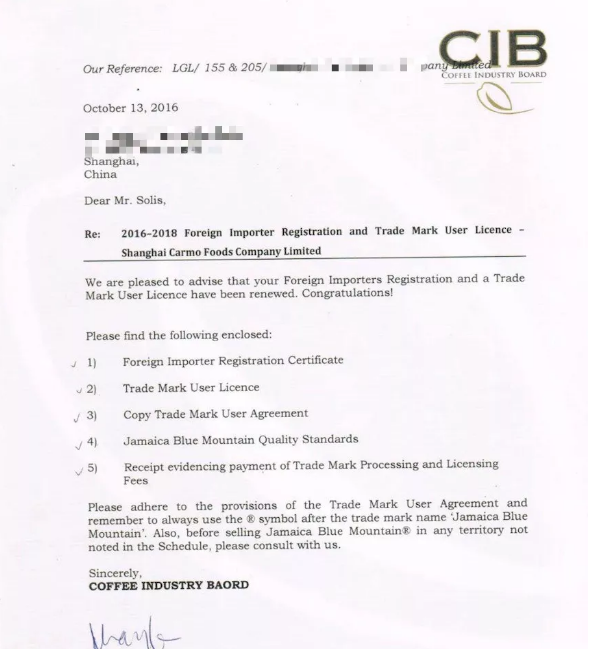
Each export batch is additionally handled by dedicated quality supervisors who sample, roast, grind, and brew it to verify it meets standards. Part of the "secret" behind Blue Mountain's pure flavor lies in the terrain: the trees grow on rugged mountain slopes where harvesting is extremely difficult, and only skilled local women can manage it. Selecting properly ripe cherries at harvest is critical - underripe or overripe beans will drag down the quality.
Once picked, the beans must be hulled the same day, then fermented for 12-18 hours, after which they are washed and sorted. Next comes drying on concrete floors or thick blankets until the moisture content falls to 12%-14%, and the beans are then stored in dedicated warehouses until needed for roasting and grinding. Every one of these steps must be tightly controlled, or quality suffers.
Blue Mountain Coffee Estates and Market
Blue Mountain coffee is also grown by some smaller estates, such as Wallenford Estate, Silver Hill Estate, and J. Martinez's Atlanta Estate. Even the largest estate owners in the region would count as small-scale by international standards. Many are small landholders whose families have farmed this land for two centuries. Jamaica's coffee industry faces its share of challenges, too: hurricane damage, rising labor costs, and the difficulty of mechanizing terrace farming. Many small estates and farms struggle to cultivate rationally.
Yet Blue Mountain coffee remains a product that reputable coffee retailers must stock no matter what. One major UK retailer put it plainly: regardless of price, he will keep selling Blue Mountain coffee year-round, because so many of his customers ask for nothing but "Blue Mountain."
Today, 90% of harvested Blue Mountain coffee is bought by the Japanese. In 1992, Jamaica sold 688 tons of Blue Mountain coffee to Japan, 75 tons to the United States, and 59 tons to the United Kingdom. With only 10% of production left for the rest of the world, Blue Mountain coffee is perpetually in short supply at any price. In the UK, Langford Brothers was for many years the sole supplier; later, the Edmonds Group also obtained supply through Jamaica's Salda Foods.
Langford Brothers is a licensed Jamaica Blue Mountain coffee brand.
The transport difference that sets Blue Mountain apart is its 70kg wooden barrels - replicas of the Bonifieur barrels produced on Guadeloupe Island last century. Those barrels originally carried flour from Britain to Jamaica and typically bore brand names and manufacturer information. The Coffee Industry Board issues certificates for all authentic Jamaican coffee and stamps its approval before export.
The Jamaican government once insisted that all Blue Mountain coffee be roasted in Jamaica to guarantee consistent quality. In reality, roasting is a refined art that demands experience, training, and expensive equipment - and from the consumer's point of view, coffee should be purchased and consumed immediately after roasting, which roasting in Jamaica cannot deliver. Jamaican green beans may now be exported.
Jamaica Coffee Profile
Location: Central America
Area: 11,100 square kilometers
Population: 2,826,000
Official Language: English
Coffee Cultivation Area: 9,000 hectares
Coffee Production: 27,000 bags
Coffee Varieties: Arabica
Special Regional Coffee Certification:
Jamaica
Population: 2,711,000
Jamaica has essentially one coffee production area - and it is the most famous growing region in the world.
BLUE MOUNTAIN
Blue Mountain coffee is arguably the most successful name in coffee history, and its region is clearly defined and legally protected. Only coffee grown between 900 and 1,500 meters (3,000 and 4,900 feet) within the parishes of Saint Andrew, Saint Thomas, Portland, and Saint Mary may be called "Jamaica Blue Mountain." Coffee grown between 450 and 900 meters (1,500-3,000 feet) is "Jamaica High Mountain," while beans from lower areas are "Jamaica Supreme" or "Jamaica Low Mountain." Tracing Blue Mountain coffee can be confusing, because most lots are sold under the name of the processing factory that handled them. These factories occasionally buy from a single large estate, but typically they purchase from countless small farmers across the region. For a long time, most of Jamaica's Blue Mountain coffee has been shipped to Japan in small wooden barrels rather than burlap bags. It is also worth noting that because Blue Mountain commands high prices, the market is flooded with counterfeits.
Elevation: 900-1,500m
Harvest: June - July
Varieties: Jamaica Blue Mountain (a Typica derivative), Typica
In 1728, Sir Nicholas Lawes, then Governor of Jamaica, introduced coffee from Martinique. Jamaica proved an ideal place to grow it: within nine years of introduction, the island was exporting roughly 83,000 pounds of coffee beans a year. Between 1728 and 1768, the industry developed extensively in the foothills of St. Andrew before gradually shifting toward the Blue Mountains. In June 1950, Jamaica's Coffee Industry Board established official quality standards for exported green beans.
The Blue Mountain region covers eastern Jamaica, and only coffee grown there may be called Jamaica Blue Mountain Coffee (JBM). Jamaica High Mountain Coffee refers to beans grown in high mountain areas outside that region. Wallenford, Mavis, Old Tavern, and Moy Hall are the four most famous legally authorized Blue Mountain green coffee processing factories in Jamaica. Notably, none of the four is a farm: they are processing mills that do not grow their own coffee, instead buying unprocessed cherries from small farms across the Blue Mountain region and processing them to official quality standards.
FrontStreet Coffee believes that truly premium Jamaica Blue Mountain coffee has a pure, clean, gentle, and very delicate flavor - which is also what makes it harder to roast. Like other island-grown beans, even the finest, highest-altitude Jamaican coffee sits at lower elevations than comparable mainland coffees. Lower-altitude beans are less dense and therefore need different attention at the roaster; without experience in roasting quality coffee, even excellent Blue Mountain green beans can be roasted into something lifeless and ordinary. As a general rule when brewing Blue Mountain, we recommend increasing the coffee dose by 20% to bring out that rich yet elegant, charming aroma - one more reason Blue Mountain coffee sells at a premium. For the roast itself, FrontStreet Coffee recommends medium-dark to highlight its low acidity, rich body, and balanced flavor, letting the beans develop for four minutes after first crack to build more caramelization products.
Though good beans can be brewed any way you like, since these are typically roasted darker, FrontStreet Coffee still recommends low water temperature paired with a coarser grind for extraction.
FrontStreet Coffee Recommendation
So how do you make sure your Blue Mountain is the real thing? First, look for proper certification: authentic Jamaica Blue Mountain carries documents issued by the Jamaican government, including origin certificates, so check whether the seller can provide them. Second, check the barrels - genuine Blue Mountain ships in custom-built wooden barrels stamped with detailed batch information, which is why the barrel itself is one of the ways to tell real from fake. Third, inspect the green beans: authentic Blue Mountain beans are regular, plump, faintly upturned at both ends, and green in color. Finally, judge by the cup: real Blue Mountain is intensely aromatic yet clean and refined, with no off-flavors whatsoever - fakes simply cannot match that depth of fragrance.
FrontStreet Coffee's Jamaica Blue Mountain No.1 comes from the highest grade lots, grown at the historic Cliff Estate (Clifton), which has been cultivating coffee since around 1750. Its fields sit at an average of 4,300 feet (1,310.64 meters), where sufficient altitude, mild afternoon cloud cover shading the mountainsides, ample sunshine, and mineral-rich soil give the trees excellent growing conditions and lengthen the ripening of the coffee cherries. FrontStreet's Blue Mountain is roasted to order within 5 days and roasted medium-dark to highlight that rich, traditional character - bitterness giving way to sweetness in the classic style.
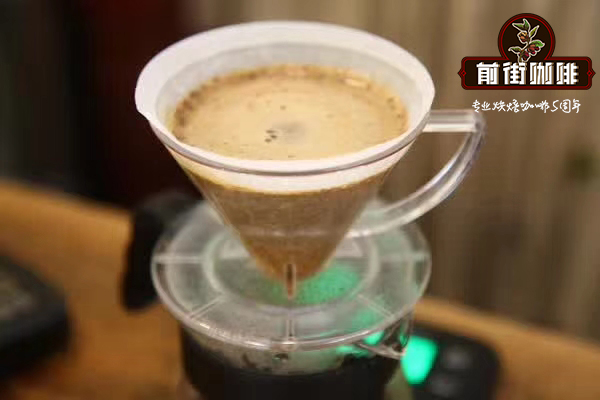
FrontStreet recommends a Kono dripper to bring out its full body: 15g of coffee per single serving (rest the beans 4-7 days from roast date for best flavor), a grind slightly coarser than for light roasts - roughly white-sugar texture - and water at 87-88°C, since water that is too hot is the most common cause of a burnt, bitter cup, while water that is too cool leaves it flat. Use a 1:15 ratio: bloom with 30g of water for 30 seconds, pour up to 120g in a slow vertical spiral, then finish to 225g with a slightly faster pour to keep fines from clogging the bed. The result: a remarkably clean, complex, gentle cup with chocolate sweetness, powerful body, and perfectly matched sweetness, acidity, and bitterness - only a measured, elegant acidity, and a long fruity finish.
Important Notice :
FrontStreet Coffee is a long-established specialty coffee roaster in Guangzhou China, selling freshly roasted beans from its own farm in Yunnan as well as dozens of carefully selected single-origin beans from around the world for both pour-over and espresso. The products deliver consistently excellent quality and great value, with shipping within 24 hours. Guangzhou's FrontStreet Coffee shop is recommended by many coffee lovers, and the beans are now available online at the Tmall 。
FrontStreet Coffee has moved to a new address:
FrontStreet Coffee Address: 315,Donghua East Road,GuangZhou
Tel:020 38364473
 Scan and follow the En Gafei WeChat official account. Please indicate that the reprint comes from "En Gafei".

