Guatemala SL28 Coffee Bean Roasting and Flavor Characteristics | Guyabo/Plain of Guava Estates
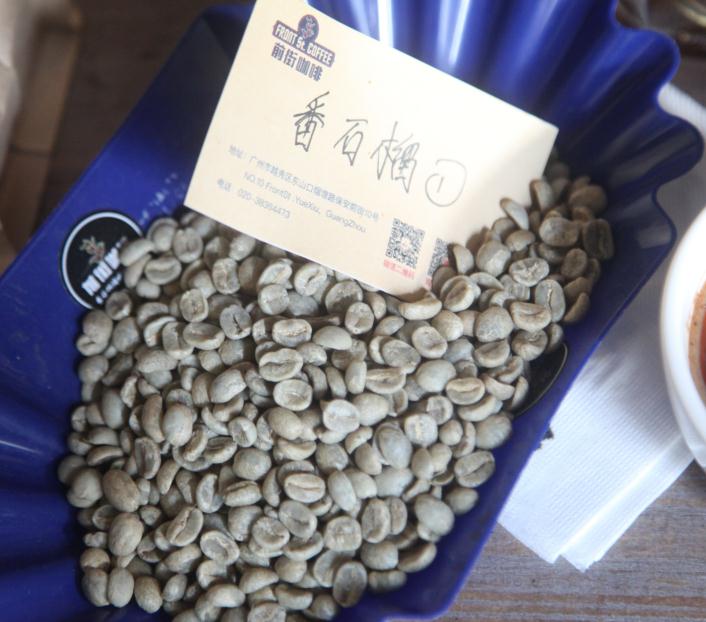
Today we're featuring the SL28 that has come into FrontStreet Coffee's spotlight. This bean crossed the Atlantic and landed in Guatemala, in Central America. Among African beans that have left their homeland, SL28 is quite rare apart from the renowned Gesha. So what flavour characteristics does it develop in Guatemala? Let's find out.
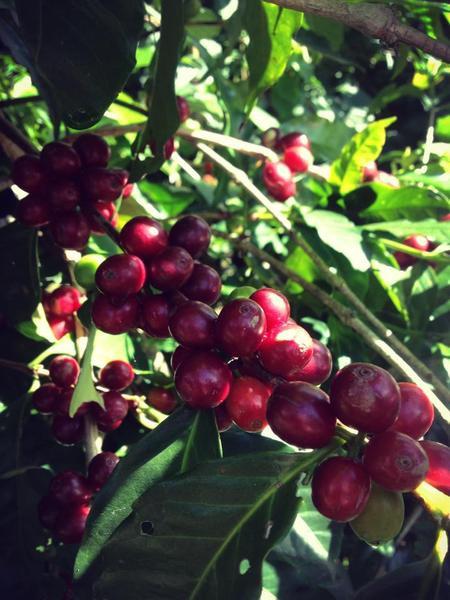
SL28 is a direct descendant of Bourbon, selected and cultivated in Kenya in the early 20th century by French and British missionaries and researchers. It carries a mixed heritage of French Mission, Mocha, and Yemen Typica. High sweetness, delicate balance, prominent citrus and plum flavours, a rich body, and of course strong, layered fruit acidity are the hallmarks of SL28. Along with SL34, it dominates most of Kenya's coffee production. The bean FrontStreet Coffee is introducing today is planted in the New Oriente region of Guatemala.
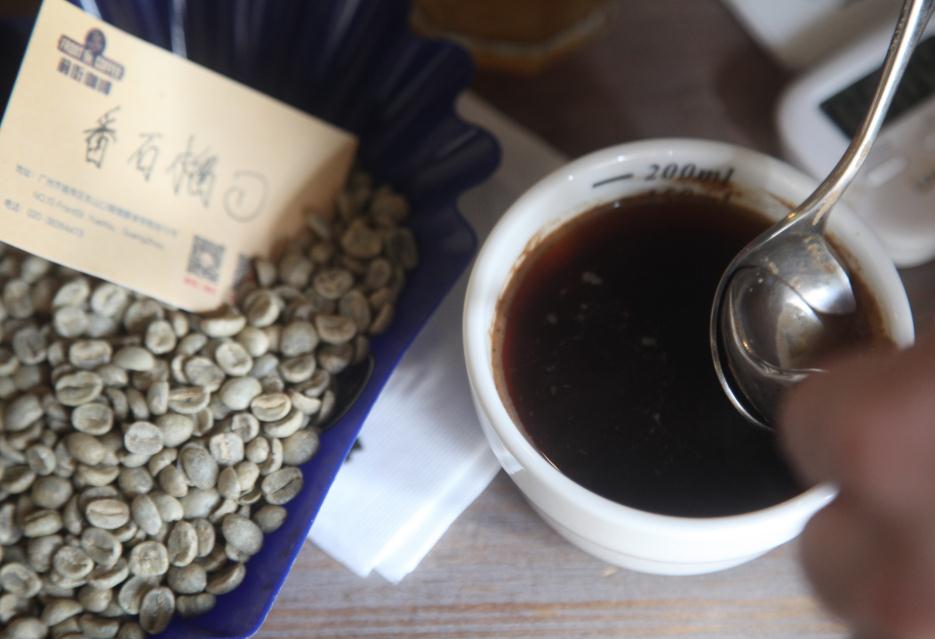
Estate: Finca Plan del Guayabo Estate
Region: New Oriente
Micro-region: Volcán de Suchitán
Altitude: 1675 meters
Annual rainfall: 1500mm
Variety: SL28
Processing: Honey processed
Shade: 100% shade-grown
Flowering period: April-May
Harvest period: January-March
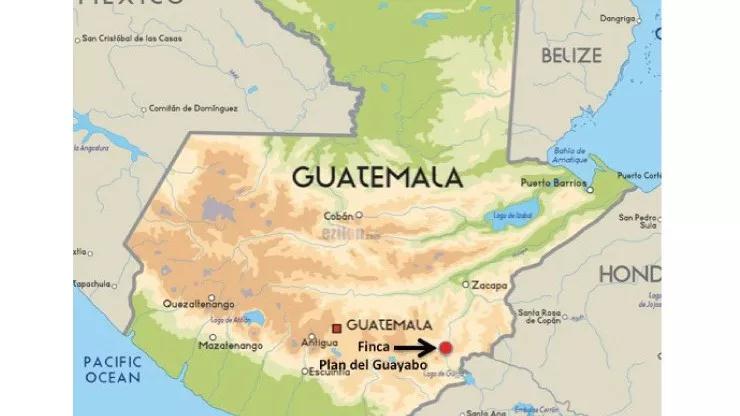
New Oriente Region
New Oriente is one of Guatemala's oldest coffee-producing regions. In the 1980s the area began to take off on rising demand for specialty coffee. Once one of Guatemala's historically poorest and most remote areas, the region is now developing rapidly, with small estates throughout beginning to grow coffee. New Oriente has a cloudy, rainy climate and sits on former volcanic mountain ranges. Its soil is metamorphic rock, making it rich in minerals. Unlike other volcanic regions of Guatemala, the New Oriente area has seen considerable volcanic activity since coffee was first planted, making it one of the few places that survived adversity.
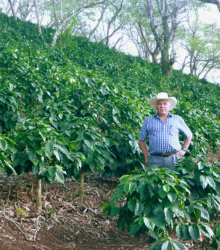
Current estate owner Mr. Benjamin Donado
Plan del Guayabo
Plan del Guayabo lies next to the Volcán de Suchitan volcano in the New Oriente region of Guatemala. The farm's Spanish name "Plan del Guayabo" means "Guava Plain," named for the abundance of guava trees in the area. Its current owner is Mr. Benjamin Donado, whose family began growing coffee in 1990. Because of the steep terrain and high altitude, almost everyone locally believed the land was suited to forestry rather than coffee. Mr. Donado firmly believed good coffee could be grown here. Facts proved him right, and we thank Mr. Donado's "stubbornness" for letting us taste this delicious coffee.
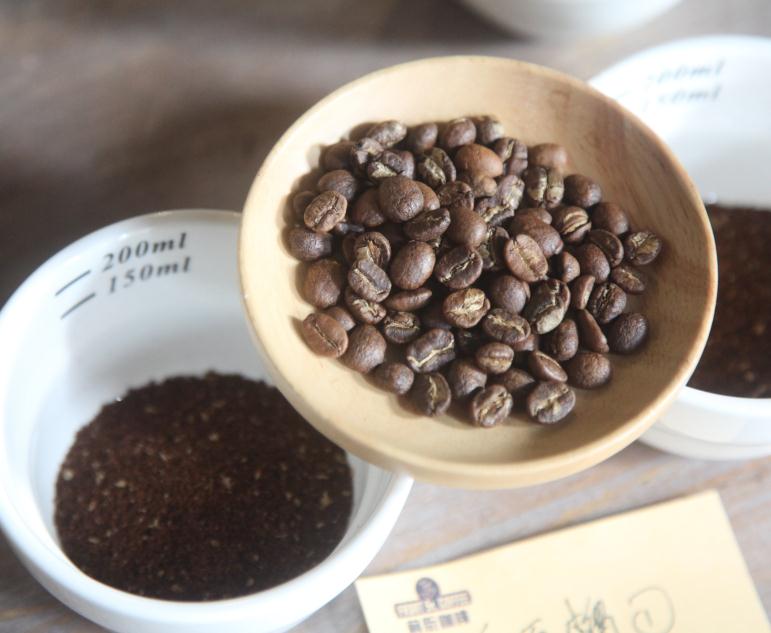
FrontStreet Coffee Roasting and Flavor Evaluation
SL28 plus honey processing — the roaster's first thought was: sour and sweet! Guatemala's high-altitude beans have high density, and honey-processed beans also have a hard texture. Through the first roast it became clear that this bean absorbs heat slowly during the dehydration stage, and a slow temperature rise that stretches roasting time can produce roasted flavours.
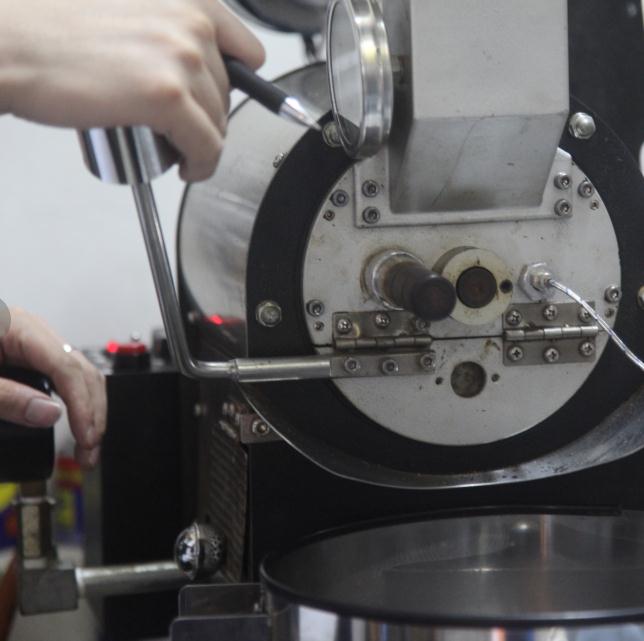
So the roaster changed approach, using high heat and quick roasting during the dehydration stage, and extending the Maillard reaction time at the yellowing point and the development time after first crack to achieve a mature roast. This was done twice, with a cupping comparison after 8 hours.
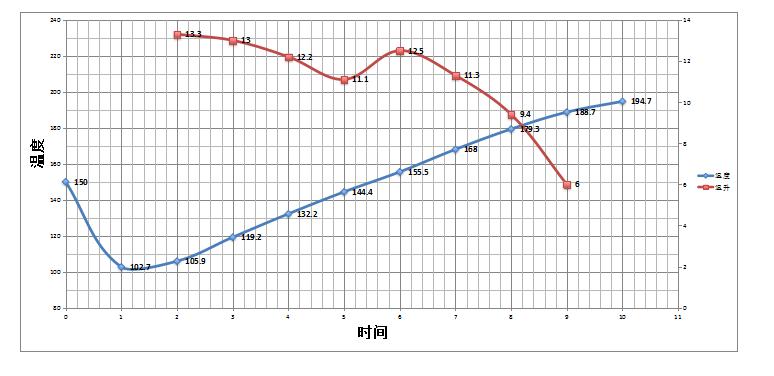
Curve A
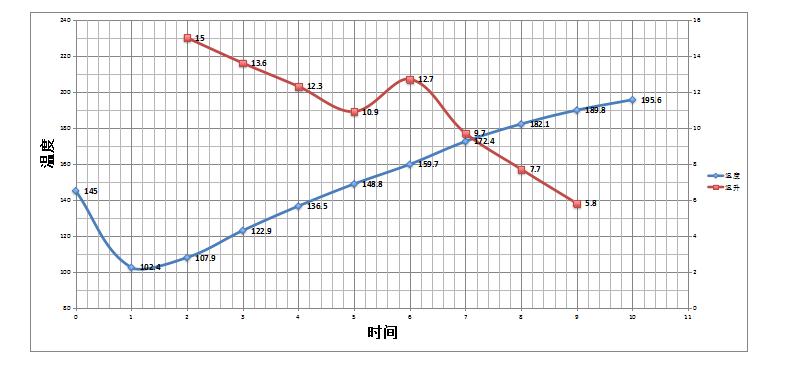
Curve B
Above are two roasting curves using high heat, quick roasting, and extended development. The yellowing points for roasts A and B were 5'30 and 4'50 respectively, while the first crack points were 185°C/8'40 and 187°C/8'36. The drop temperatures and development times were 196°C/1'50 and 198°C/2'00 respectively. Based on the curve analysis, roast B received more energy in the early stages and had a longer flavour development time, so we can predict that both its enzymatic and caramelisation flavours will be better than roast A. Did the cupping actually reflect the roasting results?
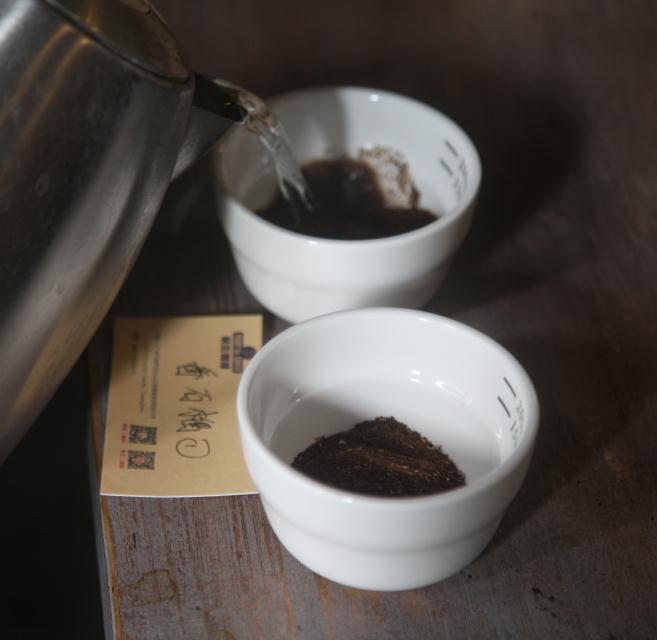
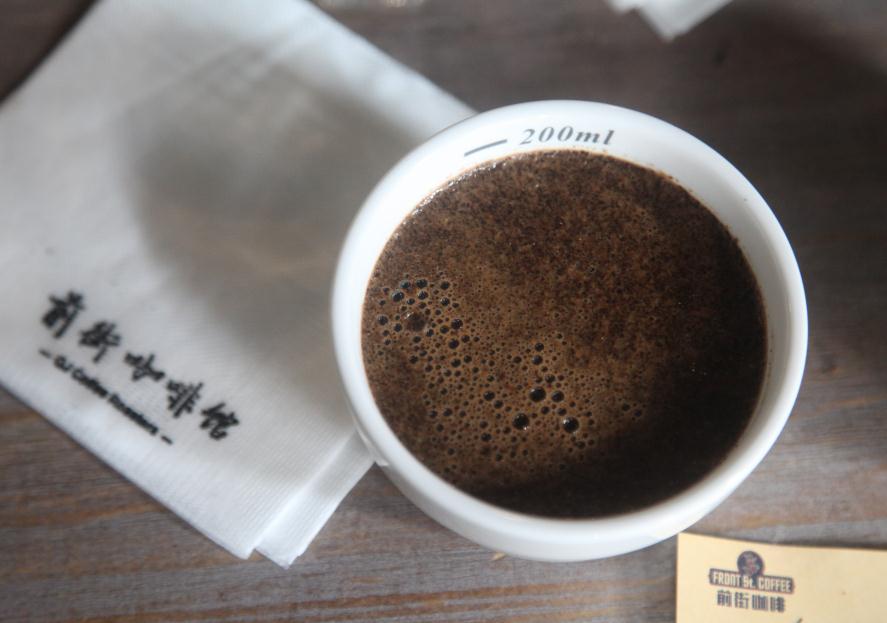
Cupping results are as follows:
Roast A: Roasted peanuts, almonds, cocoa, caramel, grapefruit, cream.
Roast B: Floral notes, toffee, almonds, cocoa, cinnamon, plums, jackfruit, with a faint tobacco flavour nurtured by Guatemala's volcanic soil.
Other notes: Roast B shows better balance between acidity and sweetness, with high sweetness, a long aftertaste, and a strong sweet return.
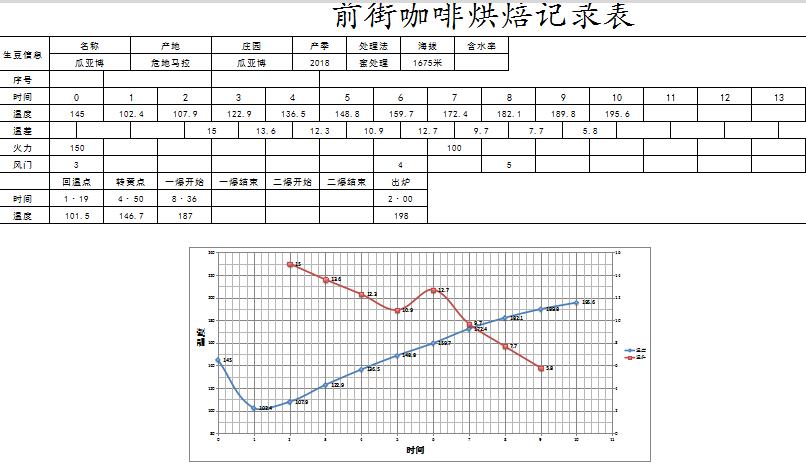
Roasting machine: Yangjia 600g, 300g batch size, roasting room temperature 28°C, humidity 50%.
The roaster used a low-temperature bean entry, raised the heat to 160 after 30 seconds, set the damper at 3, and let the return temperature reach 101°C. At the browning point of 160°C the damper was opened to 4. That minute saw a slight temperature rise from the release of water vapour. Based on the first crack temperatures from the first two roasts, we predicted first crack around 185°C. We reduced the heat to 100°C about 10°C in advance, slowing the temperature rise to prepare for extending the development time after first crack. First crack came at 187°C, with development of 11°C over 2 minutes, during which the crack sounds appeared in orderly succession.
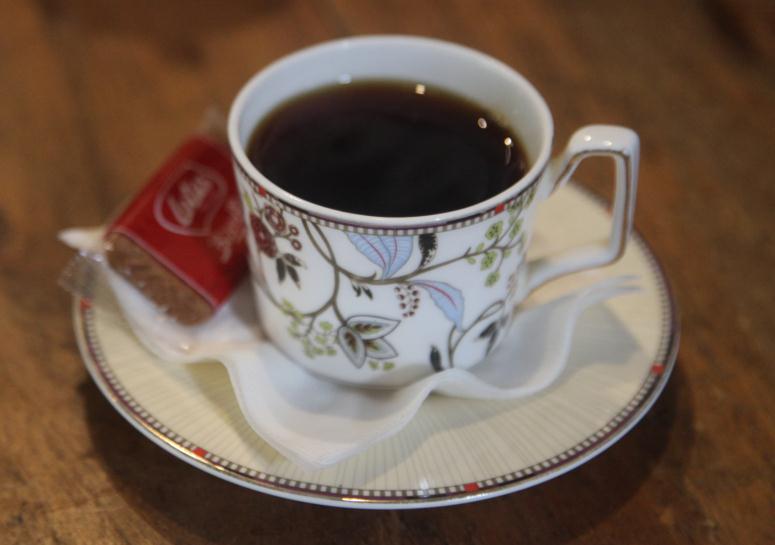
24 Hours Later - FrontStreet Coffee Barista's Pour-Over
16g dose, water temperature 90°C, powder-to-water ratio 1:16, medium-fine grind (suitable for light roast coffee), brewing time 2 minutes 15 seconds.
This coffee opens with a rich toffee aroma, with the excellent balanced body typical of Central American coffee and a cinnamon note. As it cools slightly, almond and jackfruit flavours emerge, finishing with cocoa and berry. The aftertaste carries tobacco and a sweet return, with strong caramel sweetness at the bottom of the cup. Finishing a cup gives the feeling of watching SL28 advance into the American continent, battling wind and waves on the boundless ocean, and finally integrating perfectly with its new home.
FrontStreet Coffee Recommendation
SL28 is prized for exactly the qualities Guatemala's highlands amplify — sweetness, citrus, and plum — and if you enjoy that bright, fruit-driven style, FrontStreet Coffee's Geisha range is the natural next step. Geisha is a low-yield, disease-prone variety that demands careful management, which is why its price stays high, but its jasmine-like florals and refined sweet-sour balance have won over coffee lovers worldwide. FrontStreet's Panama Boquete Geisha is the entry-level option: it lets you taste the classic Panamanian orange-blossom honey character, with an oolong-tea body, delicate fruit acidity, and clear layers at a reasonable price.
For something higher up the range, FrontStreet's Esmeralda Red Label and Green Label Geisha come from the estate that made the variety famous in Panama. The Red Label, officially "Esmeralda Special," is grown at 1,600-1,800 meters, cupped above 90 points for every lot, and drawn from a single plot — FrontStreet's Red Label comes from the Jaramillo plot — so buyers can choose a lot by its finer flavour nuances. The Green Label, or "Private Collection," blends several plots to express the estate's signature high-altitude Geisha profile, and its lower price makes it excellent value.
Geisha is a medium-light, floral-and-fruit type with a hard texture that tends to sink and clog the dripper, so FrontStreet Coffee grinds to about 78% passing a Chinese-standard #20 sieve — roughly fine sugar — and brews with water at 91°C. For pour-over, FrontStreet uses 15g in a small Hario V60 at a 1:16 ratio and a three-stage method: start the timer, bloom with 30g of water for 30 seconds, pour the second stage with a slow circular flow to 125g, wait for the bed to fall halfway, then pour to 225g, for a total extraction of about 2 minutes 10 seconds to 2 minutes 20 seconds.
Important Notice :
FrontStreet Coffee is a long-established specialty coffee roaster in Guangzhou China, selling freshly roasted beans from its own farm in Yunnan as well as dozens of carefully selected single-origin beans from around the world for both pour-over and espresso. The products deliver consistently excellent quality and great value, with shipping within 24 hours. Guangzhou's FrontStreet Coffee shop is recommended by many coffee lovers, and the beans are now available online at the Tmall 。
FrontStreet Coffee has moved to a new address:
FrontStreet Coffee Address: 315,Donghua East Road,GuangZhou
Tel:020 38364473
 Scan and follow the En Gafei WeChat official account. Please indicate that the reprint comes from "En Gafei".