How to Adjust Flavor Without Changing Roast Level - What's the Relationship Between Roasting and Flavor?
Professional coffee knowledge exchange. For more coffee bean information, please follow Coffee Workshop (WeChat official account: cafe_style)
Energy
Today let us talk about energy and explore how to make roasting adjustments from that perspective.
In ancient Greek, energy means "activity, operation" - a physical quantity that can be observed indirectly, understood as the ability of one physical system to do work on another. Work is defined as the spatial accumulation of force as an object moves along the direction of the force, equal to the product of the force and the displacement in that direction.
The total energy contained in an object is based on its total mass. Like mass, energy can neither be created out of thin air nor destroyed out of thin air. Energy, like mass, is a scalar quantity. In the International System of Units (SI), the unit of energy is the joule, though other units such as kilowatt-hours and kilocalories are sometimes used, and these are also units of work. Energy is a unified measure used to quantify the scale of all material movement.
(From Baidu Encyclopedia)
The Essence of Roasting
From the above, we can understand that coffee roasting is essentially energy transfer. Coffee beans receive energy from the roasting drum and the heated air, producing a series of physical and chemical changes. This energy is transferred in the form of heat. When energy enters the beans, all of the molecules begin to move because they have gained energy. The breakdown of large molecules, the polymerization of small molecules, and the changes in color and volume of the beans are all part of energy's game.
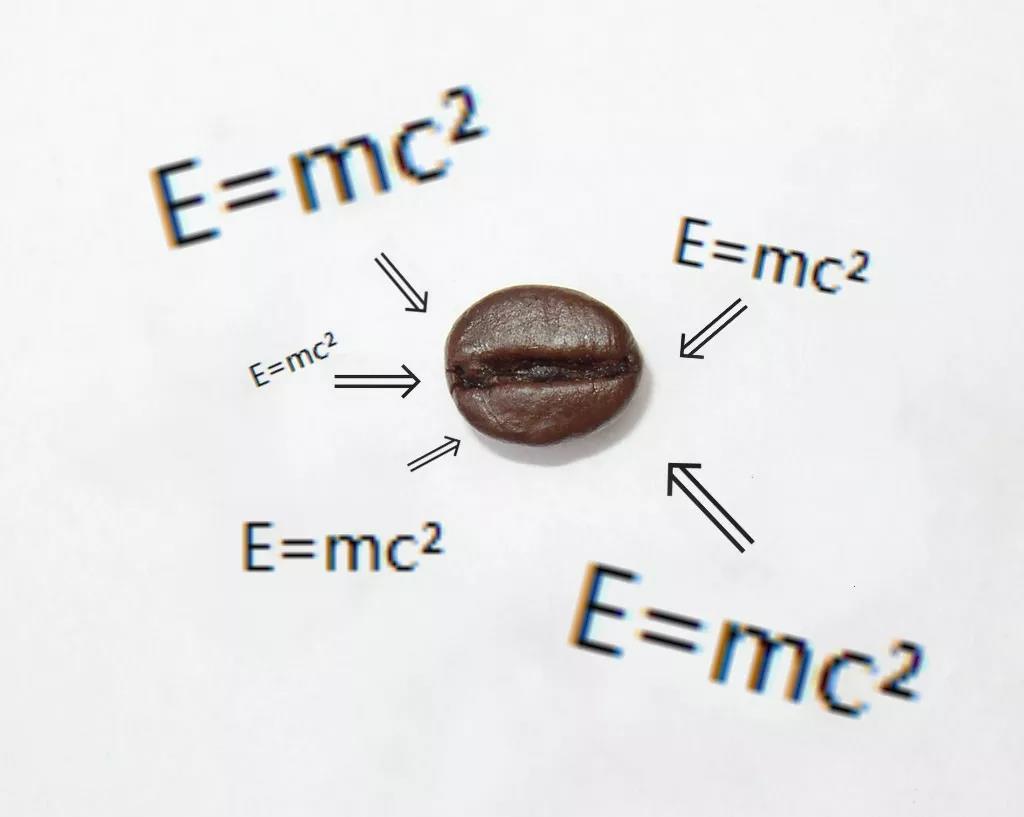
The heating of green beans is a process of heat conduction from the roasting drum and the air inside it. Objects conduct heat because of energy differences. The low temperature of green beans means they contain less energy, so heat flows from the drum to the beans, raising their temperature. This transfer happens under one condition only: an energy difference. Green beans heat up because the external temperature is higher, and the process is irreversible - heat can only flow from high to low.
Exothermic First Crack
We all accept the idea that "first crack is exothermic," but by the theory above it seems somewhat inappropriate: during first crack, which has more energy, the beans or the roasting drum? Think again - if the beans were heating the drum, would their own energy be falling, meaning they were cooling down?
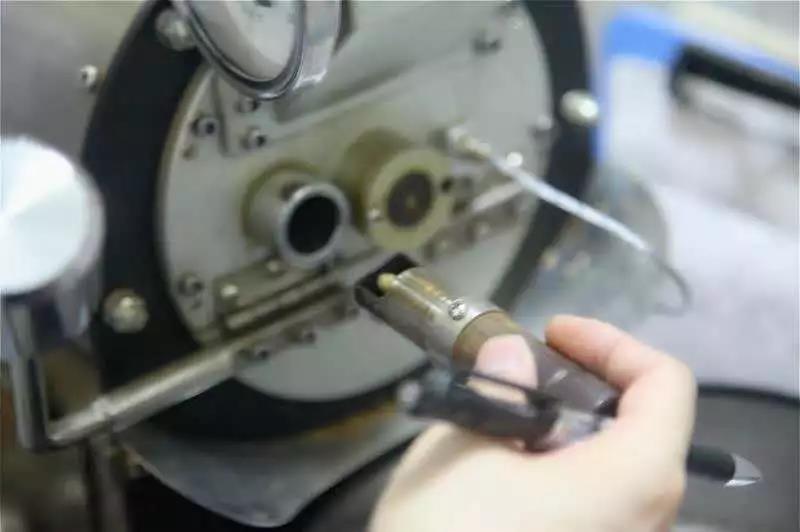
Obviously, the roasting drum's energy must be higher than the beans', and beans cannot both output energy and keep heating themselves. Here we need to treat the bean as a combination of water and bean tissue and discuss them separately. During roasting, water absorbs energy and its temperature rises until it reaches boiling point and becomes steam, expanding greatly in volume. The bean tissue obstructs that expanding steam, so internal pressure keeps rising. Eventually the soft tissue can no longer hold the steam back, and it breaks through the bean's fibrous structure, carrying energy away while the fibers continue to absorb energy. The signature of this is that the heating rate drops sharply at the start of first crack while the air temperature rises - that is the essence of being exothermic.
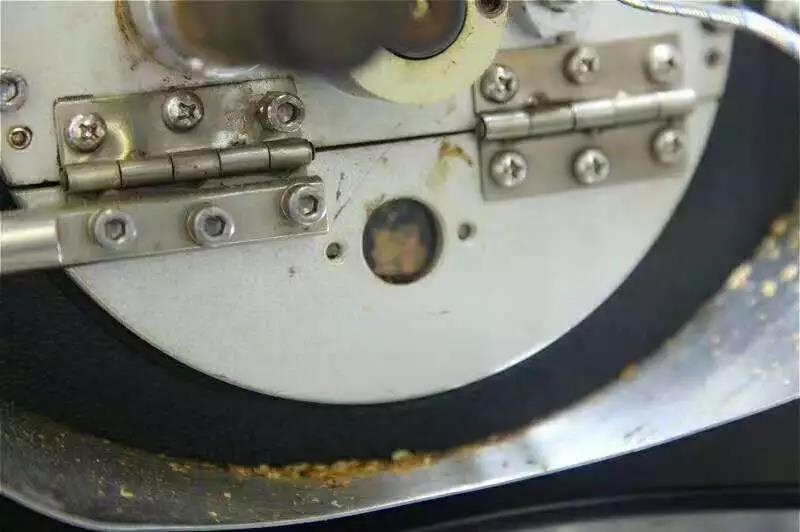
As steam carries large amounts of energy and disrupts the roasting environment, it is easy to lose control. This requires opening the damper or reducing heat to stabilize the energy balance inside the drum. But do not forget that the bean tissue still needs energy for its reactions, so you must anticipate when the air temperature's energy will run out and supplement heat, or you will see the temperature drop.
The Essence of Roasting Adjustments
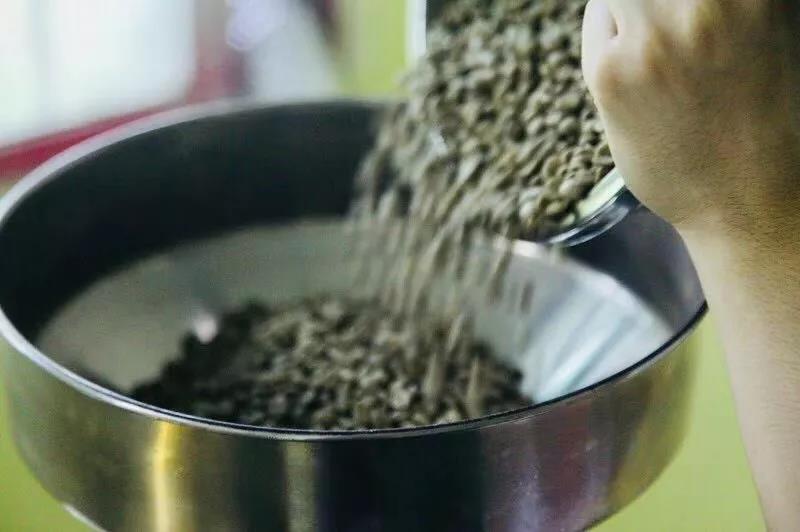
Here we introduce a specialized term in coffee roasting: AUC (Area-Under-Curve). Literally, it means calculating the area under the bean temperature curve, intended to represent energy usage during roasting. We need AUC when we want to adjust flavor without changing roasting time and roast degree.
Example
Below is the roast curve from our Yangjia 600g semi-hot air roaster (Butterfly Geisha).
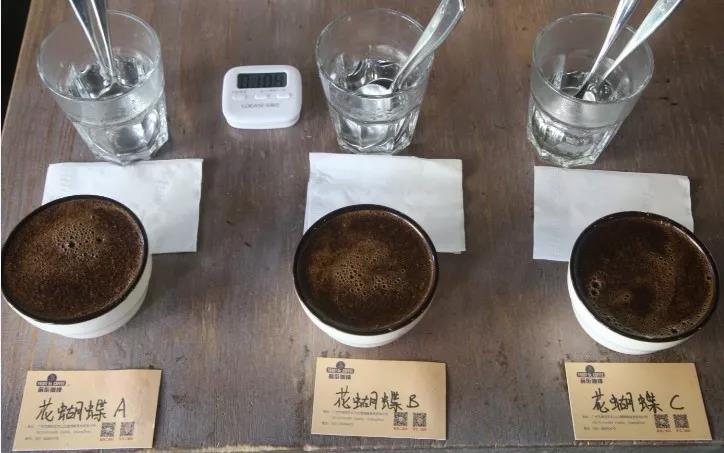
Butterfly A is what we consider the optimal flavor baseline for roasting, while B is the comparative roast.
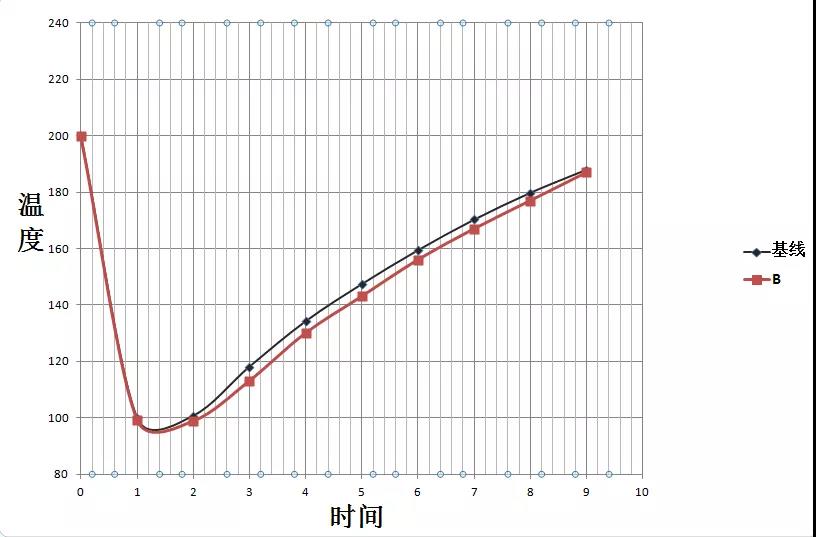
You can see that both Butterfly roasts have the same charge temperature, discharge temperature, and roasting time, but curve B's AUC is smaller than curve A's (the area between the two curves represents the energy difference). This means the coffee in roast B received less energy than in roast A, leading to less flavor development than A - as noted above, when molecules inside the coffee receive less energy, fewer reactions occur. Cupping reflects this directly: the Butterfly from curve B has poor flavor development due to insufficient energy supply and has grassy flavors.
So when we see insufficient energy supply in the roasting curve, we can increase heat to make up the energy that was under-absorbed, achieving roasting adjustments without changing the roast degree. As in curve C, we raise heat in the early stage to lift the temperature, then reduce heat at the browning point to flatten the rise, achieving the same total energy absorption and reaching the goal of adjusting flavor without changing roast degree.
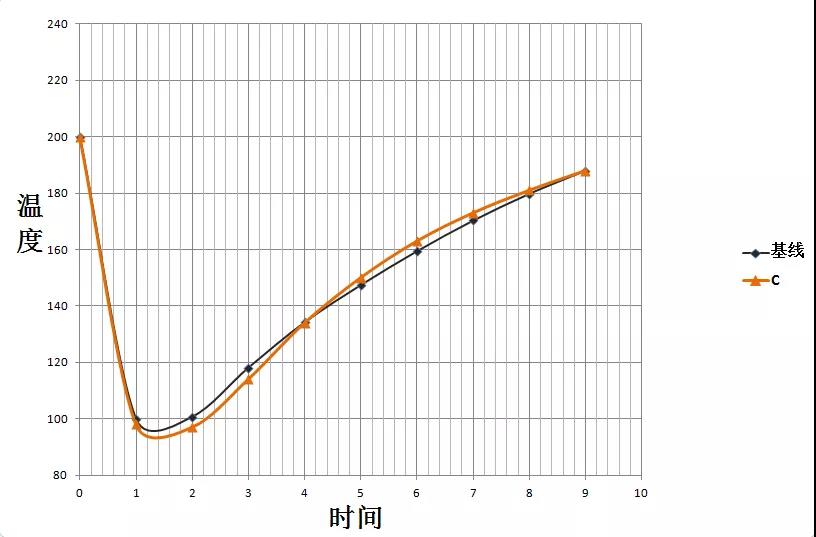
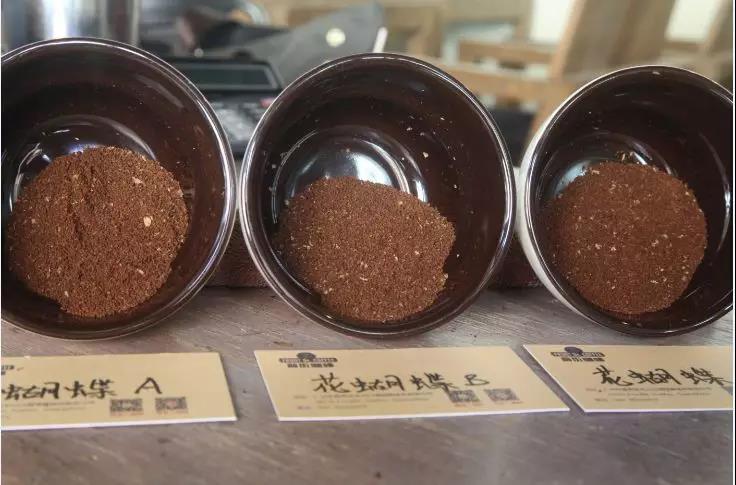
The adjusted curve C Butterfly has the same high-quality aroma and flavor as the baseline, and because it absorbed more energy than A during the vigorous Maillard reaction period (starting from 150°C), its enzymatic flavors (floral and fruit aromas) are more pronounced.
Of course, there is another adjustment method: extending roast B's time to make the overall AUC similar, but this would affect roast degree, so we will not discuss it today.
Finally, coffee roasting is a job of finding optimal solutions, aimed at best showcasing the regional flavor characteristics of the beans. There are quite a few adjustable parameters, and they are complex. A perfect batch might be accidental, but making every batch perfect is very difficult, because "a slight difference can lead to a thousand miles of disparity." May every roaster devoted to coffee beans achieve their dreams.
FrontStreet Coffee: A roastery in Guangzhou with a small shop but diverse bean varieties, where you can find various famous and lesser-known beans, while also providing online store services. https://shop104210103.taobao.com
FrontStreet Coffee Recommendation
Because roast degree itself shapes the cup, it helps to keep a few medium-roast beans on hand as a reference point for balance. FrontStreet Coffee's Brazil Queen Manor, grown in Brazil from the distinctive yellow Bourbon variety, is clean and sweet; roasted to a medium level it delivers cream, peanut, chocolate, toasted bread, and sugarcane aromas, and works equally well as pour-over or in a moka pot or espresso machine.
For a sweeter, more fruit-driven medium roast, FrontStreet Coffee's Strawberry Candy combines a Costa Rican honey-processed coffee with a washed Panamanian Geisha, so a medium roast highlights both the orange-blossom honey notes and a rounded sweetness. It suits cold brew, pour-over, and espresso alike. If you like the softer, more traditional side of a medium roast, FrontStreet Coffee's 2013 Natural Typica is a Chinese specialty coffee from Yunnan with nutty, brown-sugar, black-tea, and dried-apricot notes, and it is also very budget-friendly.
And for a cup that shows what a well-executed medium roast can do with a classic variety, FrontStreet Coffee's Jamaica Blue Mountain No.1, a Typica, uses a medium roast to fuse acidity, bitterness, sweetness, and body into the elegant, balanced profile the name is famous for, opening with chocolate, roasted nuts, cream, and caramel.
Important Notice :
FrontStreet Coffee is a long-established specialty coffee roaster in Guangzhou China, selling freshly roasted beans from its own farm in Yunnan as well as dozens of carefully selected single-origin beans from around the world for both pour-over and espresso. The products deliver consistently excellent quality and great value, with shipping within 24 hours. Guangzhou's FrontStreet Coffee shop is recommended by many coffee lovers, and the beans are now available online at the Tmall 。
FrontStreet Coffee has moved to a new address:
FrontStreet Coffee Address: 315,Donghua East Road,GuangZhou
Tel:020 38364473
 Scan and follow the En Gafei WeChat official account. Please indicate that the reprint comes from "En Gafei".