How to Make Espresso? What Factors Affect the Extraction of a Shot of Espresso?
Every time you drink an espresso and find it bitter and astringent? Perhaps you are approaching it the wrong way. Making espresso looks simple - grind, dose, tamp, lock in, press the switch - but that is not the whole story. Within those few short minutes, there is a fair amount of technique involved.
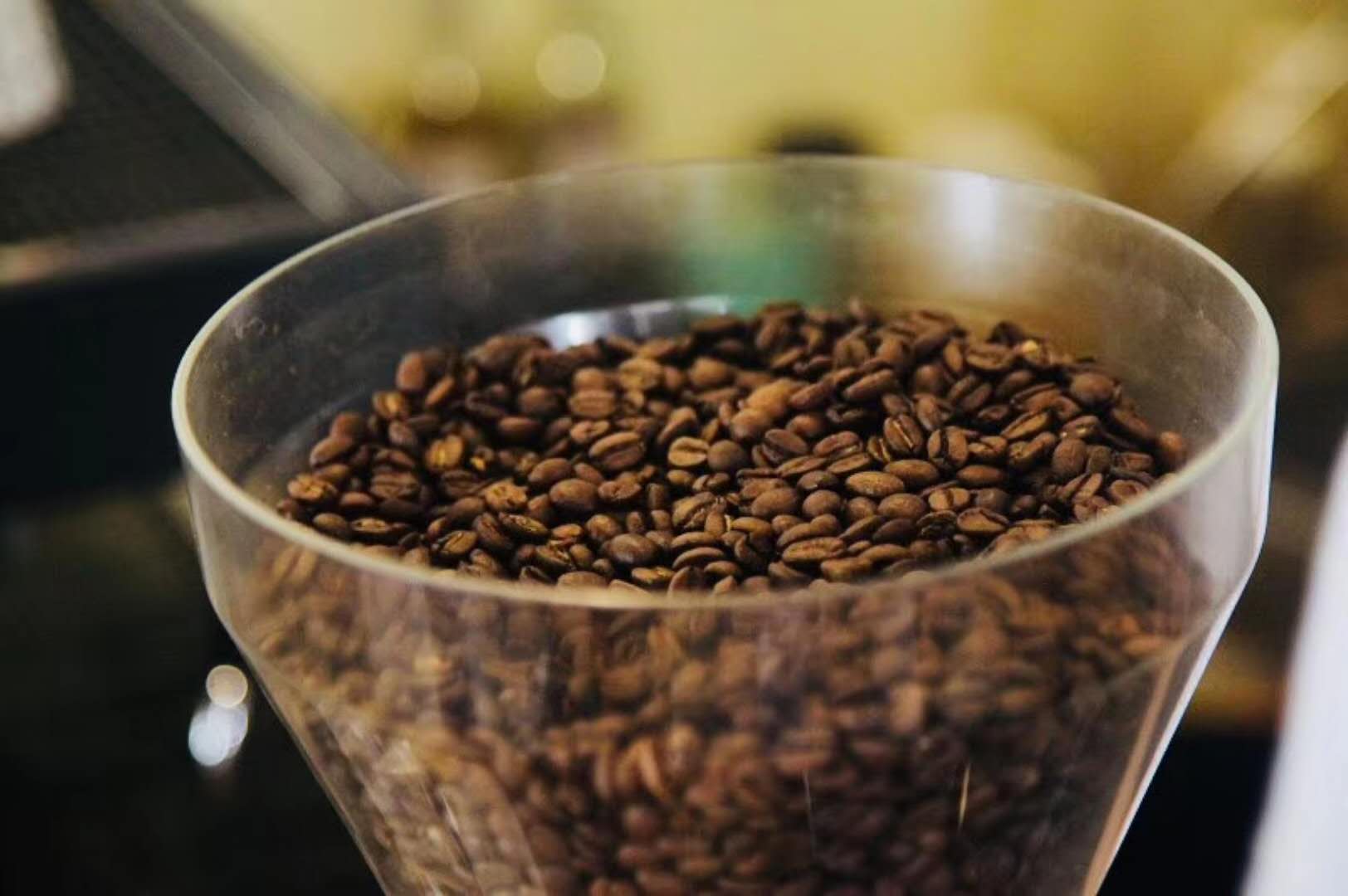
The Importance of Coffee Beans
First, the beans. Yes - if you want a consistent espresso, the coffee beans matter a great deal.
FrontStreet Coffee generally recommends resting espresso beans for about ten days. Darker roasts degas faster than lighter ones, so why such a long rest?
Because when you make espresso, unlike pour-over, there is not enough space for the coffee to degas properly. If the beans are too fresh and degassing vigorously, channeling becomes easy, and the shot extracts inconsistently.
Grind Size Adjustment
Once you have suitable beans, the next thing to consider is grind size. This is essentially a daily task - adjusting the grind. Espresso grind size is not fixed at a single setting, so when should you adjust it?
Situations where the grinder may need adjustment:
1. When temperature, air pressure, or humidity changes suddenly - this is especially noticeable in open spaces.
2. When you change beans. When one bag is finished and a freshly opened bag goes in, the new beans may have a different roast date, batch, or resting period, which changes extraction.
3. During continuous brewing. After 5-6 consecutive extractions, the grind may suddenly become much finer, because continuous use transfers heat from the grinder's motor to the burrs, and friction between the burrs and the beans adds more, so the gap between the burrs narrows through thermal expansion.
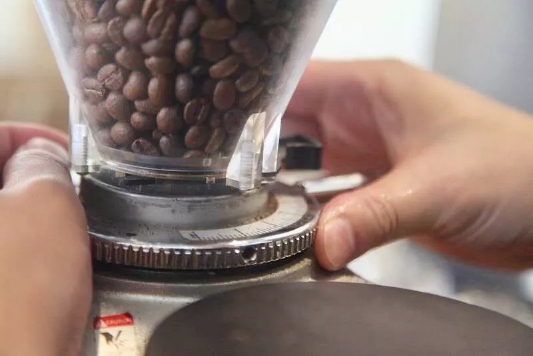
The moisture content and storage time of beans are always changing, and burr wear changes over time as well. Baristas should therefore readjust the grinder regularly to keep the grounds where they should be.
When beans enter the grinder, the burrs crush them into particles. The smaller the distance between the burrs, the finer the particles become.
The finer the particles, the more compact and dense the bed is, making it harder for water to pass through and significantly extending extraction time.
Conversely, if the distance between the burrs increases, the particles become coarser, water passes more easily, and extraction speeds up.
FrontStreet Coffee typically starts from previous extraction parameters, keeping time within 25-30 seconds. A single dose is 13-14 grams, while a double is around 20 grams.
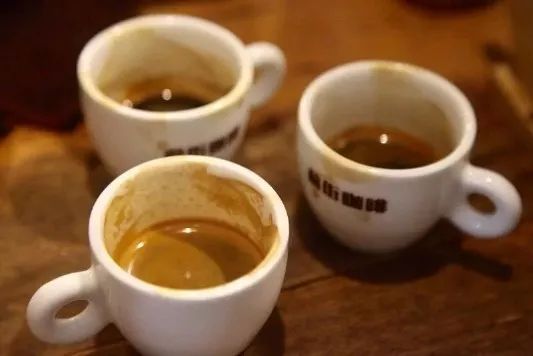
Once puck perforation and similar problems are ruled out, if extraction takes longer, the surface may be over-extracting while the inside under-extracts, which shows up as sharp acidity followed by a bitter, astringent mouthfeel because the sweetness is insufficient - the grind is likely too fine, so adjust slightly coarser. If instead the flow is fast, the stream thick, the extraction shallow and the color pale, with sharp acidity, the grind is likely too coarse - adjust slightly finer.
Dosing Techniques
Once the grind is set, it's time to dose.
Dosing is the first step of distribution. An uneven dose misleads and undermines every distribution step that follows. Even with advanced distribution tools, you cannot ignore how dosing affects extraction.
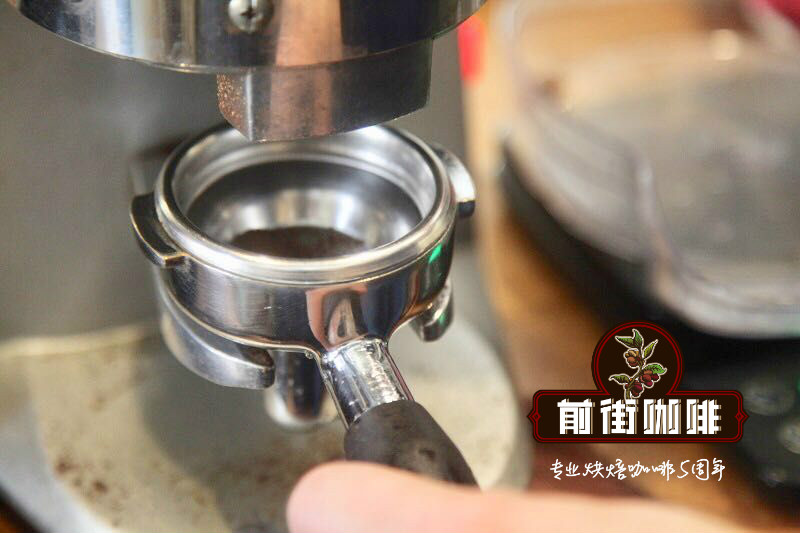
The Impact of Uneven Dosing
1. Flavor differences. If the dose is uneven, distribution cannot fix the lower layer of the bed. Uneven density across the bed means uneven puck thickness and different flow speeds in different places during extraction. A small lapse easily leads to perforation and channeling - water's inertia makes it choose the easy paths and ignore the others - so parts of the puck under-extract while other parts over-extract, and the flavor varies from cup to cup.
2. Large swings in extraction parameters. You can spend half a day adjusting the grinder only to find the flow wrong, the time wrong, and the grind still wrong - wasting a pile of beans without achieving a stable result.
How to Practice Dosing
1. Prepare an electronic scale.
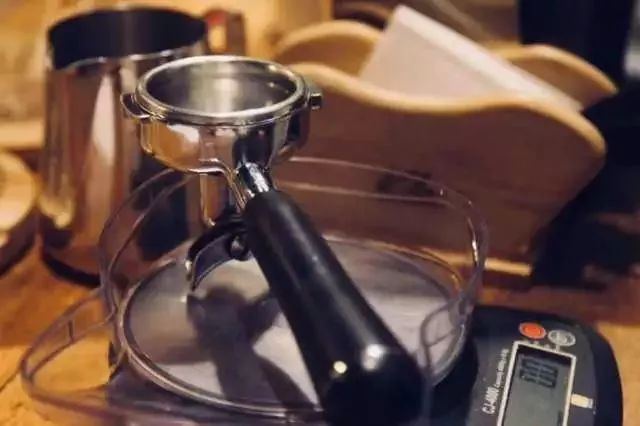
Weighing and dosing before each extraction is essential. Even with a dosing grinder, check the accuracy of its weighing regularly - even the best machines can drift or malfunction.
2. Dose in a rotating motion.
Whether you dose manually or dispense directly, as long as the coffee does not fall straight down, horizontal acceleration will bias the bed to one side. When dosing by hand, for instance, a forceful pour and a gentle pour produce different results - the more force, the more the pile leans.
Keep the dispensing speed even and rotate the portafilter steadily so the grounds spread to different positions in the basket. Absolute uniformity is impossible, but it is far better than dosing from a fixed position.
3. Tap lightly and pat gently.
After dosing, tap lightly on the holder or the table to remove large gaps in the bed. Whether the bed is fluffy or dense, even or not, its state becomes obvious at a glance. A little coordinated horizontal patting can achieve a sufficiently even distribution even without extra distribution tools.
Distribution Methods
After dosing comes distribution.
Common distribution methods include the following.
1. The Leveling Method
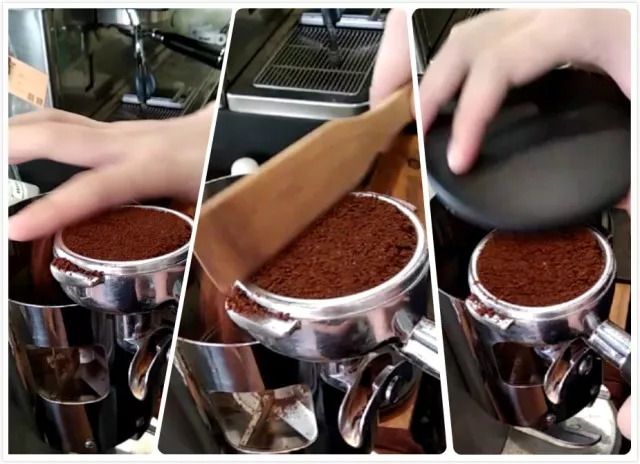
Leveling has three great tools: the hopper lid, a bamboo paddle, and your fingers. It is one of the most common and earliest techniques beginners meet, usually combined with back-and-forth pushing motions, and is divided into four-direction leveling (front, back, left, and right) and rotational leveling (a full 360 degrees).
2. The Light Tap and Gentle Pat Method
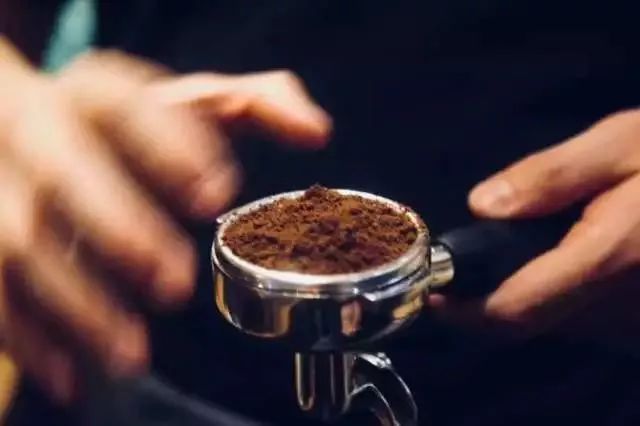
Light tapping and gentle patting are two actions but are usually used one after the other. Quickly pat the bottom of the portafilter with your palm to shake the pile even, then add a vertical gentle tap to remove large gaps in the bed, making the pile denser while increasing how much coffee the basket holds.
3. Tool-Assisted Distribution
With tools, the approaches multiply. The tools on the market fall mainly into several categories: 1) stirring or shaking; 2) leveling the surface; 3) screen dispersion; 4) rotational distribution.
Checking Distribution Quality
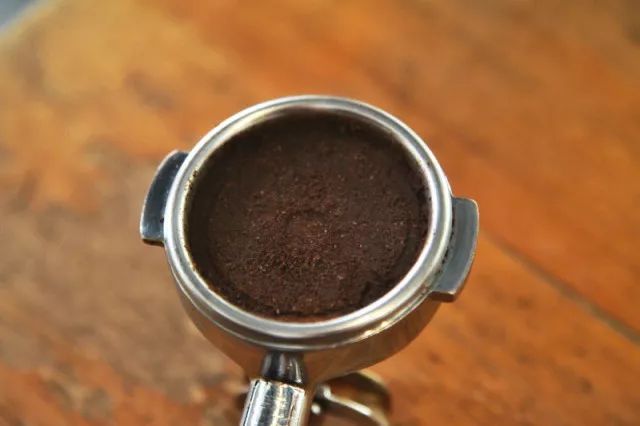
If, during extraction, the flow quickly becomes unstable, jumps around, and the color turns very light, you can conclude that something is wrong inside the puck - cracks have appeared, or uneven tamping left areas with less coffee over-extracting (which may itself stem from uneven distribution), or the distribution was simply uneven, leaving the edges uncovered so water runs straight through.
After extraction, remove the portafilter and look at the puck's shape. If the edges are bare of coffee, if the grounds have floated up, or if the puck has obvious gaps, it is an extraction failure caused by uneven distribution.
Tamping Techniques
After proper distribution comes tamping.
The purpose of tamping: use pressure to compact the loose grounds so that hot water under pressure penetrates evenly.
The direction of the tamp is straight down. If you tamp at an angle, the hot, high-pressure water from the group head will seek the path of least resistance, causing uneven extraction - the problem we commonly call channeling.
The amount of force and the tamper you use matter little, as long as the bed is compacted. Keeping the tamping force consistent from shot to shot matters far more.
FrontStreet Coffee Recommendation
Getting a stable espresso comes down to controlling a small number of variables, and the bean you put in the hopper sets the ceiling. For a home setup where consistency matters more than drama, FrontStreet Brazil Queen Estate is a dependable place to start. Its low acidity and balanced character bring out dense nut and cocoa aromas with clear caramel sweetness, and it is smooth rather than astringent on entry, working just as well through an espresso machine as it does in a pour-over or a moka pot.
If you want a shot that leans bold and heavy, FrontStreet PWN Golden Mandheling is built for it. Roasted dark, it carries very low acidity and a long, thick body, with herbal and dark chocolate aromas layered over a faint earthy note - a coffee for people who like a strong, bitter-leaning cup and avoid sourness.
Whichever bean you choose, the workflow stays the same: keep a scale on hand, hold the dose steady at whatever level the basket suits, tap and level the bed, tamp straight down, and judge the grind by the flow rather than by the number on the dial. Taste each change one at a time, and the shot will settle into something repeatable.
Important Notice :
FrontStreet Coffee is a long-established specialty coffee roaster in Guangzhou China, selling freshly roasted beans from its own farm in Yunnan as well as dozens of carefully selected single-origin beans from around the world for both pour-over and espresso. The products deliver consistently excellent quality and great value, with shipping within 24 hours. Guangzhou's FrontStreet Coffee shop is recommended by many coffee lovers, and the beans are now available online at the Tmall 。
FrontStreet Coffee has moved to a new address:
FrontStreet Coffee Address: 315,Donghua East Road,GuangZhou
Tel:020 38364473
 Scan and follow the En Gafei WeChat official account. Please indicate that the reprint comes from "En Gafei".