How to Pour Over Nicaragua El Recreo Estate Coffee_Parainema Variety Pour Over Tips
Coffee Information
Country of Origin: Nicaragua
Region: Jinotega
Estate: El Recreo
Variety: Parainema
Altitude: 1200-1300m
Processing Method: Natural Process
El Recreo Estate Story
In 1972 Leana acquired El Recreo Estate and turned it into a coffee plantation dedicated to producing and processing specialty coffee. The estate mainly exports to North America and also processes and distributes in the US market, where it set up El Recreo Estate Inc. in Boston to serve local roasteries and cafes. El Recreo has its own coffee slogan, one that reflects its commitment to respecting employee rights and to environmental responsibility.
Parainema Coffee Variety Introduction
What makes Parainema special?
Parainema is a new variety developed through breeding and hybridization, and it is resistant to coffee leaf rust and nematode infestation. Improvement work began in 1981 under a series of experiments named "Producer Requests for Disease and Pest Resistance" (known as Sarchimor T-5296). The improved coffee was first planted in Costa Rica between 2006 and 2008, then introduced to Honduras in 2010 and named Parainema. The tree is a dwarf shrub with a planting density similar to Caturra. Because of its distinct genetic lineage, the leaf tips may be green, yellow, or a mix of both. The beans are elongated like Geisha, vibrant green and full, with very rich flavors.
Processing Methods
The washed process emerged as a solution to the problems of traditional natural processing. First the harvested cherries pass through a depulper to separate most of the pulp from the beans. They are then guided into a clean water tank and soaked to ferment away the remaining mucilage. Once fermentation is complete, they are dried by sun or mechanically until moisture reaches 12%. Because the pulp is removed up front, there is no need to worry about mold or insects during drying the way there is with natural processing.
(Depulper removing fruit pulp) (Soaking in water to ferment) (Spreading out for drying)
Natural processed coffee offers rich, full flavors with distinct and varied layers, while washed coffee is very clean and refreshing with prominent fruit acidity. Different processing methods give the same beans very different aromas.
Flavor Profile
Cherry, Passion Fruit, Cranberry
Roasting Suggestions and Analysis
Recommended Brewing Equipment: Pour-over, French Press, Siphon
Brewing Analysis
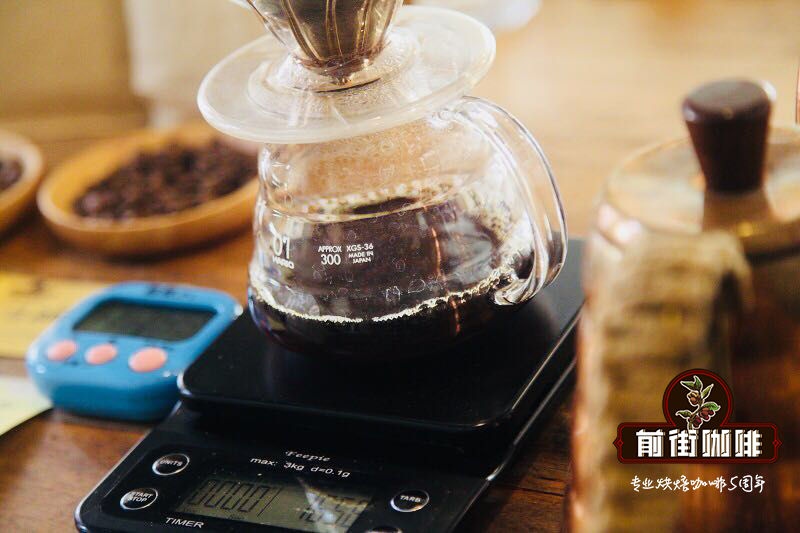
Today FrontStreet Coffee introduces our common pour-over technique for Nicaraguan coffee: the V60 three-pour method.
Segmented extraction divides all the brewing water into three separate pours.
Suitable for light roast, medium-light roast, and medium roast coffee beans.
Using a V60 dripper.
Extending the bloom time or the number of pour pauses can enhance the coffee's richness.
The Three-Pour Segmented Extraction Method
Advantages: More layered than a single continuous pour, and it clearly expresses the front, middle, and back-end flavors. It works by increasing the water volume after each bloom segment, typically pouring when the coffee level is about to drop to the surface of the coffee bed, using small, medium, and large flows across three stages.
Disadvantages: It demands higher standards for controlling flow rate and volume.
FrontStreet Coffee's Nicaraguan Coffee Pour-over Parameter Recommendations
A V60 dripper enhances the layering of the pour-over, making the coffee taste richer and cleaner, and perfectly expresses the floral and fruity aromas and soft fruit acidity of Nicaraguan coffee.
15g coffee, water temperature 89-90°C, grind BG 5R (64% passing rate on the Chinese standard 20-mesh sieve), water-to-coffee ratio close to 1:15.
Technique: 30g water for the bloom, bloom time 30s. Pour the hot water from the kettle in clockwise circles from the center of the dripper. Start timing when brewing begins, pour to 30g, then stop and wait 30 seconds before the first pour.
For the first pour, circle as before, but slightly slower, accelerating a little as you reach the outer ring. Stop pouring at around 1:15, wait for the liquid level to drop by 1/3, then pour again. For the second pour, concentrate on the center and avoid the area where the grounds meet the filter paper to prevent channeling. End extraction around 2:05; the tail end can be discarded, since longer extraction adds astringency and roughness.
Segments: 30-125-230g
FrontStreet Coffee Recommendation
Nicaraguan coffee rewards a clean, layered single origin, and so does Panama Geisha, which is famously brewed as pour-over to show off its delicate aromatics. If you are new to Geisha, FrontStreet's Boquete Geisha is the entry-level choice. Grown at 1,600 meters in Boquete's fertile volcanic-ash soil, it pours into jasmine florals, green tea, honey, citrus, and orange, at a friendly price for the quality.
For a step up, FrontStreet's Esmeralda Red Label Geisha is the highest tier: it comes from a single plot above 1,700 meters, cupping above 90 points, with the estate's signature citrus-honey profile. The difference between Red and Green Label is simply that Red Label works from individual plots with their own lot numbers, while the Green Label is a blend of lots that emphasizes the estate's high-altitude house style and is far more affordable.
If you favor the brighter, more fruit-forward Ethiopian side of Geisha, FrontStreet's Genlana Estate Geisha comes from a processing station founded in 2014 by Israel Degefa and shows a wide range of layers built on a medium-light roast: bright citrus acidity, elegant ginger-lily florals, and the full sweetness of ripe fruit with a fine, silky body.
Important Notice :
FrontStreet Coffee is a long-established specialty coffee roaster in Guangzhou China, selling freshly roasted beans from its own farm in Yunnan as well as dozens of carefully selected single-origin beans from around the world for both pour-over and espresso. The products deliver consistently excellent quality and great value, with shipping within 24 hours. Guangzhou's FrontStreet Coffee shop is recommended by many coffee lovers, and the beans are now available online at the Tmall 。
FrontStreet Coffee has moved to a new address:
FrontStreet Coffee Address: 315,Donghua East Road,GuangZhou
Tel:020 38364473
 Scan and follow the En Gafei WeChat official account. Please indicate that the reprint comes from "En Gafei".