How to Make Pour-Over Coffee with Nicaragua Hacienda Herrera Washed Catuai
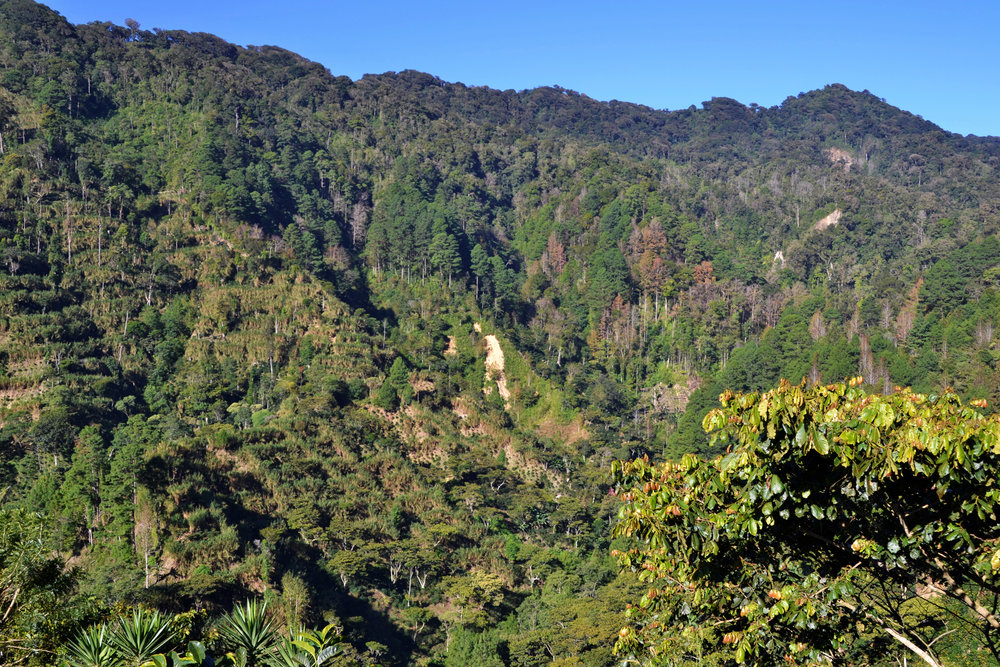
Nicaragua Coffee - Catuai, Rony Herrera
Origin Farm: Nicaragua, Herrera Farm
Processing Method: Washed
Roast Level: Medium-Light
Herrera Farm Story Introduction:
Rony is still young, yet he has already produced some of the most outstanding coffee in Nicaragua. This promising farmer grew up surrounded by coffee and would visit his father's farm every day. When he turned 18 he inherited his own farm, "Fila Quemada," which roughly translates to "Burned Ridge," a reference to the time this mountain collapsed in flames. That is ancient history now - it is a vibrant, exemplary farm today with a promising future ahead.
The Herrera family owns and operates four farms and an ecological wet mill in the La Laguna region. Three farms are managed by the three oldest brothers, while the fourth, Buena Vista, is managed by their father, Roger Herrera. Don Roger began growing coffee in the region over 30 years ago and gradually expanded the business. As he aged, his sons became involved in farm management, and today the different farms are processed and sold separately.
The region feels isolated, with only a few farms reachable by a remote dirt road. It is that isolation that makes me appreciate this farm, because it corresponds to dedication. Farms above 1,500 meters are uncommon in Nicaragua, and at these heights farmers truly have to go the extra mile. At these altitudes quality thrives, and combined with meticulous processing facilities, it produces consistently great coffee.
Catuai Coffee Variety Introduction:
Catuai green beans are relatively soft, with a sweet taste and minimal astringency - as if everything is only worth 65 points. It is a variety Brazil has strongly promoted, though it has not yet made significant achievements.
Catuai is an Arabica hybrid, a cross between Mundo Novo and Caturra, with good resistance to natural disasters, particularly wind and rain. It inherits Caturra's short plant stature, which addresses a shortcoming of Mundo Novo. Another advantage is its firm fruit, which does not easily fall off in strong winds and compensates for the fragility of Arabica cherries. Its overall flavor, however, is more monotonous than either Caturra or Mundo Novo, lacking body - which is its biggest regret. On top of that, its fruit growth and harvesting lifespan is only about ten years, another weakness.
Catuai also comes in red-fruit (Catuai Vermelho) and yellow-fruit (Catuai Amarelo) forms. Both red and yellow fruits exist, but so far no yellow fruit has been found to taste better than red. In fact, some cupping tests have shown that although coffee from yellow fruits has good acidity, its cleanliness is inferior to that of red fruits. Statistically, red Catuai wins awards more often.
Because Caturra has high yield and is not prone to pests and disease but has poorer flavor quality, Catuai was developed from Caturra to improve on those shortcomings - though it ends up feeling a little too balanced.
Washed Process Introduction:
The washed method was developed in response to the drawbacks of traditional natural processing. First, harvested cherries go through a depulper to separate most of the pulp from the beans, then are guided into a clean water tank, where they are soaked and fermented to thoroughly remove the remaining mucilage. After fermentation, they are dried by sun or by machine to bring the moisture content down to 12%. Because the washed method removes the pulp first, there is no need to worry about mold or insect infestation during drying, as there is with the natural method.
(Depulper removing pulp) (Fermentation in water) (Spread flat for drying)
Naturally processed coffee has a rich, full-bodied flavor with very distinct and diverse layers, while washed coffee has a very clean, refreshing taste with distinct fruit acidity. Different processing methods give coffee beans unique aromas.
Flavor Description: Caramel, chocolate, creamy, tea-like, lively acidity, high body
Roasting Recommendations/Analysis:
Recommended Brewing Methods: Pour-over, French press, Siphon
Brewing Analysis:
Today FrontStreet Coffee introduces a common technique for pour-over Nicaragua coffee: the V60 three-stage pour.
Stage extraction divides all the brewing water into three stages. It suits light, medium-light and medium roasts. Using a V60 filter cup, increasing the bloom time or the number of pour stops can enhance the richness of the coffee's flavor.
The three-stage pour extraction method
Advantages: more layered than a single continuous pour, it clearly distinguishes the front, middle and back end flavors of the coffee. The method increases the water volume after each bloom, usually pouring when the coffee liquid is about to drop to the surface of the coffee bed, using small, medium and large water flows across three stages.
Disadvantages: it places higher demands on water flow rate and volume.
FrontStreet Coffee's Nicaragua Coffee Pour-over Parameter Suggestions:
Brewing with a V60 filter cup enhances the layered flavor of the pour-over, making it richer and cleaner, and fully expresses the rich floral and fruity aromas and soft fruit acidity of Nicaragua coffee.
15 g of coffee powder, water temperature 89-90°C, grind BG 5R (64% pass rate through a China standard 20-mesh sieve), water-to-powder ratio close to 1:15.
Method: 30 g of water for the bloom, bloom time 30 s. The hot water in the pour-over kettle is poured clockwise in circles centered on the filter cup; timing begins with the brew, pour to 30 g, then stop and wait 30 seconds for the first pour.
During the first pour, circle as before but slow down slightly, then speed up a little on the outer ring; stop pouring at about 1:15 and wait for the liquid level to drop by one-third before pouring again. The second pour focuses on the center, making sure the water does not hit where the coffee powder meets the filter paper, to avoid channeling. End extraction at around 2:05; the tail section can be omitted, since the longer it runs, the more astringency and roughness develop.
Stages: 30-125-230g
FrontStreet Coffee Recommendation
If this washed Nicaraguan coffee's balance appeals to you, Brazilian coffee offers the same easygoing character with its own accent. FrontStreet Brazil Cerrado Red Bourbon is a classic single-origin from the well-known Cerrado region. This natural (pulped) red Bourbon, roasted medium, pours out cream, peanut, toast, caramel and hazelnut aromas with a rounded, gently bittersweet finish, and works in pour-over, moka pot, espresso SOE, siphon or French press.
For a rarer variety, FrontStreet Brazil Queen Estate comes from Mogiana, near South Minas, where fertile red volcanic soil feeds the fruit. It is a yellow Bourbon, a natural mutation of red Bourbon with a cleaner fruit character, and it shows a sugarcane sweetness along with fruit and chocolate notes. And if you brew milk drinks, Brazil is the first choice for espresso blending: the oil-rich FrontStreet Classic Blend, the nutty FrontStreet Premium Blend, the balanced FrontStreet Black Cocoa Blend and the shop-oriented FrontStreet Commercial Blend all include Brazilian coffee.
Important Notice :
FrontStreet Coffee is a long-established specialty coffee roaster in Guangzhou China, selling freshly roasted beans from its own farm in Yunnan as well as dozens of carefully selected single-origin beans from around the world for both pour-over and espresso. The products deliver consistently excellent quality and great value, with shipping within 24 hours. Guangzhou's FrontStreet Coffee shop is recommended by many coffee lovers, and the beans are now available online at the Tmall 。
FrontStreet Coffee has moved to a new address:
FrontStreet Coffee Address: 315,Donghua East Road,GuangZhou
Tel:020 38364473
 Scan and follow the En Gafei WeChat official account. Please indicate that the reprint comes from "En Gafei".