Coffee Roasting Analysis| What is Under-development and Over-development? How to Determine Roast Degree?
Professional Coffee Knowledge Exchange
For more coffee bean information, follow Coffee Workshop (WeChat public account: cafe_style).
FrontStreet Coffee Costa Rica Coffee | Costa Rica Angel Manor Global Only 85kg | Geisha 2018 - Panama Emerald Manor Red Label Natural | Blue Label Washed | Green Label Natural
Coffee roasting is a professional craft. Many data-driven enthusiasts study the curves of champion roasters and try to replicate them, little realizing that even if the roasting curves are very similar, what about the flavor? I have met many roasting masters who rely on extensive experience and intuition to roast coffee beans, not just on data and curves.
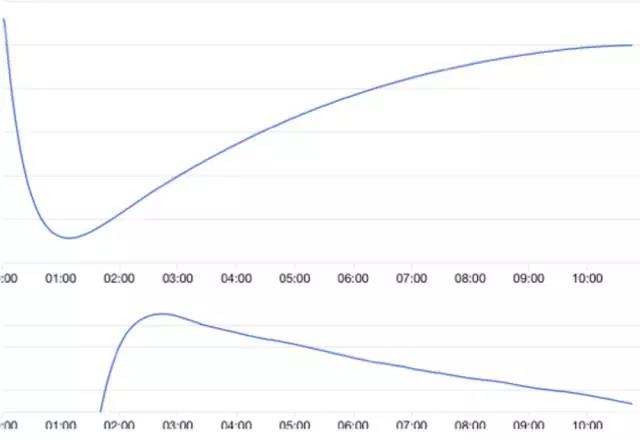
"Perfect curve? so what!?"
Indeed, our ultimate goal in roasting coffee is to produce a delicious cup, not just impressive data. The curve serves as a reference, showing how a given coffee bean behaves during the roast. In the end we must judge quality through flavor and mouthfeel evaluation, just as a coffee that hits "Golden Cup Extraction" might be "correct" but not necessarily "delicious."
Understanding "Underdeveloped" and "Overdeveloped" Roasting
Returning to our topic, let us discuss what we mean by "underdeveloped" and "overdeveloped" roasting. These two conditions cannot be easily determined from roasting curves alone.
First, let's examine underdeveloped coffee
Underdeveloped coffee beans are typically roasted too lightly and carry flavors of grass, vegetables, and toasted bread: essentially, the beans are dropped before good flavors have emerged during roasting. This usually happens when there is a sudden temperature drop after first crack, or when roasting at low temperatures for an extended period after first crack. Visually, underdeveloped beans have black creases along their center line that have not fully expanded. After drinking, you will feel a numbing, tingling sensation on the tip and sides of your tongue (insufficient degradation of chlorogenic acid).
Solution:
Visual observation: for washed coffee beans, the center line should be fully expanded, the silver skin should be relatively clean, and the color uniform, which is an excellent test. Use your nose: underdeveloped beans give off grassy aromas during roasting rather than fragrant ones. Finally, avoid dramatic drops in RoR (rate of rise) after first crack, and avoid deliberately extending the roasting time too long.
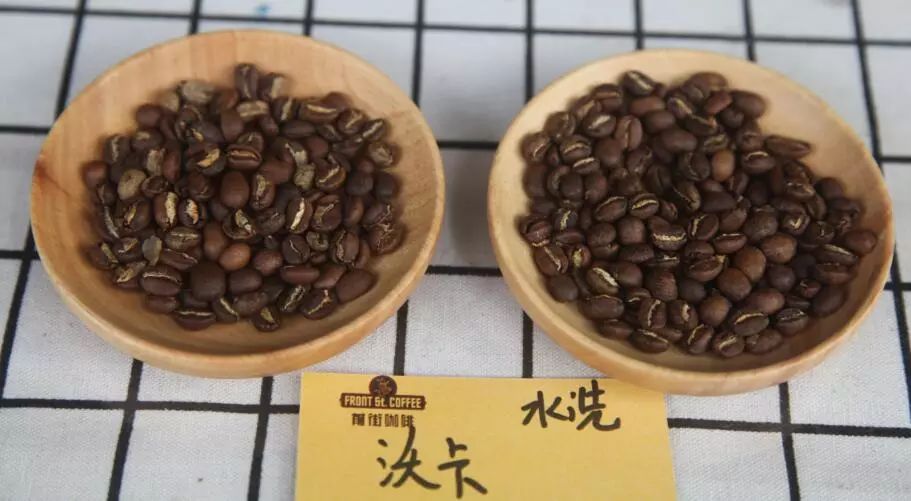
The image above shows underdeveloped coffee beans on the left and well-developed beans on the right.
Now, let's discuss overdeveloped roasting
Overdevelopment has two meanings. One is roasting too dark, where flavors are burned away and only bitterness remains, common in many "charcoal-roasted" coffees and often seen in beans roasted until they become oily. But can coffee be overdeveloped even when it is not roasted dark? Absolutely.
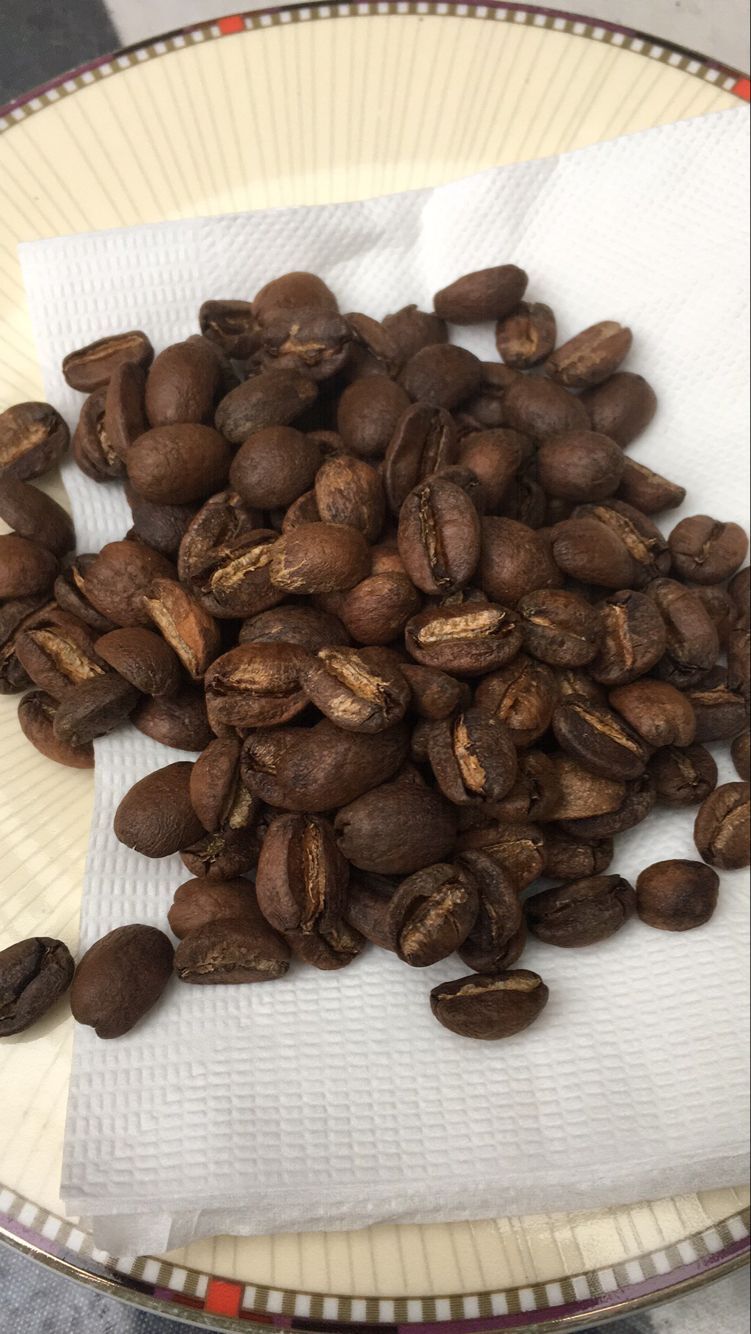
The image above shows overdeveloped coffee beans. Don't they look underdeveloped? The bean surface appears dry, but the center line has completely opened, one manifestation of overdevelopment.
Coffee beans that are overdeveloped despite not being roasted dark occur because of excessive development time during the late stages of first crack, resulting in flavor loss. The main taste characteristics are burnt grain flavors, flat taste notes, and roasted aromas. The brewed coffee color will also be relatively pale, with an oily mouthfeel (distinguished from full body).
Solution:
Mainly, after first crack, observe when the beans have expanded and sample them to identify aromas, then when the expected fragrance is achieved, drop the beans decisively (this requires experienced judgment) rather than holding the roast within a temperature range. For beans from certain regions, such as Panama Boquete coffee beans, you especially cannot develop for too long after first crack, and you do not need to wait for complete expansion; otherwise the bean core will become darker than the surface, meaning overdevelopment has occurred, flavors will be diminished, and the resulting coffee will taste flat.
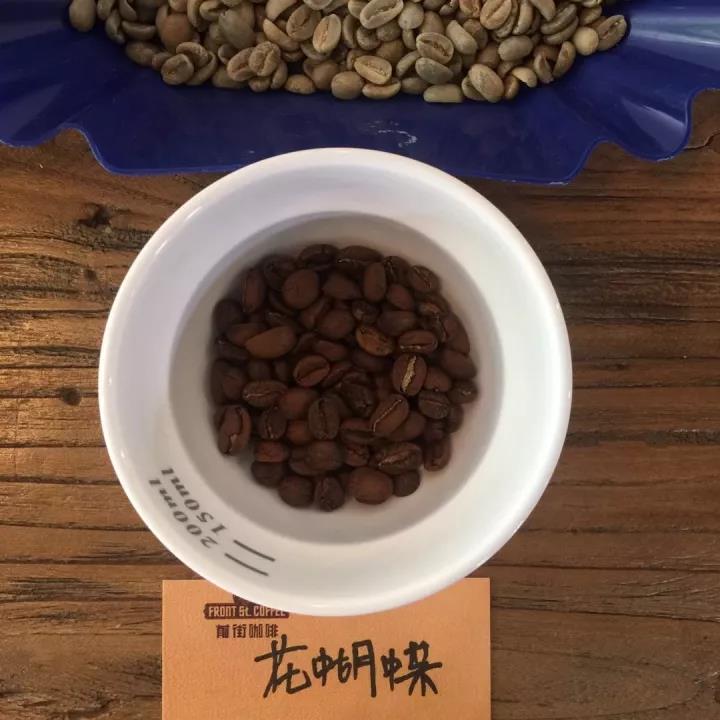
For beans like Geisha, having some creases is actually normal.
Final Thoughts
Roasting coffee beans requires considering many aspects of the raw beans: variety, growing environment, processing method, moisture content, water activity, and more, in order to formulate a roasting approach. Then, through multiple adjustments and cupping sessions, find a roast that brings out better flavors (which includes the roaster's subjective preferences). If you are competing, a beautiful roasting curve might seem "fairly accurate" or "not too bad" to judges, but to achieve delicious coffee it ultimately comes down to cupping and brewing. Among the factors that determine coffee flavor, the quality of the raw beans is particularly important (as are storage conditions). As roasters and baristas, our ultimate goal is to express the best qualities of a coffee bean rather than to deliberately try to change it (failed attempts are even more embarrassing).
FrontStreet Coffee Recommendation
If you want to taste how careful development reads in the cup, Geisha is the variety to follow. Its high price and demanding cultivation make it unforgiving of a rushed roast, and the lots below are the ones FrontStreet roasters watch most closely after first crack.
FrontStreet Emerald Estate Red Label Geisha
Emerald Estate is the estate that made Geisha a household name, and its line is split into Red Label and Green Label. The Red Label is formally called "Esmeralda Special": grown at 1,600-1,800 meters, each lot must cup above 90 points and carries its own independent number, with every bean in a lot coming from a single small plot, such as FrontStreet's Red Label from the Halimiyo plot. That lets buyers chase specific flavor nuances from lot to lot.
FrontStreet Emerald Estate Green Label Geisha
The Green Label's original name is "Private Collection," so called because its brand tag has a green background. Unlike the Red Label, it does not emphasize detailed plot information; it blends lots from several plots to express Emerald Estate's signature high-altitude Geisha character. Think of it as a Geisha lot without plot separation, priced more accessibly, which makes FrontStreet's Green Label excellent value.
FrontStreet Boquete Geisha
For a first taste of the "Geisha flavor," FrontStreet recommends the Boquete Geisha from Panama. An entry-level Geisha, it lets you enjoy the classic Panamanian orange-honey note at a reasonable price, with an oolong-tea quality, a delicate fruit sweet-sour and clear layering.
FrontStreet Gesha Village Gold Label and Red Label
Ethiopia, coffee's birthplace, also has an estate famous for the variety: Gesha Village, which runs a strictly graded system like Panama's. It grows three Geisha varieties, Gori Gesha, Gesha 1931 and Illubabor Forest, and grades lots as Gold Label Rarities, Red Label Growers Reserve, Green Label Single-Terroir and Chaka. Gold Label belongs to the Gesha 1931 variety and accounts for 10% of Gesha Village's total output; it is the estate's top coffee outside auction and is often chosen by competition baristas. FrontStreet's Gold Label is given a refined natural process and cups with complex, layered flavor: distinctive in dry aroma, in the slurp and in the lingering finish. Red Label belongs to the Gori Gesha variety, accounts for 15% of output, and scores 88 or above on the SCA 100-point scale; it is the estate's single-terroir series, so every lot carries complete traceability, including block name, variety and processing date.
FrontStreet Genlana Geisha
Genlana Estate lies in Yirgacheffe, Ethiopia, and is rare in growing a single variety. This lot comes from the Genlana processing station at the border of Ethiopia's Kochere and Genlana Abaya districts; founded in 2014 and run by Mr. Israel Degefa, the station sits in an area of up to 700 hectares of coffee cultivation, much of it uncultivated, with fertile soil and shade trees throughout. The original rainforest soil and generous shade give this native Ethiopian Geisha more changeable layering. Cherries are hand-picked fully ripe and dried in the sun on raised beds for 14-20 days depending on the weather. Roasted medium-light, it shows bright citrus acidity, elegant ginger flower, the full sweetness of ripe fruit and a fine, silky texture with Geisha's signature refined finish.
Important Notice :
FrontStreet Coffee is a long-established specialty coffee roaster in Guangzhou China, selling freshly roasted beans from its own farm in Yunnan as well as dozens of carefully selected single-origin beans from around the world for both pour-over and espresso. The products deliver consistently excellent quality and great value, with shipping within 24 hours. Guangzhou's FrontStreet Coffee shop is recommended by many coffee lovers, and the beans are now available online at the Tmall 。
FrontStreet Coffee has moved to a new address:
FrontStreet Coffee Address: 315,Donghua East Road,GuangZhou
Tel:020 38364473
 Scan and follow the En Gafei WeChat official account. Please indicate that the reprint comes from "En Gafei".