Nicaragua Finca San Isidro Maracatura Pour-Over Parameters_How to Brew Maracatura

Finca San Isidro Estate Story
Experimentation and craft are what drive Finca San Isidro forward. As a teenager, Byron moved from farm to farm repairing machinery at the neighborhood washing stations; as his father's farm expanded, he built four washing stations of his own.
Those stations began as his own drafts, with every screw driven and every coat of paint applied by Byron himself. Only three pulpers were bought in — from family members — one of which was specifically calibrated to strip the skin off the oversized Maracaturra cherries. The washing station is also fitted with a sorting system that grades cherries by weight and quality.
Maracaturra Coffee Variety Introduction
What makes Maracaturra special?
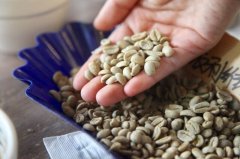
Like the Maragogype, Maracaturra produces unusually large beans. According to Mauricio, it inherits the excellent cup quality and high yields of its Caturra parent. The plant stays short but grows a dense canopy of leaves that shields it from strong winds — a real advantage on estates regularly battered by gusts.
The catch is leaf rust: Maracaturra is highly susceptible, so it demands careful attention. In the cup it offers tropical fruit and lively acidity. The variety took 5th place in the 2015 Cup of Excellence, and Mauricio believes future harvests can surpass even Pacamara.
Washed Processing Method Introduction
Developed to fix the shortcomings of traditional natural processing, the washed method starts by running harvested cherries through a depulper to strip away most of the fruit. The beans then soak in a clean water tank to ferment, dissolving the remaining mucilage completely. Once fermentation is finished, they are dried in the sun or by machine down to 12% moisture. Because the pulp is removed before drying, washed coffee never faces the mold and insect problems that can plague natural lots.
(↑ Depulping machine removing pulp) (↑ Fermentation while soaking in water) (↑ Spread flat for drying)
Natural processing, for its part, produces rich, full flavors with distinct and layered aromatics — which is exactly why so many producers keep both methods in their toolkit.
Roasting Recommendations/Analysis:
Recommended brewing equipment: Pour-over, French press, Siphon
Brewing Analysis:
Here, FrontStreet Coffee shares the technique we use most often for pour-over Nicaraguan coffee: the V60 three-pour method.
Segmented extraction — the total brewing water is divided into three pours.
Suitable for light, medium-light, and medium roast coffee.
Uses a V60 dripper.
Lengthening the bloom or adding more pour interruptions will deepen the coffee's body.
Three-Pour Segmented Extraction Method
Advantages: More layered than a single continuous pour, clearly separating the coffee's front, middle, and finish. After the bloom, each pour adds progressively more water — typically poured just as the liquid level is about to sink to the surface of the coffee bed — using small, medium, and large flows for the three stages.
Disadvantages: Demands precise control of both flow rate and pour volume.
FrontStreet Coffee's Nicaraguan Coffee Pour-Over Parameter Recommendations
Brewing with a V60 brings out the layering of this coffee, making the cup read richer yet cleaner, and lets the floral and fruit aromatics of Nicaraguan coffee — along with its soft, fruit-like acidity — fully express themselves.
15g of coffee, water temperature 89-90°C, grind BG 5R (a 64% pass-through rate on the #20 sieve), water-to-coffee ratio close to 1:15.
Technique: Start the timer as you begin brewing and pour 30g of water in clockwise circles around the center of the dripper, then stop and wait 30 seconds for the bloom before the first pour.
For the first pour, circle as before at a slightly slower pace, accelerating a touch as you reach the outer edge. Stop at around 1:15, wait for the level to drop by one-third, then pour again. The second pour targets the center — avoid letting the stream hit the seam where grounds meet filter paper, or the bed will channel. Finish extraction around 2:05; the tail can be discarded, since the longer it runs, the more astringency and roughness creep in.
Pour segments: 30-125-230g
FrontStreet Coffee Recommendation
If a bright, floral, fruit-driven V60 cup is what you are after, FrontStreet Coffee's washed Yirgacheffe Guodingding Cooperative is the natural first stop — jasmine florals, lively citrus acidity, and green tea and honey undertones in a medium-light roast, friendly enough for anyone new to pour-over. For a bolder expression of fruit, the FrontStreet Huakui's strawberry, passion fruit, jackfruit, and even lychee aromas make it, as many drinkers say, "the coffee that tastes least like coffee," while the Panama Esmeralda Red Label Geisha remains the ultimate pursuit: elegant jasmine, bergamot, and black tea in a clean, translucent cup.
On the deeper-roasted side, the FrontStreet PWN Golden Mandheling brings herbal and dark chocolate depth with almost no acidity for those who prefer weight over brightness, and the FrontStreet Brazil Queen's Estate balances nuts, cocoa, and caramel sweetness in a round, low-acid cup that works with any brewer you own.
Important Notice :
FrontStreet Coffee is a long-established specialty coffee roaster in Guangzhou China, selling freshly roasted beans from its own farm in Yunnan as well as dozens of carefully selected single-origin beans from around the world for both pour-over and espresso. The products deliver consistently excellent quality and great value, with shipping within 24 hours. Guangzhou's FrontStreet Coffee shop is recommended by many coffee lovers, and the beans are now available online at the Tmall 。
FrontStreet Coffee has moved to a new address:
FrontStreet Coffee Address: 315,Donghua East Road,GuangZhou
Tel:020 38364473
 Scan and follow the En Gafei WeChat official account. Please indicate that the reprint comes from "En Gafei".