Why Does Nicaraguan Man Bull Estate Yellow Honey Coffee Taste Astringent When Pour-Over Brewed? What's the Best Water for Pour-Over Coffee?
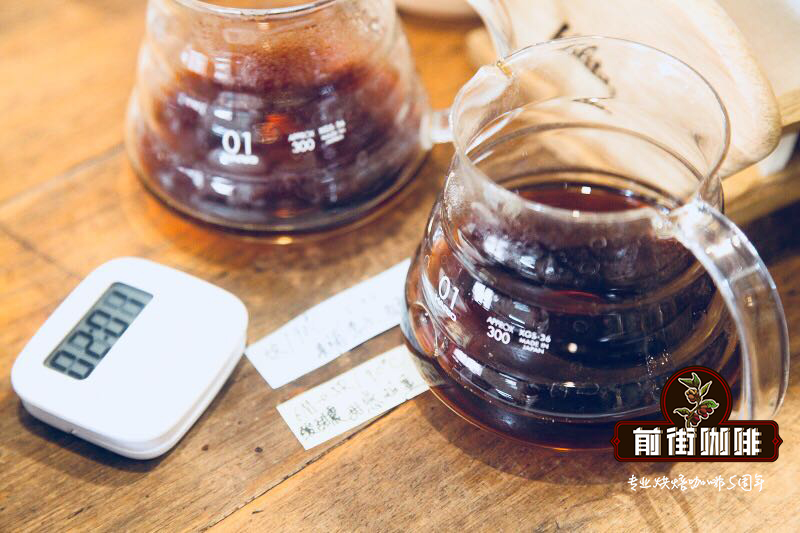
Nicaragua coffee: Las Promesas Estate, H1 variety, red honey
Nicaragua Gonzalo Adan Castillo Honey
- Estate: Las Promesas
- Region: Dipilto
- Variety: H1
- Altitude: 1,250 m
- Processing method: yellow honey process
- Roast level: light to medium
The Las Promesas story
Gonzalo Adan Castillo Moreno's coffee comes from a grower who is a frequent winner in Nicaragua's Cup of Excellence and who owns several estates, with 35 years of organic coffee cultivation behind him. He holds award records from the 2016 CAFE MAS FINOS OF NICARAGUA competition and from the 2015 and 2017 Cup of Excellence, and 75% of the coffee he produces scores 83 or higher on the cupping table.
Las Promesas Estate sits in the northern region of Nueva Segovia, near the Honduran border, at an altitude of 1,100 to 1,200 meters. With 35 years of coffee-growing experience, the estate produces many different varieties. Both the processing equipment and the cultivation techniques are of a high standard. The estate keeps two full-time employees, with the rest contract staff handling green-bean processing — depulping, washing, fermentation, and packing. Las Promesas runs a soil analysis every two years and uses the data to supply the right nutrients, applying fertilizer four times a year.
The owner places great importance on farm health. His commitment to protecting the planet shows up in many details. Readily available organic fertilizer is made from coffee cherries mixed with pulp. Weeding is done by hand, 3-4 times a year; despite the higher labor cost, the approach is kept to reduce environmental pollution. Wherever possible, 30-35% shade trees are preserved to help slow the pace of climate change.
A weather station on the estate provides forecasting and record-keeping. Workers can access the data online, and it is shared with the coffee academies that collaborate with the estate so students can observe the relationship between climate change and productivity. The owner firmly believes that only by caring for the earth and understanding the key variables of nature can the planet naturally reward us with abundant, full-bodied fruit.
The H1 hybrid variety
What is H1 hybrid coffee? H1 is a cross between Sarchimor T5296 and Rume Sudan.
Sarchimor T5296, a variety from Costa Rica's CATIE national breeding program, is a hybrid cross of Villa Sarchi and Timor, and it carries strong disease resistance.
Sudan Rume, according to pedigree analysis, belongs to a line older than both Typica and Bourbon. Because it is grown mainly in Sudan and Ethiopia, its rich gene pool has drawn scholars to study its disease-resistant genes for years. Yet limited by a lower yield than other varieties, it has never been widely adopted in producing countries. Compared with the traditional common Geisha profile, Sudan Rume offers rarer but rich toffee and milk-candy flavors alongside a fuller body.
Main characteristics
- Resistant to leaf rust
- Susceptible to American leaf spot disease
- When grown under shade below 40% and grafted onto Robusta trees, yields 30% more than Catuai
- Coffee cherries hold firmly after ripening and are not easily shed
- Satisfying cupping quality
An introduction to honey processing
Honey processing sits between the natural and washed methods. By drying the coffee together with its mucilage in the sun, it keeps the cleanliness of washed coffee while significantly increasing sweetness and caramel flavor, since the pulp mucilage is extremely high in sugar. The method first appeared in Costa Rica, mainly because some high-altitude areas of Central America lacked water, so after running the cherries through a pulper they were dried in the sun with the mucilage still on.
Put simply, honey processing means processing coffee with the remaining pectin and inner parchment still attached after the skin and pulp have been removed. The key to distinguishing honey styles lies in how that remaining pectin is handled: how much is retained, and how fast it is dried.
Honey-processed beans are graded into three levels by the amount of pulp retained, from most to least: yellow honey, red honey, and black honey.
Yellow (Honey Amarillo)
Approximately 40% of the mucilage is removed, and the drying method requires the most direct heat and the maximum sunlight, taking about 8 days to reach a stable moisture content. Yellow honey beans get the longest sun exposure, and longer exposure means more heat, so this coffee can dry within a week. Normally, drying time depends on local climate, temperature, and humidity.
Red (Honey Rojo)
Approximately 25% of the mucilage is removed. Compared with yellow honey, the drying takes longer and direct sunlight is reduced, sometimes using shade nets. Red honey beans take 2-3 weeks to dry, usually because of the weather or because they are placed in a shaded area; if the weather is sunny, growers will partially shade them to cut the exposure time.
Black (Honey Negro)
Black honey removes almost no mucilage and takes the longest to dry, at minimum two weeks, using coverings to block excessive sunlight and prevent overly fast drying so the sugar conversion is more thorough. The beans sit in shade for the longest stretch with minimal sun exposure and dry for at least two weeks. Black honey is the most complex to produce — the extended drying demands more frequent checks to prevent mold and over-fermentation — so it carries the highest labor cost and the highest price.
On flavor, beyond the increased sweetness, yellow honey tastes clean and bright like a washed coffee, while black honey approaches the rich fruit aroma and full texture of a natural, with red honey falling in between. These are general descriptions: roast level, brewing method, and the terroir of each estate will still produce variation.
Roasting notes
Roast level: light to medium.
Cupping flavor description
Flavor: hazelnut, peach, plum, green apple, a refreshing, clean, elegant floral aroma, a balanced interplay of fruitiness and green-apple acidity, and a smooth, layered mouthfeel.
Recommended brewing equipment: pour-over, French press, siphon.
Brewing analysis
FrontStreet Coffee's common pour-over method for Nicaraguan coffee is the V60 three-stage pour.
Staged extraction divides all the brewing water into three pours. It suits light, light-medium, and medium roasts, and uses a V60 dripper. Extending the bloom or adding pour interruptions enhances the richness of the coffee.
The three-stage staged extraction method
Advantages: more layered than a single continuous pour, clearly separating the front, middle, and back end of the coffee. The method means increasing the amount of water with each pour after the bloom, typically pouring when the coffee liquid is about to drop to the surface of the coffee bed, and using small, medium, and large flows across the three stages.
Disadvantages: it places higher demands on your control of flow rate and volume.
FrontStreet Coffee's Nicaraguan pour-over parameters
A V60 dripper heightens the layered flavor of the pour-over, making it richer and cleaner, and fully expresses the rich florals and fruit of Nicaraguan coffee with its soft fruit acidity.
15g of coffee, water at 89-90°C, grind BG 5R (64% pass-through on China's standard 20-mesh sieve), coffee-to-water ratio close to 1:15.
Method: 30g of water for the bloom, blooming for 30s. Pour the hot water from the kettle clockwise in circles centered on the middle of the dripper. Start timing as brewing begins, pour to 30g, then stop and wait 30 seconds before the first pour.
For the first pour, circle as before but a little more slowly, picking up speed on the outer circles. Stop pouring at around 1:15. When the liquid level has dropped by one third, pour again. The second pour should be concentrated in the center, with the stream kept off the point where the grounds meet the filter paper to avoid channeling. Finish extraction at around 2:05; the tail can be omitted, since the longer it runs, the more astringency and roughness appear.
Segments: 30-125-230g.
FrontStreet Coffee Recommendation
Honey processing and the V60 are a natural pairing: the method layers sweetness and fruit onto a clean base, and the cone's fast, controlled flow is exactly what keeps those layers distinct in the cup.
The Hario V60 is a favorite at FrontStreet Coffee for good reason. Hario was founded in Tokyo in 1921 as a maker of heat-resistant glass for research, and in 2004 it redesigned the V60's prototype into the shape we know now, named for its 60-degree cone and V form; it went on sale a year later. That cone and 60-degree angle force the water to travel toward the center before dripping through, extending contact between water and grounds so aroma and flavor extract fully, while the single large hole lets water pass unobstructed — so the flow rate depends almost entirely on the brewer's control, which shows up directly in the cup.
The V60's fast extraction suits coffees that live on aroma and acidity. FrontStreet Coffee Gedingding and FrontStreet Coffee Huakui are two classic choices — the first with the classic Yirgacheffe profile, the second loaded with tropical fruit — while FrontStreet Coffee Strawberry Candy, a Geisha blend with a Geisha-style floral-and-fruit character, and FrontStreet Coffee Mozart, with its raisined sweetness, are equally at home in the cone. If you prefer the older, deeper style, the same brewer serves FrontStreet Coffee Jamaica Blue Mountain No. 1 and FrontStreet Coffee PWN Golden Mandheling, the two most popular specialty coffees of an earlier era, whose caramelized chocolate, maple, nut, and vanilla notes shine through a siphon or flannel just as well. On materials, FrontStreet Coffee favors the resin Hario V60: it blocks heat loss effectively, and in mass production resin is the easiest material to mold to the tightest tolerances. Whatever the material, the geometry stays the same, so a slow, even, small-circle pour — and a steady hand on the flow — is what lets this brewer show a honey-processed coffee at its best.
Important Notice :
FrontStreet Coffee is a long-established specialty coffee roaster in Guangzhou China, selling freshly roasted beans from its own farm in Yunnan as well as dozens of carefully selected single-origin beans from around the world for both pour-over and espresso. The products deliver consistently excellent quality and great value, with shipping within 24 hours. Guangzhou's FrontStreet Coffee shop is recommended by many coffee lovers, and the beans are now available online at the Tmall 。
FrontStreet Coffee has moved to a new address:
FrontStreet Coffee Address: 315,Donghua East Road,GuangZhou
Tel:020 38364473
 Scan and follow the En Gafei WeChat official account. Please indicate that the reprint comes from "En Gafei".