Why is La Esperanza Colombian Geisha Pour-Over Coffee Expensive & How to Brew It Well
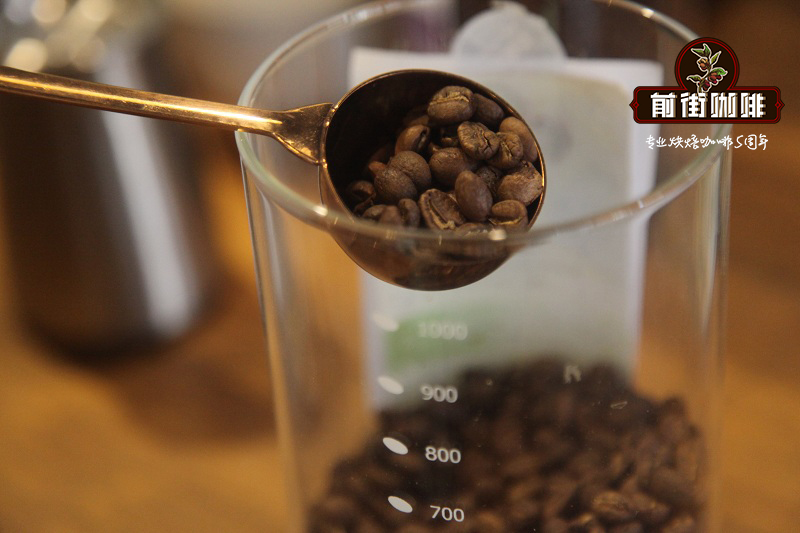
Coffee Bean Profile
Country: Colombia
Region: Cauca Valley
Producer: La Esperanza Estate
Processing Method: Honey Process
Variety: Laurina (Bourbon Pointu)
Altitude: 1,510-1,710 meters
Other: Organic cultivation, Rainforest Alliance certified
La Esperanza Estate Story
La Esperanza Estate is undoubtedly one of Colombia's most prestigious estates. Its affiliated estates have won the Best of Panama championship (2008) and runner-up (2009). In 2012, three of its products claimed an incredible 2nd, 3rd, and 7th place among the top ten at the SCAA Coffee of the Year. In the recently announced GFA (Good Food Award), La Esperanza Estate became the only award-winning estate outside the Ethiopia, Kenya, and Panama regions.
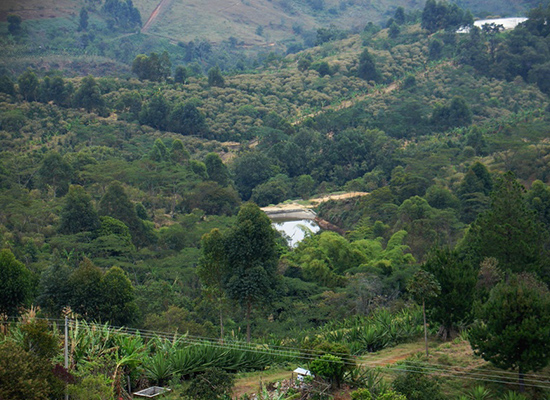
La Esperanza Estate is located in the Huila region. It is not a personal or family-owned coffee farm but rather a collective of several coffee farmers who sell under the unified name of La Esperanza Estate. The estate is distributed across forests at altitudes of 1400-1650 meters, where coffee cherries are hand-harvested at complete maturity. The coffee farmers insist on maintaining excellent growing environments and diligently control the quality of their green beans. La Esperanza was the champion estate at the 2007 Colombia Coffee Competition and also secured 9th, 12th, and 14th places in 2008 (different coffee growers). In November 2008 it received a high score of 93 points from American coffee master Kenneth Davids (author of Coffee Review and the book "Home Coffee Roasting"), making it a top-tier Colombian estate.
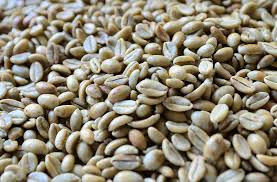
Laurina (Bourbon Pointu) Coffee Variety Introduction
Bourbon Island became a French territory in 1664 and was named Bourbon to honour the achievements of the French Bourbon Dynasty. It was renamed Réunion Island (French: La Réunion) after the French Revolution in 1792.
In the 18th century the French planted coffee on Réunion Island in the Indian Ocean, then known as "Bourbon Island," where the trees underwent a mutation. Compared with typical Bourbon, Laurina has smaller leaves, smaller and more pointed coffee cherries, and a tree shape resembling a Christmas tree with a shallow form, hence the name Laurina (scientific name: Laurina).
In the 18th century Laurina coffee was extremely precious, with very low yields but excellent flavour that commanded premium prices. It was deeply loved by European royalty. King Louis XV of the Bourbon Dynasty declared it the world's best coffee, and nobility and aristocrats flocked to it, enjoying immense favour.
In the mid-19th century, several severe hurricanes and coffee tree diseases nearly destroyed the coffee industry. Laurina disappeared from the world coffee stage, becoming history and legend.
It was not until 1999 that Japanese coffee experts travelled to the island seeking traces of this coffee, but they returned empty-handed. Later, local botanists on the island, after years of effort, finally found this unique wild mother tree, allowing the variety to be gradually cultivated and beginning its path to revival.
Only in the 20th century did scientists discover that Laurina's caffeine content is just half that of typical Arabica coffee.
P.S. Regular Arabica coffee contains about 1.2% caffeine, Robusta contains 2.2%, while Laurina contains only 0.6%, making it a natural low-caffeine coffee variety.
Honey Process Introduction
The honey process sits between the natural and washed processes. First the coffee pulp is screened out while some pulp is retained, followed by sun-drying.
The honey process originated mainly in Costa Rica in Central America and remains one of the most commonly used processing methods in Central America today. However, it takes a relatively long time and must be handled very carefully. The timing of sun-drying and turning must be well managed to avoid producing defective beans.
Roasting Suggestions/Analysis
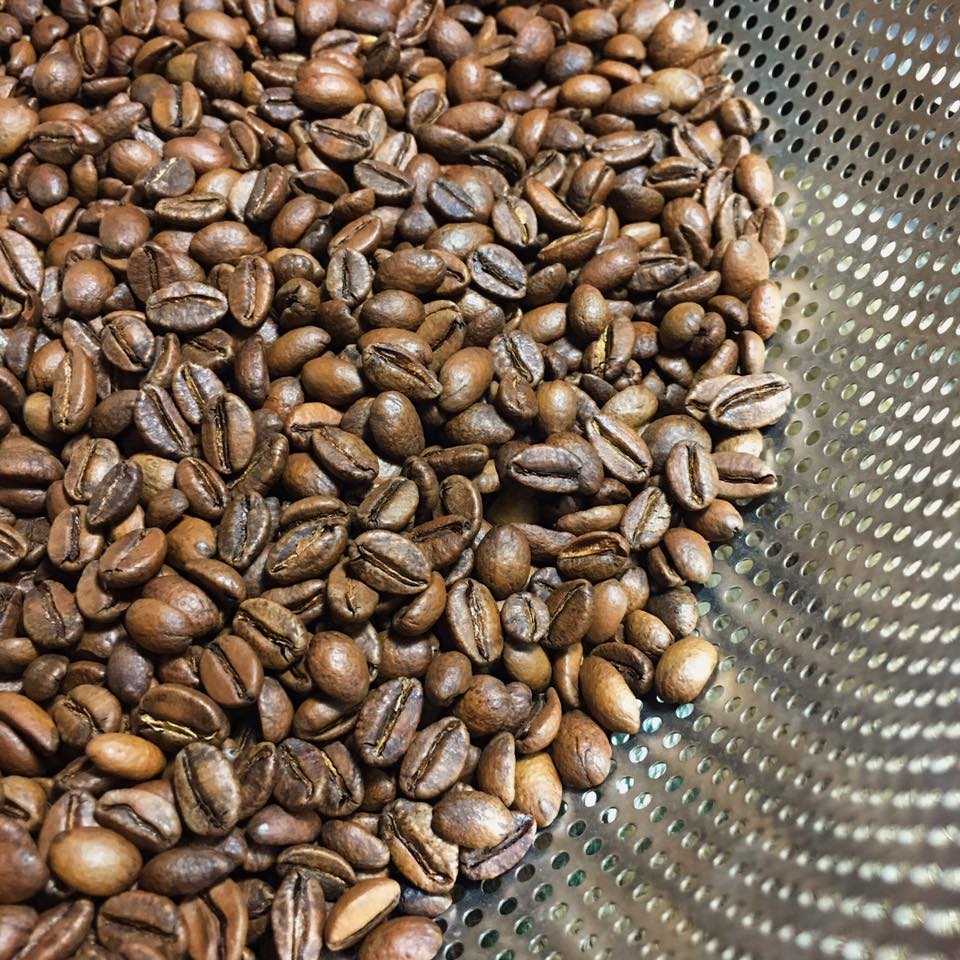
Colombian coffee typically grows at altitudes of 1500-1700 meters, so this Laurina has relatively high density, moderate moisture content, and a slightly hard bean texture. The thickness from the bean surface to the core of Laurina beans is relatively thin, so they are unsuited to roasting at too high a temperature, which would create burnt, bitter flavours. We use a medium-heat approach for bean loading, maintaining the heat through the dehydration stage and making fine adjustments after first crack begins as the temperature rises, to promote more complete caramelisation. Holding first crack between 8.5 and 9.5 minutes preserves more floral and fruit aromas while retaining clean, bright acidity. It is generally best to finish the roast between the dense phase of first crack and the end of first crack, achieving a light to medium roast.
Cupping Flavor Description
Flavor notes: Lemon, citrus, spices, grapes, juicy sensation, slight woody notes, malic acid and fruit-based acidity
Both the dry aroma and wet fragrance carry rich wine-like aromas.
On the first sip, beyond the wine aroma there are notes of ripe fruits, fruit beer, and blended fruit tea.
In the mid to late cup, the sweet-and-sour juicy sensations of tropical fruits like peach, passion fruit, papaya, and mango develop, with complex layers.
Brewing Analysis
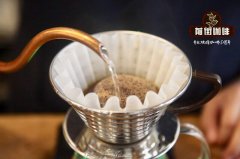
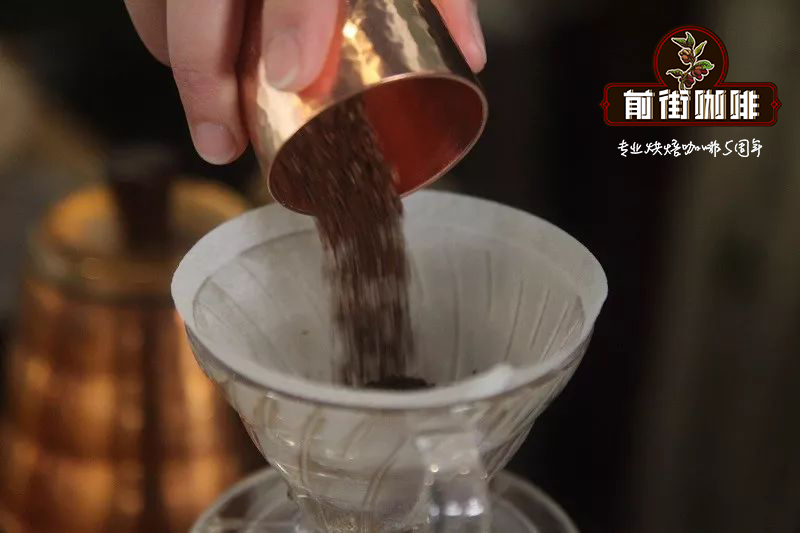
Today we introduce FrontStreet Coffee's commonly used pour-over method for Laurina coffee: the V60 three-stage pouring method.
Stage extraction divides all brewing water into three stages of injection.
Suitable for light roast, light-medium, and medium roast coffee beans.
Using a V60 dripper.
Increasing bloom time or the number of pour interruptions can enhance the richness of the coffee flavour.
Three-Stage Pouring Stage Extraction Method
Advantages: More layered than a single continuous pour, and it can clearly distinguish the front, middle, and back flavour profiles of the coffee. The method involves increasing water volume after each bloom stage, typically pouring when the coffee liquid is about to drop to the surface of the coffee bed, using small, medium, and large water flows for three-stage extraction.
Disadvantages: It places higher demands on water flow rate and volume.
FrontStreet Coffee's Laurina Coffee Pour-Over Parameter Suggestions
Brewing with a V60 dripper enhances the layered complexity of the pour-over, making it richer and cleaner; it fully expresses the Laurina variety's rich floral and fruit aromas with a gentle fruit-based acidity.
15g coffee grounds, water temperature 89-90°C, grind BG 5R (China standard 20-mesh sieve pass rate 64%), water-to-coffee ratio close to 1:15.
Method: 30g of water for the bloom, bloom time 30s. The hot water in the pour-over kettle is poured in clockwise circles centred on the middle of the dripper. Start timing when brewing begins, pour water to 30g, then stop pouring and wait 30 seconds before the first pour.
For the first pour, circle similarly to before but slightly slower, speeding up a little when reaching the outer rings, and stop the water flow around 1:15 seconds. When the liquid level drops by 1/3, pour again. The second pour concentrates on the centre, avoiding the connection between the coffee grounds and the filter paper to prevent a channeling effect. End extraction around 2:05 seconds; the tail section can be omitted (the longer it runs, the more astringency and rough texture appear).
Stages: 30-125-230g
FrontStreet Coffee Recommendation
Laurina is a rare, naturally low-caffeine variety once declared the world's best coffee by Louis XV, and its wine-like, fruit-forward cup has a spiritual cousin in Geisha — another variety that combines delicate florals with a refined sweet-sour balance. If that profile appeals to you, FrontStreet Coffee's Geisha range is worth exploring. FrontStreet's Panama Boquete Geisha is the entry-level choice, delivering the classic Panamanian orange-blossom honey note, an oolong-tea body, and delicate fruit acidity with clear layers.
Higher up, FrontStreet's Esmeralda Red Label and Green Label Geisha both come from the estate that made Panama Geisha famous. The Red Label, officially "Esmeralda Special," is grown at 1,600-1,800 meters, cupped above 90 points for every lot, and drawn from a single plot — FrontStreet's comes from Jaramillo — so the flavour can be traced to one small parcel. The Green Label, or "Private Collection," blends several plots to express the estate's signature high-altitude profile, and its more affordable price makes it strong value. For a different origin, FrontStreet's Geisha Village Gold Label is the Geisha 1931 variety, about 10% of the village's total output and usually a naturally processed lot reserved for competition, while the Red Label is the Gori Gesha variety, roughly 15% of production and scored 88 or above on the SCA 100-point scale.
Because Geisha is a medium-light, hard-textured bean that tends to sink and block the dripper, FrontStreet Coffee grinds to about 78% passing a Chinese-standard #20 sieve — roughly fine sugar — and brews with water at 91°C. On pour-over, 15g in a small Hario V60 at a 1:16 ratio works well with a three-stage method: bloom 30g of water for 30 seconds, pour the second stage slowly in circles to 125g, wait for the bed to drop halfway, then pour to 225g, for a total extraction of about 2 minutes 10 seconds to 2 minutes 20 seconds.
Important Notice :
FrontStreet Coffee is a long-established specialty coffee roaster in Guangzhou China, selling freshly roasted beans from its own farm in Yunnan as well as dozens of carefully selected single-origin beans from around the world for both pour-over and espresso. The products deliver consistently excellent quality and great value, with shipping within 24 hours. Guangzhou's FrontStreet Coffee shop is recommended by many coffee lovers, and the beans are now available online at the Tmall 。
FrontStreet Coffee has moved to a new address:
FrontStreet Coffee Address: 315,Donghua East Road,GuangZhou
Tel:020 38364473
 Scan and follow the En Gafei WeChat official account. Please indicate that the reprint comes from "En Gafei".