What is the Water-to-Coffee Ratio for Pour-Over Brewing of Nicaragua Finca Mamamina Natural Process Pacamara?
Nicaragua Mierisch Family Finca Mamamina Pacamara 19 Screen Natural Process
The Story of Finca Mamamina
This Nicaraguan Pacamara comes from Finca Mamamina, one of the estates owned by the Mierisch family.
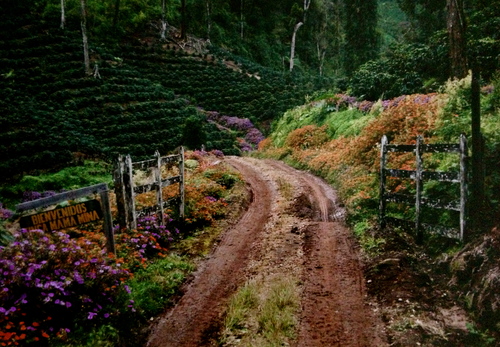
The Mierisch family has been growing coffee since 1908—more than a century of history—across nine estates. Eight of them are in Nicaragua: San Jose, Limoncillo, Escondida, Milagros, Placeres, Los Altos, Mama Mina, and Suspiro; the ninth, Cerro Azul, is in Honduras.
In 2017, another coffee from the family, "Lemon Tree Estate," drew attention as well. Lemon Tree Estate began cultivating the Java Nica variety in 2008 and went on to take runner-up in the Cup of Excellence (COE).
The family's estates have collected numerous Cup of Excellence awards over the years.
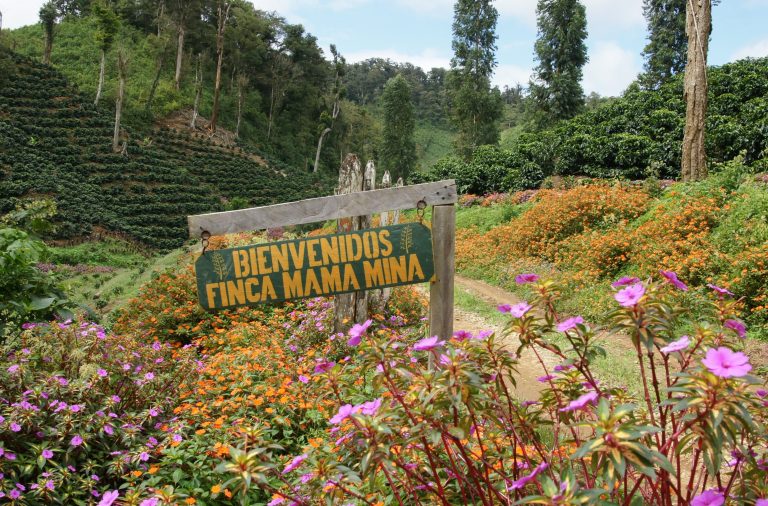
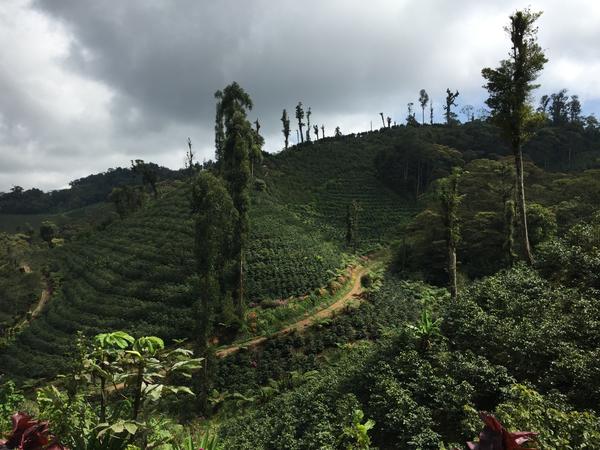
Finca Mamamina sits on volcanic ash soils and is grown under shade, producing high-quality Nicaraguan coffee that has been certified by the OCIA (Organic Crop Improvement Association) as high-altitude premium organic coffee. The cup is rich and layered: a clear black-berry aroma arrives first, with blackberry and dark plum framed by citrus peel, finishing solid and structured with a silky, clean sweetness.
About the Pacamara Variety
Pacamara is a hybrid variety artificially bred in El Salvador in 1958, with Pacas and Maragogype as its parents. It combines the strengths of both—and arguably surpasses them. The cup is pure and gentle yet full-bodied and smooth, with lively acidity, rich flavor, and a remarkably long aftertaste. It carries the excellent cup quality of Pacas while inheriting Maragogype's oversized beans: Pacamara beans reach at least 70%-80% of Maragogype's size, with 100% of the lot at screen size 17 and 90% at screen 18. Average bean length is 1.03 cm (versus roughly 0.8-0.85 cm for ordinary beans), average width 0.71 cm (versus about 0.6-0.65 cm), and thickness 0.37 cm—plump, round beans all around. The name simply fuses the first syllables of its "parents": Paca + mara = Pacamara.
At the 2005 El Salvador Cup of Excellence, Pacamara stunned the judges: among the top ten coffees, Pacamara lots took second, fifth, sixth, and seventh place.
In 2007, the variety won double championships at the Guatemala and El Salvador Cup of Excellence competitions. From then on Pacamara's momentum was unstoppable—it has consistently occupied top spots in major competitions and is internationally regarded as a rising star on par with Geisha.
In the Guatemala Cup of Excellence alone, Pacamara held the championship in 7 of the 10 years from 2008 to 2017.
Because of that extraordinary competition record, in 2017 the Best of Panama (BOP) committee decided to create a separate competition category just for Pacamara.
For all its success, the variety has real drawbacks: Pacamara demands a great deal from soil, water, climate, and altitude, yields are low, and it has poor resistance to coffee leaf rust—which is why it is not widely planted.
Today Pacamara is no longer especially rare, but it remains uncommon in the market. Pacamaras from Guatemala and El Salvador are considered the finest, with admirers around the world, which makes reaching local markets even rarer.
About the Natural Process
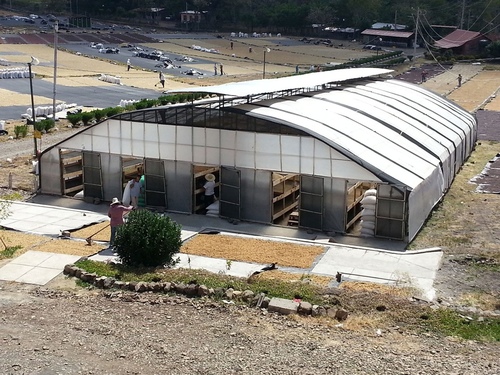
The natural (dry) process is the oldest and most original way to process coffee. Harvested coffee cherries are poured into large water tanks: ripe, dense fruit sinks while underdeveloped or overripe cherries float and are skimmed off. The healthy cherries are then spread on patios to dry in direct sun, reducing moisture from about 60% to 12%-15%. Finally, a hulling machine removes the hard, dried outer skin and pulp, completing the green coffee.
(↑ Sorting coffee cherries) (↑ Open-air sun drying)
Natural processing amplifies berry and tropical fruit flavors while keeping acidity mild. Traditional naturals, however, can sometimes produce negative notes such as earthiness or over-fermentation.
The natural process is enjoying a revival today—it has even become an important processing method for competition coffees. Much of that comes from the improved African raised drying beds, which keep the fruit off the ground, away from moisture, animal contamination, and earthy taints, while providing good air convection for more even drying. Farmers turn the cherries regularly so they absorb the sweetness of the pulp gently, and the flavor grows richer as a result.
Roasting Suggestions
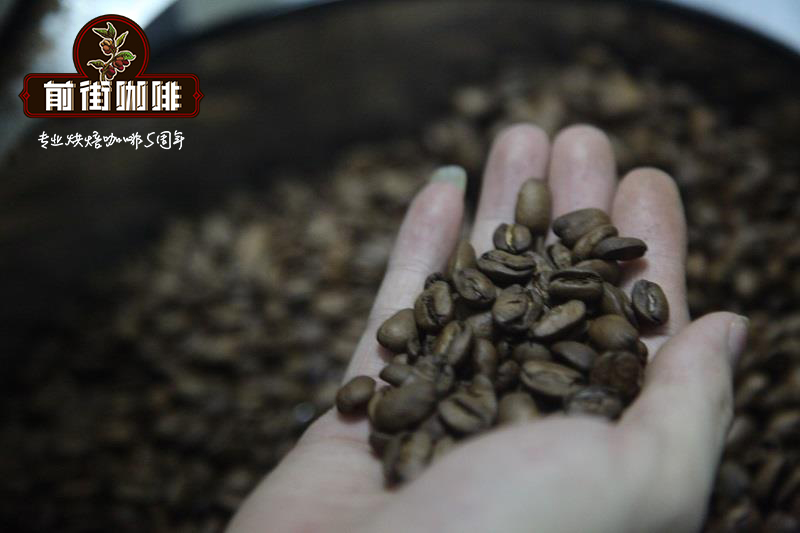
This is the large-bean Pacamara: big particles, high density, and—as new-crop beans—relatively high moisture. During roasting it absorbs heat slowly, but the Maillard reaction proceeds quickly, with the yellowing point arriving at around 5 minutes. For a first roast, try a slightly higher charge temperature, around 200°C, with relatively strong heat at the start, then adjust downward through the roast: after the beans pass the yellowing point, reduce heat to extend the drying phase so the large beans dehydrate thoroughly; from the end of drying to first crack, hold medium heat or raise it slightly to give the Maillard reaction enough time and build pressure before first crack; just before the first crack's signs appear, ease the heat back to avoid scorching the bean surface. With this approach the drying time runs relatively long, with a rate of rise of 6-8 degrees per thirty seconds, while still reaching first crack between 8.5 and 9.5 minutes—preserving more floral and fruity aromatics and keeping the acidity clean and bright. In general, we recommend dropping the beans between the dense phase of first crack and its end, at roughly a medium roast.
Cupping Notes
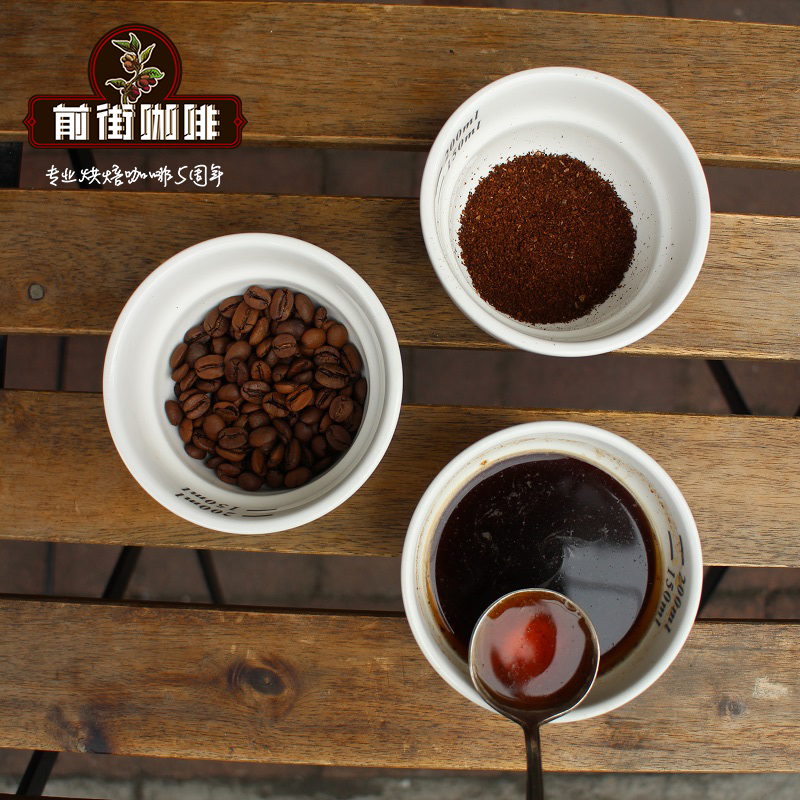
Flavor: a clear black-berry aroma on the attack, with blackberry, black currant, and dark plum accompanied by orange peel. The overall flavor is solid and well-structured.
Brewing Analysis
Here FrontStreet Coffee introduces a common pour-over technique for Pacamara: the V60 three-pour method.
Segmented extraction divides the total brew water into three separate pours.
Suitable for light roast, medium-light, and medium roast beans.
Uses a V60 dripper.
Lengthening the bloom or adding more pours increases the richness and body of the finished cup.
The three-pour segmented method
Advantages: more layered than single-pour methods, letting you clearly separate the front, middle, and back-end flavors of the coffee. The approach increases the water volume after each stage—typically pouring again just as the coffee liquid is about to fall to the surface of the bed—using small, medium, and large flows across the three pours.
Disadvantages: it places relatively high demands on the brewer's control of flow rate and volume.
FrontStreet Coffee's Pour-Over Parameter Suggestions for This Pacamara
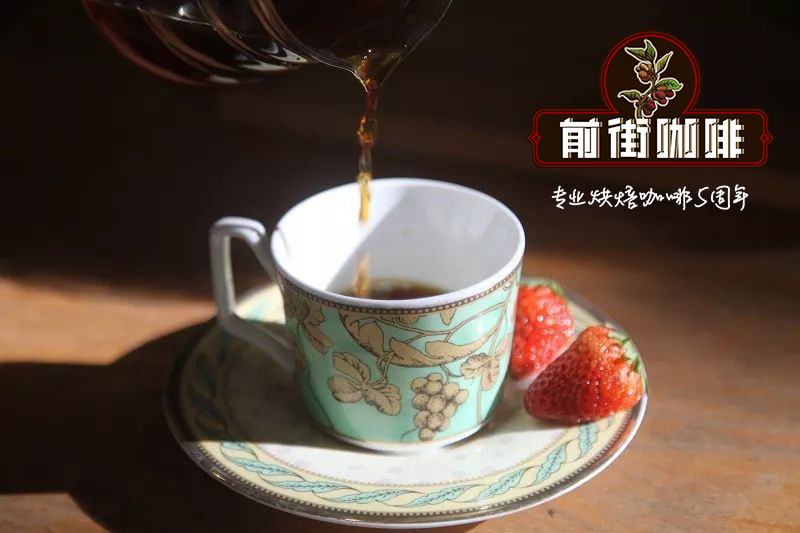
A V60 dripper enhances the layered character of pour-over coffee, making the cup richer and cleaner, and it expresses the bright, uplifting aromatics of the Pacamara variety perfectly.
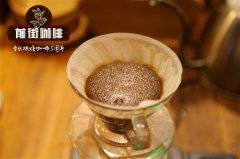
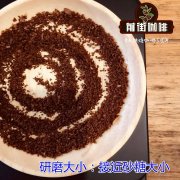
15g of coffee, water temperature 89-90°C, grind at BG 5R (64% pass rate through the Chinese standard 20-mesh sieve), water-to-coffee ratio close to 1:15-16.
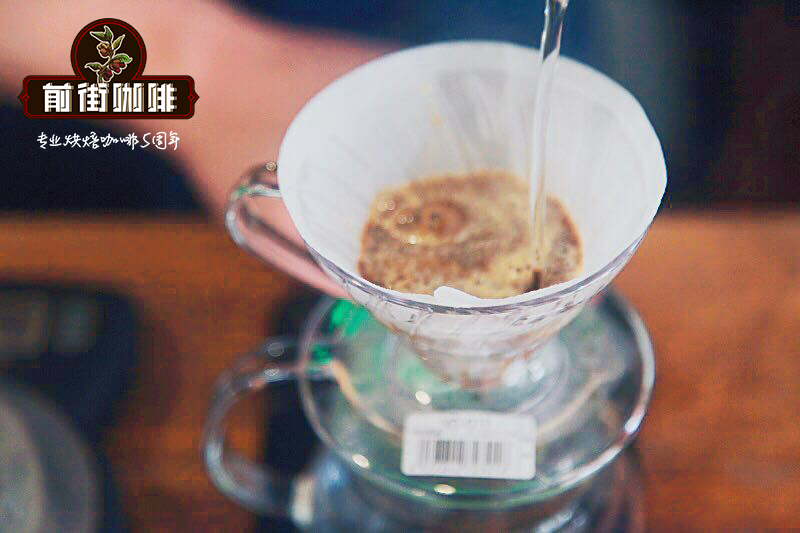
Technique: bloom with 27g of water for 30 seconds. Using hot water from the kettle, draw clockwise circles centered in the middle of the dripper—start your timer when the brew begins, pour to 27g, then stop and wait 30 seconds before the first main pour.
For the first pour, draw circles as before, slightly slower, speeding up a little at the outer edge; stop pouring at around 1:15. When the liquid level has dropped by one-third, pour again. For the second pour, concentrate the flow on the center, making sure the water does not hit the seam between the coffee bed and the filter paper, which would cause channeling. End extraction at around 2:05. Discard the last of the liquid—the longer it runs, the more astringency and rough texture creep in.
Pour segments: 30-125-230g.
FrontStreet Coffee Recommendation
If this kind of fruit-forward, layered cup appeals to you, the V60 is the dripper that will bring it out. The Hario company that designed it was founded in Tokyo in 1921 as a maker of heatproof laboratory glassware—the heat-resistant server that pairs with every pour-over setup is one of its signature products. In 2004 Hario redesigned the V60 into essentially the form we know today, named for its 60° cone angle and V-shaped geometry, and released it to the market the following year. The cone and 60° angle force water to flow toward the center before draining, extending the contact between water and grounds for fuller extraction of aroma and flavor, while the single large outlet leaves the flow rate entirely in the brewer's hands.
The V60's quick, crisp extraction suits bright, floral coffees especially well—think the white-floral Yirgacheffes of Ethiopia or the berry acidity of Kenya. FrontStreet Coffee's Yirgacheffe Guodingding, with its citrus, berry, and floral notes; the intensely tropical Hirumi (Huakui) natural with strawberry, passion fruit, jackfruit, and lychee; the Geisha-inspired Strawberry Sugar blend; and the raisin-toned Mozart all shine through a V60. For a medium-dark alternative, the PWN Golden Mandheling offers herbaceous, dark-chocolate depth with almost no acidity, and the Brazil Queen Estate balances nut and cocoa with caramel sweetness—proof the V60 is not only for light roasts.
Important Notice :
FrontStreet Coffee is a long-established specialty coffee roaster in Guangzhou China, selling freshly roasted beans from its own farm in Yunnan as well as dozens of carefully selected single-origin beans from around the world for both pour-over and espresso. The products deliver consistently excellent quality and great value, with shipping within 24 hours. Guangzhou's FrontStreet Coffee shop is recommended by many coffee lovers, and the beans are now available online at the Tmall 。
FrontStreet Coffee has moved to a new address:
FrontStreet Coffee Address: 315,Donghua East Road,GuangZhou
Tel:020 38364473
 Scan and follow the En Gafei WeChat official account. Please indicate that the reprint comes from "En Gafei".