Brewing Recommendations for Costa Rica Black Pearl Geisha: Flavor Characteristics and Story of Black Pearl Geisha Coffee Beans
Professional Coffee Knowledge Exchange
Estate Story Introduction
Dona Francisca and Don Oscar Chacon are the third-generation operators of the Las Lajas micromill. They inherited the farm from their grandparents and are known as among the first farmers in Central America to produce high-quality honey and natural coffees; they began entering the Cup of Excellence in 2009.
Las Lajas is an organic mill in Sabanilla, in Costa Rica's Central Valley. Organic coffee is rare in Costa Rica, and the quality of this estate's coffee makes it truly distinctive. True to its environmental principles, Las Lajas farms organically. All the coffee it processes comes from its own farm, fully traceable batch by batch, and every batch is processed daily. Water use is minimal because nothing is washed-processed. During harvest, Francisca measures the sugar content (Brix) of the cherries to time the picking; the highest reading has reached 21-22%.
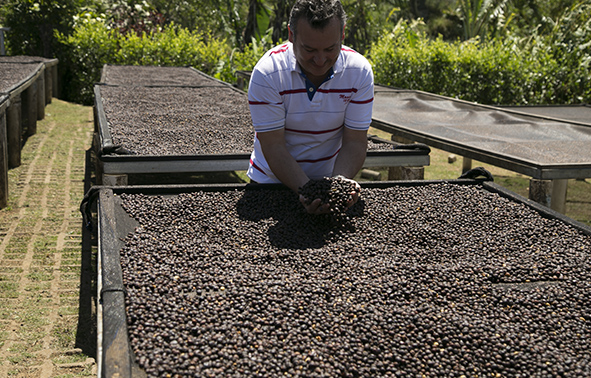
Las Lajas was among the first in Central America to run honey and natural processing. Natural processing is a very traditional, low-resource method, but with so many uncontrollable variables, excellent results are hard to achieve. Las Lajas brought in innovations — notably Francisca's use of a Brix meter, a tool from the wine industry, to measure fruit sugar and set both harvest timing and processing method. Only cherries above 20% sugar go to the natural process. For perspective, typical fruits measure around 14% for apples, 12% for lemons, and 18% for passion fruit — while Las Lajas cherries hit 21-22%!
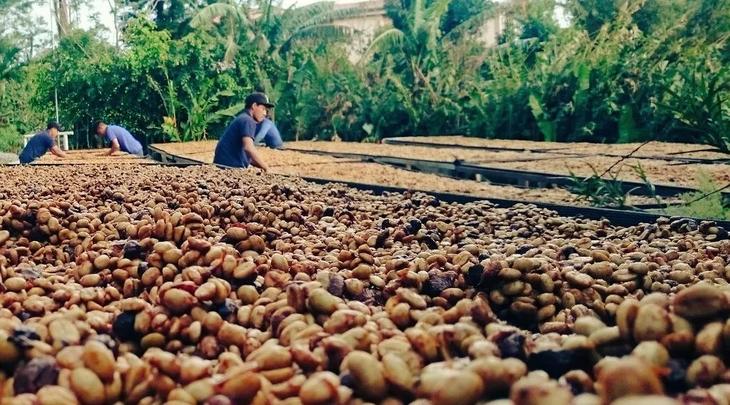
The estate owners grade their honey and natural coffees into several classes by flavor profile. In honey processing, most Costa Rican farmers control the retained pulp with depulpers at the washing station; Las Lajas chose another path — keeping 100% of the mucilage and instead controlling drying time and turning frequency on African raised beds to shape different flavor characters. Their honey lots are divided into yellow honey, red honey, and black honey.
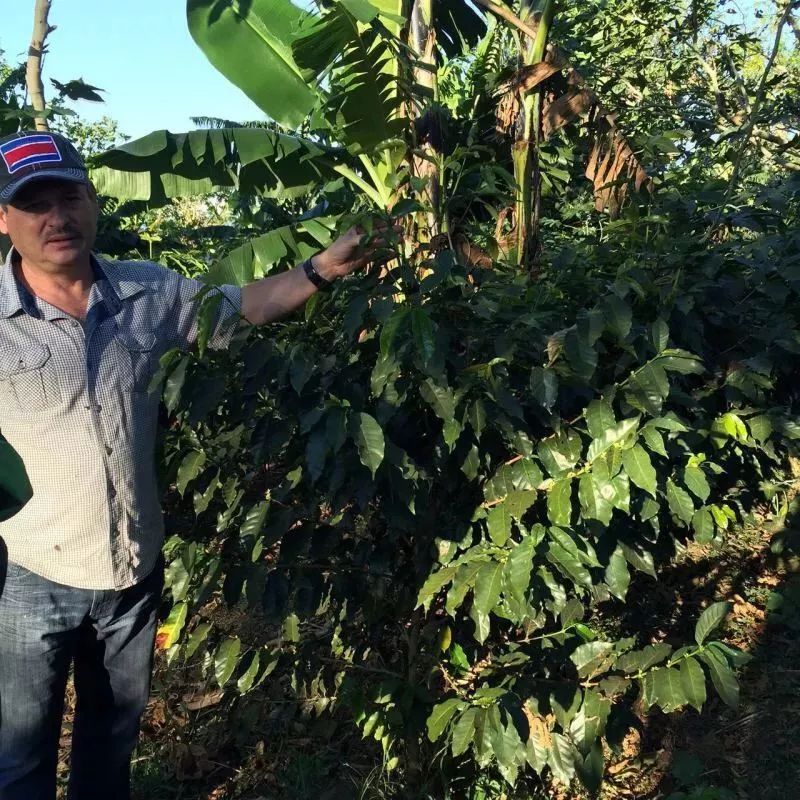
Las Lajas also produces washed coffees. The varieties planted include Catuai and Villa Sarchi, with small quantities of Kenya varieties such as SL28 and Obata also introduced. Though the estate's altitude is modest — roughly 1300-1500 meters — its distinctive processing gives Las Lajas coffees a signature profile.
Geisha Coffee Variety Introduction
Geisha (also spelled Gesha) is an original variety within Arabica. It is extremely difficult to cultivate, yielding about half of what other varieties produce — which is why it commands such rarity value.
1931: A botanical expedition to southwestern Ethiopia discovered the variety near the village of Geisha and carried seeds to Kenya, where they were grown in nurseries.
1936: Geisha seeds were introduced to Uganda and Tanzania.
1953: Costa Rica's research institution CATIE obtained Geisha seeds from Tanzania for research.
1960: Pachi Serracin, former owner of Panama's Don Pachi Estate, brought Geisha seeds from Costa Rica to Panama.
2004: At the Best of Panama (BOP) competition, Hacienda La Esmeralda stunned the judges with Geisha and took first place. For the following decade, whenever they entered, they won the major awards.
2007: At the International Coffee Tasting Championship organized by the Specialty Coffee Association of America (SCAA), Geisha again took first place, with a bid price of $130 per pound — a record for competition coffee.
2008: Hacienda La Esmeralda held its own independent auction (skipping BOP that year).
2012: Best of Panama was split into traditional, Geisha, and natural categories to keep Geisha from sweeping every class.
2014: BOP was subdivided further into Geisha Natural, Geisha Washed, Traditional Natural, and Traditional Washed, because Geisha kept dominating the natural category.
2015: BOP was reorganized into Winner Natural, Winner Washed, Traditional Natural, and Traditional Washed, letting another excellent variety, Pacamara, compete — but results were disappointing, with only one batch of 32 reaching the finals.
Best of Panama Auction Price History
2005: Best of Panama (BOP) competition: $20.10 (first batch)
2006: Best of Panama (BOP) competition: $50.25 (first batch)
2007: Best of Panama (BOP) competition: $130 (first batch)
2008: La Esmeralda auction: $105.25
2009: La Esmeralda auction: $117
2010: Best of Panama (BOP) competition: $170
2011: Best of Panama (BOP) competition: $75.25 (first place, washed category), with the natural category won by Don Pachi Geisha ($111.50)
2012: La Esmeralda auction: $66 (did not enter BOP that year)
2013: Best of Panama (BOP) competition: $350 (first place, natural Geisha category, won by Japan)
2014: La Esmeralda auction: $105.50 (this batch had shown prominent aromatics the previous year)
2015: La Esmeralda auction: $131 (third natural batch) / $122.01 (first natural batch)
Best of Panama (BOP) competition: $140.01 (natural Geisha champion)
Black Pearl Processing Method Introduction
Black Pearl (Perla Negra): harvested cherries are laid on African raised beds in the early morning and turned regularly while sun-drying until they reach 11.5% moisture — a process of approximately two weeks.
FrontStreet Coffee's Geisha Roasting Suggestions and Analysis
Geisha is the most celebrated of all coffee cultivars and a great favorite of coffee enthusiasts. Washed Geisha best expresses the variety's inherent character: distinct, clear floral and citrus flavors, extremely high clarity, soft elegant acidity, a persistent cotton-candy-like sweetness, and the mouthfeel of premium black tea.
Revealing this Costa Rican Geisha takes real care at the roaster. Geisha generally grows at altitudes above 1500 meters, producing hard, dense beans with a full form and medium particle size — thick, elongated beans with tapered ends.
How to Roast Costa Rican Geisha to Express Its Unique Flavor
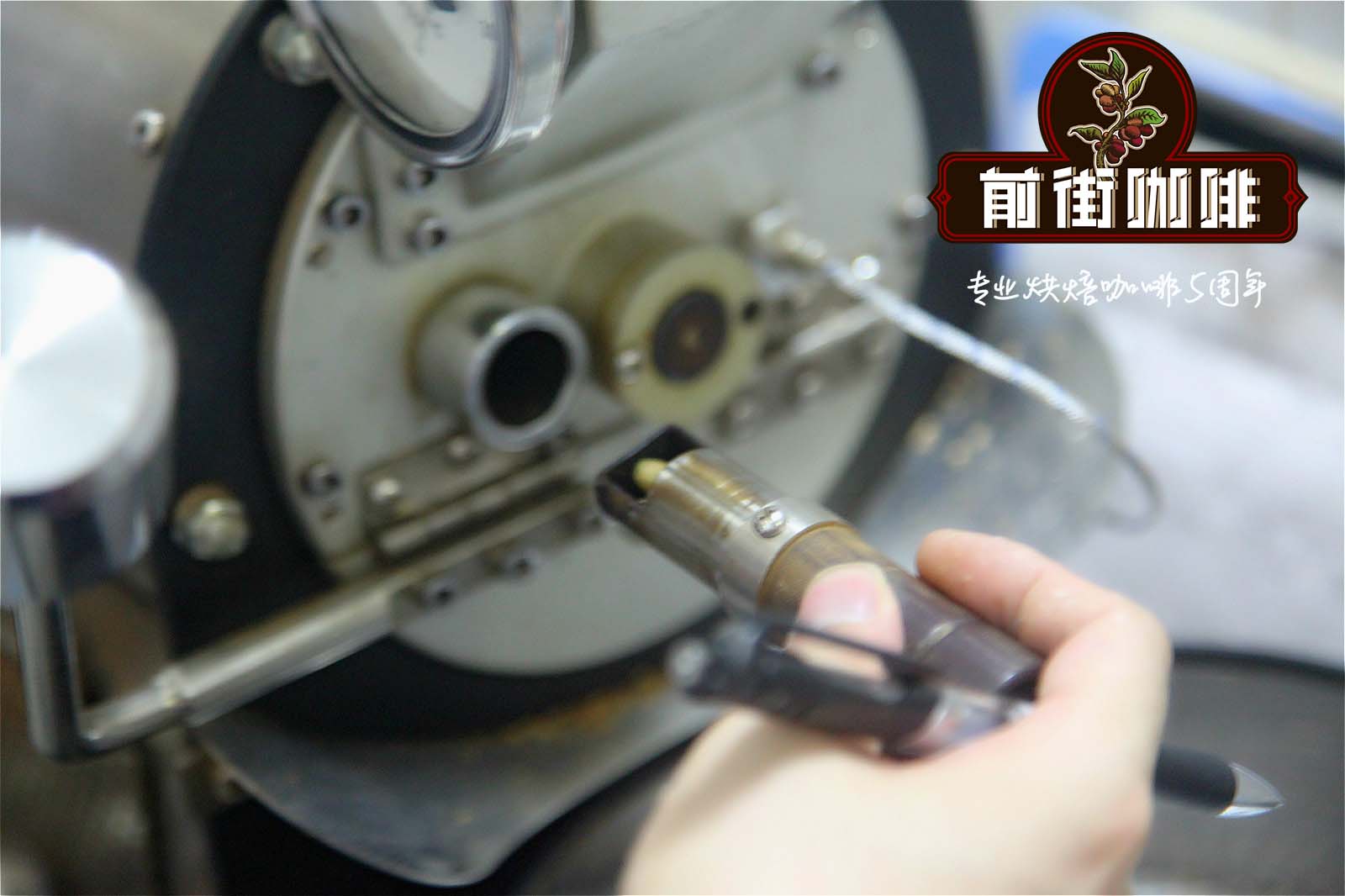
Because the beans are so hard and dense, the roast opens with high heat for dehydration, quickly building a temperature gap between bean surface and core. To preserve the florals, the Maillard stage must stay short, so after yellowing the heat is raised to medium-high to drive the beans into first crack promptly. Shortening the yellowing-to-first-crack window also boosts clarity. If temperature climbs too fast after first crack, caramelization intensifies and masks the floral and fruit aromatics — so approaching first crack, heat is cut sharply to slow the rise, and airflow is opened fully at the start of first crack. The beans are dropped once first crack intensifies and winds down, letting the core develop fully while retaining maximum aroma and sugar.
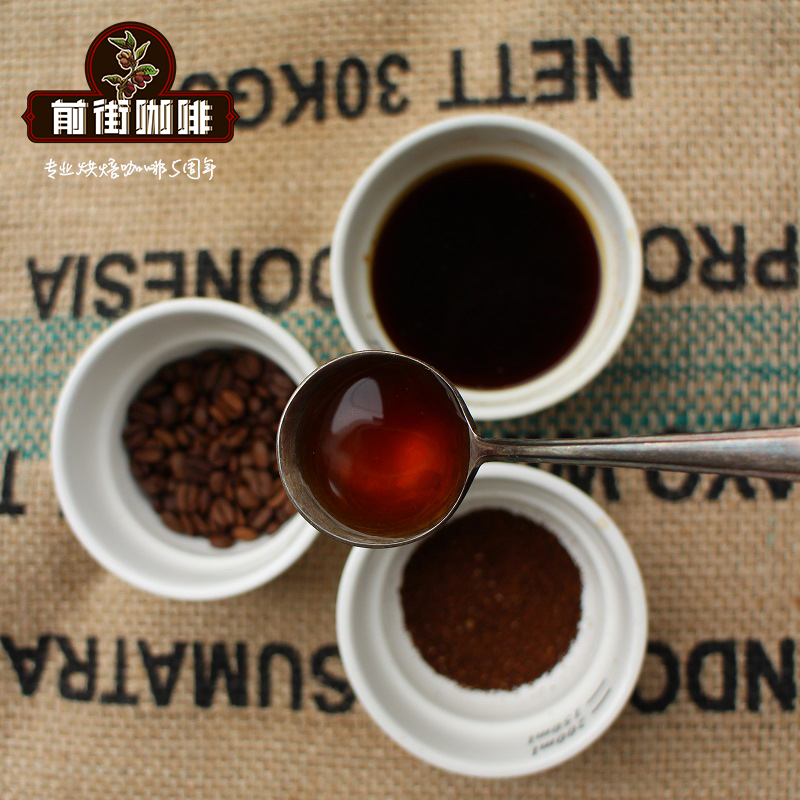
Cupping Flavor Description
Floral, plum, and grape juice qualities, with delicate, rich layers and a full, substantial body.
Brewing Analysis
Here FrontStreet Coffee shares a commonly used pour-over approach for Geisha: the three-stage pour.
Three-Stage Pouring Method
Segmented extraction, dividing the total water across three pours.
Suited to light, medium-light, and medium roast beans.
Uses a Kalita wave dripper (cake cup).
Extending the bloom or adding pour interruptions increases richness and body.
How Segmented Extraction Works
Advantages: more layered than one continuous pour, clearly exposing front, middle, and back notes. After each pause, water volume increases; pour when the liquid level drops to the surface of the bed, using small, medium, then large flows across the three stages.
Disadvantages: demands finer control of flow rate and volume.
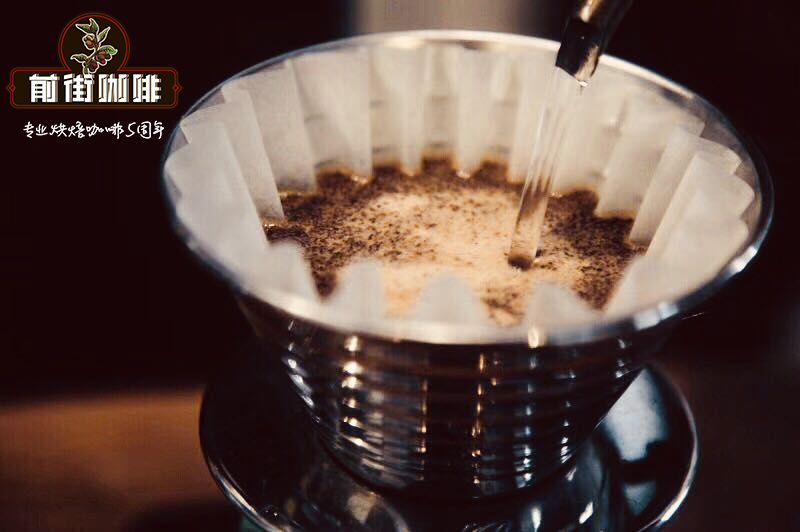
FrontStreet Coffee's Geisha Pour-Over Parameter Recommendations
The cake cup extracts by immersion, enlarging the contact area between grounds and water; compared with a V60, it enhances texture for a more viscous mouthfeel.
15g coffee, water temperature 91-92°C, grind BG 5R (64% pass-through on the Chinese standard #20 sieve), water-to-coffee ratio close to 1:15-16.
Technique: pour 27g of water to bloom for 30 seconds, pouring in clockwise circles centered on the middle of the filter cone. Start the timer as brewing begins; pour to 27g, stop, and wait 30 seconds before the first main pour.
For the first pour, use the same circular motion slightly more slowly, speeding up a touch at the outer edge. Stop pouring around 1:15. When the liquid level falls by one-third, pour again; the second pour should concentrate on the center, keeping the flow away from the grounds-paper edge to prevent channeling. End extraction around 2:05, and feel free to cut the tail section — the longer it runs, the more astringency and roughness creep in.
Segments: 30-125-230g
FrontStreet Coffee Recommendation
Geisha won the world over on its distinctive florals and superb sweet-acid balance, but low yields, weak disease resistance, and demanding cultivation keep prices high — so it pays to know the tiers. If this Black Pearl is your first taste of the variety, FrontStreet Coffee's Panama Boquete Geisha is the ideal entry point: at a friendly price it delivers the classic Panamanian profile of orange-blossom honey notes, an oolong-tea character, delicate fruit acidity, and clear layering.
To go further, FrontStreet Coffee carries the Esmeralda tiers: the Red Label (Esmeralda Special), grown at 1600-1800 meters with every batch cupping above 90 points and traceable to a single plot such as Jaramillo, and the more affordable Green Label (Private Collection), which blends lots across plots to express Esmeralda's signature high-altitude Geisha character — outstanding value. On the variety's home ground, the Granla Estate Gesha from Yirgacheffe — hand-picked fully ripe cherries dried on raised beds for 14-20 days — offers bright citrus acidity, elegant ginger-flower aroma, and full ripe-fruit sweetness. For any of these, brew like the recipe above but coarser (78% pass on the #20 sieve, about fine-sugar size), 91°C water, 15g at 1:16 in a small V60, three pours to 225g for a total extraction of 2:10-2:20.
Important Notice :
FrontStreet Coffee is a long-established specialty coffee roaster in Guangzhou China, selling freshly roasted beans from its own farm in Yunnan as well as dozens of carefully selected single-origin beans from around the world for both pour-over and espresso. The products deliver consistently excellent quality and great value, with shipping within 24 hours. Guangzhou's FrontStreet Coffee shop is recommended by many coffee lovers, and the beans are now available online at the Tmall 。
FrontStreet Coffee has moved to a new address:
FrontStreet Coffee Address: 315,Donghua East Road,GuangZhou
Tel:020 38364473
 Scan and follow the En Gafei WeChat official account. Please indicate that the reprint comes from "En Gafei".