What's the ideal pour-over ratio for Panama El Burro Estate Geisha coffee_ How to best enjoy El Burro Estate Geisha
Professional coffee knowledge exchange. For more coffee bean information, follow FrontStreet Coffee.
Panama El Burro Estate Geisha Natural Coffee Beans
Estate Story Information
Panama Elida El Burro Estate
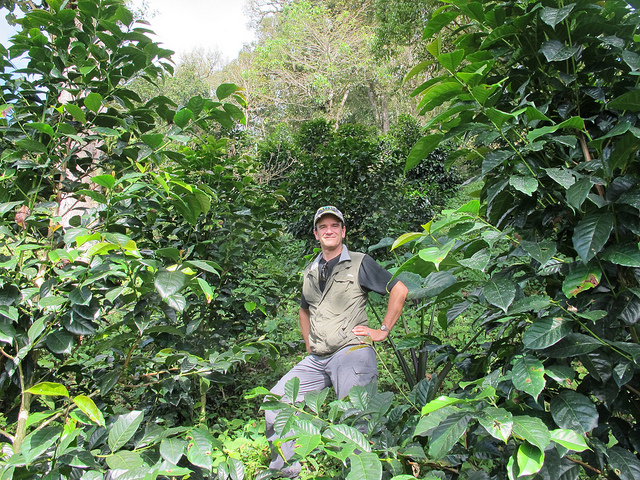
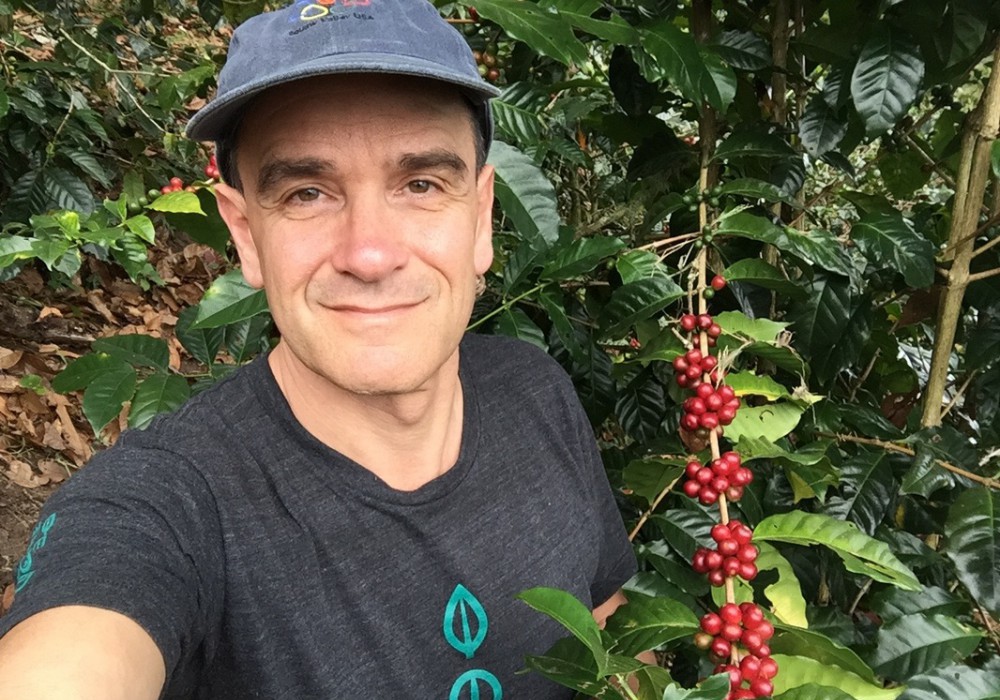
El Burro Estate is one of the farms under Wilford Lamastus, owner of Elida Estate. Also located in the beautiful Boquete region, more than half of the surrounding cultivation area falls within Baru Volcano National Park, preserving a relatively pristine ecosystem. Baru is one of the tallest volcanoes in Central America, and its differences in altitude create as many as seven or more microclimates across the volcanic area. El Burro's coffee grows at an extremely high altitude of about 1800m, where temperatures run low. Even in the dry season, lingering clouds and mist hang over the slopes, with primeval forest providing shade. The nights are cold, so a coffee tree needs four and a half to five and a half years before bearing fruit (two to three years longer than in ordinary environments), and cherry ripening can be delayed by about a month, allowing more complete development.
Beyond the excellent environment, Wilford enforces strict quality control on every batch. This lot was carefully selected from African-bed, naturally dried Geisha--100% natural drying--making it an exceptionally flavorful batch.
Coffee Bean Variety Introduction
The Geisha variety (also spelled "Gesha") is an original variety within the Arabica species. It is very difficult to cultivate and yields half of what other coffee trees produce, making it a bean of rare value.
1931: A team of botanists on an expedition in southwestern Ethiopia discovered the Geisha variety near the village of Geisha. They carried Geisha seeds to Kenya, where they were planted and grown in nurseries.
1936: Geisha seeds were introduced to Uganda and Tanzania.
1953: The Costa Rican research institution CATIE obtained Geisha seeds from Tanzania for research purposes.
1960: Pachi Serracin, former owner of Panama's Don Pachi Estate, brought Geisha from Costa Rica to Panama.
2004: At the Best of Panama (BOP) auction, Hacienda La Esmeralda rose to prominence with Geisha, taking first place that year. Over the following decade, they won major awards every time they entered.
2007: At the International Elite Bean Cupping Competition organized by the Specialty Coffee Association of America (SCAA), Geisha won the championship again, with a bidding price of $130 per pound--the highest price record for competition beans at the time.
2008: Hacienda La Esmeralda held its own auction (skipping BOP that year).
2012: The Best of Panama (BOP) auction was split into traditional, Geisha, and natural categories to keep Geisha from dominating every class.
2014: The BOP auction was subdivided further into natural Geisha, washed Geisha, traditional natural, and traditional washed categories, since Geisha still dominated the natural class.
2015: The BOP auction was divided into excellent natural, excellent washed, traditional natural, and traditional washed categories, allowing the other fine variety Pacamara to compete--but the results disappointed, with only one batch out of 32 reaching the finals.
Geisha Auction Prices
2005: Best of Panama (BOP) auction: $20.1 (first batch)
2006: Best of Panama (BOP) auction: $50.25 (first batch)
2007: Best of Panama (BOP) auction: $130 (first batch)
2008: Hacienda La Esmeralda auction: $105.25
2009: Hacienda La Esmeralda auction: $117
2010: Best of Panama (BOP) auction: $170
2011: Best of Panama (BOP) auction: $75.25 (first place, washed category), with the natural category won by Don Pachi Geisha ($111.5)
2012: Hacienda La Esmeralda auction: $66 (did not enter BOP that year)
2013: Best of Panama (BOP) auction: $350 (first place, natural Geisha category, acquired by Japan)
2014: Hacienda La Esmeralda auction: $105.5 (that year's lot showed prominent defects)
2015: Hacienda La Esmeralda auction: $131 (third natural batch) / $122.01 (first natural batch)
Best of Panama (BOP) auction: $140.01 (natural Geisha champion)
Processing method: Natural, 2016 BOP No. 1 batch
Processing Method Introduction
Natural Process
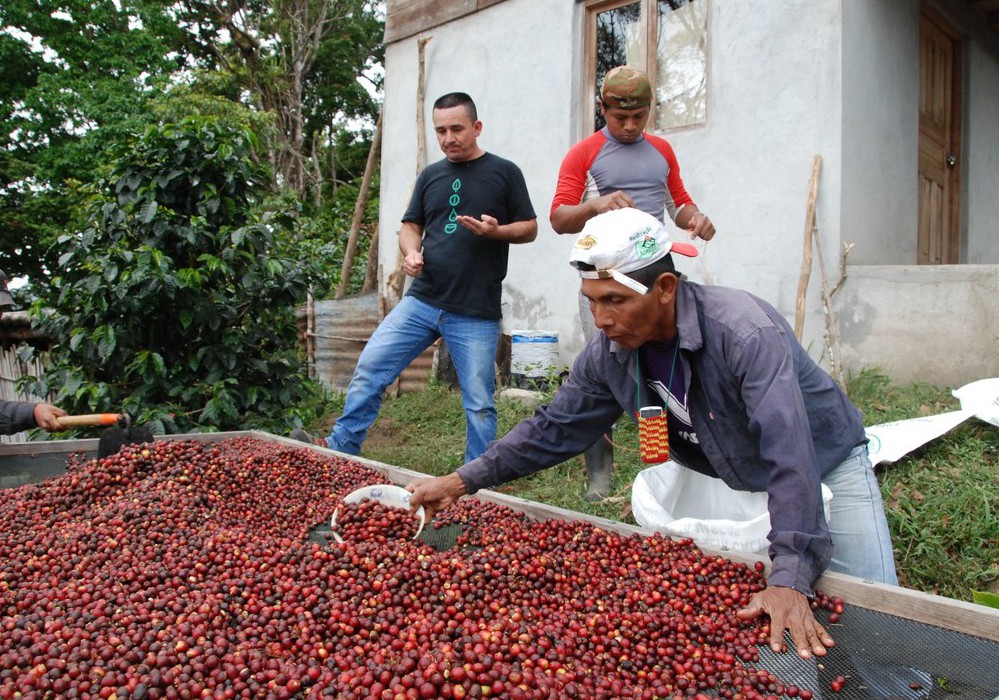
The natural process is the oldest and most primitive way to prepare coffee. Compared with the washed process, coffee dried this way is also called "natural coffee" or "dry-processed coffee." Harvested cherries are laid directly in the sun for roughly two to four weeks, a method typically used in countries with distinct dry and wet seasons.
Natural Process - Processing Steps
1. Harvest mature coffee cherries
2. Preliminary removal of impurities and defective beans
3. Floating selection: cherries are poured into water tanks. Mature, full cherries sink to the bottom, while immature or defective ones float to the surface.
4. Natural drying
The mature cherries that sank are removed and spread on drying grounds for natural drying, reducing moisture content from 70% to about 10-12%. They must be turned several times daily for even drying and covered at night to prevent moisture reabsorption.
5. Hulling: after about two to four weeks of sun, the outer layer of the coffee seeds is dry and hard; a hulling machine then removes it.
6. Packaging and shipping
The hulled beans are packed into bags--the green coffee we generally speak of. From there, different roasting and brewing choices unlock coffee's countless flavor variations.
FrontStreet Coffee Roasting Suggestions/Analysis
Geisha, the most celebrated of all coffee varieties, is adored by enthusiasts everywhere. Washed Geisha in particular best highlights the variety's own character: very distinct floral and citrus flavors, extremely high cleanliness, soft elegant acidity, a persistent cotton-candy sweetness, and a premium black-tea mouthfeel.
Revealing these traits takes real effort at the roaster. Geisha generally grows at altitudes above 1500 meters, making it a hard, dense bean: full form, medium size, with thick, long beans that taper at both ends.
So how do we express Geisha's unique flavors through roasting?
The approach is this: because the bean is hard and dense, high heat is used at the start of dehydration to quickly establish a temperature differential between bean surface and core. To capture more floral aroma, the Maillard phase needs to be relatively short--so after yellowing, heat is raised to medium-high so the beans reach first crack faster; shortening the time from yellowing to first crack also improves cleanliness. If temperature climbs too fast after first crack, caramelization intensifies and floral and fruit aromas fade. Therefore, as first crack approaches, heat is cut significantly to slow the rise, with airflow fully open at the start of first crack. The beans are dropped once first crack becomes dense, letting the core develop while retaining maximum aroma and sugars.
Cupping Flavor Description
Flavor description: red apple, berries, honey peach, ripe pineapple, red wine aroma, chocolate, with delicate and rich layers and a full, solid body
Brewing Analysis
Today FrontStreet Coffee introduces the standard method for hand-pouring Geisha: the three-stage pour.
Three-Stage Pour Method
Segmented extraction, dividing one portion of water into three injections
Suitable for light, medium-light, and medium roast coffee beans
Uses a Kalita wave filter
Increasing the bloom time or the number of pour pauses enhances the richness of the coffee's flavor
Segmented Extraction in the Three-Stage Pour
Advantages: more layered than a single pour, clearly separating the coffee's front, middle, and back-end flavors. After the bloom, increase the water amount in stages, usually pouring just as the coffee liquid is about to drop to the bed surface, using small, medium, and large flows for the three stages.
Disadvantages: higher demands on flow rate and volume control.
FrontStreet Coffee's Geisha Hand-Pour Parameter Suggestions
The wave filter uses immersion-style extraction, increasing the contact area between coffee and water. Compared with the V60, it improves texture and gives a more viscous mouthfeel.
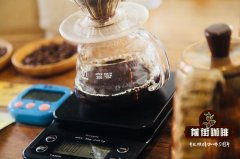
15g of coffee, water temperature 91-92°C, grind BG 5R (64% pass rate through the Chinese standard #20 sieve), water-to-coffee ratio close to 1:15-16
Method: 27g of water for the bloom, bloom time 30s. Pour the hot water from the kettle clockwise in circles centered on the middle of the filter. Start timing when brewing begins: pour to 27g, stop, and wait 30 seconds before the first pour.
For the first pour, circle as before but slightly slower, speeding up a little as you reach the outer circle. Stop pouring at about 1:15. When the liquid level has dropped by a third, pour again. For the second pour, concentrate on the center, avoiding the zone where coffee meets the filter paper to prevent channeling. End extraction at about 2:05. The final tail can be skipped--the longer it runs, the more astringency and rough texture build up.
Segments: 30-125-230g
FrontStreet Coffee Recommendation
Gesha (from the English "Geisha") is one of the most beloved varieties in Arabica coffee, winning over countless drinkers with its unique florals and superb sweet-tart character--while low yields, weak disease resistance, and demanding management keep prices climbing. Knowing the tiers is how you find a great-tasting, fairly priced Gesha.
Panama is where Gesha made its name. To taste it at the top, choose FrontStreet's Esmeralda Red Label Gesha (Esmeralda Special, grown at 1600-1800 meters, every batch scoring above 90 points and traceable to a single named plot such as Jaramillo) or the friendlier Green Label (Private Collection), which blends lots from multiple high-altitude plots into Esmeralda's signature Gesha profile. For a first taste of the legend, the entry-level FrontStreet Boquete Gesha delivers classic orange-honey aromatics, oolong-tea feel, and delicate fruit sweetness at an accessible price.
Ethiopia is where Gesha was born. FrontStreet's Granlana Estate Gesha from Yirgacheffe, roasted light-to-medium, keeps pleasant white florals while highlighting the sweet-tart lift of orange, guava, and citrus with a cleaner finish; for estate-level Ethiopian Gesha, the Gesha Village Gold Label (Gesha 1931, refined natural, about 10% of production) and Red Label (Gori Gesha, SCA 88+ points, 15% of production) are the must-buy picks for advanced players. As a budget-friendly alternative, the FrontStreet Strawberry Candy--a blend of honey-processed Costa Rica and Panamanian Gesha--carries both delicate florals and sweet fruit through pour-over, moka pot, espresso machine, or cold brew.
Important Notice :
FrontStreet Coffee is a long-established specialty coffee roaster in Guangzhou China, selling freshly roasted beans from its own farm in Yunnan as well as dozens of carefully selected single-origin beans from around the world for both pour-over and espresso. The products deliver consistently excellent quality and great value, with shipping within 24 hours. Guangzhou's FrontStreet Coffee shop is recommended by many coffee lovers, and the beans are now available online at the Tmall 。
FrontStreet Coffee has moved to a new address:
FrontStreet Coffee Address: 315,Donghua East Road,GuangZhou
Tel:020 38364473
 Scan and follow the En Gafei WeChat official account. Please indicate that the reprint comes from "En Gafei".