What is the Best Pour-Over Concentration for Panama Aurora Estate Ironman Geisha Coffee_Ironman Geisha Roast Analysis
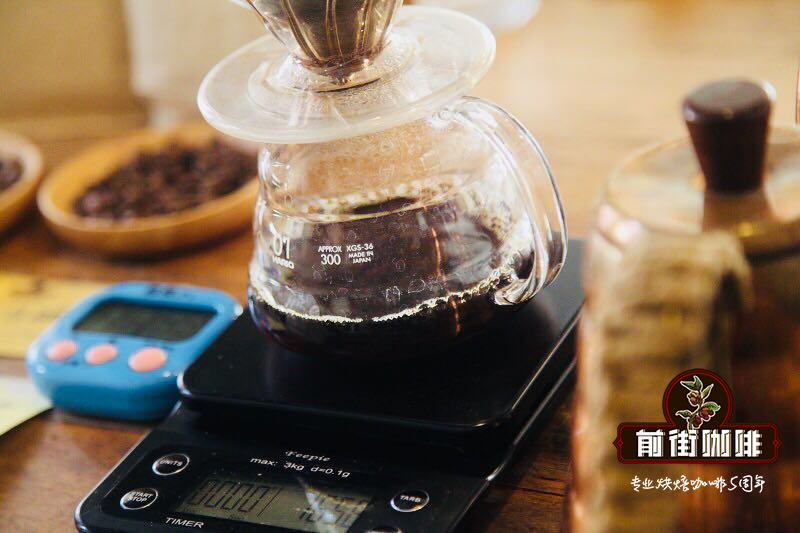
Panama Aurora Ironman Estate Geisha Auromar Camilina Gesha
NO.1, Natural Process Category, 2016 Best of Panama
Variety: Geisha
Estate Story:
"Ironman Geisha" is the nickname for Panama's Auromar Geisha, used for the auction lots sold through the Best of Panama competition. Since 2006, Auromar S.A. has focused on producing high-quality, premium SHB coffee. Today the project is devoted almost entirely to Geisha, with only a small share of the land given over to high-quality Caturra.
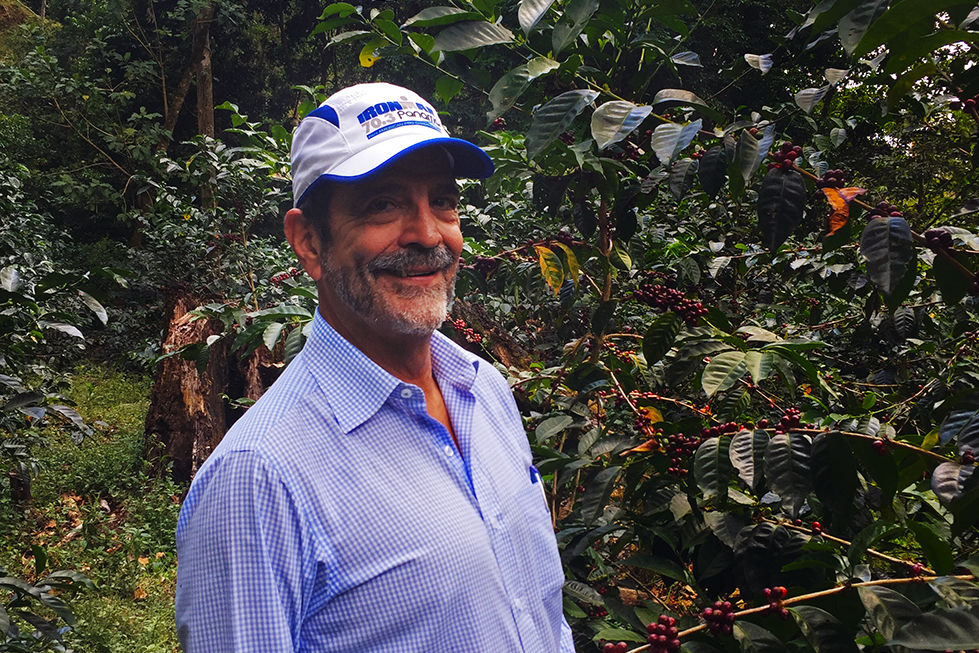
[Note: Caturra is a dwarf mutation of the Bourbon variety that produces excellent cup quality.]
Auromar Estate lies in the far northwestern corner of Chiriquí Province, Panama, in the Candela region—just 2 kilometers from the Costa Rican border. Of the farm's 31 hectares, 16 are untouched highland rainforest at its highest point, between 1,700 and 1,775 meters. The remaining 15 hectares, at elevations of 1,485 to 1,700 meters, are reserved exclusively for coffee, giving the plantation an average elevation of 1,625 meters. Average annual temperatures range from 16 to 25 degrees Celsius, and rainfall averages roughly 3,500 millimeters.
At present, 9 hectares are planted with coffee, with plans to expand to 15 hectares within two years. The plantation uses semi-shade cultivation with native tree species, including some high-altitude Hass avocado. During the 2012-2013 harvest the estate produced 1,700 pounds of Geisha and 1,600 pounds of Caturra, all of it sold to international buyers. In 2013, Auromar's Ironman Geisha also won the BOP competition in the washed Geisha category.
Estate owner Roberto Brenes is a genuine coffee lover whose day job is CEO of the Panama Stock Exchange. He earned an MBA at Columbia University in the United States, returned to Panama, spent years gaining experience in South America, and then came home again. That depth of experience and passion shows in the coffee he grows. In the early years the estate was planted exclusively with Geisha; this year the owner has begun trialing new varieties and processes, such as washed and natural Catuai.
The farm was originally meant to be Roberto's retirement plan for his family, but his insistence on quality earned him first place in the 2013 BOP washed Geisha category. A devoted triathlete, he named the lot "Ironman" after the spirit of the sport. The Geisha harvest totaled 1,700 pounds, of which 150 pounds were set aside for competition; the lot's final auction price hit an astonishing $160.25 per pound, a new record high. In 2014 and 2015 Auromar kept up the momentum, placing 10th and 12th respectively in the Best of Panama natural Geisha category, with auction prices above $30—a testament to the farm's strength. The awards keep coming: in September 2014, Coffee Review scored the estate's Panama Ironman Camilina Geisha 97 points, the highest of that year. That batch was named after the owner's beloved granddaughter, and its flavor notes read like this: full of mango, citrus, guava, intense florals, passion fruit, clove, and lily, with rich, smooth fruit acidity and a syrupy, lively texture—complex and persistent from start to finish.
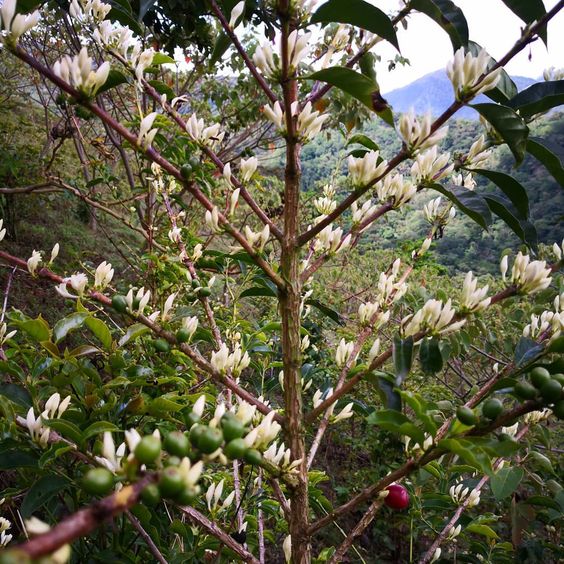
About the Coffee Variety
Geisha is an original landrace within the Arabica family. It is notoriously hard to cultivate, yielding only about half as much as other varieties, which makes it one of the rarest and most prized coffees in the world.
A Geisha Historical Timeline:
1931: A team of botanists on an expedition in southwestern Ethiopia discovers the Geisha variety near the village of Geisha and carries seeds back to Kenya, where they are raised in nurseries.
1936: Geisha seeds reach Uganda and Tanzania.
1953: Costa Rica's research institution CATIE obtains Geisha seeds from Tanzania for research.
1960: Pachi Serracin, former owner of Panama's Don Pachi Estate, brings Geisha from Costa Rica to Panama.
2004: At the Best of Panama (BOP) competition, Hacienda La Esmeralda makes a spectacular debut with Geisha, taking first place. For the next decade, whenever they enter, they win.
2007: At the SCAA-sponsored international cupping competition, Geisha wins again, with an auction price of $130 per pound—a record for competition lots.
2008: Hacienda La Esmeralda holds its own independent auction (skipping BOP that year).
2012: BOP splits into traditional, Geisha, and natural process categories to stop Geisha from sweeping every category.
2014: BOP subdivides further into natural Geisha, washed Geisha, traditional natural, and traditional washed, because Geisha is still dominating the natural category.
2015: BOP reorganizes into winners' natural, winners' washed, traditional natural, and traditional washed, finally letting the excellent Pacamara variety compete. The result, however, is a letdown: only one of 32 lots reaches the finals.
Auction Price History:
2005: Best of Panama (BOP): $20.10 (first lot)
2006: Best of Panama (BOP): $50.25 (first lot)
2007: Best of Panama (BOP): $130 (first lot)
2008: La Esmeralda auction: $105.25
2009: La Esmeralda auction: $117
2010: Best of Panama (BOP): $170
2011: Best of Panama (BOP): $75.25 (first place, washed category); natural category goes to Don Pachi Geisha ($111.50)
2012: La Esmeralda auction: $66 (no BOP entry that year)
2013: Best of Panama (BOP): $350 (first place, natural Geisha category, purchased by Japan)
2014: La Esmeralda auction: $105.50 (that lot had defects the previous year)
2015: La Esmeralda auction: $131 (third natural lot) / $122.01 (first natural lot)
2015: Best of Panama (BOP): $140.01 (natural Geisha champion)
Processing Method: Natural Process, the NO.1 batch from BOP 2016
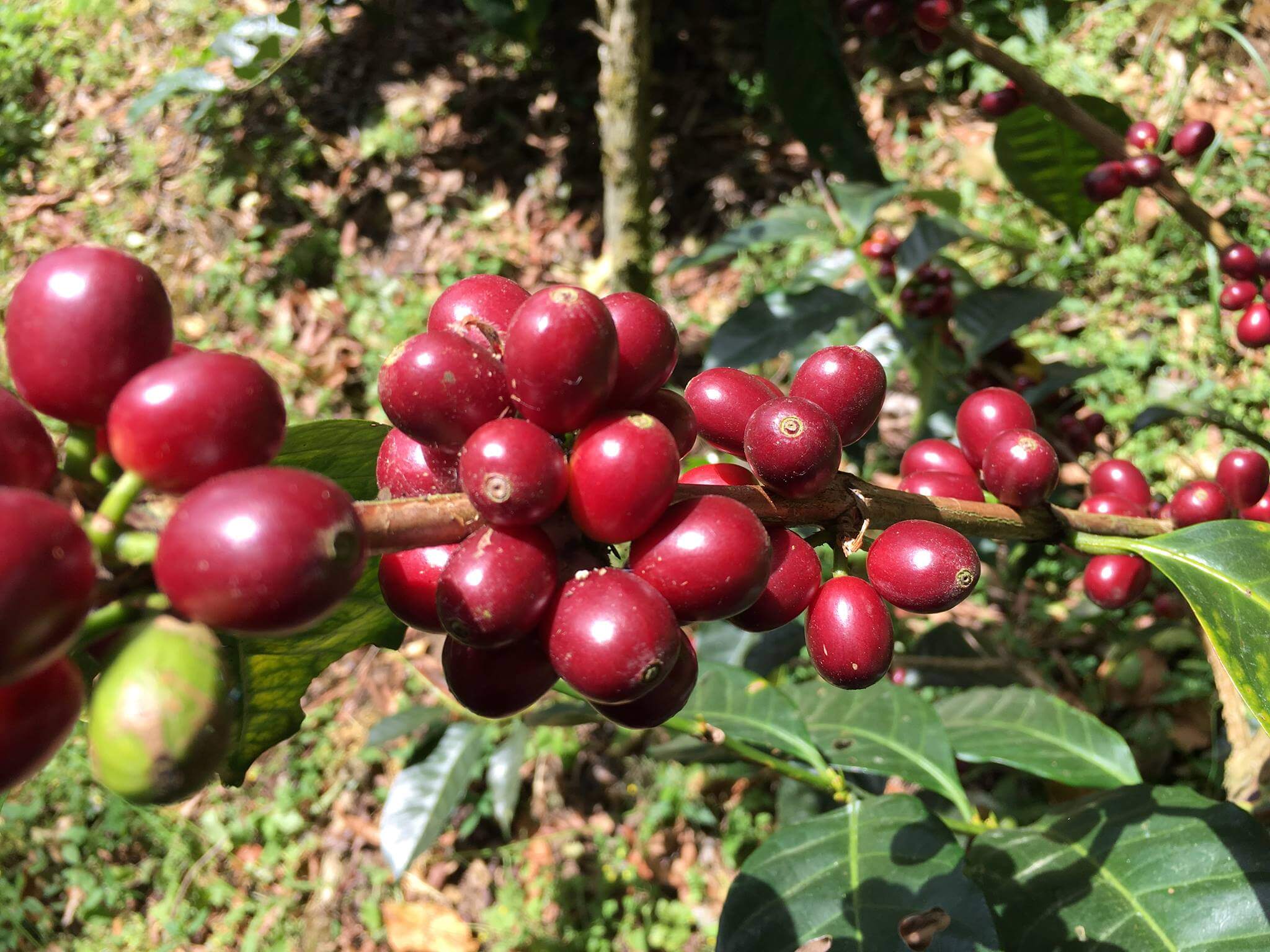
About the Processing Method:
Natural Process (Dry Process)
The natural process is the oldest and most traditional way to process coffee. In contrast to the washed process, coffee handled this way is called "natural" or "sun-dried" coffee. Harvested cherries are simply laid out in the sun for roughly two to four weeks. The method is typical of countries with distinct wet and dry seasons.
Natural Process — Step by Step:
1. Harvest ripe coffee cherries
2. Initial sorting to remove debris and defective beans
3. Floatation sorting: Cherries are poured into water tanks. Ripe, dense cherries sink; unripe or damaged ones float.
4. Sun drying
The ripe cherries that sank are scooped out and spread on drying patios, where the moisture content is brought down from 70% to about 10-12%. They must be raked several times a day for even drying and covered at night to keep out moisture.
5. Hulling: After roughly two to four weeks in the sun, the outer layers of the seeds are dry and hard. Hulling machines then strip them away.
6. Bagging and shipping
The hulled beans are bagged as what we commonly call green coffee. From there, different roast profiles and brewing approaches unlock the countless flavors coffee can offer.
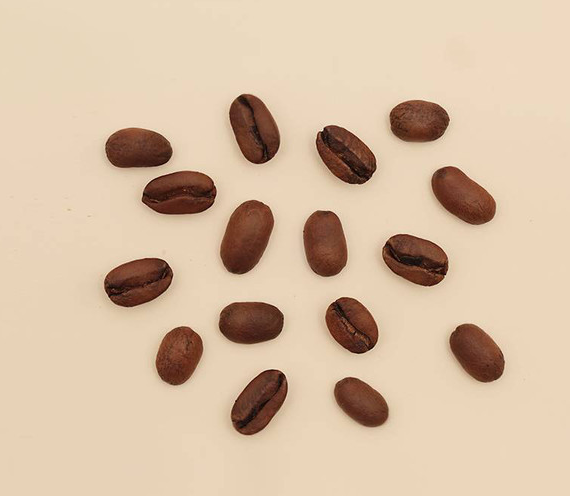
FrontStreet Coffee Roasting Suggestions/Analysis
Geisha is the most celebrated variety in the coffee world, and washed Geisha shows the variety's essential character best. What makes Geisha special is its vivid, crystal-clear florals and citrus notes, exceptional clarity, soft and elegant acidity, a lingering cotton-candy sweetness, and a premium black-tea mouthfeel.
Bringing those qualities out demands careful roasting. Geisha typically grows at altitudes above 1,500 meters, producing beans that are hard and dense—full-bodied, medium-sized, thick and elongated, with pointed tips.
So how do you roast Geisha to express what makes it unique?
The approach starts with high heat through the drying phase: given the beans' hardness and density, strong heat quickly establishes a temperature gradient between surface and core. To protect the florals, the Maillard reaction should run relatively short, so once the beans yellow, heat is raised to medium-high to drive them into first crack quickly. Shortening the stretch from yellowing to first crack also boosts clarity. If temperature climbs too fast after first crack, caramelization intensifies and buries the floral and fruity aromas—so as first crack nears, heat is cut back sharply to slow the rise, and the air damper is opened fully at the start of first crack. The beans are dropped as first-crack activity subsides, letting the core mature fully while preserving maximum aroma and sugars.
Cupping Flavor Description
Flavor: Citrus, Arkansas black apple, starfruit, loquat, magnolia, raspberry, cocoa powder, burro banana, hibiscus, blackcurrant, sorghum wood, guava, Anjou pear, coffee cherry, passion fruit, and persimmon
Geisha Coffee Brewing Analysis
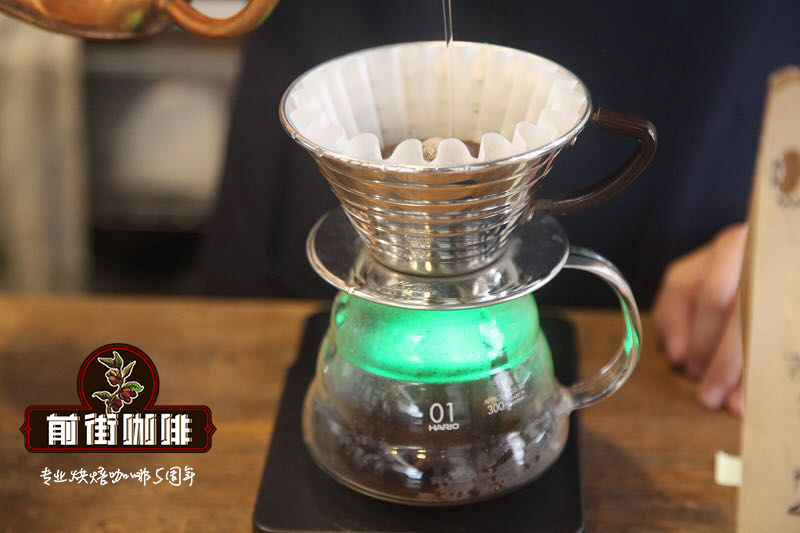
Here is FrontStreet Coffee's usual method for pour-over Geisha: the three-stage method.
Three-Stage Pouring Method
Segmented extraction, dividing one portion of water into three pours
Suited to light, medium-light, and medium roast coffees
Uses a Kalita wave dripper (flat-bottom)
Lengthen the bloom or add more pour breaks to boost body and richness
The Three-Stage Segmented Extraction Method:
Advantages: More layered than a single continuous pour, clearly separating the coffee's front-, mid-, and back-end flavors. After each bloom you add more water, usually pouring again once the liquid drops to just above the coffee bed, using small, medium, and large flows across the three stages.
Disadvantages: Requires precise control of flow rate and water volume.
FrontStreet Coffee's Geisha Pour-Over Parameter Recommendations:
The wave dripper works by immersion, enlarging the contact area between grounds and water. Compared with a V60, it builds more body and a thicker, more viscous mouthfeel.
15 g of coffee, water at 91-92°C, grind size BG 5R (64% pass rate on the Chinese standard 20-mesh sieve), water-to-coffee ratio close to 1:15-16
Technique: Start with 27 g of water for the bloom, 30 seconds. Pour hot water from the gooseneck kettle in clockwise circles from the center of the dripper, starting the timer as you begin. Pour to 27 g, stop, and wait 30 seconds before the first main pour.
For the first pour, circle as before but slightly slower, speeding up a little as you reach the outer rings, and break the pour at about 1:15. Once the liquid level drops by a third, pour again. Keep the second pour centered, avoiding the seam where the grounds meet the filter paper to prevent channeling. Finish the extraction around 2:05. The tail end can be skipped—the longer it drags, the more astringency and roughness build.
Segments: 30-125-230 g
FrontStreet Coffee Recommendation
Ironman Geisha is competition coffee through and through—and if you want a taste of Panamanian Gesha without chasing auction lots, FrontStreet Coffee's Boquete Gesha is the ideal starting point: an entry-level Gesha that delivers the classic orange-honeyed sweetness of top Panamanian Gesha, with oolong-tea elegance, delicate fruit acidity, and distinct layers, all at an approachable price.
Ready to go deeper? FrontStreet Coffee's Esmeralda Red Label (Esmeralda Special) grows at 1,600-1,800 meters, with every batch cupping above 90 points and every lot traceable to a single named plot—letting you choose exactly the micro-lot flavor profile that suits your palate.
Important Notice :
FrontStreet Coffee is a long-established specialty coffee roaster in Guangzhou China, selling freshly roasted beans from its own farm in Yunnan as well as dozens of carefully selected single-origin beans from around the world for both pour-over and espresso. The products deliver consistently excellent quality and great value, with shipping within 24 hours. Guangzhou's FrontStreet Coffee shop is recommended by many coffee lovers, and the beans are now available online at the Tmall 。
FrontStreet Coffee has moved to a new address:
FrontStreet Coffee Address: 315,Donghua East Road,GuangZhou
Tel:020 38364473
 Scan and follow the En Gafei WeChat official account. Please indicate that the reprint comes from "En Gafei".