How much coffee powder for pour-over of Hartman Manor Geisha in Panama_How does Hartman Geisha taste?

Geisha is grown in many regions around the world, but Panama produces the highest quality. The variety is extremely particular about its environment: it must grow at high altitudes above 1,500 meters and needs cloud cover, shade, fertile soil, and sufficient accumulated heat to thrive. Drawing on its unique environmental and climatic advantages, Panama has successfully cultivated batch after batch of high-quality Geisha.
Hartmann Estate is located in the Volcán region, on the western side of the Barú Volcano, which generally receives less rainfall. The estate sits at high altitude, and although the total property covers 120 hectares, only 20 hectares are suitable for coffee, so it plants just a few varieties such as Geisha, Caturra, and Catuai. The Geisha grown here is cultivated under rainforest shade and carries more intense dried-fruit flavors, sweetness, and aroma.
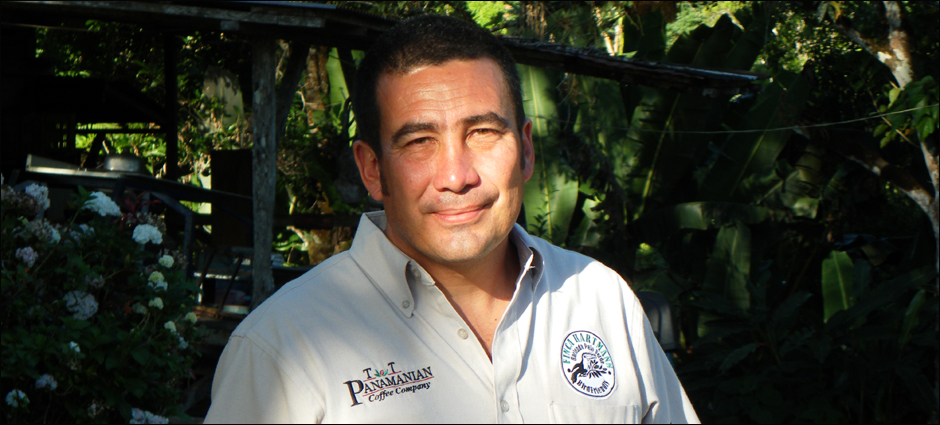
Hartmann Estate
The story of Hartmann Estate is remarkably legendary. Founder Alois Strass Hartmann was born on June 20, 1891, in the Moravia region of Austria-Hungary, now the Czech Republic. After World War I began, both of his brothers died in combat after joining the army. As a young boy, he escaped by hiding on a ship bound for Pennsylvania, USA. Luis Hartmann traveled through several countries with his friends until he arrived in Panama in 1911 and settled in Chiriquí Province in 1912, building the first small cabin in this primeval forest.
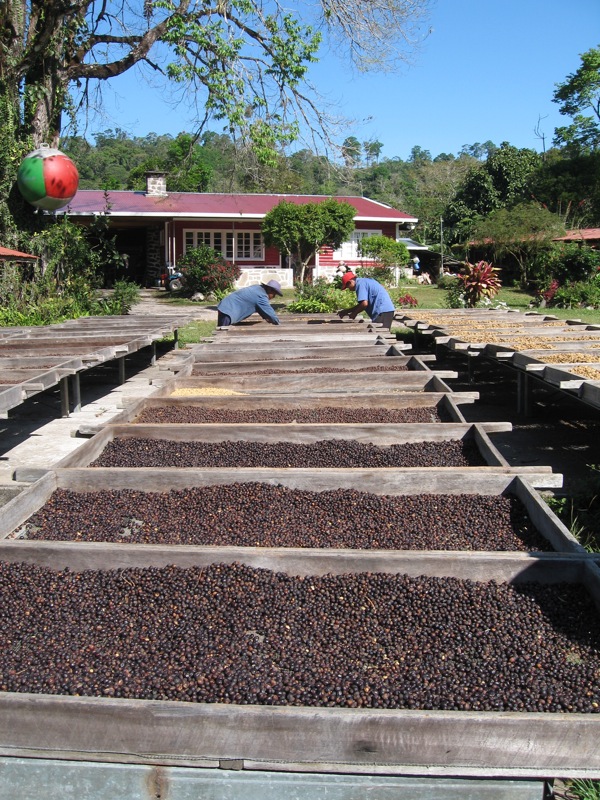
Today's Hartmann Estate is a family business founded in 1940 by Ratibor Hartmann, son of Alois. In 1966, Ratibor married Dinorora Sandi from Costa Rica. They had five children together: Ratibor Jr., Allan, Alexander, Alice, and Kelly. Each family member takes on responsibilities in coffee cultivation management, harvesting and processing, and estate tours. A family estate that has been growing coffee for over 100 years is itself a legendary story.
This family business has a state-level cupping laboratory and sample roasting room. They rigorously cup each batch of coffee cherries, ensuring consistent quality for Hartmann Estate's coffee while constantly seeking improvement. Their scientific approach and nearly 100 years of family experience guarantee exceptional products.
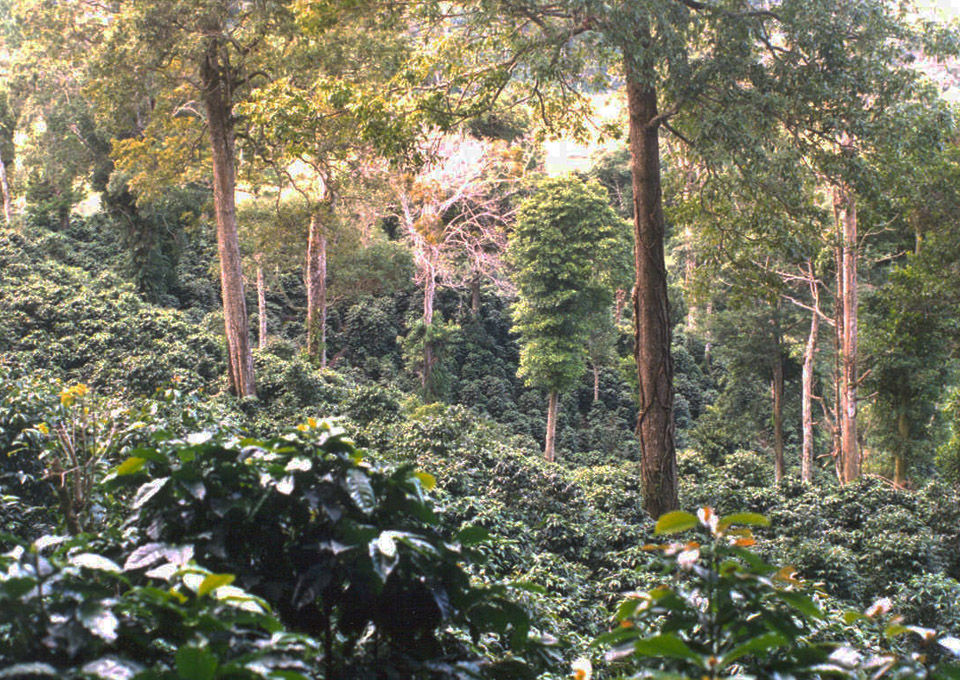
Flavor Characteristics
Rose, yellow peach, yellow apricot, berry acidity, cinnamon aroma, and a concentrated ripe-fruit fragrance.
Today we present FrontStreet Coffee's commonly used pour-over method for Geisha coffee: the three-stage brewing method.
Three-Stage Pouring Method
Segmented extraction divides a single portion of water into three pours.
Suitable for light roast, medium-light roast, and medium roast beans.
Uses a Kalita Wave filter (cake-style filter).
Increase the bloom time or the number of pour interruptions to enhance the richness of the coffee's flavor.
Three-Stage Pouring, Segmented Extraction Method
Advantages: It is more layered than a single continuous pour and clearly separates the front, middle, and back-end flavors of the coffee. The method increases the water volume after each bloom, typically pouring when the coffee liquid is about to drop to the surface of the coffee bed, using small, medium, and large streams for a three-stage extraction.
Disadvantages: It places relatively high demands on pour rate and volume.
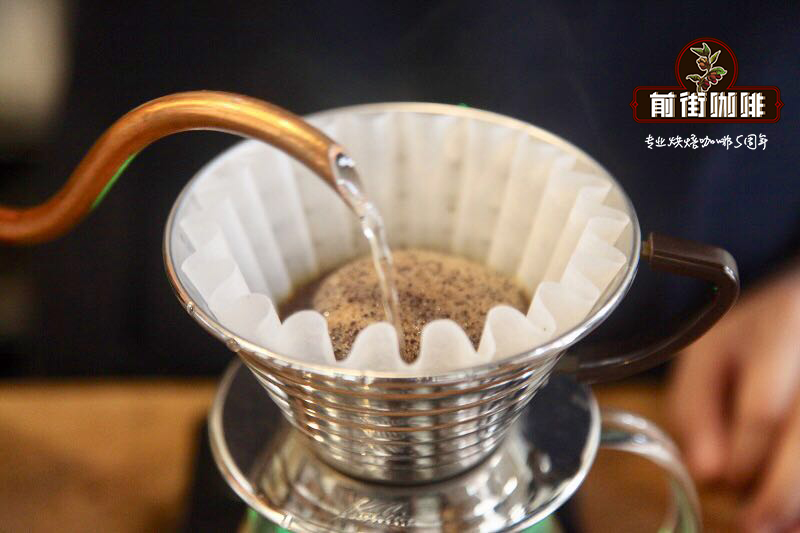
FrontStreet Coffee's Geisha Pour-Over Parameter Recommendations
The cake-style filter uses immersion extraction, increasing the contact area between the grounds and the water. Compared with V60 brewing, it can enhance texture and give a thicker mouthfeel.
15 g of coffee, water temperature 91-92°C, grind BG 5R (a 64% pass rate on the Chinese standard 20-mesh screen), water-to-coffee ratio close to 1:15-16.
Method: 27 g of water for the bloom, bloom time 30s. Pour the hot water from the gooseneck kettle in clockwise circles centered on the middle of the filter. Start timing when brewing begins, pour to 27 g, then stop and wait 30 seconds before the first pour.
For the first pour, circle in the same way but a little more slowly. Speed up slightly when reaching the outer ring, and stop around 1:15. When the liquid level drops by one third, pour again. The second pour should focus on the center, avoiding the area where the grounds meet the filter paper to prevent channeling. End extraction around 2:05. The tail can be omitted (the longer it runs, the more astringency and coarse texture will build).
Segmentation: 30-125-230 g.
FrontStreet Coffee Recommendation
To taste a Panamanian Geisha in this elegant, floral spirit, FrontStreet Coffee's Esmeralda Red Label Gesha is a memorable choice. Hacienda La Esmeralda's Gesha line is divided into Red Label and Green Label. The Red Label, officially named "Esmeralda Special," is grown at 1,600-1,800 meters; every lot must score above 90 points in cupping, every lot carries its own number, and every lot comes from a single small parcel, so buyers can choose a batch to match their flavor preference. The Green Label, originally "Private Collection," blends lots from several parcels without emphasizing parcel detail, focusing instead on the estate's signature high-altitude Gesha character, and it is the more affordable of the two.
Gesha is a medium-light roasted floral-fruity bean with a firm texture that tends to sink and clog the dripper, so FrontStreet suggests grinding to a 78% pass rate on the Chinese standard 20-mesh screen, roughly the size of fine sugar, and brewing at 91°C. FrontStreet brews Gesha with 15 g of grounds in a small Hario V60 at a 1:16 ratio. Once everything is ready, use a three-stage technique: start the timer and pour to 30 g for a 30-second bloom; then, with a small stream, circle to 125 g, wait until the water level in the bed drops halfway, and continue circling with a small stream to 225 g. When it has fully drained, total extraction time runs about 2:10-2:20.
Important Notice :
FrontStreet Coffee is a long-established specialty coffee roaster in Guangzhou China, selling freshly roasted beans from its own farm in Yunnan as well as dozens of carefully selected single-origin beans from around the world for both pour-over and espresso. The products deliver consistently excellent quality and great value, with shipping within 24 hours. Guangzhou's FrontStreet Coffee shop is recommended by many coffee lovers, and the beans are now available online at the Tmall 。
FrontStreet Coffee has moved to a new address:
FrontStreet Coffee Address: 315,Donghua East Road,GuangZhou
Tel:020 38364473
 Scan and follow the En Gafei WeChat official account. Please indicate that the reprint comes from "En Gafei".