How to Brew Jenson Estate Red Label Geisha Pour-Over Coffee & Optimal TDS
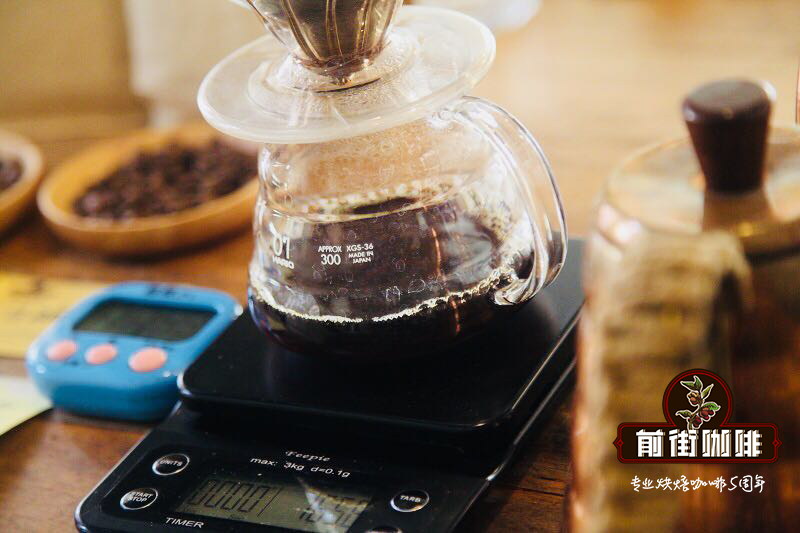
Janson Estate Red Label Geisha Coffee belongs to a limited refined batch.
Flavor | Wild Ginger Flower, Orange Blossom, Sweet Peach, Honey Date, Plum Wine
Roast Level | Light Roast
Region | Volcanic Zone (Volcan)
Altitude | 1,500 meters
Variety | Geisha
Processing Method | Natural
Janson Estate sits on the western side of the Baru Volcano volcanic zone, spanning a total of 1,200 hectares of nutrient-rich volcanic ash soil.
Because the Geisha variety demands high-altitude planting, the estate has only limited ground suitable for growing it—which makes this meticulously cultivated Geisha all the more precious for its rarity.
The estate enjoys uniquely advantageous environmental conditions, and its Geisha beans are prized more each year. The harvest consists mainly of deep red, fully ripe cherries, managed with scientific cultivation to raise both yield and quality.
In 2004, the Peterson family of Panama first introduced the Geisha variety to the world, and the international coffee community has been crazy for it ever since—it is often called the "Champagne of Coffee."
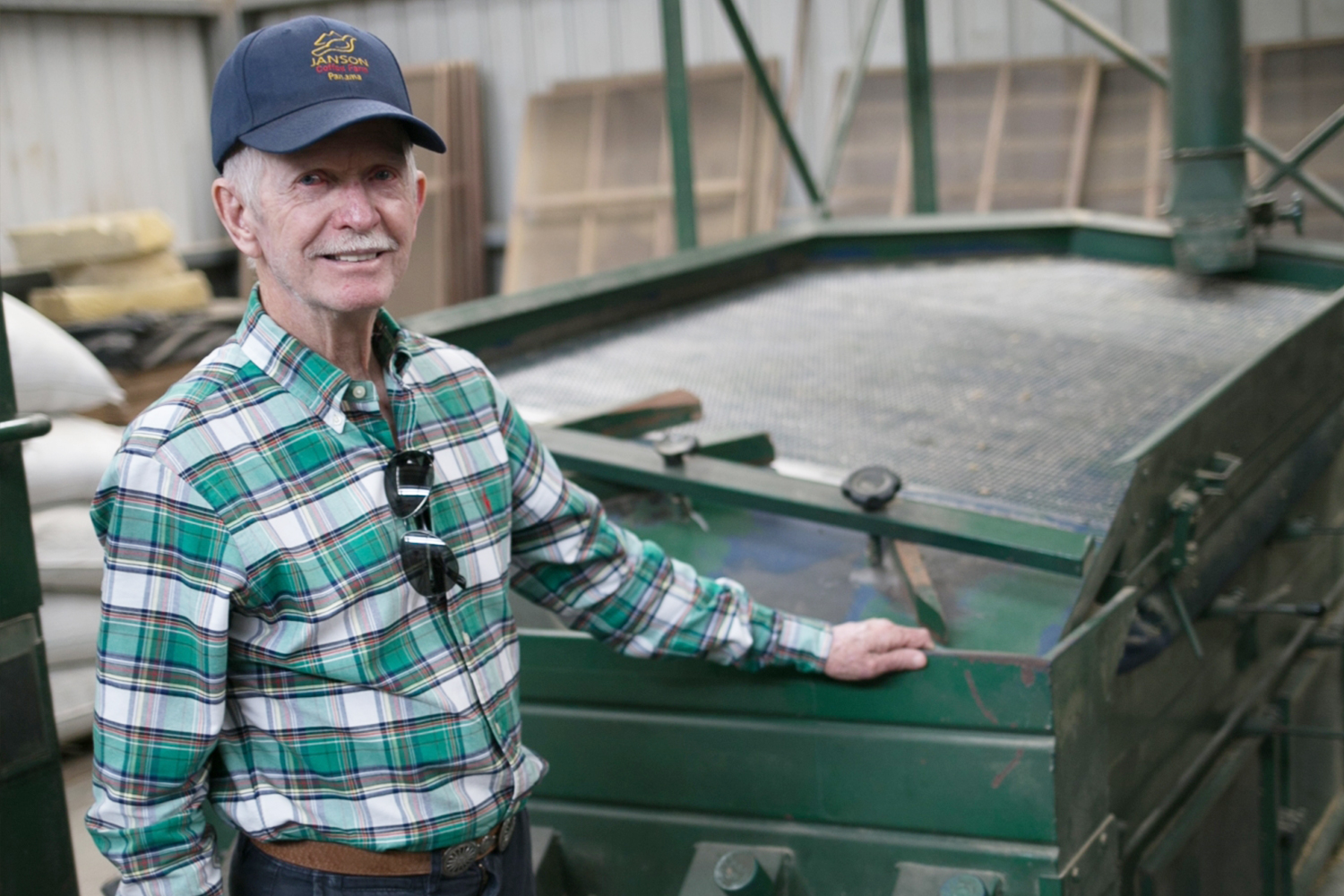
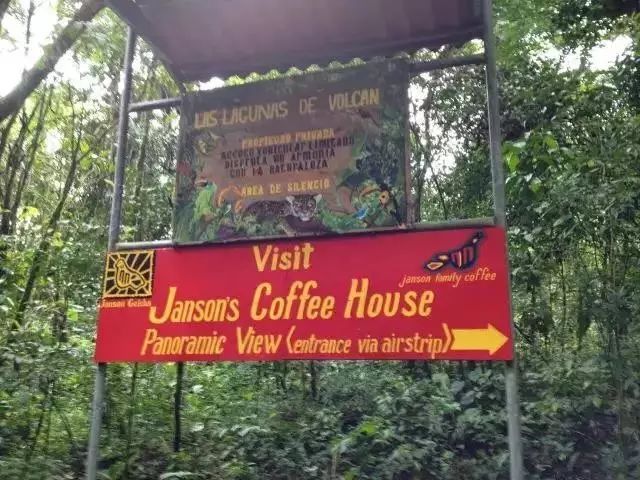
In 2013, a new contender appeared at the Best of Panama competition presented by the Specialty Coffee Association of Panama (SCAP): the Geisha of Janson Estate, owned by Karl Janson. Janson Geisha is rarely heard of in Taiwan because the estate focuses mainly on domestic sales rather than export; moreover, more than 50% of the estate is planted with Geisha, making it the second-largest Geisha producer in Panama. This lot was imported directly from Panama as the exclusive Taiwan distributor for 2016. Karl Janson was originally Swiss and fell in love with the peaks and valleys of Panama's Volcan region in the early 1940s; after marrying his wife Margaret, he started Panama's first automated farm, growing coffee beans and raising livestock side by side.
Janson Farm not only runs its own dedicated coffee processing plant for the cherries but also applies the best roasting methods to achieve the finest cupping results.
To guarantee quality, the estate strictly requires workers to pick only the most mature, beautiful ripe red cherries, at a wage of $4 per day. This land was previously used for highland avocados, which were trucked straight to Panama City after harvest; prized for their special flavor and creamy texture, they were high-priced fruit.
Today the land is devoted mainly to coffee, with avocados interplanted among the trees. The estate fertilizes about 4 times a year. The first application comes right after the coffee harvest, mainly nitrogen and phosphorus plus other trace elements.
Subsequent applications use appropriate organic fertilizers in July and September. The final one comes three weeks before harvest: foliar fertilizer imported from Canada, sprayed for a last nutritional boost. No fertilizer is applied at all during the harvest season itself.
Natural-processed lots first sun-dry for 4 days, depending on the weather. Once moisture reaches about 40%, machine drying takes over for several days of slow drying—more than 12 days in total. Each finished batch is packed into black grain bags inside an additional layer of PP plastic woven bags (commonly known as fertilizer bags) and rested in a warehouse for 3 months of maturation, effectively protected from moisture and light. The farm's inherent advantages let the Geisha show its most perfect flavor.
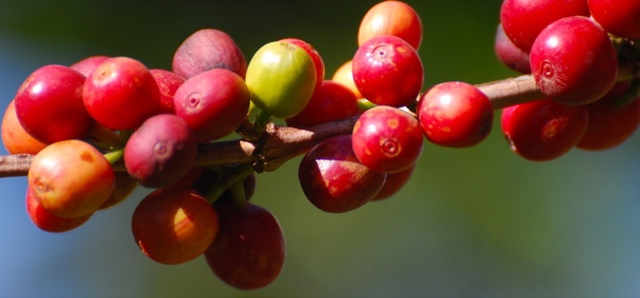
Here, FrontStreet Coffee introduces a classic hand-pour technique for Geisha coffee: the Three-Stage Method.
Three-Stage Pouring Method
Segmented extraction, dividing one portion of water into three stages for pouring
Suitable for light roast, medium-light roast, and medium roast coffee beans
Using Kalita wave filter cup
Increase blooming time or number of water breaks to enhance the richness of coffee flavor
Three-Stage Pouring Segmented Extraction Method
Advantages: More layered than a single pour, clearly distinguishing the front, middle, and back-end flavors of the coffee. After each bloom, the water volume increases; you usually pour just as the coffee liquid is about to drop to the surface of the grounds, using small, medium, and large flows for the three stages.
Disadvantages: Higher demands on pouring control and water volume.
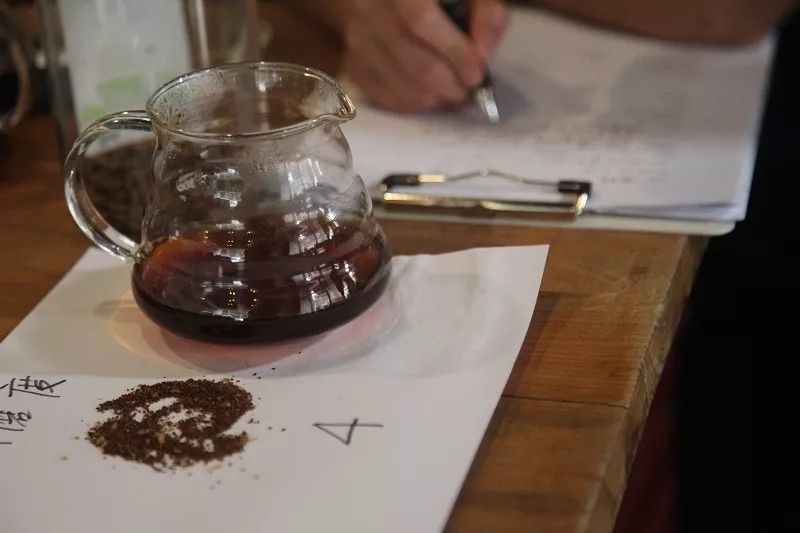
FrontStreet Coffee's Geisha Coffee Hand-Pour Parameter Recommendations
Wave cups extract by immersion, increasing the contact area between grounds and water. Compared with a V60, this improves texture and makes the coffee taste more viscous.
15g of coffee, water temperature 91-92°C, grind size BG 5R (64% pass rate on the Chinese standard 20-mesh screen), water-to-coffee ratio close to 1:15-16.
Technique:
Bloom with 27g of water for 30 seconds. Pour the hot water from the kettle in clockwise circles starting from the center of the filter cup. Start timing as you begin pouring, pour to 27g, then stop and wait 30 seconds.
For the first pour, circle as before but slightly slower, speeding up a little at the outer edge. Stop pouring at around 1:15, wait for the liquid level to drop by one third, then pour again. The second pour should concentrate on the center, avoiding the seam where grounds meet the filter paper to prevent channeling. End extraction at around 2:05; the tail end can be discarded—the longer it runs, the more astringency and rough texture build up.
Segments: 30-125-230g
FrontStreet Coffee Recommendation
Geisha takes its name from the English "Geisha" and is among the most beloved of all arabica varieties—its singular florals and superb sweet-tart character have won over countless coffee lovers, while low yields, weak disease resistance, and demanding cultivation keep its price climbing. If you want great Geisha without a splurge, it helps to know the types. Panama, where Geisha made its name (Esmeralda's lots stunned BOP judges in 2003 with an average cupping score of 94.6, a competition record), offers the FrontStreet Esmeralda Red Label ("Esmeralda Special," grown at 1600–1800 meters, each batch scoring above 90 points and traceable to a single plot such as Jaramillo) and the more affordable Green Label ("Private Collection," a blend of plots expressing the estate's signature high-altitude style), plus the entry-level FrontStreet Boquete Geisha with its classic orange-blossom honeyed aroma, oolong tea feel, and delicate fruit.
Ethiopia, Geisha's birthplace, offers its own interpretations. The FrontStreet Genlana Estate Geisha—processed at the Genlana station founded in 2014 under Israel Degefa, amid 700 hectares of largely uncultivated, shade-dotted land near Kochere—is roasted medium-light and shows bright citrus acidity, elegant ginger-flower aroma, and full ripe-fruit sweetness with a silky body. For estate-level Ethiopian Geisha, the FrontStreet Geisha Village Gold Label (Gesha 1931, 10% of the estate's output, refined natural process) and Red Label (Gori Gesha, 15% of output, scoring 88+ on the SCA 100-point scale with full traceability) come from one of Ethiopia's few large estates, planted beside the original Geisha forest just 12 miles from where the variety was found.
For brewing any of these, note that Geisha is dense and tends to sink and clog the dripper: FrontStreet Coffee suggests a coarse grind of about 78% pass on a Chinese standard #20 sieve (roughly fine-sugar texture) and 91°C water. Use 15g of coffee in a small Hario V60 at a 1:16 ratio, three-stage pouring: 30g of water for a 30-second bloom, then small circular pours to 125g, topping up to 225g once the bed drops to half—total extraction about 2 minutes 10 seconds to 2 minutes 20 seconds. Geisha also makes a superb SOE: the medium-roast FrontStreet Genlana Estate Geisha SOE at 20g in, 1:2 ratio, 25 seconds, yields 40g with apricot, caramel, and nut flavors; add 200g of hot water for an americano with orange, nut, and blueberry notes, or 200g of milk for a latte with a creamy-cookie smoothness.
Important Notice :
FrontStreet Coffee is a long-established specialty coffee roaster in Guangzhou China, selling freshly roasted beans from its own farm in Yunnan as well as dozens of carefully selected single-origin beans from around the world for both pour-over and espresso. The products deliver consistently excellent quality and great value, with shipping within 24 hours. Guangzhou's FrontStreet Coffee shop is recommended by many coffee lovers, and the beans are now available online at the Tmall 。
FrontStreet Coffee has moved to a new address:
FrontStreet Coffee Address: 315,Donghua East Road,GuangZhou
Tel:020 38364473
 Scan and follow the En Gafei WeChat official account. Please indicate that the reprint comes from "En Gafei".