Characteristics of Jamaican Blue Mountain Coffee and Why Its Production Is So Limited
The Origin of Blue Mountain Coffee
Blue Mountain lies squarely within the coffee belt between 25 degrees north and south latitude. Much of the Blue Mountain range rises above 1,800 meters, with fertile young volcanic soil, rainfall year-round, and significant day-night temperature differences. Most remarkable of all is the climate: almost every afternoon, clouds and mist settle over the entire mountaintop, providing natural shade for the coffee trees while bathing them in moisture — a large part of why Blue Mountain coffee's taste and aroma are so exceptional.
The Blue Mountain range is the highest in the Caribbean. From a distance the mountains take on a faint blue haze, refracted from the azure sea, creating an ethereal, dreamlike scene.
When Columbus passed by five hundred years ago, he remarked that it was the most peaceful island he had ever seen.
Quality Standards and Characteristics
The quality standards of 100% certified Jamaica Blue Mountain coffee are matched by no other coffee — strict, precise regulations have created one of the most distinctive coffees in the world. Only beans grown at high altitude, in a precisely defined geographic zone and under specific conditions, can earn Jamaica's certification as 100% pure Blue Mountain coffee. Because the growing area is so limited, production is small; demand, meanwhile, is enormous, and the caffeine content is unusually low — roughly half that of other varieties or less.
Blue Mountain coffee is grown only within the limited area of Jamaica's Blue Mountain range at altitudes of 800–1,200 meters. It typically grows on steep slopes — gradients can reach 60 degrees — which makes hand harvesting essential. Its hallmark is exceptional aroma and a delicate taste. Precisely because of that aroma, it is often blended with other raw beans, and over 80% of the crop is exported to Japan.
Blue Mountain coffee naturally has a rich body and a very balanced taste, with mild acidity and noticeable sweetness and essentially no bitterness.
Because it is grown only in limited areas, the harvest is extremely small. In 2014, green bean production was about 875 metric tons. From July 2013 to July 2014, Jamaica exported 283 tons of Blue Mountain green beans to Japan, plus an additional 440 metric tons — a total of 723 tons, which after roasting yields 578 tons of roasted beans. At 15 grams per cup, that works out to roughly 38.56 million cups — meaning the average Japanese person drinks less than one cup of Blue Mountain coffee per year. In fact, the Blue Mountain variety is the same as the other coffee grown in Jamaica; what sets it apart is the harsh growing environment and rigorous selection and inspection, which produce an exceptionally delicate cup. In 1953, the Jamaican government legally demarcated the boundary between the Blue Mountain area and all other regions, stipulating that coffee from outside the Blue Mountain range may not use the Blue Mountain name — only coffee produced in designated areas of the range can be called "Blue Mountain Coffee."
The Origin of Barrel Packaging
Of all the world's coffees, only Blue Mountain is shipped in wooden barrels; every other coffee is exported in gunny sacks. The practice is said to date from the mid-18th century, during the British colonial period, when flour was shipped from Britain to Jamaica and the empty barrels were reused to transport coffee and rum. The barrels used today are made from timber grown in temperate forests in the United States. Wood naturally absorbs and releases ambient humidity without major swings, cushioning the coffee against sudden temperature changes in transit. Barrels also seal in and isolate the coffee's aroma, preserving quality at its best — though the added cost is considerable.
How to Brew Blue Mountain Coffee by Hand
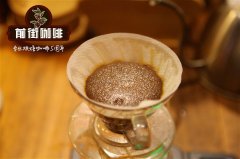
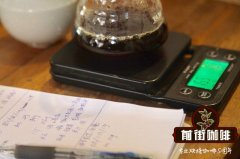
Use 15 grams of coffee, water at 88°C, a grind of BG 5R (60% pass-through on a Chinese standard 20-mesh sieve), and a water-to-coffee ratio close to 1:15.
Method: Begin with 30 grams of water for the bloom, holding for 30 seconds, with the water poured close to the coffee surface. Pour the first stage to 120 grams and stop; wait for the water level to drop by one-third to one-half, then pour the second stage up to 225 grams. Keep total brew time around 2 minutes 5 seconds.
Flavor Profile
Blue Mountain's flavor is very clean and very gentle, with chocolate sweetness and a strong, full body. The cup is rich and mellow, with sweetness, acidity, and bitterness in perfect balance — no harsh bitterness, only moderate, well-judged acidity, and a finish with lingering fruit notes. Brewed in a Kono, Kalita wave, or cake dripper, the concentration rises and the cup becomes denser and more intense; the V60, by contrast, yields a refreshing sweetness, with sugarcane notes early on and nutty, dark-chocolate depth and lingering sweetness in the later stage.
FrontStreet Coffee Recommendation
Strictly speaking, only coffee grown in the designated zone of Jamaica's Blue Mountain range and certified by the Jamaican government may be called "Jamaica Blue Mountain Coffee." The range sits in eastern Jamaica — one of the Caribbean's highest mountain systems, with its tallest peak at 2,256 meters — and is perpetually wreathed in mist, which is how it earned the name "Blue Mountain." High altitude brings a wide day-night temperature range and a longer ripening period for the cherries; fertile volcanic soil feeds the trees; and abundant, even rainfall lets the fruit slowly accumulate sugars and flavor compounds. This is the environment behind Blue Mountain's famously delicate texture and balanced flavor.
When buying, certification matters enormously. Genuine Blue Mountain coffee carries no QR traceability code, but reputable importers hold complete export certificates and origin documentation — and the traditional barrels themselves (in 15, 45, and 70 kg sizes) are a telltale sign of the real thing, as is the green, plump, slightly upturned shape of the green beans. FrontStreet Coffee's Blue Mountain No. 1 comes from the historic Clifton Estate, which has grown coffee since around 1750 at an average elevation of 4,300 feet (about 1,310 meters). Roasted medium-dark to highlight its classic balance, the cup unfolds in layers of nuts, dark chocolate, cream and caramel, and gentle sweetness — harmony among acidity, sweetness, bitterness, and aroma. For pour-over, FrontStreet Coffee suggests a 1:15 ratio, water at 87–88°C, a medium-coarse grind (about the texture of white sugar), and beans rested 4–7 days from the roast date.
Important Notice :
FrontStreet Coffee is a long-established specialty coffee roaster in Guangzhou China, selling freshly roasted beans from its own farm in Yunnan as well as dozens of carefully selected single-origin beans from around the world for both pour-over and espresso. The products deliver consistently excellent quality and great value, with shipping within 24 hours. Guangzhou's FrontStreet Coffee shop is recommended by many coffee lovers, and the beans are now available online at the Tmall 。
FrontStreet Coffee has moved to a new address:
FrontStreet Coffee Address: 315,Donghua East Road,GuangZhou
Tel:020 38364473
 Scan and follow the En Gafei WeChat official account. Please indicate that the reprint comes from "En Gafei".