Costa Rica Los Lirios - Herbazu Estate Cafetalera Herbazu Vilasachi
Costa Rica Los Lirios - Herbazu Estate (Cafetalera Herbazu), Villa Sarchi and Caturra Flavor
Costa Rica produces the most stable, highest-quality coffee in Central America, with a coffee history reaching back to the 19th century. Coffee was already being exported to Britain by 1800, and by 1880, long before the idea of specialty coffee existed, plenty of high-altitude premium coffee (S.H.B.) was blended with lowland coffee without any special selection. Because the country is narrow, latitude, altitude, soil, rainfall, and temperature vary widely from place to place, which gave rise to a rich range of cultivars. Robusta is legally banned from cultivation in Costa Rica; only Arabica is permitted. Common varieties include Caturra, Catuai, Villa Sarchi, Gesha, Bourbon, and Villalobos. The washed process is the most common method in Central America, but more and more countries are producing natural beans, and honey-processed beans (Miel Process) have grown steadily popular in recent years - a trend that started in Costa Rica.
Costa Rica has responded to foreign buyers' demands with a "micro mill" revolution. The principle is to let every small Costa Rican farm have its own micro-processing system, so that everything from harvest to processing and bagging is handled on the farm without depending on anyone else. Farms can then process their beans by the simplest, fastest, most cost-effective route, which protects quality and improves farm profits. It also means the farm takes full responsibility for the coffee it produces.
Cafetalera Herbazu is a well-known family coffee farm. It does not process coffee for other growers and does not buy coffee from other estates; it handles only its own, which speaks to the family's commitment to quality over quantity. The family has grown coffee on Herbazu land for more than 50 years, making it a genuine family farm in the truest sense. It was not until 2001 that the current generation of the Barrantes Zuniga family decided to build their own washed processing plant. In 2002 they began working with the British green coffee merchant Hunter Coffee, and Cafetalera Herbazu has since become a prestigious estate. The private land is divided into 13 plots averaging 2.5 hectares each, managed by five brothers and eight sisters of the Barrantes Zuniga family.
Property Characteristics
Farm Name: Herbazu
Farmer: Hermanos Barrantes Zuniga
City: Lourdes de Naranjo
Region: Occidental Valley, Western Valley of Costa Rica
Country: COSTA RICA
Coffee Growing Area: 32.5 Hectares
Altitude: 1,500 meters
Coffee Characteristics
Variety: Caturra, Villa Sarchi
Villa Sarchi originates from Red Bourbon and offers bright, delicate citrus acidity with deeper notes of raisin and nutty aroma. It shows considerable complexity and excellent balance, making it a rare and outstanding variety.
Processing System: Fully Washed and dried on patio
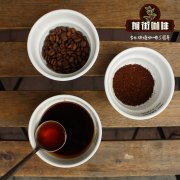
Top Jury Descriptions: Cupping roast level begins 60 seconds after first crack (Cinnamon)
Aroma/Flavor: Raisin, vanilla, stone fruit, jasmine, chamomile, grassy, caramel, brown sugar
Acidity: Grape, tartaric acid, grapefruit acidity, clean and fresh
Complexity and Others: Smooth, round, and full-bodied, with good balance, excellent sweetness, and a vanilla aftertaste
Flavor Profile: Enhanced sweetness, reduced acidity, and a rounded mouthfeel.
FrontStreet Coffee Recommended Brewing:
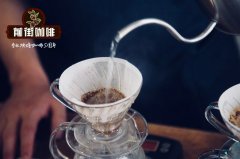
Dripper: Hario V60
Water Temperature: 90°C
Grind Size: Fuji Royal grinder setting 3.5
Brewing Method: 1:15 coffee-to-water ratio, 15g of coffee. First pour 25g of water and let it bloom for 25 seconds. Second pour to 120g and pause. Wait until the water level drops by half, then pour slowly to 225g total. Total extraction time around 2:00.
Analysis: The three-stage method clearly separates the front, middle, and back end of the coffee. Because the V60 has many ribs and drains quickly, pausing during the pour helps extend extraction time.
FrontStreet Coffee Recommendation
Costa Rica is where honey processing took hold, but it is also a fine place to meet Geisha. FrontStreet Boquete Geisha is the most accessible introduction: a Panama Geisha that delivers the classic orange-blossom honey character, an oolong-tea sensation, and a delicate fruit acidity with clearly defined layers, at a price that makes it a reasonable entry point. For the full expression of the variety, FrontStreet Esmeralda Red Label and Green Label Geisha come from the estate that made Geisha famous. The Red Label lots, formally "Esmeralda Special," grow at 1600-1800 meters, must cup above 90 points, and each carries its own lot number from a single small plot; the Green Label series, "Private Collection," blends several plots to present the estate's signature high-altitude Geisha flavor at a friendlier price.
Ethiopia is Geisha's birthplace, and FrontStreet Grana Geisha comes from a station at the junction of the Kochere and Grana Abaya areas, founded in 2014. Only fully ripe cherries are hand-picked and dried on raised beds for 14-20 days depending on the weather. Roasted medium-light, it shows bright citrus acidity, elegant ginger flower aroma, and the full sweetness of ripe fruit, with a fine, silky body and the delicate finish that marks the variety.
Geisha is a medium-light, floral and fruit-forward coffee with a hard bean, and it tends to sink and clog the drain hole when brewed, so grind a little coarser than usual - about 78% passing a Chinese standard #20 sieve, or the texture of fine granulated sugar - and use water at 91°C. FrontStreet brews 15g in a small Hario V60 at a 1:16 ratio, then pours in three stages: start the timer and pour to 30g for a 30-second bloom, then a second pour with a small stream to 125g, wait for the bed to drop halfway, and continue with a small stream to 225g. Total extraction lands between 2:10 and 2:20. Geisha also makes an excellent single-origin espresso; FrontStreet's Grana Geisha SOE, pulled at 20g of coffee, a 1:2 ratio, 25 seconds, and 40g of liquid, turns into apricot, caramel, and nuts in the cup.
Important Notice :
FrontStreet Coffee is a long-established specialty coffee roaster in Guangzhou China, selling freshly roasted beans from its own farm in Yunnan as well as dozens of carefully selected single-origin beans from around the world for both pour-over and espresso. The products deliver consistently excellent quality and great value, with shipping within 24 hours. Guangzhou's FrontStreet Coffee shop is recommended by many coffee lovers, and the beans are now available online at the Tmall 。
FrontStreet Coffee has moved to a new address:
FrontStreet Coffee Address: 315,Donghua East Road,GuangZhou
Tel:020 38364473
 Scan and follow the En Gafei WeChat official account. Please indicate that the reprint comes from "En Gafei".