Guatemala Huehuetenango | La Libertad Cooperative SHB Caturra & Catuai
For professional coffee knowledge exchange and more bean coverage, follow Coffee Workshop (WeChat official account: cafe_style).
Guatemala Huehuetenango | La Libertad Cooperative SHB Caturra, Catuai Flavor Profile
Over the past century, coffee has carried Guatemala's economy. Roughly 125,000 producers work the crop today, and it is the country's leading export, accounting for 40% of exported agricultural products. As many as 20 of Guatemala's 22 departments grow coffee, and the bean is cultivated in almost every region. Around 98% of the coffee is shade-grown and almost entirely Arabica. The main sub-varieties are Bourbon, Typica, Caturra, Catuai, Pache, and Pacamara.
Guatemala is well suited to the crop. High altitudes, some 300 distinct microclimates, stable rainfall, and fertile, mineral-rich soil make it the most promising coffee country in Central America. Starting in the early 1990s, Anacafe pioneered a division into eight producing regions for high-grown hard beans (S.H.B.), classified by cup character, growing climate, soil quality, and altitude: the Acatenango valley, Antigua, Atitlan, Coban, the Fraijanes plateau, Huehuetenango, Nuevo Oriente, and the San Marcos volcanic region. The main harvest runs from December through March of the following year, and higher regions such as Huehuetenango can run into April. Once harvesting and processing are finished, shipping typically takes place from April to July.
Huehuetenango is a major coffee town in the northwest. Along with Antigua, it has long been one of Guatemala's two most important producing regions, and it is known worldwide for its fine citrus acidity and a distinctive chrysanthemum-tea note. Its terrain mixes mountains, hills, and volcanic slopes. Coffee grows on volcanic slopes above 1,900 meters in altitude, with annual rainfall of about 4,000 millimeters and an average temperature of 25 degrees.
Guatemala's Slow Food movement supports small producers in preserving traditional crop varieties. Farms under this protection must be small-scale and sit above 1,500 meters in altitude. There are currently four core cooperatives, among them La Libertad and Todos Santos, two different communities representing roughly 150 small growers.
The Slow Food movement, as the name suggests, hopes coffee will grow slowly and fully absorb nutrients, which improves both quality and traceability. Much like the history of agricultural production in Taiwan, it is a small-farmer program built on self-commitment and personal responsibility.
Property Characteristics
Farm Name: La Libertad Cooperative
Region: Huehuetenango
Country: Guatemala
Altitude: 1,900 meters
Coffee Characteristics
Variety: Caturra, Catuai
Processing System: Fully washed and dried on patio
Grade: SHB
Total Pounds: 2,250 pounds
Screen Size: 17-18 screen
Cupping Roast Level: 60 seconds after first crack (Cinnamon roast)
Aroma/Flavor: Hazelnut, caramel, cinnamon, milk chocolate, raisin, honey
Acidity: Lemon and lime, with a coarse rather than delicate acidity
Complexity & Other Characteristics: Lemon black tea aroma, a range of fruit sweetness including cherry, apple, and peach, a smooth mouthfeel, and the nectar-like aftertaste we all love.
Overall Style Attributes: Fruit-forward sweetness, with a smooth mouthfeel and alternating sweet and sour notes.
FrontStreet Coffee Recommended Brewing
Dripper: Hario V60
Water Temperature: 90°C
Grind Size: Fuji Royal grinder setting 3.5
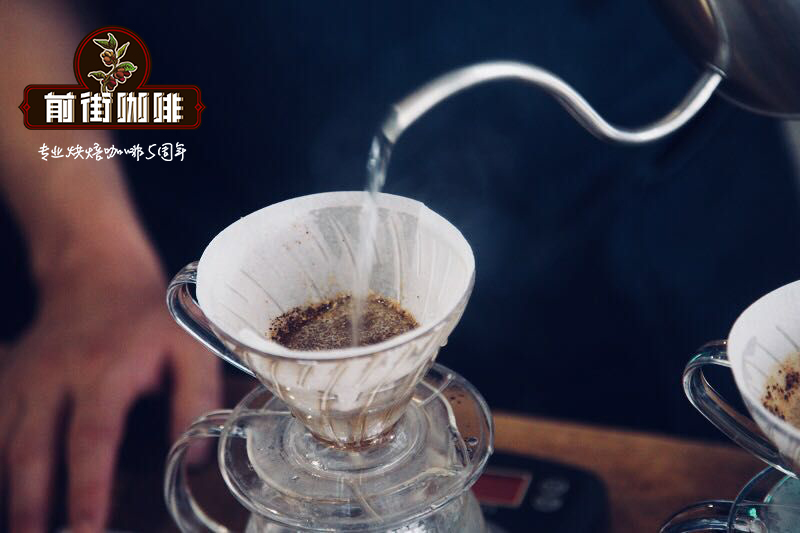
Brewing Method: A coffee-to-water ratio of 1:15 with 15g of grounds. First pour 25g of water for a 25-second bloom. Second pour up to 120g, then pause. Wait until the water level drops to half, then continue pouring slowly to a total of 225g. Extraction time is around 2:00.
Analysis: A three-stage pour clearly separates the front, middle, and back-end flavors of the coffee. Because the V60 has many ribs and drains quickly, pausing between pours helps extend the extraction time.
FrontStreet Coffee Recommendation
This Huehuetenango lot leans on fruit-forward sweetness and a smooth, rounded mouthfeel, and FrontStreet Coffee's Arabica single origins cover that same ground well. The FrontStreet Panama Red Label Geisha is the showpiece, with elegant jasmine aromatics and a lifted citrus, bergamot, and black-tea profile, while the FrontStreet Brazil Queen's Estate brings a Yellow Bourbon's creamy peanut, toast, and sugarcane sweetness for a gentler everyday cup.
Together they show how far a well-grown Arabica can travel between bright and creamy.
Important Notice :
FrontStreet Coffee is a long-established specialty coffee roaster in Guangzhou China, selling freshly roasted beans from its own farm in Yunnan as well as dozens of carefully selected single-origin beans from around the world for both pour-over and espresso. The products deliver consistently excellent quality and great value, with shipping within 24 hours. Guangzhou's FrontStreet Coffee shop is recommended by many coffee lovers, and the beans are now available online at the Tmall 。
FrontStreet Coffee has moved to a new address:
FrontStreet Coffee Address: 315,Donghua East Road,GuangZhou
Tel:020 38364473
 Scan and follow the En Gafei WeChat official account. Please indicate that the reprint comes from "En Gafei".