What's the Difference Between Black Coffee Beans and Ground Coffee? How to Choose Coffee Beans?
Once you decide to brew your own coffee, the first decision you face at the shop is whether to buy whole beans or coffee that has already been ground. Setting aside personal factors like equipment and time, our recommendation is clear: buy whole beans.
Why Choose Coffee Beans Over Ground Coffee
There are solid reasons for that firm recommendation. Remember where coffee's aroma comes from? It comes from the oils released during roasting, and those oils are sealed inside the pores of the bean. Once the bean is ground, the aroma and oils start to evaporate, so the flavor of the brewed cup naturally fades.
On top of that, the greater surface area of ground coffee exposed to air makes it quick to absorb moisture and turn stale. Under identical conditions, whole beans can be stored for nearly twice as long as ground coffee.
The one real advantage of ground coffee is convenience — useful if you often oversleep and have no time to grind slowly in the morning, or if you haven't bought a grinder yet. Ground coffee lets you enjoy a decent cup quickly. If you do decide to buy pre-ground, keep two things in mind: (1) buy roughly two weeks' worth at a time to protect freshness, and (2) store it in a good airtight container.
The Joy of Grinding Your Own Beans
Think grinding your own beans is a hassle? In practice it's enjoyable, and it helps keep flavor intact.
Whole beans are the best form for preserving coffee's complete flavor profile, keeping it fresh and true to origin. Some manufacturers blend beans from different sources into the same bag of ground coffee, which makes it hard for consumers to verify where the coffee actually came from.
Grinding your own beans is a serious subject in its own right, but trust us — once you start, you'll never go back to the pre-ground days. Working through different brew methods and grind sizes, and tasting the distinct flavors each one produces, is genuinely one of the great pleasures of brewing coffee at home.
Coffee's Optimal Tasting Period
When you buy coffee, do you still check the expiration date on the bag? Here's something important: a coffee's optimal tasting period is not the same as its expiration date. What you should be reading is the roasting date.
The roasting date tells you how fresh the beans are. Typically, beans roasted within the last 2-3 days are an excellent choice. But buying freshly roasted beans doesn't automatically mean peak flavor. Beyond the lingering smoky notes from roasting and the beans' own aromas, coffee continues to release nitrogen dioxide for about 48 hours after roasting. Brewing immediately after roasting can therefore actually give you a suboptimal cup.
We recommend buying approximately two weeks' worth of beans at a time. For beans stored at room temperature, using them within two weeks usually delivers the best flavor and aroma.
Types of Coffee Beans
There are currently more than 100 coffee varieties worldwide, and the two most common are Arabica and Robusta (Canephora). The two differ significantly in flavor, composition and growing conditions. Here's how they compare.
Arabica: Premium, Smooth Flavor, Low Caffeine
Coffee advertisements often stress that they use 100% Arabica. That's fair — judged on price alone, Arabica is indeed the more premium type. As a rule, Arabica beans cost about twice as much as Robusta.
In terms of composition, Arabica has a lower caffeine content (0.9-1.2%), 60% more fat than Robusta, and twice the sugar. As a result, Arabica tastes sweeter and smoother, with hints of plum-like acidity.
Arabica also has a slightly lower chlorogenic acid content (5.5-8%). Besides acting as an antioxidant, chlorogenic acid is an important compound that resists pests, so Arabica is more vulnerable to pest damage and climate stress. It is typically grown at higher altitudes, where it produces fewer fruits that ripen more slowly. The beans are oval-shaped.
Today Brazil is the largest producer of Arabica, while Colombia grows Arabica exclusively.
Robusta: Affordable, Bitter Flavor, High Caffeine
Robusta, by contrast, has a higher caffeine content (1.6-2.4%) and lower fat and sugar levels, which gives it a more bitter, intense flavor. Some tasters describe it bluntly as rubbery.
Robusta carries more chlorogenic acid (7-10%), making it resistant to pests and climate stress. It is usually grown at lower altitudes, where it fruits abundantly and quickly. The beans are round-shaped.
Vietnam is currently the largest producer of Robusta, with Africa and India also contributing.
Price Doesn't Equal Quality
Because it's affordable, Robusta is often blended into commercial ground coffee to cut costs, and most inexpensive instant coffee on the market is predominantly Robusta. But price doesn't equal quality. High-quality Robusta is often used in espresso because it builds a richer crema, and a good Robusta can taste better than a poor Arabica.
So the choice between the two comes down mainly to personal preference. Some people find Arabica's aroma too strong, while others enjoy Robusta's mellow bitterness. Our only caution: if you're sensitive to caffeine, pay attention to the dose, because Robusta holds about twice as much caffeine as Arabica.
Of course, coffee isn't limited to these two. You can also explore Java, Kona, Sumatra and other varieties to add new dimensions to your coffee experience.
How to Select Coffee Beans
We can't see the product before buying, and we can't perform the look-smell-peel-chew routine, but when buying online we can still evaluate a few things. These also apply in a physical store.
A. Origin
Online, some stores may sell beans that aren't from the origin they claim. Some Blue Mountain coffee, for instance, doesn't actually come from Jamaica. Similarly, if the packaging only says "Colombia" or "Brazil" with no specific estate, it's typically coffee from a large production region. Coffee from an origin also comes in commercial and specialty grades, so not all Ethiopian coffee is necessarily specialty grade. It's best to find beans traceable to a specific region; beans with that level of traceability rarely disappoint. And if you're not especially particular, exploring different regional flavors is its own reward.
How do you read a name like "Ethiopia Natural Sidamo Hambella Guji Grada 2.0"?
Coffee beans naturally carry distinct regional characteristics, so understanding the flavor before you buy helps. Like a wine label, a coffee label usually tells you a lot about what's in the bag. From "Ethiopia Natural Sidamo Hambella Guji Grada 2.0" we can gather: Country: Ethiopia; Region: Sidamo Hambella; Grade: G1; Processing: Natural; Name: Guji Grada 2.0.
If you buy beans labeled only "Ethiopia" with nothing further, they're typically from a large production region.
B. Packaging Date (Roasting Date)
Check that the packaging date is recent. Green coffee generally has a shelf life of one to two years, while roasted beans stay fresh for about 2 months. Choose freshly roasted beans and finish them within that freshness window to enjoy coffee at its most captivating aroma and richest mouthfeel.
Freshly roasted beans hold a large amount of gas and respire actively. During extraction, that gas releases from the grounds and creates the wonderful, full bloom of bubbles you see on the bed. Some lightly roasted beans, however, may show less obvious bubbling.
C. Store and Brand
This goes without saying — some coffees mix in other beans to cut costs, so be careful. Blending expensive beans with cheaper ones, or high-quality beans with lower-quality beans of the same variety, can significantly affect the taste. When buying beans, try to choose reputable stores or brands. Popular local home-roasting operations typically offer beans fresher than supermarket stock, so look for a coffee shop you trust.
FrontStreet Coffee Recommendation
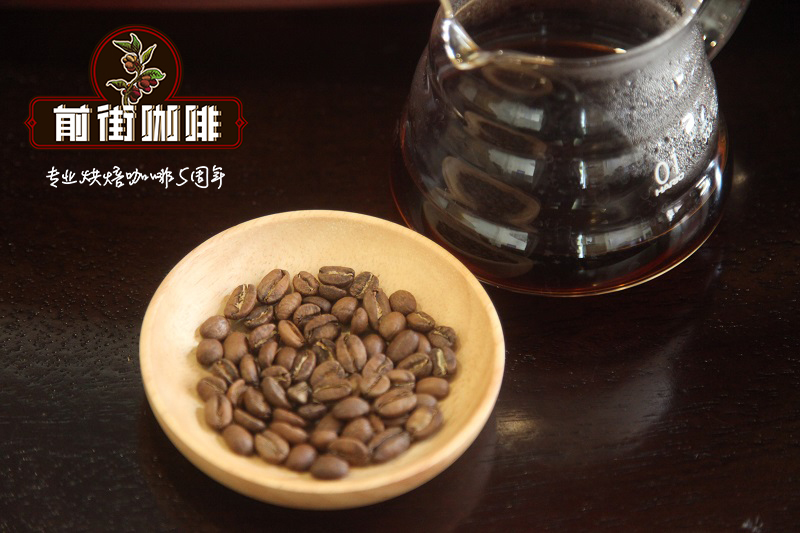
If you're buying whole beans for the first time and want a forgiving middle ground, medium roasts are the easiest place to start. FrontStreet Coffee's Brazil Queen's Estate — the rare Yellow Bourbon grown in Brazil, the world's largest coffee producer — is mellow and sweet, showing creamy peanut, chocolate, toast and sugarcane after a medium roast, and it works for pour-over as well as a moka pot or espresso machine. For something sweeter and fruitier, FrontStreet Strawberry Candy, a blend of Costa Rican honey-processed coffee and Panamanian washed Geisha, brings orange-blossom honey and rounded sweetness. FrontStreet 2013 Natural Typica, a medium-roasted Chinese single origin, rounds things out with nut, brown sugar, black tea and dried apricot notes.
Important Notice :
FrontStreet Coffee is a long-established specialty coffee roaster in Guangzhou China, selling freshly roasted beans from its own farm in Yunnan as well as dozens of carefully selected single-origin beans from around the world for both pour-over and espresso. The products deliver consistently excellent quality and great value, with shipping within 24 hours. Guangzhou's FrontStreet Coffee shop is recommended by many coffee lovers, and the beans are now available online at the Tmall 。
FrontStreet Coffee has moved to a new address:
FrontStreet Coffee Address: 315,Donghua East Road,GuangZhou
Tel:020 38364473
 Scan and follow the En Gafei WeChat official account. Please indicate that the reprint comes from "En Gafei".