What are high-quality black coffee beans? How should coffee beans be consumed?
For more professional coffee knowledge and coffee bean information, follow FrontStreet Coffee.
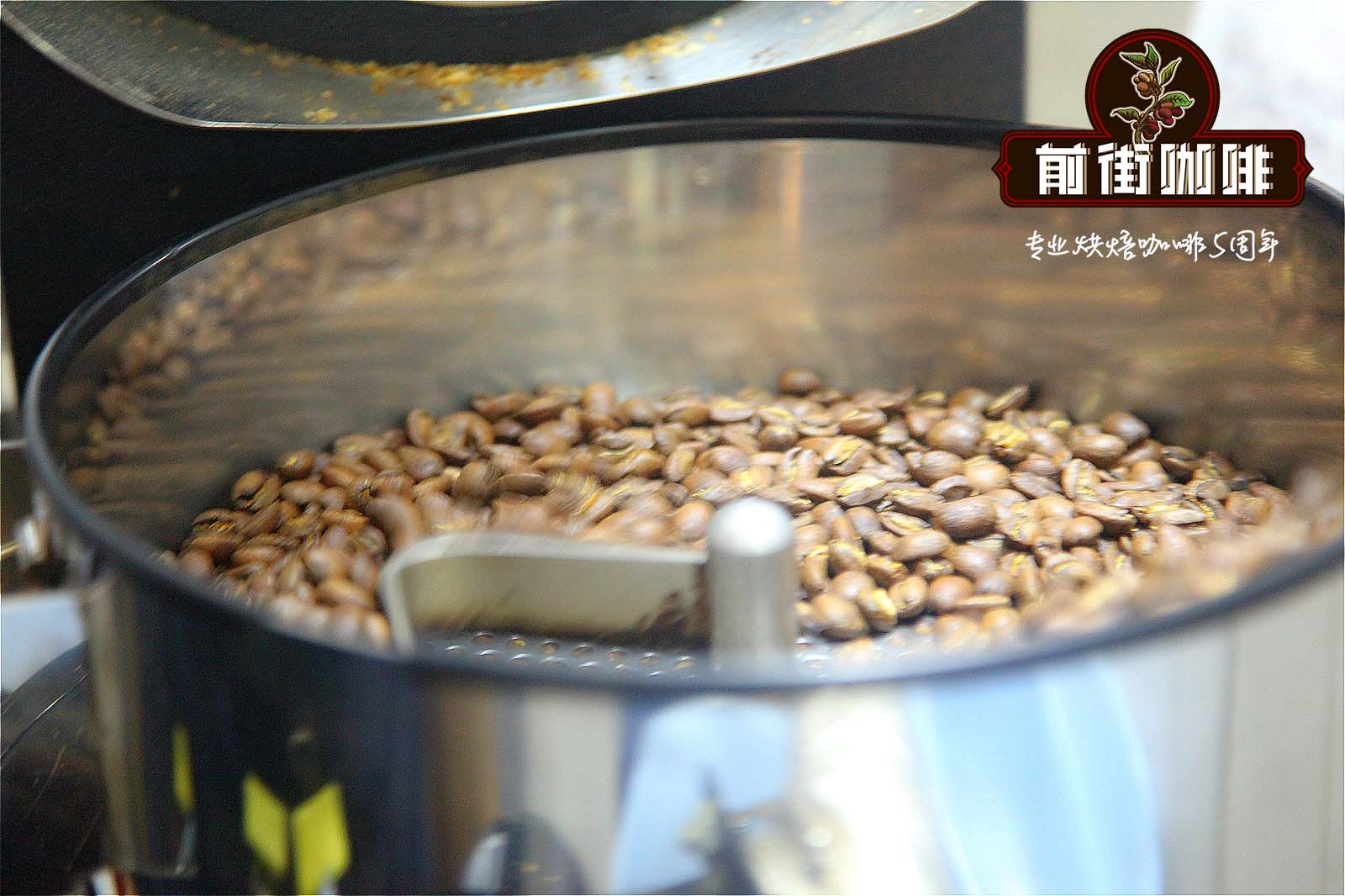
Coffee's aroma and flavor only come to life after roasting. During roasting, moisture gradually leaves the green beans: weight drops, color deepens, volume expands, and aromatic oils slowly emerge. At the same time, the large amount of chlorogenic acid in raw beans gradually breaks down, releasing pleasant fruity acids. Exactly which flavors appear depends on how long the roast runs. In the image below you can see how the beans' appearance changes over the course of roasting.
Whatever processing a coffee undergoes before leaving the farm — natural, washed, semi-washed, or honey — the green beans arrive in a dry state with low moisture content (about 12%). Green coffee in this condition stores fairly well: it is typically packed in sealed bags, wrapped in burlap, and shipped by sea to importers around the world. Even so, several things along the way can compromise the beans' freshness.
1. Rough Processing and Contamination
Coffee is, at heart, a fruit. It has to be processed to remove skin and pulp and become stable green beans — otherwise it would simply rot. But not every farmer has been trained in proper processing, and many work with crude equipment or outdated conditions, so processing can end up rough and unscientific.
For instance, if cherries are poorly sorted — mixed sizes and mixed ripeness — a single uniform drying time leaves them with uneven moisture. Beans that come out too moist may be on the edge of spoiling the day they leave the farm, and blended in with the good beans, they're ready to ruin your pot of specialty coffee.
Alternatively, an unclean drying environment can contaminate the beans. Animals, wind-blown dust, dirty water — all of these can leave strange flavors and bacteria on the beans, accelerating spoilage so the coffee is unfresh from the very start.
2. Transportation and Storage Defects
Properly processed green coffee is dry and oxidizes slowly, so it holds its freshness well — but burlap is not a moisture barrier. If beans meet damp ship holds or humid warehouses in transit, they can spoil or oxidize faster. Even dedicated plastic liners can split or crack. When that happens, the beans' good flavors drift off into the air, and musty or foul odors can move in.
Sea freight and warehousing take a long time, and for lower-grade commercial coffee, storage quality control is often very poor. No one knows how many beans are sacrificed along the way. But because those beans are destined to be cheap commercial coffee, better storage equipment was never in the budget — and it's the unsuspecting consumer who pays for it.
3. Overstocking and Excessive Storage Time
Even under normal transport and storage, coffee keeps oxidizing slowly. So if beans sit in a cargo hold or warehouse too long — unsold shipments, slow sales, backlogged production schedules — their freshness declines regardless.
Coffee is a futures commodity, marked with its production year, and supply generally spans years: early in the year you drink the previous two years' crops, gradually shifting toward last year's and this year's. For example, at the start of 2018 you would typically be drinking 2016-17 crop coffee, and only after a few months would 2017-18 beans appear. Some green merchants don't follow the cross-year convention at all — 90+, for instance, uses a single-crop-year standard.
All of which means: if a merchant is sitting on old stock — say, coffee from 3-4 years ago — that coffee will taste different from a fresh crop even if it was stored perfectly. How different depends on the storage conditions and how quickly the beans themselves oxidize. Aged coffee is another subject entirely: that is deliberate, carefully managed maturation, and not every coffee is suited to it.
How to Choose Coffee Beans Online
You can't see the product before it arrives, so the usual look-smell-peel-chew checks are out — but you can still judge a coffee online by the following. These apply to buying in a physical shop, too.
A. Origin
Online, some sellers pass off coffee that isn't from the stated origin — some "Blue Mountain" coffee, for example, never grew in Jamaica. And a bag that says only "Colombia" or "Brazil," with no estate information, is usually bulk coffee from a large region. Remember that coffee from a famous origin can be commercial grade or specialty grade — "Ethiopia" on the label doesn't guarantee specialty. Look for a specific region and traceable sourcing; such beans are rarely disappointing. And if you're not too fussy, simply trying flavors from different origins is a fine approach too.
Take FrontStreet Coffee's Sidamo Guji as an example. How do you read a name like "Ethiopia Natural G1 Sidamo Guji 2.0"? Coffee names carry clear regional markers, and a coffee label works much like a wine label — it tells you a lot about what's in the bag. From this name you can pull out: country — Ethiopia; region — Sidamo Guji; grade — G1; process — natural; lot name — Guji 2.0.
If a bag says nothing but "Ethiopia," it's usually bulk coffee from a large region.
B. Packaging Date (Roast Date)
Check how recent the packaging date is. Green coffee keeps for one to two years, but roasted beans are at their best for only about 2 months. Buy freshly roasted coffee and use it within that fresh window to enjoy coffee's most charming aromas and fullest taste.
Freshly roasted beans are full of gas and still actively respiring; during extraction the escaping gas creates that lovely, full bloom of bubbles. (Some light roasts bubble less noticeably — that's normal.)
C. Store and Brand
This one goes without saying: some coffees get blended with others to cut costs — cheaper beans mixed into pricier ones, or poor-quality beans of the same variety padded into good lots. It seriously damages the cup. So buy from reputable stores and brands. Freshly roasted beans from popular domestic roasters tend to be fresher than supermarket coffee. Choose coffee shops you trust.
That said, many people find a coffee delicious in the shop but disappointing when they brew it at home. The usual culprits:
First, home grinders produce less uniform particles than commercial grinders — uniformity and fineness both matter.
Second, the water quality at a coffee shop is often better than household tap water.
And for pour-over, the dripper material, the kettle, and other gear all play a part.
FrontStreet Coffee is a roastery in Guangzhou — a small shop with a wide range of beans, famous names and obscure ones alike — and it also runs an online store: https://shop104210103.taobao.com
FrontStreet Coffee Recommendation
If the honey process caught your eye while reading about processing methods, FrontStreet Coffee's Costa Rica lineup is a great place to start. Honey processing evolved from Brazil's semi-washed (pulped natural) method, which dries de-pulped cherries with their mucilage still on — shortening drying time while avoiding the off-flavors of uncontrolled fermentation. FrontStreet Coffee's Cerrado is a classic Brazilian semi-washed coffee in that tradition, with pronounced cream, peanut, nut, and chocolate notes. Costa Rica took the method and refined it by varying how much mucilage is retained and how long the drying lasts, giving rise to black, red, yellow, and white honey.
FrontStreet Coffee's Blackberry uses the rare black honey process, in which almost none of the mucilage is removed and drying stretches over at least 2 weeks under shade covers so the sugars convert fully, with regular turning to prevent overheating and over-fermentation. Roasted medium-light, it opens with a strong fresh-floral fragrance in the grinder and brews into grape, berry, and ripe blackberry flavors. FrontStreet Coffee's Mozart goes one step further with the raisin honey process: the whole cherries are pre-dried on raised beds for at least 3 days before the skin and pulp are removed, with 100% of the mucilage retained — even trickier to execute than black honey. The reward is a richer dried-fruit sweetness; however you brew it — pour-over, cold brew, or moka pot — you'll find osmanthus, pineapple, and raisin aromas.
And for something that combines variety pedigree with processing finesse, FrontStreet Coffee's Strawberry Candy is a blend of Panama Geisha and Costa Rican coffee raised in a raisin honey process. The Geisha contributes its classic orange-blossom honey character, while the Costa Rican component — floated and sorted on harvest day, dried at least 3 days on raised beds, and turned constantly for even drying — brings notes of grape and dried blueberry, gentle fruit acidity, an almond finish, and obvious sweetness.
Important Notice :
FrontStreet Coffee is a long-established specialty coffee roaster in Guangzhou China, selling freshly roasted beans from its own farm in Yunnan as well as dozens of carefully selected single-origin beans from around the world for both pour-over and espresso. The products deliver consistently excellent quality and great value, with shipping within 24 hours. Guangzhou's FrontStreet Coffee shop is recommended by many coffee lovers, and the beans are now available online at the Tmall 。
FrontStreet Coffee has moved to a new address:
FrontStreet Coffee Address: 315,Donghua East Road,GuangZhou
Tel:020 38364473
 Scan and follow the En Gafei WeChat official account. Please indicate that the reprint comes from "En Gafei".