How to Pour-Over Colombian Cañas Select Washed Coffee_ How to Make Cañas Coffee Delicious by Pour-Over
Colombian Coffee Beans
Our latest single-origin release is a washed Caturra grown in the agricultural region of Santa Fe de Antioquia. These beans come from high altitudes of roughly 1,700-2,100 meters, are fully washed, and are then dried in the sun.
Caturra is a natural mutation of Bourbon, first discovered in Brazil (in the town that gave the variety its name). It thrives at higher altitudes and delivers larger yields thanks to its short stature, thick central trunk, and abundance of secondary branches; its natural disease resistance helps output too. The trade-off is that higher-altitude lots grow more slowly, quality climbs with altitude, but yield can drop.
Colombian coffee is generally known for being mild yet complex, with a balanced flavor profile. This washed Caturra works well in any brewing method except very large milk-based drinks, where its flavor can get slightly lost in the volume of milk.
Tasting notes: classic Colombian character, medium body, bright lime-like acidity, notes of rich chocolate, nougat, and vanilla, complemented by tart fruits such as red berries and apple, finishing clean.
Santa Fe de Antioquia Region - Colombia
Santa Fe de Antioquia lies in the Cauca River basin of Antioquia Department, Colombia. The region has a tropical humid climate, ideal for coffee cultivation and one that lets farmers adopt more sustainable practices.
Most of Antioquia Department falls within the Colombian Coffee Region, declared a UNESCO World Heritage Site in 2011 as the "Coffee Cultural Landscape."
Most Colombian coffee is handled by the National Federation of Coffee Growers of Colombia, founded in 1927 as a commercial cooperative that promotes Colombian coffee production and export. It today represents over 500,000 producers and small family-owned farms. Its objectives include protecting the industry, evaluating and addressing its problems, and promoting Colombia's interests through the coffee sector.
One current challenge for the industry is regional climate change tied to global warming. Since 2006 it has pushed Colombian production down from the standard benchmark of 12 million 132-pound bags to 9 million bags in 2010. Between 1980 and 2010 average temperatures rose by 1°C, and average precipitation has increased by 25% in recent years, disrupting the precise climate conditions Arabica depends on.
Green Bean Processing
This Santa Fe de Antioquia single origin is fully washed. Washing depends on every stage, growing, harvesting, fermentation, being done right, because its flavor rests entirely on beans that absorbed sufficient nutrients and sugars during growth.
The process starts by depulping the cherries while keeping the mucilage intact for fermentation. Fermentation can take 1-4 days, giving the bacteria in the fermentation tank time to break down the mucilage, which is then washed off at the end. Once the mucilage is gone, the coffee is carefully sun-dried. All of this is completed at the L&D wet mill in Cañas Gordas.
How to Brew Colombian Coffee [Cañas] Well?
FrontStreet Coffee pour-over reference: Weigh 15g of Cañas coffee and grind medium, particles slightly coarser than table salt. We use the BG grinder at setting 5R (60% standard sieve pass rate), water at 89°C, a V60 dripper, and a coffee-to-water ratio of about 1:15.
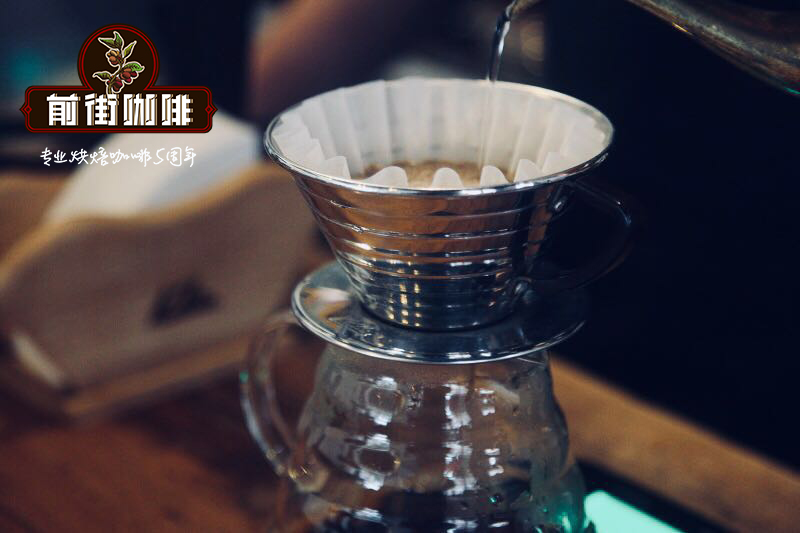
Pour hot water from the gooseneck kettle in clockwise circles centered on the middle of the bed. Start timing as the brew begins: reach 30g within 15 seconds, then stop. At 1 minute, begin the second pour, again clockwise circles around the center, keeping the water away from where the grounds meet the filter paper to prevent channeling.
Leave a ring at the outermost edge of the grounds and pour circle by circle toward the center. By 2 minutes 20 seconds you should reach 220g, and the brew is complete.
Japanese Iced Pour-Over [Cañas]
FrontStreet Coffee iced pour-over reference for Cañas:
Colombia Cañas, light-medium roast, BG grinder setting 5M (67% standard sieve pass rate).
20g of coffee, 150g of ice, 150g of hot water. The water should be 1°C hotter than the standard pour-over recommendation of 90°C. Grind slightly finer than for a hot brew, Fuji setting 3 instead of the usual 3.5. Recommended coffee-to-(water+ice) ratio is 1:15.
Bloom with 40g of water for 30 seconds.
Pour in segments: 60g in the first, 40g in the second. Use a fine but tall water column to agitate the bed firmly so the grounds roll fully, but keep the liquid level from rising too high and don't pour onto the filter paper at the edges.
Total extraction time is about 2.5 minutes, comparable to a normal hot extraction for 20g of coffee.
FrontStreet Coffee Recommendation
If you love balanced, easy-drinking single origins like this Colombian Caturra, FrontStreet Coffee's Brazil Cerrado Red Bourbon is a classic worth trying next. Cerrado is one of Brazil's best-known coffee regions with a reputation for quality, and this Red Bourbon lot shows exactly why Brazilian coffee is prized for its gentle acidity and excellent balance of sweetness, bitterness, and body. At a medium roast it releases rich aromas of creamed peanut, toast, caramel, and hazelnut, with a rounded mouthfeel, hardly any acidity, and only a light bitter touch. It suits drinkers who prefer smooth, nutty, low-acid cups, and it is remarkably versatile: besides pour-over, it extracts beautifully in a moka pot, as espresso (single-origin SOE), in a siphon, or a French press. It also works as a single origin or as a base for blends.
Important Notice :
FrontStreet Coffee is a long-established specialty coffee roaster in Guangzhou China, selling freshly roasted beans from its own farm in Yunnan as well as dozens of carefully selected single-origin beans from around the world for both pour-over and espresso. The products deliver consistently excellent quality and great value, with shipping within 24 hours. Guangzhou's FrontStreet Coffee shop is recommended by many coffee lovers, and the beans are now available online at the Tmall 。
FrontStreet Coffee has moved to a new address:
FrontStreet Coffee Address: 315,Donghua East Road,GuangZhou
Tel:020 38364473
 Scan and follow the En Gafei WeChat official account. Please indicate that the reprint comes from "En Gafei".