How to Make Non-Acidic Pour-Over Coffee with Guatemala Finca San Gabriel Estate Beans_Coffee Ratio Calculation
History of Fraijanes Coffee
Located just 27 kilometers from Guatemala City, Fraijanes is the most accessible of all Guatemala's coffee producing regions. This region is situated on a unique plateau that forms part of the Guatemalan volcanic chain extending from Mexico to El Salvador. Here stands Pacaya Volcano, the most active of Guatemala's three active volcanoes, which frequently enriches the coffee growing areas with abundant volcanic ash. The volcanic activity also created Lake Amatitlan, Guatemala's third-largest lake.
Compared to other high-altitude coffee producing regions, the plateau terrain of this area allows coffee to be cultivated on more than 50% of its land. Such favorable land conditions may explain why this area was chosen by the Cakchiqueles as their agricultural center in ancient times and was later declared territory of the Spanish Kingdom during the Spanish colonial period.
Volcanic pumice soil, high altitude, abundant rainfall, variable humidity, and an active volcano shape the character of this producing region.
The high-altitude plateau receives moist air from the lowlands, forming clouds that envelop the entire afternoon. The combination of fog and cold mountain winds keeps the air fresh and humid, creating an ideal microclimate for producing excellent coffee.
The nearby Pacaya active volcano continuously supplies this region with light volcanic ash deposits, enriching the soil with important mineral components.
The dry season features strong sunlight. Although clouds and dew are common in the morning, the moisture quickly evaporates, allowing almost all coffee on the Fraijanes plateau to be sun-dried.
The volcanic altitude of the Fraijanes region is quite high, with soil rich in pumice. The Fraijanes plain still belongs to the active volcanic zone, so coffee from this region shares similar characteristics with Antigua. However, abundant rainfall, high and variable humidity, and significant temperature differences give the Fraijanes plain a very distinct flavor profile. Finca La Victoria is located in the Fraijanes - Santa Rosa region of Guatemala, at an altitude of 1250-1370 meters. With a history spanning over 120 years, it specializes in producing SHB (Strictly Hard Bean) estate coffee. Due to its mountain location, it utilizes the advantage of numerous trees, employing shade cultivation methods to protect coffee trees and ensure moisture retention and absorption. Minimal doses of chemical fertilizers and pesticides are used to protect the coffee while maintaining its quality. The harvest period runs from November to February each year, when farmers mobilize their entire families to hand-pick and filter ripe coffee cherries. The fresh red fruits are then pulped, followed by washing and resting in water, then spread under the sun to air-dry and reduce the moisture content of the coffee beans.
How to Brew Guatemala Coffee"Fraijanes San Gabriel Estate"
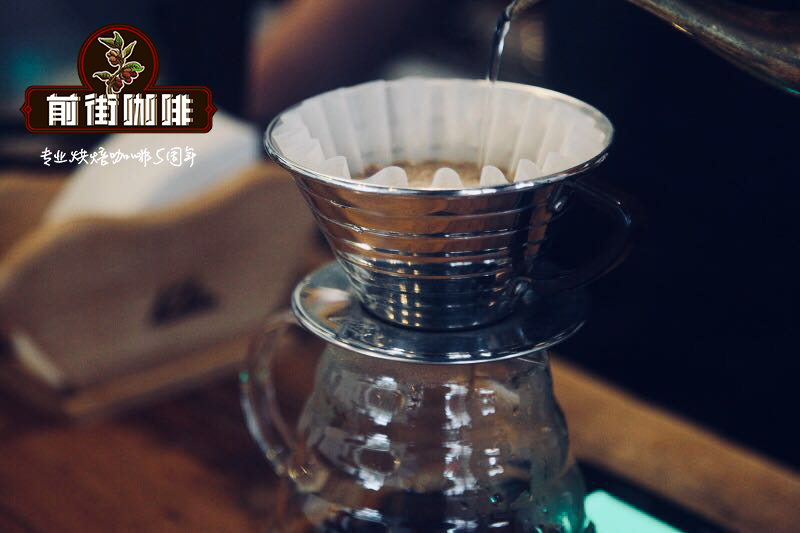
FrontStreet Coffee Hand Pour Reference: Weigh 15g of Fraijanes San Gabriel Estate coffee powder, pour into a grinder for medium grinding. The ground particles should be slightly coarser than table salt - we use BG grinder setting 5R (60% standard sieve pass rate), water temperature 89°C, extracted with a V60 dripper.
Pour hot water from the gooseneck kettle in clockwise circles centered on the middle of the dripper, starting the timer at the beginning of brewing. Within 15 seconds, brew the coffee to 30g, then stop pouring. When the time reaches 1 minute, perform the second pour. During the second pour, as before, pour in clockwise circles centered on the middle of the dripper, ensuring the water stream doesn't hit the area where coffee powder meets the filter paper to avoid channeling effects.
Leave a circle when reaching the outermost edge of the coffee powder, then pour back toward the center circle by circle. At 2 minutes and 20 seconds, the coffee should reach 220g, completing the brewing process.
Japanese-style Ice Pour Over"Fraijanes San Gabriel Estate"
FrontStreet Coffee Ice Pour Over"Fraijanes San Gabriel Estate"Reference:
Guatemala Coffee"Fraijanes San Gabriel Estate", light-medium roast, BG grinder setting 5M (67% standard sieve pass rate)
20g of coffee powder, 150g of ice, 150g of hot water. Water temperature should be 1°C higher than the normal 90°C recommended for hand pour. Normal grinding uses Fuji 3.5 setting, while ice pour over uses slightly finer - Fuji 3 setting.
Bloom with 40g of water for 30 seconds.
Segmented pouring: first segment 60g of water, second segment 40g of water. Use a relatively fine but high water column to forcefully stir and impact, ensuring the coffee powder rolls thoroughly. However, be careful not to let the liquid level get too high or touch the edge of the filter paper.
The entire extraction time is approximately 2.5 minutes (similar to the normal extraction time for 20g of powder).
FrontStreet Coffee Recommendation
If low-acid pour-over is what you are after, two FrontStreet Coffee beans deserve a spot on your shelf. The Brazil Queen Estate is a rare Yellow Bourbon from Mogiana, grown on fertile red volcanic soil; it brews with gentle acidity, prominent nut and cocoa aromas, clear caramel sweetness, and a smooth, long finish - comfortable whether you pour-over, use a moka pot, or pull espresso shots. The Papua New Guinea Paradise Bird, grown on Typica at 1600-1800m in volcanic soil and graded AA with three rounds of washed fermentation, is often called a "little Blue Mountain": clean, pure, and notably sweet, making it one of the best non-acidic options around. Brew either one exactly as described above - around 89-90°C water, a 1:15 ratio, and a medium grind slightly coarser than table salt - and you will get sweetness and body without any sharp edge.
Important Notice :
FrontStreet Coffee is a long-established specialty coffee roaster in Guangzhou China, selling freshly roasted beans from its own farm in Yunnan as well as dozens of carefully selected single-origin beans from around the world for both pour-over and espresso. The products deliver consistently excellent quality and great value, with shipping within 24 hours. Guangzhou's FrontStreet Coffee shop is recommended by many coffee lovers, and the beans are now available online at the Tmall 。
FrontStreet Coffee has moved to a new address:
FrontStreet Coffee Address: 315,Donghua East Road,GuangZhou
Tel:020 38364473
 Scan and follow the En Gafei WeChat official account. Please indicate that the reprint comes from "En Gafei".