How to Adjust Grind Size for Pour-Over of Guatemala Huehuetenango Honey Process Coffee_Ice Pour-Over Huehuetenango Water-to-Ice Ratio Calculation
For professional coffee knowledge exchange and more coffee bean information, follow Coffee Workshop (WeChat public account: cafe_style).
Guatemala: The Land of Exceptional Coffee
Bordered by Mexico to the north, Honduras and El Salvador to the south, the Caribbean Sea to the east, and the Pacific Ocean to the west, Guatemala has a unique geography spanning tropical rainforests, volcanic formations, highland valleys, and diverse microclimates. Guatemalan coffee holds a reputation as some of the finest in the world, and its Strictly Hard Bean (SHB) grades are full-bodied, deliciously balanced, and richly flavored.
Few places on earth can produce the variety of premium beans that Guatemala does. The exceptional quality comes from its unique growing conditions: varying climate patterns across regions, nutrient-rich volcanic soil, abundant natural water, high mountain elevations, and cool, humid forests. Its strategic location in Central America also matters. Guatemala covers approximately 108,899 square kilometers and has distinct geographic regions - highland volcanoes, lowland tropical forests, volcanic sandy plains along the Pacific coast, and untouched Caribbean coastline. The Sierra Madre range runs across Guatemala from east to west, covering about two-thirds of the country, with 34 volcanoes within its borders. Rivers and lakes dot the landscape, while equatorial forests and jungle plains cover the terrain. Both the Pacific and Caribbean coasts have undeveloped volcanic beaches.
Volcanic Origins and Exceptional Quality
Guatemalan coffee ranks among the world's finest varieties thanks to the country's high-altitude volcanic terrain, where the volcanoes themselves provide the ideal environment for cultivation. Compared with other coffees, cuppers particularly favor this spicy, complex flavor profile. The Strictly Hard Bean (SHB) from this region is exceptionally fine - full-bodied, delicious, and perfectly balanced in acidity.
Coffee was first introduced to Guatemala in 1750 by Jesuit priests, and by the late 19th century German colonists had developed the country's coffee industry. Today most production is in the southern regions. Guatemala has seven major coffee-producing regions, each with distinct flavor characteristics. Overall, Guatemalan coffee is smooth and full-bodied, with elegant aromas and a special, pleasant, fruit-like acidity - truly the aristocrat of coffees. Among them, Antigua Classic comes highly recommended by coffee connoisseurs worldwide.
A Sweet and Delightful Experience
If you're looking for a simply sweet cup, try these Guatemalan beans. Beyond that initial sweetness, you'll find more sweetness still. When hot, it shows honey-like sweetness; as it cools, cantaloupe notes emerge, with subtle florals. In short, it's simply an excellent cup of coffee.
Guatemala Las Moritas Estate
Origin: Antigua
Altitude: 1,550-1,800 meters
Processing Method: Honey Process
Grade: European Standard SHB
Roast Level: CITY+
Flavor Profile: Lime, malt caramel, floral notes, dark chocolate, chestnut, pleasant aftertaste
Brewing Guide: Guatemala Las Moritas Honey Process
FrontStreet Coffee Pour-Over Reference:
Measure 15 g of Las Moritas Honey Process beans and grind to medium coarseness (slightly coarser than table salt). We use a BG grinder setting 5R (60% standard sieve pass-through) with water at 89 degrees C and a V60 dripper.
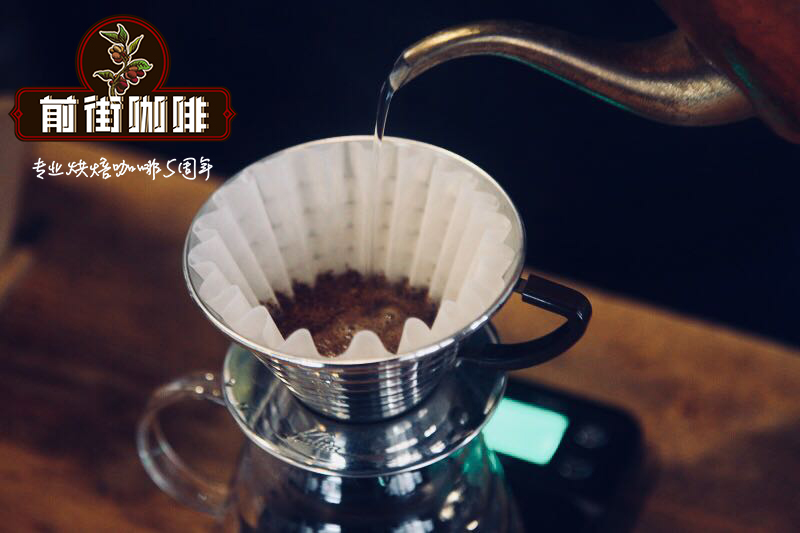
Pour hot water from the gooseneck kettle in clockwise circles around the center of the filter. Start timing when you begin pouring. Reach 30 g in 15 seconds, then stop. At 1 minute, begin the second pour. Again, pour in clockwise circles from the center, avoiding the area where the grounds meet the filter paper to prevent channeling. Leave a small circle around the outer edge of the coffee bed, then work back toward the center. Complete the brew at 2 minutes and 20 seconds when you reach 220 g in total.
Japanese Iced Pour-Over: Las Moritas Honey Process
FrontStreet Coffee Iced Pour-Over Reference:
Guatemala Las Moritas Honey Process, light-medium roast, BG grinder setting 5M (67% standard sieve pass-through).
20 g of coffee, 150 g of ice, 150 g of hot water. The water temperature should be 1 degree C higher than the recommended 90 degrees C for regular pour-over. Normal grinding uses a Fuji 3.5 setting, while iced pour-over requires slightly finer grinding - Fuji setting 3.
Bloom with 40 g of water for 30 seconds.
Use segmented pouring: first segment 60 g of water, second segment 40 g of water. Use a relatively fine but high water column, applying vigorous stirring to ensure the grounds tumble thoroughly. Be careful not to let the water level get too high or touch the edge filter paper.
The total extraction time should be approximately 2.5 minutes (similar to the normal extraction time for 20 g of coffee).
FrontStreet Coffee Recommendation
Honey-processed beans like these reward a V60, and a few FrontStreet coffees are especially well suited to it. The FrontStreet Kenya Cherry Tomato is a highlight for anyone who enjoys bright fruit acidity: a Kenyan washed bean from the Sika region, grown at 1,550-1,750 meters, planted with the classic SL28 and SL34 varieties, and given Kenya's signature 72-hour double washed fermentation. FrontStreet roasts it light to keep the lively acidity and layered fruit. On the dry aroma you get dried cherry tomato and florals; the cup opens with clear cherry tomato and dark plum, a bright, solid acidity like fresh juice, then rises into sweetness with snow pear and black plum, finishing clean and long with yellow sugar and light green tea.
For a rounder, sweeter pour-over, the FrontStreet Huakui is a favorite. Grown at very high altitude with excellent terroir and processed as a natural, it shows strawberry, passion fruit, and even lychee on top of delicate florals, with pronounced sweetness, very low bitterness, and a smooth, juice-like mouthfeel.
And if you want to push the V60 toward its most elegant expression, the FrontStreet Panama Esmeralda Red Label Geisha brings jasmine, citrus, bergamot, and black tea, with a clean, transparent body and a long, layered finish.
Important Notice :
FrontStreet Coffee is a long-established specialty coffee roaster in Guangzhou China, selling freshly roasted beans from its own farm in Yunnan as well as dozens of carefully selected single-origin beans from around the world for both pour-over and espresso. The products deliver consistently excellent quality and great value, with shipping within 24 hours. Guangzhou's FrontStreet Coffee shop is recommended by many coffee lovers, and the beans are now available online at the Tmall 。
FrontStreet Coffee has moved to a new address:
FrontStreet Coffee Address: 315,Donghua East Road,GuangZhou
Tel:020 38364473
 Scan and follow the En Gafei WeChat official account. Please indicate that the reprint comes from "En Gafei".