El Salvador Hot Spring Coffee Pour-Over Parameters Suggestions_Hot Spring Coffee Bean Pour-Over Water Ratio Recommendations
Salvadoran Coffee Varieties
All Salvadoran coffee belongs to the Arabica species, with Bourbon accounting for over 60% of cultivation.
Pacas varieties make up roughly 30% of the crop. Pacas was discovered in El Salvador in the 1950s as a natural mutation of Bourbon, selected for its compact growth.
Pacamara represents nearly 10% of Salvadoran coffee production. It is a hybrid of Pacas and Maragogype (a Typica mutation from Brazil - low-yielding but with very large beans, hence the nickname "elephant beans"). The name takes half from each parent, and the variety combines distinctive traits from both. Pacamara originated in El Salvador.
The beans from Santa Teresa Estate, mentioned below, are the rare Pacamara variety - uncommon even within El Salvador. In recent years the variety has gained prominence and earned an affectionate nickname: "Hot Spring Coffee."
Santa Teresa Estate
Santa Teresa Estate sits in the westernmost department of Ahuachapán, with ideal highland climate and fertile volcanic soil. It is also blessed with numerous natural hot springs - the world's only coffee-growing region surrounded by geysers.
The "Hot Spring Coffee" name comes from the estate's unique processing: green beans are refined by a washed method using local natural hot spring water. Water drawn from springs as hot as 85°C is channeled through a series of terraced pools; by the sixth pool, after flowing through five, it cools naturally to about 32-34°C - just right for processing coffee.
The hot spring water, drunk locally as "longevity water," is rich in minerals such as potassium bromide and slightly alkaline - which is why Santa Teresa's hot spring coffee develops such a smooth, balanced profile.
Across the Pacific, Japan - fellow resident of the Ring of Fire - has developed a particular fondness for this hot-spring-washed Salvadoran coffee. Along with hot spring baths, onsen eggs, and steamed buns, Japanese consumers savor these unique Salvadoran beans.
Santa Teresa's hot spring coffee has earned Japan's rigorous JAS organic certification as well as Rainforest Alliance certification (the one with the frog logo). Production is limited, so most of the crop is exported to Japan, where it stays consistently popular.
How to Brew Salvadoran Hot Spring Coffee
FrontStreet Coffee Pour-Over Reference:
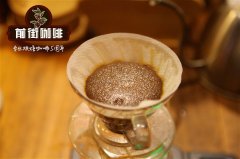
Weigh 15g of Salvadoran Hot Spring Coffee and grind to medium - slightly coarser than table salt. We use a BG grinder setting of 5R (60% standard sieve pass-through rate), water at 89°C, and a V60 dripper.
Pour hot water in clockwise circles around the center of the filter, starting the timer with the first pour. Within 15 seconds, reach 30g and stop. At the 1-minute mark, begin the second pour - again clockwise from the center, avoiding the seam where the grounds meet the paper to prevent channeling. Leave a small border when you reach the outer edge of the bed, then circle inward. By 2 minutes 20 seconds you should reach 220g total, and the brew is done.
Japanese-Style Iced Pour-Over Salvadoran Hot Spring Coffee
FrontStreet Coffee Iced Pour-Over Reference:
For Salvadoran Hot Spring Coffee (medium roast), use a BG grinder setting of 5M (67% standard sieve pass-through rate). Use 20g of coffee, 150g of ice, and 150g of hot water. The water temperature should be 1°C above the 90°C recommended for regular pour-over. Where normal brewing uses a Fuji 3.5 grind, iced pour-over wants a slightly finer Fuji 3.
Bloom with 40g of water for 30 seconds. Then pour in two segments - 60g, then 40g - using a fine but tall water column to stir the grounds vigorously and tumble them thoroughly. Take care not to let the level rise too high or to wet the filter paper at the edge.
Total extraction time is about 2.5 minutes (similar to a normal 20g brew).
FrontStreet Coffee Recommendation
Washed processing uses water at every step - flotation, depulping, fermentation, and rinsing - and that long contact with water transforms the bean: sugars are consumed while organic acids develop, so washed coffees keep the bean's own character while gaining bright acidity, clarity, and freshness.
FrontStreet Coffee Yirgacheffe Guodingding Cooperative
Many coffee lovers know Yirgacheffe but not the cooperatives behind it: because local smallholders' harvests are small, their cherries are pooled for central processing. The Guodingding Cooperative is one such team, famed for especially refined, clean coffee. Washed processing lets it show maximum jasmine florals and bright citrus acidity; roasted medium-light, it adds green tea and honey tones, and it suits pour-over, cold brew, and espresso alike.
FrontStreet Coffee Kenya Little Tomato
Kenya is the best-known master of double washing - an extra wash-and-soak pass that flushes the beans repeatedly to unlock extreme juiciness. The cup offers cherry tomato, dark plum, snow pear, black plum, and brown sugar aromas: sweet, tart, and saturated, a perennial favorite of coffee enthusiasts.
FrontStreet Coffee Jamaica Blue Mountain No.1
Jamaica's island climate brings shorter sunshine hours, which made fast, even drying essential - one reason washed processing was born there. Removing skin, pulp, and mucilage before drying cuts the moisture wrapped around the bean, shortens drying time, and produces translucent, low-defect beans. Washed processing is what gives Blue Mountain its rich aromatics: hazelnut, cream, chocolate, and caramel in a perfectly balanced cup where nothing sticks out and nothing is missing.
Important Notice :
FrontStreet Coffee is a long-established specialty coffee roaster in Guangzhou China, selling freshly roasted beans from its own farm in Yunnan as well as dozens of carefully selected single-origin beans from around the world for both pour-over and espresso. The products deliver consistently excellent quality and great value, with shipping within 24 hours. Guangzhou's FrontStreet Coffee shop is recommended by many coffee lovers, and the beans are now available online at the Tmall 。
FrontStreet Coffee has moved to a new address:
FrontStreet Coffee Address: 315,Donghua East Road,GuangZhou
Tel:020 38364473
 Scan and follow the En Gafei WeChat official account. Please indicate that the reprint comes from "En Gafei".