Panama Janson Estate Blue Label Geisha Coffee Pour-Over Watering Guide & Flavor Characteristics
About Panama Coffee Estates: Janson Estate
In 2004, the Peterson family of Panama introduced the Geisha variety to the world. Since then, the international coffee community has gone crazy for Geisha, calling it the champagne of the coffee world. In 2013, a new finalist appeared at the Best of Panama competition organized by the Specialty Coffee Association of Panama (SCAP): the Geisha from Carl Janson's Janson Estate.
A Unique Microclimate
The microclimate of Panama's highlands is the most important resource behind the country's distinctive coffees. Running east to west, the Republic of Panama allows cold air currents to flow across the central mountain range and converge above 6,500 feet, creating multiple microclimates in the Boquete and Volcán regions, which are the main production areas for Panama's specialty coffees. These coffees are cultivated in the nutrient-rich, well-balanced soils of the Barú Volcano region. The mild microclimate, soil, temperature, and altitude of these highlands are well suited to sowing, growing, and harvesting all kinds of specialty coffee.
Estate Founder Mr. Carl Janson Came from Switzerland
When he arrived in Panama, he fell deeply in love with the Volcan area, a mountain-surrounded region that reminded him of his Swiss homeland. After marrying his wife Margaret, he purchased the estate in 1940. Carl Janson, an enthusiastic rancher, was also the first person to introduce Angus cattle to Panama.
Janson Estate Geisha
Geisha, the Name
The name Geisha is pronounced the same as the English word "geisha," which is how the coffee got its alternative spelling. Because the trees grow taller than typical coffee plants, they were originally planted in small plots within the estate and used as windbreaks.
Geisha as a Variety
The Geisha variety was discovered in Ethiopia's Geisha forest in 1931 and later sent to the Coffee Research Institute in Kenya. It was introduced to Uganda and Tanzania in 1936, and Costa Rica brought it in during 1953.
For a long time, few people paid attention to Geisha. That changed when Don Pachi first brought it from the small town of Gesha in southwestern Ethiopia to Costa Rica, after which Geisha entered Panama along the southern route. Panama's La Esmeralda estate separated it from other varieties and won the national coffee competition with it, which officially brought Geisha into the spotlight.
Geisha is notoriously picky about its growing environment, requiring high altitude, cloud cover and shade, fertile soil, and abundant accumulated warmth.
In 2013, a new finalist appeared at the Best of Panama competition organized by the Specialty Coffee Association of Panama (SCAP): the Geisha from Carl Janson's Janson Estate — also known as the "champagne of the coffee world," with a full jasmine floral aroma, delicate berry notes, a clean taste, and flavors of honey and lychee.
Geisha has pronounced sweetness, an exceptionally clean cup, and rich aromas that run from berries and citrus to mango, papaya, and peach. A very distinct bergamot-like aftertaste is one of its signature cupping attributes. To this day, Geisha remains the champion among coffee varieties.
Janson Geisha is relatively little known outside Panama, because the estate mainly sells domestically and does not export. In this high-altitude environment of nutrient-rich volcanic soil, abundant rainfall, and suitable temperatures, Janson Estate has gradually become the second-largest Geisha producer among Panama's estates, with 50% of the farm planted in Geisha coffee trees.
The harvested cherries are nicknamed "ox-blood coffee cherries," and their sweetness is remarkably high. To keep the natural environment in balance, Janson Estate runs livestock farming alongside coffee cultivation. Today, three generations of the family run the estate together: Carl's four sons — Carl, Michael, Ritchie, and Peter — with Carl overseeing the JANSON FAMILY roasting facilities, Michael managing part of the coffee farm, and Ritchie and Peter assisting with overall management.
At an average altitude of about 1,700 meters, the estate sits on nutrient-rich volcanic soil with abundant rainfall and mild temperatures. The Janson family managers follow environmentally friendly principles, practice 100% sustainable cultivation, and have built their own processing plants so that spent coffee cherries can be returned to the fields as fertilizer.
Only 2,000 Geisha plants are grown per hectare, ensuring enough space and soil for each tree. With half the estate planted in Geisha, Janson ranks second in Panama's Geisha production, and every batch of green coffee carries a highly recognizable batch number and is 100% traceable.
The estate not only has an exclusive processing plant for its cherries but also invests considerable effort in roasting to make its cupping results more meaningful.
These efforts have steadily raised the quality of Janson's coffee, culminating in a second-place finish for Janson Estate Geisha in the Best of Panama (BOP) competition.
In recent years, coffees from the Volcan region have gained prominence in the specialty market, with many estates entering Best of Panama and even winning championships. Volcan generally receives less annual rainfall than Boquete, and its location on the western side of the Barú Volcano gives its coffees stronger dried-fruit flavors, sweetness, and aroma compared with the Boquete region.
In the early days, the Volcan area grew mostly cash crops such as fruits and vegetables, and only a few farmers cultivated coffee. Among the pioneers of coffee growing in the region were Panama's well-known Hartmann family and the Janson family.
Panama Janson Estate Blue Label Washed Geisha
Geisha is a famous coffee variety from Panama, a small Central American country where coffee farmers call it a miracle. Janson Estate is one of several estates famous for Geisha, alongside La Esmeralda and Elida Estate.
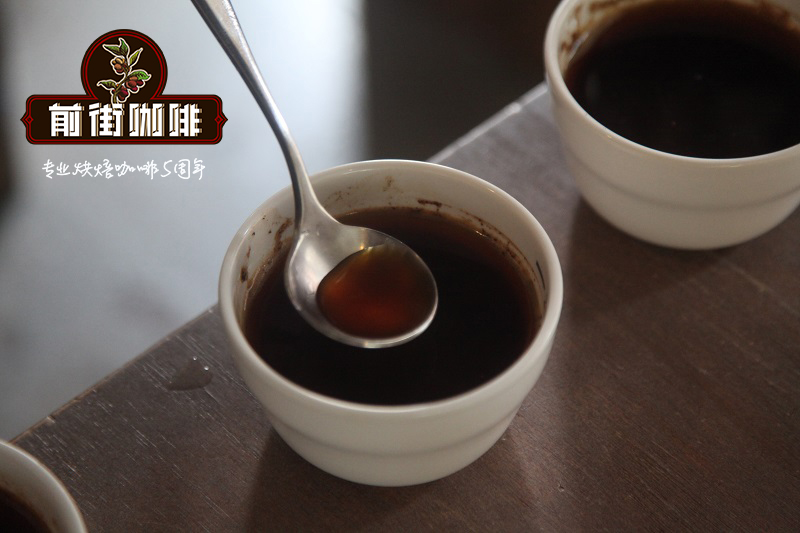
This coffee shows a clear citrus and sweet-orange aroma, clean and soft acidity, and high sweetness. Many people fall in love with specialty single-origin coffee because of a single cup of Geisha — it is well worth trying yourself.
How to Brew Panama Janson Estate Blue Label Washed Geisha
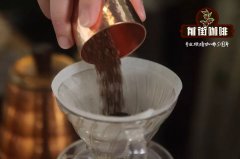
FrontStreet Coffee pour-over reference: weigh out 15g of Janson Estate Blue Label Washed Geisha and grind to a medium coarseness — slightly coarser than table salt. We use the BG grinder at setting 5R (60% pass-through rate on the standard sieve), water at 90°C, extracted with a V60 dripper.
With the center of the dripper as your reference point, pour in slow clockwise circles. Start timing when the brew begins: bring the coffee up to 30g within 15 seconds, then stop pouring. When the timer reaches 1 minute, start the second pour. As before, pour in clockwise circles around the center, and keep the water from hitting the seam where the coffee bed meets the filter paper to prevent channeling.
On the final pour, work outward to the edge of the coffee bed once, then spiral back toward the center circle by circle. At 2 minutes 20 seconds the coffee reaches 220g and the brew is complete.
Iced Brew: Janson Estate Blue Label Washed Geisha
FrontStreet Coffee iced-brew reference for Janson Estate Blue Label Washed Geisha: light-to-medium roast, BG grinder setting 4B, 20g of coffee, 83°C water, a 3-minute bloom, brewed in a Chemex with ice water for a total of 200ml of water.
FrontStreet Coffee Recommendation
If this Panamanian Geisha has piqued your interest, FrontStreet Coffee's own Geisha lineup is a great place to keep exploring. The red-label Esmeralda Special Geisha grows at 1,600–1,800 meters, must cup above 90 points, and comes from a single traceable micro-lot per batch; the green-label Private Collection blends lots from multiple plots to express the estate's signature high-altitude Geisha character at a more approachable price. For a first taste of classic Panama Geisha, FrontStreet recommends the entry-level Boquete Geisha, which delivers the classic orange-blossom honey sweetness, an oolong-tea texture, and delicate fruit acidity at a friendly price.
Ethiopia, the birthplace of Geisha, is equally rewarding. FrontStreet's Gelana Estate Gesha comes from a washing station established in 2014 near the border of the Kochere and Gelana Abaya areas, within a 700-hectare growing region of fertile, mostly untouched land shaded by old-growth trees. Fully ripe cherries are hand-picked and sun-dried on raised beds for 14–20 days depending on the weather. Roasted medium-light, it shows bright citrus acidity, an elegant ginger-flower aroma, the full sweetness of ripe fruit, and a silky texture with Geisha's signature refined finish. To brew it, FrontStreet suggests a coarse grind (about 78% pass-through on a #20 sieve, roughly the size of fine granulated sugar), water at 91°C, and 15g of coffee in a small Hario V60 at a 1:16 ratio. Brew in three pours: bloom with 30g of water for 30 seconds, pour to 125g, then finish at 225g, for a total drawdown of roughly 2 minutes 10 seconds to 2 minutes 20 seconds.
Important Notice :
FrontStreet Coffee is a long-established specialty coffee roaster in Guangzhou China, selling freshly roasted beans from its own farm in Yunnan as well as dozens of carefully selected single-origin beans from around the world for both pour-over and espresso. The products deliver consistently excellent quality and great value, with shipping within 24 hours. Guangzhou's FrontStreet Coffee shop is recommended by many coffee lovers, and the beans are now available online at the Tmall 。
FrontStreet Coffee has moved to a new address:
FrontStreet Coffee Address: 315,Donghua East Road,GuangZhou
Tel:020 38364473
 Scan and follow the En Gafei WeChat official account. Please indicate that the reprint comes from "En Gafei".